
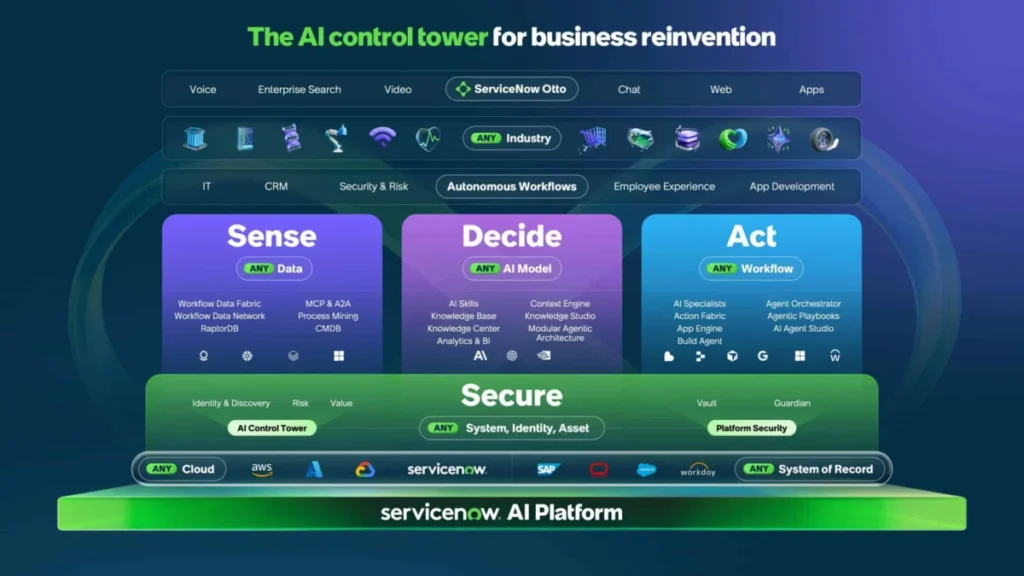
ServiceNow has unveiled a sweeping suite of announcements signaling its aggressive strategy to capture a significant share of the burgeoning enterprise AI market. The company’s stated goal is to double its revenue to $30 billion within the next four years, a target it aims to achieve by positioning itself as the central hub for managing, securing, and providing access to every AI agent operating within an organization. This ambitious plan places ServiceNow directly in competition with major players like Microsoft and Workday, who are pursuing similar strategies to govern the increasingly complex world of enterprise artificial intelligence.
The core of ServiceNow’s announcement revolves around its vision of transforming "enterprise AI chaos into control," a sentiment echoed by competitors like Workday, who emphasize the need for "AI agents without enterprise governance [being] lawless by design." While CIOs may find these pronouncements reassuring, the practical challenge for many businesses lies not in managing chaos, but in demonstrating scalable return on investment (ROI) for AI initiatives. The success of ServiceNow’s new offerings will hinge on their ability to not only provide control but also to facilitate the rapid development and deployment of valuable AI use cases.
The "Action Fabric": ServiceNow’s Centralized AI Management Layer
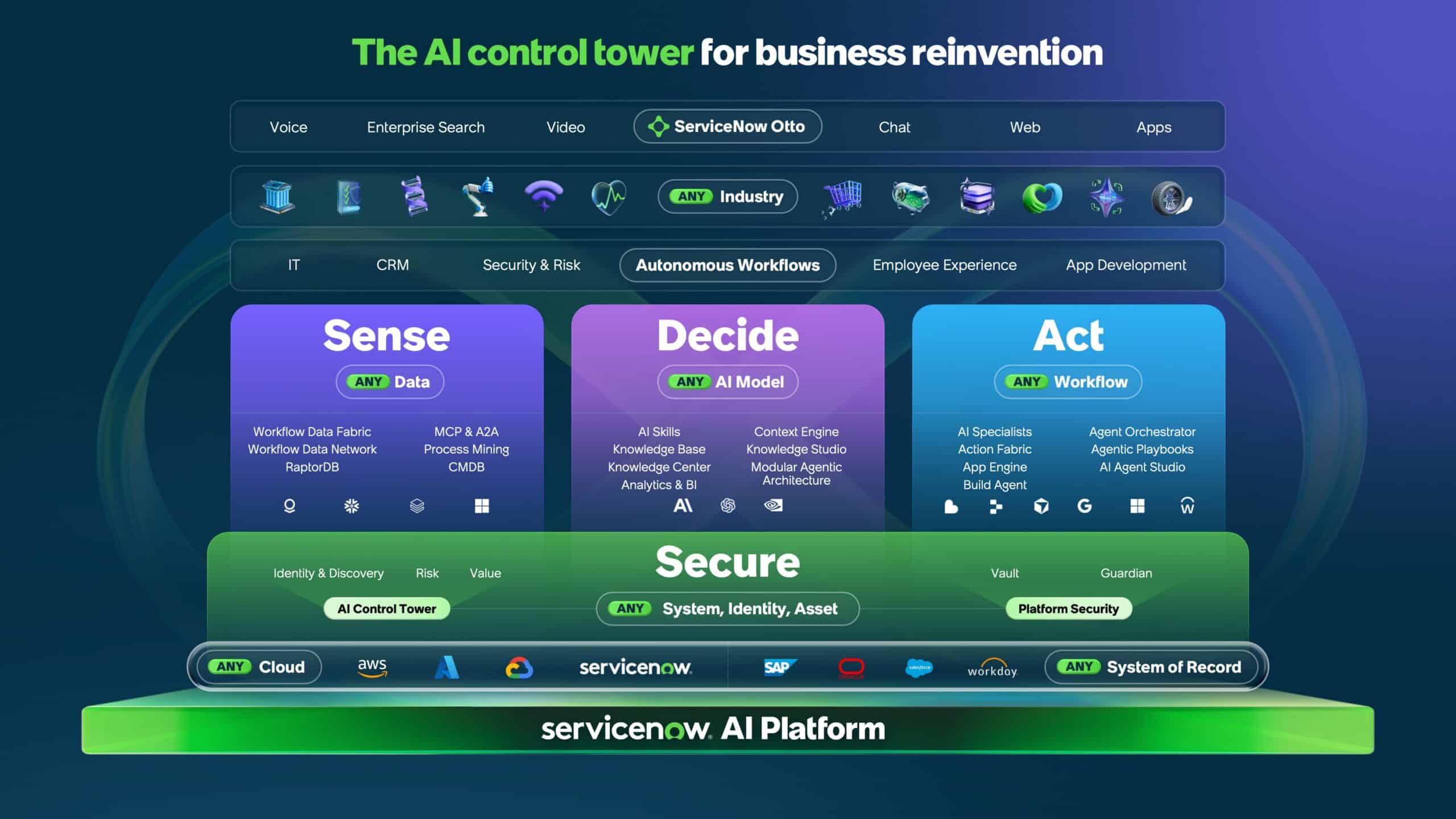
At the forefront of ServiceNow’s strategy is the introduction of its "Action Fabric," a comprehensive management layer designed to monitor and govern all AI agent activity. This concept aligns directly with Microsoft’s "Agent 365" and Workday’s "Agent System of Record," all aiming to create a unified control plane for a diverse ecosystem of AI agents.
ServiceNow’s Action Fabric, delivered via an MCP server, is designed to be universally compatible:
- Universal Compatibility: "Any agent. Any model." This means any AI agent, regardless of its origin or the underlying model, can connect and operate through the ServiceNow Fabric. This open approach is a key differentiator, aiming to avoid vendor lock-in for AI deployments.
- Open to All AI: The management tools are designed to be callable by AI agents themselves, enabling automated management scenarios and seamless integration with third-party management frameworks.
- Enhanced Security and Governance: The platform promises "Full Control; Full Trust" by ensuring all agents are authenticated, permission-scoped, audited, and monitored. While the specifics of enforcing complex business rules from other enterprise systems like Workday or SAP remain to be fully detailed, the foundational IT management capabilities ServiceNow has built over two decades—including its Configuration Management Database (CMDB), Workflow Data Network, security center, and identity and access controls—provide a robust backbone for this new initiative.
This move represents a significant evolution for ServiceNow, leveraging its existing strengths in IT service management and workflow automation to address the emerging challenges of AI governance. Competitors are making parallel plays: Workday’s Agent System of Record and Agent Gateway are opening its platform to external agents on a per-call basis, while SAP is directing agents to its Business Accelerator Hub for access to business rules, also with a usage-based metering model. The choice between these platforms will likely depend on a company’s existing investment in specific ecosystems (like Workday or SAP) and their preferred development environments.
"Otto": The Front Door to Enterprise AI and Employee Experience
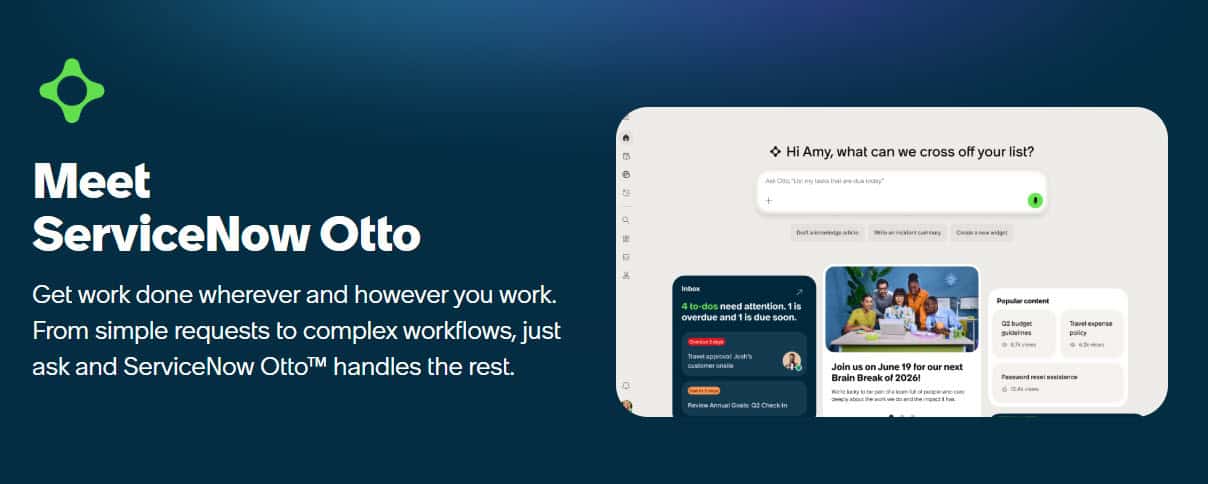
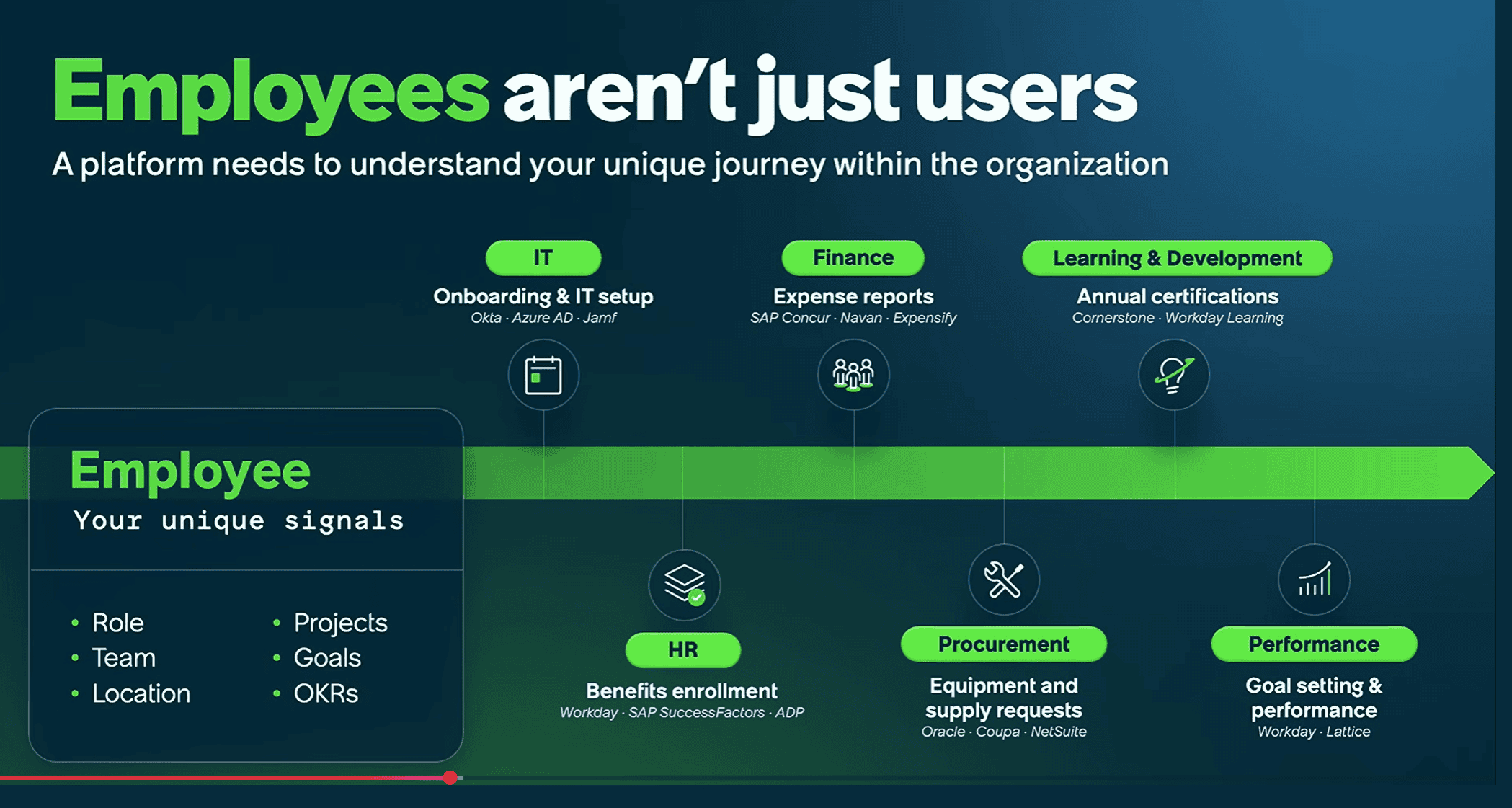
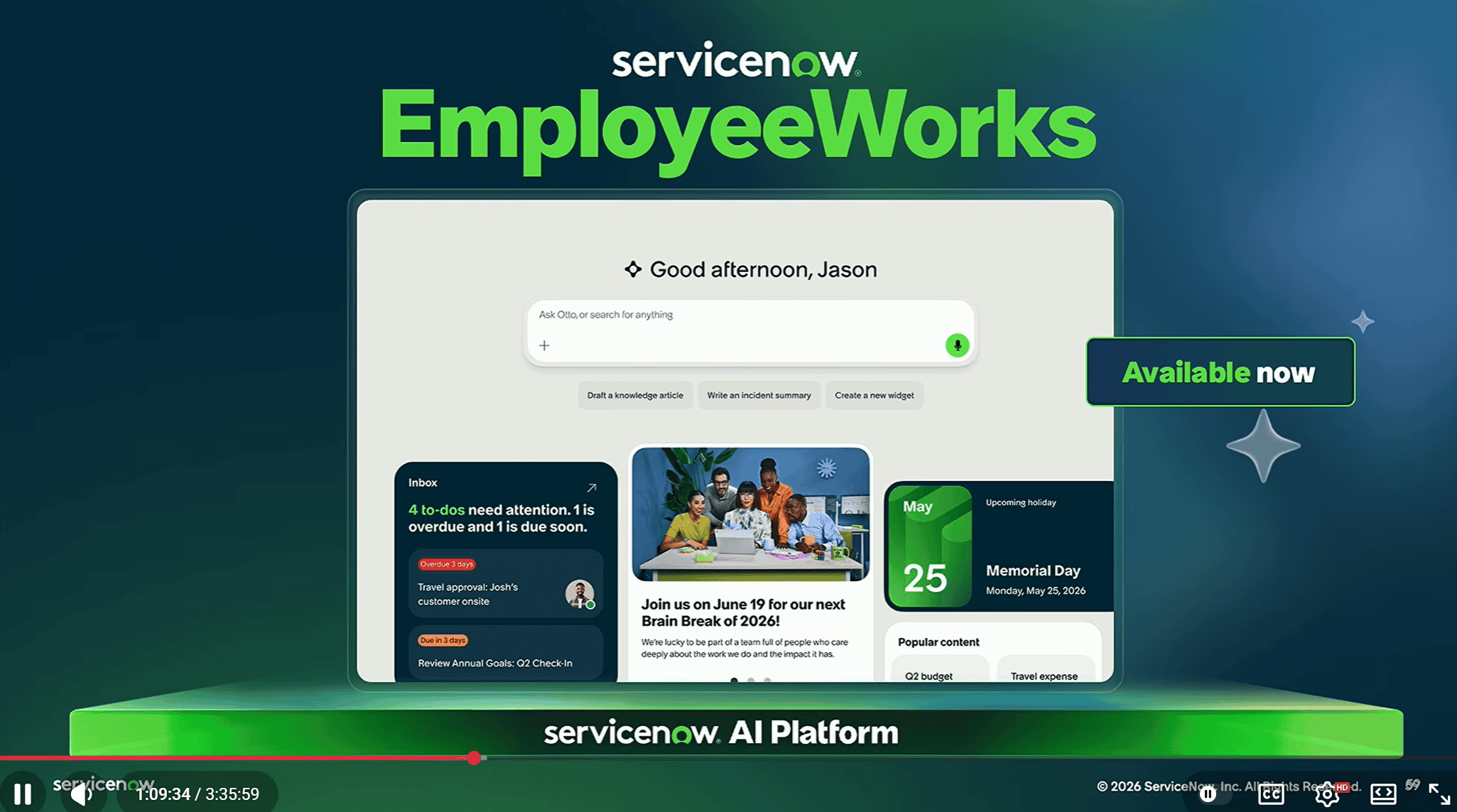
ServiceNow is also reinventing its Now Assist offering as "Otto," positioning it as the "Front Door" to any enterprise resource. This strategy mirrors Workday’s introduction of "Sana" as its enterprise gateway. Otto, which integrates with Moveworks, aims to provide a friendly, persona-driven interface for employees to interact with AI for a wide range of needs, from search and knowledge management to broader employee support.
The rebranding of Now Assist to Otto signifies a strategic shift towards enhancing the overall employee experience. Bhavin Shah, founder of Moveworks, now leads the Otto initiative, which is being marketed under the broader "EmployeeWorks" umbrella. This rebranding aims to move away from the more functional, and perhaps less engaging, term "Employee Self-Service" towards a more intuitive and supportive interaction model.
While Otto is positioned as a central employee agent, the complexity of the Employee Experience (EX) platform market cannot be underestimated. A truly effective EX platform must integrate a wide array of functionalities, including communication, community building, training, surveys, and support for various employee needs across different departments like IT, HR, and general operations. ServiceNow acknowledges that Otto will require extensive integrations to handle diverse scenarios, including critical situations like crisis management, where AI agents may need to support employees facing personal emergencies, power outages, or geopolitical conflicts. The competitive landscape for EX platforms is fierce, with major players like Microsoft, Zoom, and various Human Capital Management (HCM) vendors actively vying for market share.
The AI Control Tower: Governance, Security, and ROI
A pivotal component of ServiceNow’s new strategy is the "AI Control Tower," a vision for a comprehensive system to "discover, observe, govern, and secure enterprise AI." This ambitious platform aims to go beyond mere monitoring and provisioning of AI agents. It seeks to actively compute the ROI of AI deployments, identify agents that are misbehaving or exceeding operational costs (e.g., excessive token consumption), and provide autonomous detection and mitigation of threats, such as prompt injection attacks.
The AI Control Tower’s capabilities are reminiscent of early enterprise management systems, such as IBM’s SystemView, which aimed to manage every aspect of a proprietary network. ServiceNow’s vision, as articulated by CEO Bill McDermott, is to manage the entire enterprise landscape: every identity, agent, workflow, and person. This comprehensive approach, while bold, faces the perennial challenge of balancing IT control with human judgment. While IT departments may be drawn to the promise of absolute control, the nuanced reality of employee decision-making, often guided by "what they think is best," requires a more adaptable approach. The Ritz Carlton’s renowned service model, which empowers employees to use their best judgment, serves as a reminder that not every interaction can or should be rigidly managed.
The Autonomous Workforce: Defining AI Roles
ServiceNow is also introducing "The ServiceNow Autonomous Workforce," a set of predefined "AI Specialists" designed to perform autonomous work across various business functions. This initiative aims to address the nascent challenge of naming and defining the roles that AI agents will occupy within organizations. Examples of these AI Specialists include Site Reliability AI Specialist, HR Service Delivery AI Specialist, and Enterprise Architecture Specialist.
This concept aligns with the broader trend of defining agent capabilities, similar to the categorization of agents as "action-takers," "rule-setters," and "observers/monitors." Such predefined roles could streamline the adoption of AI by providing clear starting points for companies looking to automate or augment specific functions. For instance, HR departments could leverage AI Specialists for tasks like DEI analysis, compliance monitoring, employee engagement tracking, or pay equity advocacy. The development of these specialized agents could centralize complex, data-intensive tasks, potentially freeing up human employees for more strategic and nuanced work.
The Galileo platform, integrated as an add-on feature to Otto, acts as a "digital HR consultant," further supporting this vision by providing AI-powered assistance for HR functions. The company anticipates that as AI agents become more sophisticated, they may even begin to self-name based on their capabilities.
The Context Engine: Unifying Enterprise Operations
Complementing these announcements is the introduction of the ServiceNow Context Engine. This layer aims to identify and locate existing business rules and metadata across enterprise systems, providing a unified view of operational processes. By integrating data from various sources, including ERP systems, the Context Engine builds a "graph of graphs," combining knowledge, action, asset, and decision graphs. This aims to create a dynamic, learning system that understands how a business operates through each interaction.
This move into context and semantic layers places ServiceNow in direct competition with offerings like Microsoft’s WorkIQ and Gloat’s Loomra, which also focus on understanding and leveraging enterprise data for AI applications. The ability to integrate disparate data sources and business rules is crucial for building intelligent agents that can execute complex tasks reliably.
Implications for the Future of Software Revenue and Work
ServiceNow’s aggressive expansion into the AI management and governance space signals a significant shift in how enterprise software will be monetized. The company’s goal of doubling revenue suggests a move away from traditional per-seat licensing towards usage-based models, where revenue is tied to the volume and complexity of AI agent interactions. This "software is a service" model, driven by agent usage, is a trend embraced by other major players like Workday, Oracle, and SAP.
The emergence of dedicated AI services companies, such as Anthropic’s partnership with Blackstone and OpenAI’s joint venture, further underscores this trend. These collaborations aim to build integrated AI products and services, reflecting a broader industry pivot towards monetizing AI capabilities through service-oriented offerings.
However, the economic case for such extensive AI infrastructure investment remains a subject of debate. While AI promises to automate tasks and potentially reduce labor costs, the cost of AI token fees and the infrastructure to manage them must be weighed against the benefits. As seen with Uber’s decision to reduce reliance on certain software agents in favor of human labor, the cost-effectiveness of AI is not always guaranteed.
The ultimate impact of these developments on the nature of work is a complex question. While the goal is often framed as "automating work," a more transformative outcome might be to "transform work" by augmenting human capabilities. The vision of AI agents liberating humans to think bigger and more clearly aligns with the idea that AI should enhance, rather than simply replace, human potential. As ServiceNow, Microsoft, Workday, and others continue to innovate, the enterprise landscape is set to be reshaped by the integration of intelligent agents, demanding a careful balance between technological advancement and human-centric work design.







