
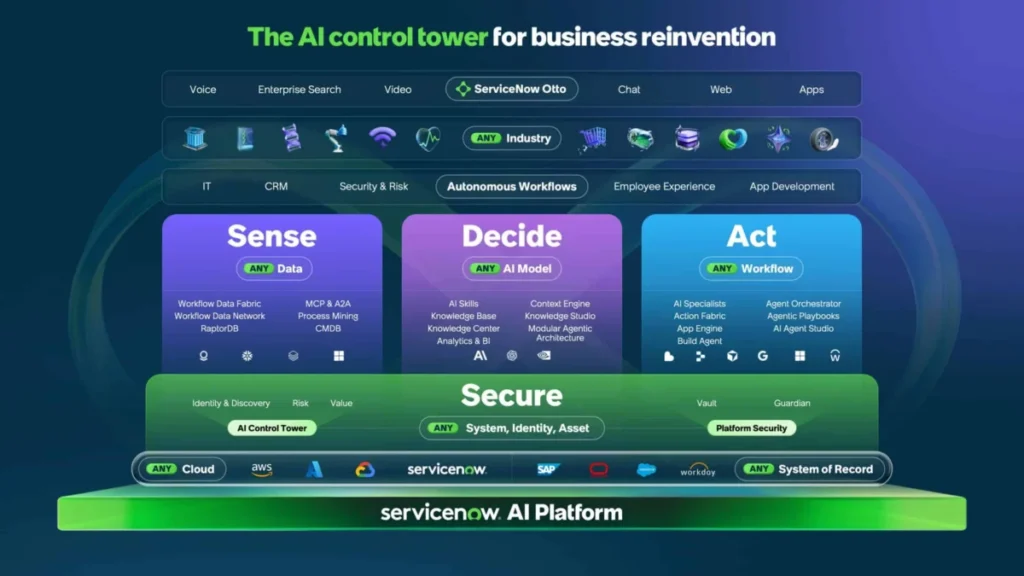
ServiceNow has launched a comprehensive suite of announcements, signaling its aggressive push to capture the burgeoning enterprise AI agent market. The company aims to become the central hub for managing, securing, and providing access to every AI agent deployed within an organization, a strategy that underpins its ambitious goal of doubling its revenue to $30 billion within the next four years. This strategic pivot positions ServiceNow not just as a workflow automation provider, but as a critical gatekeeper and enabler for the future of enterprise AI, a move that coincides with similar plays by major tech rivals like Microsoft and Workday.
The company’s vision, articulated through new product introductions and strategic frameworks, centers on transforming what it terms "enterprise AI chaos" into a state of "control." This is a direct response to the rapidly expanding, and often fragmented, landscape of AI agents and models being adopted by businesses. ServiceNow’s approach, which some industry observers have dubbed the "tollgate for agents," proposes a robust management and governance layer designed to ensure security, compliance, and operational efficiency.
The "Action Fabric": ServiceNow’s Central Control Layer
At the heart of ServiceNow’s new strategy is the "Action Fabric," described as a monitoring and management layer for all AI agent activities. This framework is designed to be agnostic to the specific AI models or agent developers, allowing any AI agent to connect via its proprietary MCP server. This open approach, mirroring commitments from Microsoft’s "Agent 365" and Workday’s "Agent System of Record," aims to foster broad adoption.
Key features of the Action Fabric include:
- Universal Agent Compatibility: The platform supports "any agent, any model," regardless of origin. This means organizations can integrate AI agents from various vendors without being locked into a single ecosystem.
- Open Integration Frameworks: Management tools within the Action Fabric can be invoked by external agents, enabling the automation of management scenarios and the seamless integration of third-party management solutions.
- Robust Security and Governance: All agents connected to the fabric undergo authentication, permission scoping, auditing, and continuous monitoring. This provides organizations with "full control" and "full trust" over their AI deployments.
This initiative leverages ServiceNow’s two decades of investment in its foundational platform, including its Configuration Management Database (CMDB), Workflow Data Network, pre-configured business rules, Security Center, and identity and access management capabilities. This existing infrastructure provides a solid backbone for managing complex enterprise AI ecosystems.
Competitor Landscape: A Race for AI Dominance
ServiceNow’s aggressive move into AI agent management is not occurring in a vacuum. Both Microsoft and Workday are pursuing parallel strategies to establish themselves as central platforms for AI-driven enterprise operations.
- Microsoft’s Approach: Microsoft is betting heavily on its Microsoft 365 Copilot and Azure AI infrastructure to become the de facto standard for enterprise AI. Its vision encompasses an integrated platform that manages AI agents across its extensive suite of productivity and business applications.
- Workday’s Strategy: Workday, a leader in HR and financial management, is evolving from a "system of record" to a "platform of agents." Its "Agent System of Record" and "Agent Gateway" aim to provide a controlled environment for external AI agents to interact with Workday’s core data and business logic, with a focus on governance and security.
SAP is also making similar moves, emphasizing the use of its Business Accelerator Hub for AI agents to access its business rules, with usage-based metering. The choice between these platforms will likely hinge on an organization’s existing investment in specific vendor ecosystems, the complexity of their business rules, and their preferred development environments for AI agents.
"Otto": The New Front Door to Enterprise AI and Employee Experience
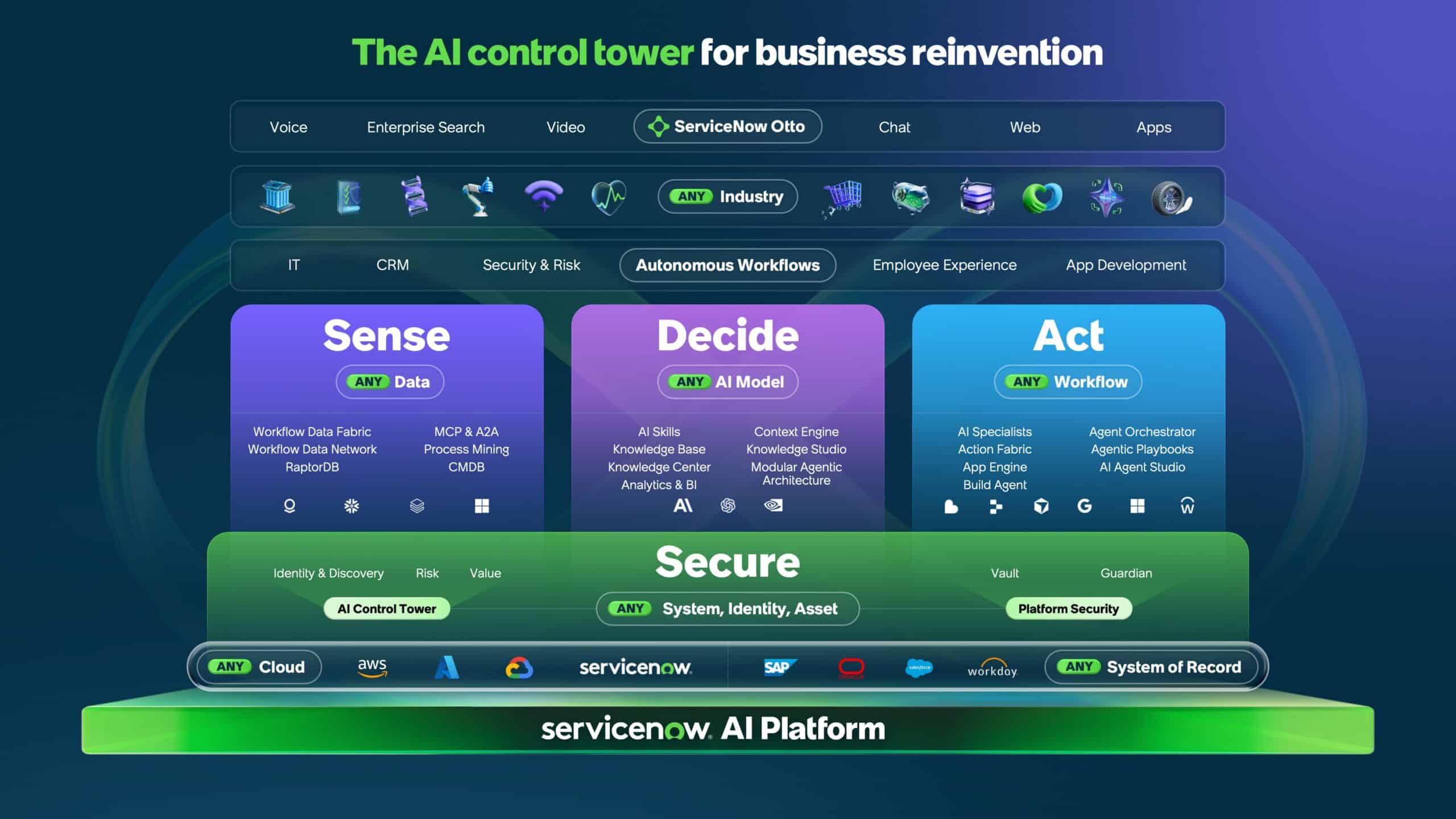
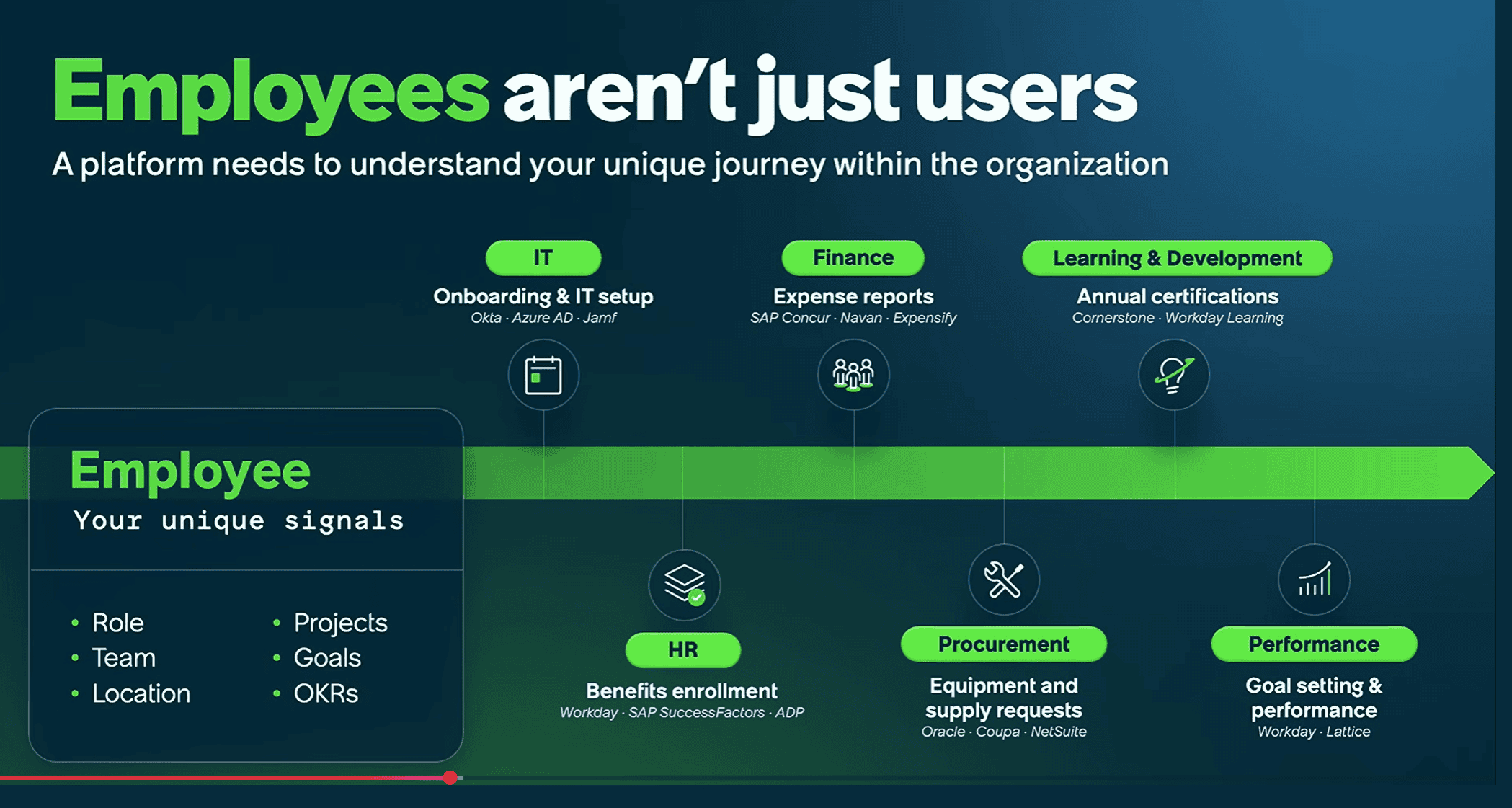
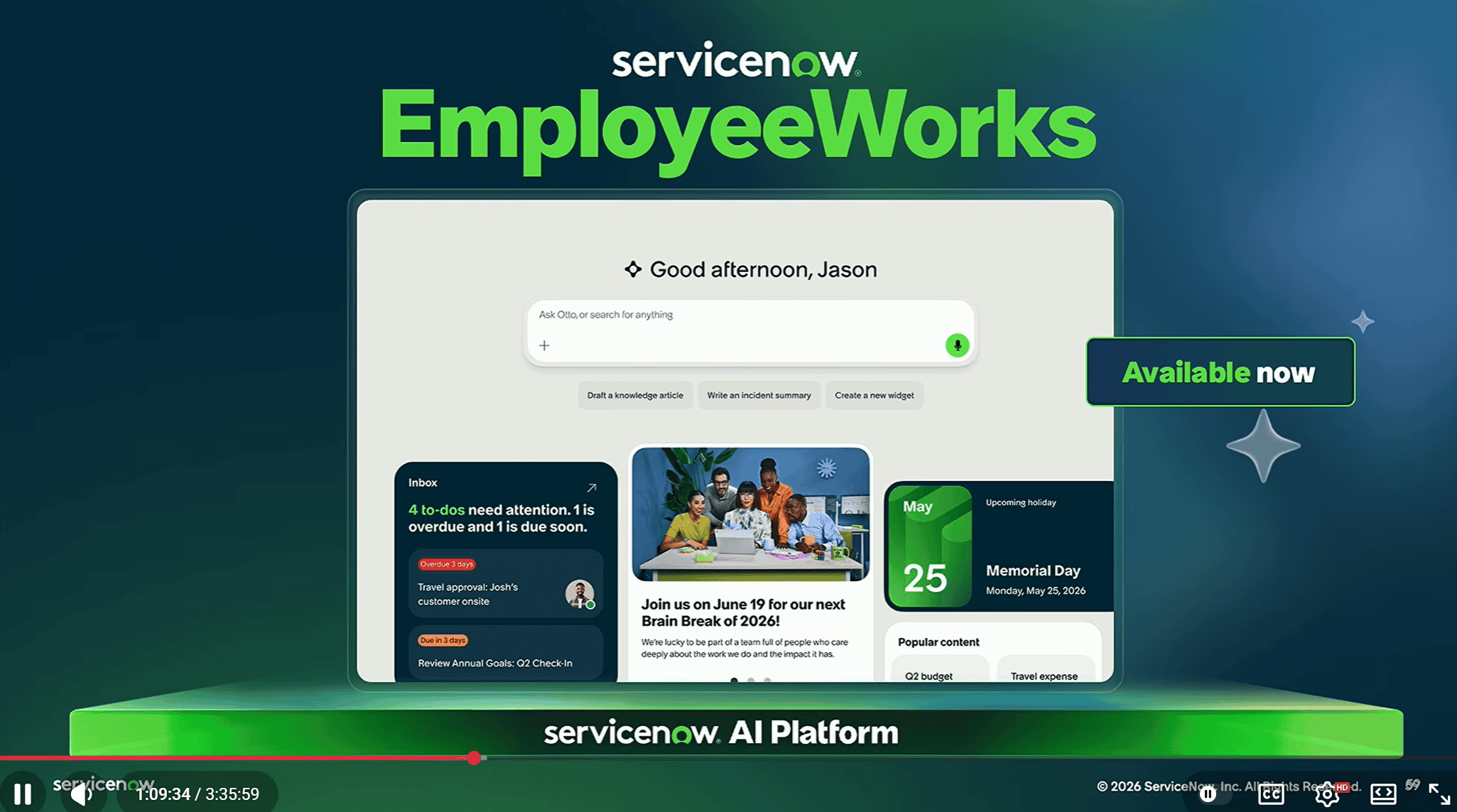
ServiceNow is also reinventing its "Now Assist" capabilities, rebranding and integrating them into a persona named "Otto." This initiative aims to create a unified "Front Door to the Enterprise" for employees, similar to Workday’s "Sana" offering. Otto is designed to serve as a conversational interface for a wide range of employee needs, from IT support and knowledge management to HR inquiries and task automation.
The integration of Moveworks technology into Now Assist, now branded as Otto, positions it as a key component of ServiceNow’s broader Employee Experience (EX) strategy. The company is rebranding this integrated offering as "EmployeeWorks," signaling a departure from the traditional "Employee Self-Service" model towards a more proactive and personalized employee support paradigm.
Bhavin Shah, founder of Moveworks, now leads the Otto initiative, emphasizing its open nature and its role in defining the future of employee interaction with enterprise systems. While Otto aims to be a friendly, intuitive employee tool, the underlying challenge of integrating diverse employee needs with complex enterprise systems remains significant. The success of Otto will depend on its ability to seamlessly connect with a multitude of other systems and provide comprehensive support across various employee functions, a complex undertaking that many existing EX platforms are still striving to achieve.
The integration of Galileo, ServiceNow’s "digital HR consultant," into Otto further strengthens its capabilities, particularly in the HR domain. Galileo’s ability to act as an AI-powered HR expert can now be accessed through Otto, providing a more sophisticated and integrated employee experience.
The AI Control Tower: Governance and ROI for Enterprise AI
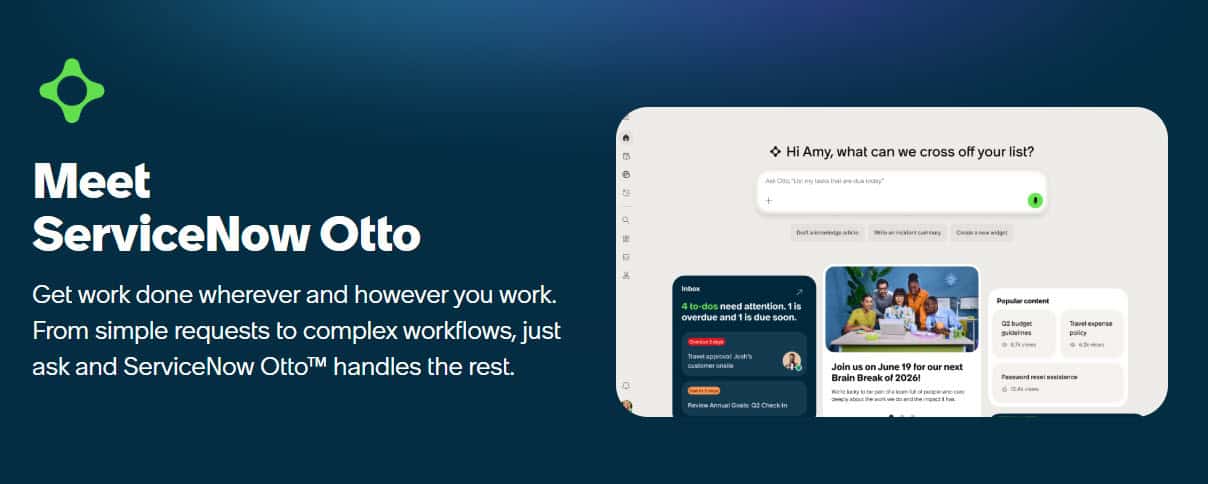
A critical component of ServiceNow’s strategy is the "AI Control Tower," a vision for an expansive platform that goes beyond mere monitoring and provisioning of AI agents. The AI Control Tower aims to:
- Discover and Observe: Identify and catalog all AI agents and models deployed within an organization.
- Govern and Secure: Enforce security policies, access controls, and compliance regulations across all AI deployments.
- Measure ROI: Analyze the value and impact of AI agents, identifying those that are delivering tangible business benefits and those that may be underperforming or incurring excessive costs.
- Detect Anomalies: Identify and flag potential issues such as "hallucinations" (inaccurate or nonsensical outputs) or operational inefficiencies.
This comprehensive approach echoes historical enterprise management tools, such as IBM’s SystemView, which sought to provide unified control over complex IT environments. The AI Control Tower’s ability to detect and mitigate threats, such as a recent demonstration showcasing the autonomous neutralization of a prompt injection attack on a pricing agent by integrating signals from security partners like Veza, Armis, Cisco AI Defense, and CrowdStrike, highlights its potential value proposition for IT departments concerned about AI security.
However, the emphasis on "monitoring and managing every decision" raises questions about the balance between control and employee autonomy. While the AI Control Tower offers significant benefits for IT governance, the human element of decision-making and empowered judgment, as exemplified by service-oriented businesses like The Ritz-Carlton, remains a crucial consideration.
The ServiceNow Autonomous Workforce: Predefined AI Specialists
ServiceNow is also introducing "The ServiceNow Autonomous Workforce," a set of predefined "AI Specialists" designed to perform autonomous work across various business functions. This initiative aligns with the evolving understanding of AI agents as specialized workers capable of taking on specific roles.
Examples of these AI Specialists include:
- Site Reliability AI Specialist
- AI Operations Specialist
- Level 1 Service Desk Specialist
- HR Service Delivery AI Specialist
- Case Management Specialist
- Third-party Screening Specialist
- Enterprise Architecture Specialist
- Vulnerability Exposure Specialist
This move is reminiscent of discussions around the future of work, where AI agents are expected to fill specific job functions, potentially leading to a redistribution of tasks and responsibilities. The company’s "HR 2030 Blueprint" categorizes agents into those that "take action," "set rules," and "observe and monitor," providing a framework for defining these new AI roles. While ServiceNow is providing initial role definitions, the dynamic nature of AI suggests that agents may eventually self-identify their capabilities and optimal roles based on their performance and learned expertise.
The Context Engine: Unifying Enterprise Operations
The introduction of the ServiceNow "Context Engine" represents another significant strategic pillar. This engine acts as a contextual layer that identifies and locates existing system business rules and metadata, providing a unified view of enterprise operations. By integrating organizational structure, privacy rules, and various business workflows, the Context Engine aims to create a "graph of graphs," combining knowledge, action, asset, and decision graphs into a massive, interconnected network.
This sophisticated data integration and analysis capability positions ServiceNow to compete directly with offerings like Microsoft WorkIQ and Gloat’s Loomra, which are also focused on providing context and semantic understanding within enterprise AI. The Context Engine’s ability to "grow smarter about how a business works with each action" signifies a move towards a more dynamic and adaptive understanding of enterprise operations. The integration of "autonomous data analytics" through an AI Analyst Specialist further enhances its ability to maintain data integrity and derive insights.
Redefining the Enterprise Software Revenue Model
ServiceNow’s expansive AI strategy is fundamentally tied to its goal of redefining enterprise software revenue models. The company, along with competitors like Workday, Oracle, and SAP, recognizes the shift from per-seat licensing to usage-based monetization, particularly through AI agent interactions. This represents a potential trillion-dollar opportunity for software companies, driven by the increasing adoption of AI-powered services.
The emergence of new ventures, such as Anthropic’s partnership with Blackstone and OpenAI’s joint venture for AI services, underscores the industry’s focus on developing integrated AI products and services that replace traditional human-led workflows. This new paradigm, where "software is a service" and fees are driven by agent usage, has the potential to significantly alter the economic landscape of enterprise technology.
Implications and the Future of Work
ServiceNow’s ambitious plans highlight the profound transformation underway in the enterprise technology landscape. The company’s strategy to provide comprehensive management, security, and access control for AI agents positions it as a potential central orchestrator of enterprise AI.
However, the economic viability of these new infrastructure investments will be a key factor. As the market for AI agents is still nascent, the willingness of IT departments to invest heavily in management and governance tools before widespread application adoption remains to be seen. The ongoing debate about AI versus human labor, as evidenced by companies re-evaluating the cost-effectiveness of AI agents compared to human workers, adds another layer of complexity to this economic calculus.
Ultimately, the success of ServiceNow’s strategy will depend not only on its technological prowess but also on its ability to demonstrate clear business value and ROI to its customers. The company’s focus on "transforming work" rather than merely "automating work" suggests a deeper intent to fundamentally reshape how businesses operate. The ongoing evolution of the enterprise AI market, with its intense competition and rapid innovation, will continue to shape the trajectory of companies like ServiceNow, Workday, and Microsoft as they vie for leadership in this transformative era.







