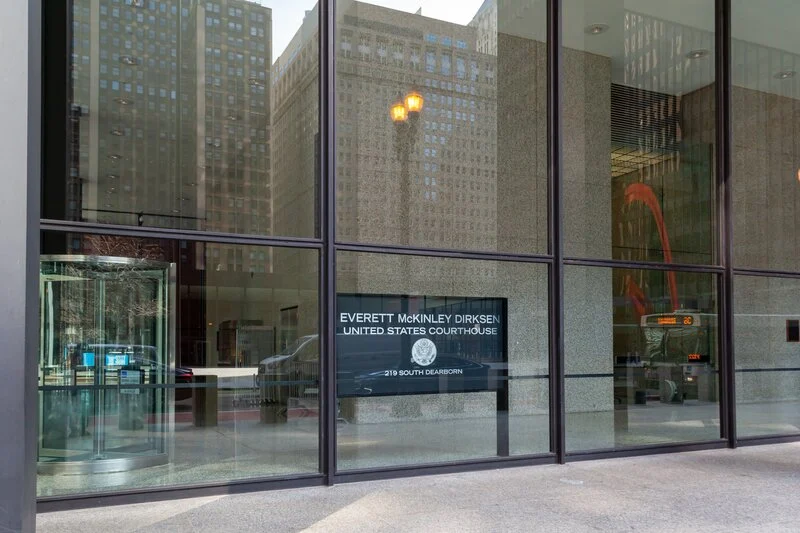
The United States Court of Appeals for the Seventh Circuit on Friday signaled significant skepticism toward a legal challenge brought by business advocacy groups against an Illinois law that prohibits employers from mandating worker attendance at meetings focused on religious or political matters, including labor unions. During oral arguments in Chicago, a three-judge panel focused heavily on the threshold issue of standing, questioning whether the plaintiffs—comprising various interest groups representing Illinois employers—had demonstrated a concrete injury sufficient to maintain their suit in federal court. One member of the panel characterized the groups’ claims of imminent harm as being built upon a "series of ifs," suggesting the litigation may be premature given that the law has yet to be enforced against the specific entities involved.
The legislation at the heart of the dispute is the Illinois Worker Freedom of Speech Act, which was signed into law by Governor JB Pritzker and became effective on January 1, 2025. The law seeks to protect employees from being forced by their employers to listen to speech regarding the employer’s opinions on "political or religious matters" under threat of termination or discipline. In the context of labor relations, this encompasses "captive audience meetings," a long-standing tactic used by management during union organizing drives to communicate the company’s position on collective bargaining.
The Core of the Legal Dispute: Standing and the "Series of Ifs"
The primary hurdle for the appellants—the Illinois Chamber of Commerce and the Associated Builders and Contractors—appears to be the constitutional requirement of standing under Article III. To sue in federal court, a plaintiff must demonstrate an "injury-in-fact" that is concrete, particularized, and actual or imminent, rather than conjectural or hypothetical.
During Friday’s proceedings, the Seventh Circuit judges pressed the plaintiffs’ counsel on whether any member of their organizations had actually been penalized under the law or if the state had taken any concrete steps toward enforcement against them. The panel noted that the law’s enforcement mechanism relies on complaints filed by employees or investigations initiated by the Illinois Department of Labor.
"Your entire argument rests on a series of ifs," one judge remarked during a particularly pointed exchange. "If an employer chooses to hold a meeting, if that meeting covers topics deemed political or religious under the statute, if an employee objects or refuses to attend, and if the employer then takes an adverse action that triggers a state investigation—only then does a conflict arise. We are being asked to strike down a state statute based on a chain of events that has not yet occurred."
Counsel for the business groups argued that the law creates an immediate "chilling effect" on protected speech. They contended that employers are already self-censoring and canceling planned informational sessions out of fear of litigation and steep civil penalties, which can reach $1,000 per violation. This "self-censorship," the groups argued, constitutes a present injury that justifies judicial intervention before the state treasury begins collecting fines.
Background: The Rise of the Worker Freedom of Speech Act
The Illinois Worker Freedom of Speech Act (SB 3649) followed a growing national trend of Democratic-led states seeking to curtail employer influence during labor disputes. Illinois joined states such as Connecticut, Minnesota, New York, Maine, and Oregon, which have passed similar measures over the last several years.
Proponents of the law, including labor unions like the AFL-CIO and the SEIU, argue that captive audience meetings are inherently coercive. They maintain that the economic power imbalance between an employer and an employee makes a "request" to attend a meeting an implicit command. By banning mandatory attendance, the law aims to ensure that employees can opt out of speech that is not related to their core job duties without fearing for their livelihoods.
Conversely, business organizations view these laws as a direct infringement on their First Amendment rights and a violation of the National Labor Relations Act (NLRA). They argue that the NLRA, a federal statute, preempts state laws regarding labor relations. Under Section 8(c) of the NLRA, employers are generally permitted to express views, arguments, or opinions on unionization, provided such expressions contain no threat of reprisal or promise of benefit.
Chronology of the Litigation
The legal battle over the Illinois law has moved swiftly through the federal system:
- May 2024: The Illinois General Assembly passes SB 3649, the Worker Freedom of Speech Act, amid heavy lobbying from both labor unions and business chambers.
- August 2024: Governor JB Pritzker signs the bill into law, with an effective date of January 1, 2025.
- November 2024: A coalition of business groups files a lawsuit in the U.S. District Court for the Northern District of Illinois, seeking a preliminary injunction to block the law’s implementation. They argue the law is unconstitutional under the First and Fourteenth Amendments and preempted by federal labor law.
- February 2025: The District Court dismisses the lawsuit, ruling that the plaintiffs lacked standing because they had not shown a specific, non-speculative threat of enforcement. The court characterized the challenge as a "pre-enforcement" action that did not meet the rigorous standards for Article III standing.
- March 2025: The plaintiffs file an appeal with the Seventh Circuit Court of Appeals.
- September 18, 2026: Oral arguments are held before the Seventh Circuit panel, where judges express skepticism regarding the "ripeness" of the case.
Supporting Data and the National Context
The outcome of the Seventh Circuit’s decision could have sweeping implications for labor law across the United States. According to data from the National Labor Relations Board (NLRB), captive audience meetings are used in nearly 90% of all union election campaigns. Labor advocates argue these meetings are the most effective tool in the "employer playbook" to discourage unionization.
The legal landscape has also been shifted by federal administrative policy. Jennifer Abruzzo, the General Counsel of the NLRB, issued a memorandum in 2022 arguing that captive audience meetings are inherently a violation of the NLRA. While the Board itself has not yet formally overturned decades of precedent (specifically the 1948 Babcock & Wilcox decision) that allows such meetings, the General Counsel’s stance has emboldened states to pass their own bans, banking on a shift in federal interpretation.
In Illinois, the Department of Labor has reported a significant uptick in inquiries regarding the law since January 2025, though official enforcement actions remain few. Business groups cite this uncertainty as a primary driver of their litigation. "The law is intentionally vague," said a spokesperson for the Illinois Chamber of Commerce in a statement following the hearing. "By leaving terms like ‘political matters’ open to broad interpretation, the state has effectively silenced employers who simply wish to discuss the economic realities of their industry with their staff."
Official Responses and Arguments
The Illinois Attorney General’s office, representing the state, defended the law before the Seventh Circuit by emphasizing the narrowness of the statute. State attorneys argued that the law does not ban speech; rather, it bans the compulsion of speech.
"An employer is free to hold a meeting and speak about any topic they wish," the state argued. "What they cannot do is use the threat of termination to force a captive audience to listen. This is a labor protection, not a speech restriction. Furthermore, until the plaintiffs can show a member who has actually been targeted for enforcement, this court has no jurisdiction to act."
Labor organizations have also weighed in, filing amicus briefs in support of the state. The Illinois AFL-CIO released a statement asserting that "the era of workplace intimidation is over. Workers deserve the right to do their jobs without being subjected to partisan or anti-union lectures that have nothing to do with their professional responsibilities."
Broader Impact and Legal Implications
If the Seventh Circuit dismisses the case on standing grounds, it would provide a temporary victory for the state of Illinois but would leave the door open for future challenges once an enforcement action is actually taken. However, if the court reaches the merits of the case, it must grapple with the complex doctrine of "Garmon preemption."
Named after the Supreme Court case San Diego Building Trades Council v. Garmon, this doctrine generally holds that states cannot regulate activity that the NLRA "arguably" protects or prohibits. Because the NLRA has historically protected an employer’s right to hold these meetings, many legal scholars believe that state-level bans are on shaky constitutional ground.
A decision against the business groups could encourage more states to pass similar "Worker Freedom" laws, potentially creating a patchwork of labor regulations across the country. Conversely, a ruling that the law is preempted by federal law would likely lead to the invalidation of similar statutes in Connecticut, New York, and elsewhere, setting up a potential showdown in the U.S. Supreme Court.
As the legal community awaits the Seventh Circuit’s written opinion, the "series of ifs" identified by the panel remains the central pivot point. For now, Illinois employers must navigate a legal environment where the right to mandate attendance at informational meetings remains in a state of precarious limbo. The court is expected to issue its ruling within the next three to six months, a decision that will either solidify the state’s power to regulate workplace speech or signal a significant win for employer advocates seeking to maintain traditional management prerogatives.