

The global educational landscape is currently navigating a fundamental shift as artificial intelligence transitions from a specialized technical novelty to a standard professional requirement. In this environment, the marketing of AI training courses has reached a point of saturation where generic messaging, such as the command to "Learn AI," no longer yields the conversion rates seen in the early 2020s. To succeed in the 2025 and 2026 market, providers must pivot toward a value-centric model that emphasizes specific workplace outcomes, role-based utility, and measurable productivity gains. This evolution reflects a broader trend in the global economy where the focus is moving from theoretical awareness of large language models to the practical integration of automated workflows within established industries.
The Evolution of the AI Training Market: A Chronology of Demand
The trajectory of AI education can be categorized into three distinct phases. The first phase, beginning roughly in late 2022 with the public release of generative AI tools, was defined by "curiosity-driven enrollment." During this period, learners sought to understand what the technology was and how it functioned. Marketing was simple, often relying on the sheer novelty of the tools.
The second phase, spanning 2023 and 2024, saw the rise of "prompt engineering" and general literacy. This era was marked by a massive influx of independent creators and bootcamps promising rapid mastery of AI tools. However, as the novelty faded, the market became crowded, leading to a decline in the effectiveness of broad-based training programs.
Entering 2025 and looking toward 2026, the market has entered the "integration and specialization" phase. Professional learners and corporate entities now demand training that is deeply embedded in specific job functions, such as human resources, legal compliance, or instructional design. The World Economic Forum’s Future of Jobs Report 2025 highlights this shift, noting that while 78 million new job opportunities are expected to emerge by 2030, there is an urgent need for upskilling to prepare the global workforce for these roles. The report found that 77% of employers are planning to upskill their workforce in response to AI-related changes, yet 63% identified the existing skills gap as the primary barrier to business transformation.

Analyzing the Dichotomy of the AI Training Buyer
Effective marketing in this sector requires a sophisticated understanding of two distinct buyer personas: the individual professional and the corporate decision-maker. These two groups operate on different timelines and are motivated by vastly different sets of data.
For the individual learner, the primary drivers are employability and career longevity. In a market where job descriptions increasingly list "AI proficiency" as a requirement, the individual is looking for a signal of competence. Marketing to this group must emphasize career prospects, the validation of skills through certification, and the immediate reduction of daily workloads. They are often swayed by social proof, such as reviews from peers and the visible authority of the instructor on platforms like LinkedIn.
Conversely, the corporate buyer—which includes Learning and Development (L&D) directors, Chief Human Resources Officers (CHROs), and executive sponsors—is focused on organizational impact. They are not merely buying a course; they are investing in a strategy to reduce operational costs, enhance governance, and ensure that AI adoption does not expose the company to legal or security risks. For these buyers, the decision-making cycle is longer and involves multiple stakeholders, including procurement and IT departments, who evaluate the scalability and data privacy standards of the training provider.
Transitioning from Syllabus-Based to Outcome-Based Messaging
A critical error in contemporary AI course marketing is the tendency to list modules—such as "Introduction to LLMs" or "Advanced Prompting"—rather than articulating the transformation the learner will undergo. High-performing marketing strategies now focus on the "marketable outcome."
Instead of promoting a syllabus, successful providers are highlighting how a participant will be able to produce higher-quality outputs with fewer revisions, or how a manager can prioritize viable AI investments based on a proven strategic framework. For example, a "Role-Based Workshop for HR Teams" is significantly more attractive to a department head than a general "AI for Business" course. The former promises to solve specific problems, such as automating repetitive administrative tasks while maintaining strict adherence to data protection regulations.
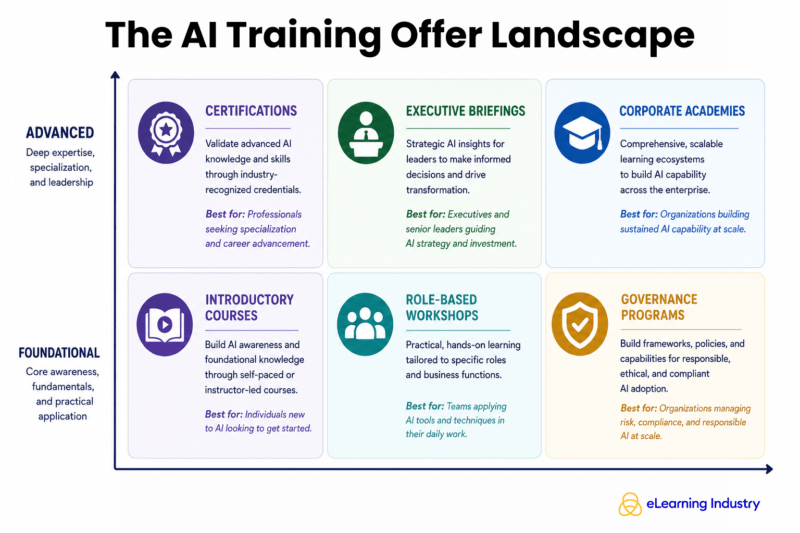
This shift necessitates a "Positioning Formula" that combines AI capability with a priority persona and a measurable outcome. A practical application of this would be: "An AI-driven workflow training for instructional designers that reduces course development time by 40% while maintaining pedagogical integrity."
The Strategic Importance of Multi-Channel Distribution
As traditional search engine optimization (SEO) evolves into Generative Engine Optimization (GEO), the way potential students discover AI courses is changing. Users are increasingly using AI-powered search engines and chatbots to ask specific questions like, "What is the best AI certification for a mid-level marketing manager?"
To capture this traffic, providers must ensure their course information is structured in a way that is easily interpreted by both traditional search engines and AI systems. This includes clear statements regarding prerequisites, duration, cost, and the specific credentials of the instructors.
Furthermore, LinkedIn has emerged as the premier platform for B2B and professional education marketing. However, the strategy has moved beyond simple advertisements. Thought leadership—sharing insights into the future of the industry, demonstrating real-world AI workflows, and providing "before and after" case studies—is now the most effective way to build the trust necessary for high-ticket enrollment. A "full-funnel" approach on LinkedIn involves educating the audience about the "capability gap" weeks before a course launch, effectively priming the market before asking for a financial commitment.
Consultative Selling in the Corporate Sector
Selling AI training to large organizations requires a consultative approach. Corporate buyers are often overwhelmed by the pace of technological change and are looking for partners who can help them navigate the complexity. The sales process should ideally begin with a "Training Needs Analysis" or an "AI Readiness Assessment." By helping a company identify exactly where its skills gaps lie, the provider positions themselves as a strategic advisor rather than a mere vendor.
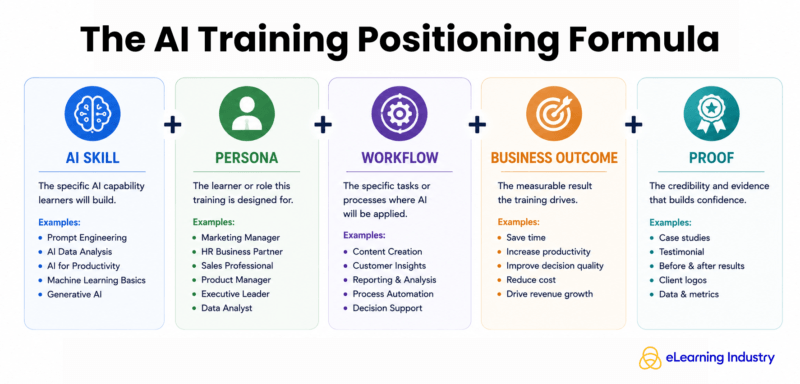
The corporate "offer ladder" often begins with a low-commitment entry point, such as an executive briefing or a pilot workshop for a single department. Once the value is proven at a small scale, it becomes much easier to secure an enterprise-wide contract for a corporate academy or a train-the-trainer program. This incremental approach reduces the perceived risk for the buyer and allows the provider to tailor the curriculum to the company’s specific technological stack and culture.
Establishing Credibility through Google’s EEAT Standards
In an era where AI-generated content is ubiquitous, the human element of expertise has become more valuable. Following Google’s EEAT (Experience, Expertise, Authoritativeness, and Trustworthiness) guidelines is essential for any training provider.
Credibility is no longer established by a large follower count alone. Instead, it is built through detailed biographies that showcase genuine professional experience, published frameworks that have been tested in the field, and a transparent policy for updating course materials as the technology evolves. Buyers are looking for instructors who have "done the work"—professionals who can demonstrate how they use AI to solve complex problems in their own careers.
Broader Economic Impact and Future Implications
The rapid scaling of AI training is not just a commercial opportunity; it is a macroeconomic necessity. As AI continues to automate routine cognitive tasks, the value of the human worker will increasingly reside in their ability to manage, audit, and direct these AI systems. This shift is expected to lead to a significant redistribution of labor across the global economy.
Organizations that fail to implement comprehensive AI upskilling programs risk falling behind in terms of operational efficiency and talent retention. Employees who do not seek out specialized training may find their roles diminished or obsolete. Therefore, the marketing of AI courses carries a significant weight of responsibility. Providers must move away from "hype-based" urgency—such as claiming that "AI will take your job tomorrow"—and move toward "utility-based" urgency, highlighting the competitive advantages of being an early and proficient adopter.
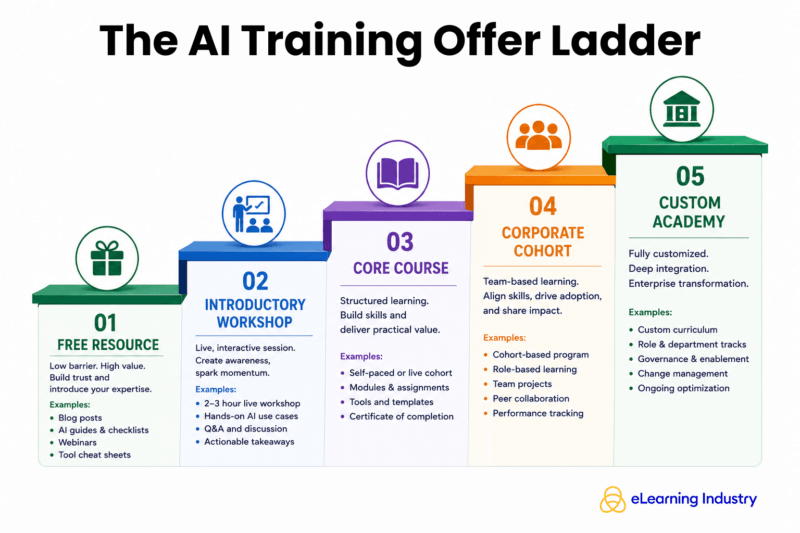
In conclusion, the successful marketing of AI training courses in 2025 and beyond requires a departure from the generic and a move toward the specific. By focusing on role-based outcomes, building credibility through transparent expertise, and utilizing a consultative sales model for corporate clients, training providers can differentiate themselves in a crowded marketplace. The goal is no longer to teach people about AI, but to empower them to work alongside it in a way that enhances their professional value and organizational impact.






