
The fundamental role of a job description extends far beyond a mere listing of duties; it serves as a critical first impression, setting expectations, introducing a company’s culture and voice, and ultimately influencing a candidate’s decision to pursue an opportunity. In today’s rapidly evolving recruitment landscape, the advent of artificial intelligence has profoundly reshaped this crucial communication tool, offering unprecedented speed and efficiency. However, this technological leap has also introduced a subtle yet significant challenge: the creeping problem of homogeneity, where AI-generated content, often derived from similar prompts and vast datasets, can lead to generic language that dilutes employer branding and fails to capture the unique essence of a role or organization.
The current recruitment environment is characterized by recruiters facing mounting requisition loads and tight deadlines, making AI’s ability to produce polished drafts in minutes an invaluable asset. Yet, this very efficiency risks creating a "quiet problem," as noted in industry observations: when similar tools, prompts, and source materials are employed across numerous organizations, the resulting language tends to converge. Candidates are increasingly encountering a landscape saturated with promises of "fast-paced environments" and searches for "passionate self-starters," leading to a sense of déjà vu that can undermine genuine interest. This article delves into the transformative impact of AI on job descriptions, explores why this pervasive sameness can erode employer branding, and outlines six actionable strategies for combining the undeniable power of automation with precise, distinctly human writing to create compelling and authentic recruitment narratives.
The Accelerating Integration of AI in Recruitment
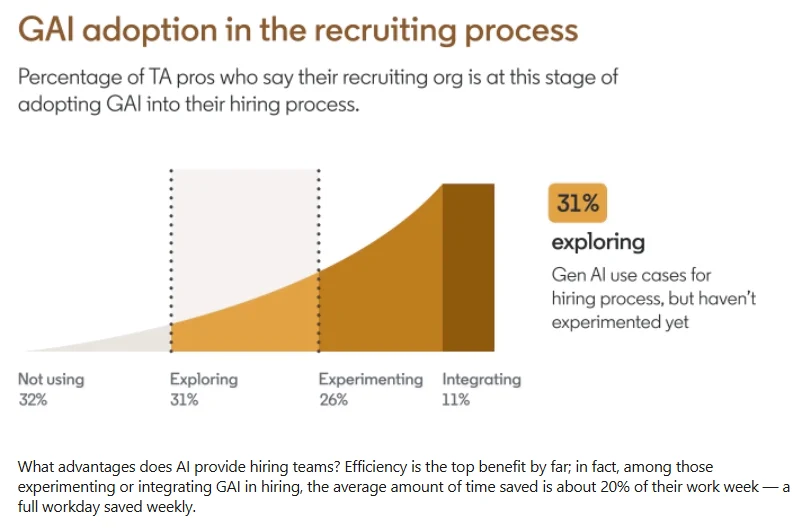
The adoption of artificial intelligence in talent acquisition is not merely a futuristic concept but a present-day reality, gaining rapid traction across various stages of the hiring pipeline. A seminal LinkedIn Future of Recruiting report highlighted this burgeoning trend, revealing that a significant 31% of talent acquisition professionals were actively exploring generative AI for hiring purposes, with another 26% already experimenting with its capabilities. The appeal is clear: those integrating or experimenting with AI reported substantial time savings, reclaiming approximately 20% of their workweek – equivalent to a full day – from previously manual or time-consuming tasks. This efficiency gain is particularly critical in an industry perpetually under pressure to optimize processes and accelerate time-to-hire.
The scope of AI’s influence now spans far beyond initial job posting creation. It has seamlessly integrated into critical recruitment functions such as candidate sourcing, initial screening, interview scheduling, and even skills assessments. Hiring teams are leveraging AI features embedded within sophisticated applicant tracking systems (ATS), standalone large language models (LLMs), specialized language checkers, and dedicated job description platforms. This widespread integration reflects a strategic shift towards automating repetitive tasks, thereby freeing human recruiters to focus on more complex, strategic, and interpersonal aspects of their roles.
Alex Byder, founder of BD Homebuyer, a cash property buyer that successfully scaled its acquisitions team using AI-driven hiring tools, offers a practical perspective on this evolution. "AI has quietly become the first draft for almost every requisition we post," Byder states. "It handles the structure, the formatting, and the baseline language, which lets our recruiters spend their energy on the parts of hiring that actually require a human touch, like understanding what a team truly needs in its next hire and engaging meaningfully with candidates." This sentiment underscores the strategic value of AI in streamlining early-stage recruitment processes, allowing for greater consistency in initial drafts and facilitating a more efficient approval process when multiple stakeholders are involved.
AI’s Multifaceted Impact on Job Description Development
Artificial intelligence is not only accelerating the pace of job description creation but also fundamentally altering its very architecture. The influence of AI can be observed in several key areas:
Faster Drafting and Editing Cycles
One of AI’s most immediate and tangible benefits is its capacity for rapid content generation. By providing a few key parameters—such as a job title, seniority level, core responsibilities, and desired tone—AI can construct a comprehensive draft within minutes. This capability is transformative for recruiters, allowing them to convert fragmented manager notes into structured overviews, detailed responsibility lists, essential qualifications, and attractive benefits sections with unprecedented speed. While a Pew Research Center study indicated that 40% of workers found AI chatbots highly helpful for completing work faster, a smaller 29% reported significant improvements in quality. This disparity serves as a crucial reminder: speed, while valuable, does not automatically equate to superior output quality.
Enhanced Consistency Across Roles and Departments
AI tools enable organizations to enforce a higher degree of consistency across dozens or even hundreds of open positions. By standardizing sections, preserving required legal language, adhering to internal approval rules, and maintaining uniform formatting, teams can ensure a consistent brand presentation while still allowing for customization of role-specific details. This consistency, however, must serve to enhance clarity and brand identity, rather than erasing the unique personality of individual roles or teams. For instance, while a finance analyst, a warehouse supervisor, and a software engineer might share common company values, their respective job descriptions should reflect distinct daily tasks, working conditions, collaborative environments, and measures of success. The challenge lies in setting a common framework that still protects the necessary room for specific, truthful role descriptions.
Skills-First and Tailored Descriptions
The shift towards a skills-first hiring approach, which prioritizes demonstrable abilities over traditional qualifications like degrees or years of experience, is greatly facilitated by AI. AI can map job responsibilities to established occupational frameworks, helping to disentangle essential skills from inherited, potentially irrelevant requirements. Furthermore, AI can dynamically adjust vocabulary and tone to suit specific job families, career levels, and target candidate audiences, making it easier to scale a skills-first methodology across an organization. This tailored approach ensures that job descriptions resonate more effectively with diverse talent pools and accurately reflect the competencies truly needed for success.
Robust Bias and Compliance Checks
AI-powered language tools offer a powerful layer of scrutiny for identifying and flagging potentially exclusionary terms, unnecessary degree prerequisites, or wording that might inadvertently discourage qualified candidates from applying. These tools can also highlight potential concerns related to pay transparency regulations or equal employment opportunity (EEO) guidelines. However, it is critical to acknowledge the limitations of automated checks. No AI model possesses a complete understanding of every local jurisdiction or nuanced contextual requirement. Consequently, human oversight remains indispensable: a person must review AI recommendations, confirm adherence to all legal standards, and critically assess whether each listed qualification is genuinely necessary for the role.
The Double-Edged Sword: Polished Yet Generic Language
While AI excels at generating grammatically correct and professionally polished language, this polish can often mask a lack of precision and specificity. Without highly detailed and unique inputs, AI models tend to revert to familiar, universally acceptable phrases that sound professional but convey little substantive information about the specific team, the direct manager, or the day-to-day realities of the work. This is precisely where the efficiency gains of AI can inadvertently lead to the problem of sameness. When job descriptions become indistinguishable, their ability to attract attention and truly differentiate an employer diminishes significantly, transforming efficiency into a liability for authentic talent attraction.
The Pervasive Problem of Homogeneity in AI-Generated Content
The tendency of AI-written job descriptions to converge on similar language is not accidental; it is an inherent characteristic of how these models operate. Generative AI models are trained on vast datasets of existing text, and their output is based on predicting the most statistically probable sequence of words given a prompt. When prompts are generic, or when the underlying training data itself contains a high frequency of certain phrases in job descriptions, the models will naturally gravitate towards these common expressions. These prevalent phrases rise to the surface not because they uniquely describe a particular workplace, but simply because they are ubiquitous in the corpus of language AI has learned from.
Consider, for example, job postings for product managers across diverse sectors such as technology, finance, and healthcare. It is not uncommon to find strikingly similar promises of "innovation," "collaboration," "competitive benefits," and "rapid growth." While these attributes may be present to some degree in all these roles, the specific decisions, the inherent risks, the regulatory environments, and the customer bases are entirely distinct. The words themselves are not inherently incorrect, but their vagueness renders them ineffective in helping a discerning candidate genuinely compare and contrast unique opportunities.
This issue extends beyond mere semantic repetition. HR.com’s Future of Recruitment Technologies 2025–26 research underscored a significant concern, with 51% of talent acquisition professionals expressing apprehension about AI potentially causing depersonalization in recruitment. This finding perfectly encapsulates the risk posed by homogenized job descriptions: while the drafting process undeniably becomes faster, the resulting language often feels less human, less specific, and critically, less connected to the actual, lived experience of the workplace.
For employers, this pervasive repetition presents a serious challenge to differentiation. If a job posting for a Head of Customer Success sounds virtually identical to a competitor’s, the organization has squandered a primary opportunity to articulate what makes its specific role, team, and mission unique. This lack of distinctiveness can lead to a less targeted applicant pool, higher rates of candidate drop-off, and ultimately, a longer time to fill critical positions.
Furthermore, the problem of homogeneity has implications for search visibility. Major search engines, including Google, prioritize "useful, original, people-first content" and explicitly warn against "repetitive material created primarily for search engines" in their spam policies. In an era where many candidates discover opportunities through organic search, a generic, AI-derived job description risks being penalized or simply overlooked, underscoring the imperative to write primarily for human candidates, not algorithms.
The Critical Impact on Employer Branding
A job description often represents the initial, extended conversation a prospective employee has with an organization’s brand. When this crucial interaction feels canned, impersonal, or indistinguishable from a dozen other postings, candidates are left to reasonably question whether the actual employee experience will feel equally generic and uninspired. This challenge isn’t confined solely to job descriptions; as AI increasingly permeates recruitment processes—from initial chatbots to automated interview scheduling—the cumulative impact on how candidates perceive a potential employer throughout their hiring journey becomes ever more significant.
Specific language is the bedrock of credibility. A compelling job description goes beyond platitudes to describe tangible realities: what unique problems the team is actively solving, the specific mechanisms by which decisions are made, the degree of autonomy afforded to the role, and concrete examples of what success looks like at the 90-day and 180-day marks. This level of detail transforms a generic outline into a vivid portrait of the prospective role.
Moreover, the language used in a job description actively shapes who feels invited and encouraged to apply. Research, such as studies published in Psycnet, has demonstrated that subtle gendered wording can significantly affect how individuals perceive the suitability of roles for themselves, highlighting the profound importance of careful language choices in fostering an inclusive applicant pool. Clear, day-to-day details also provide candidates with a more realistic preview of the role, enabling them to self-select with better information. This transparency is vital for reducing mismatches between candidate expectations and reality, which generic, overly polished copy might inadvertently obscure, ultimately leading to higher turnover rates.
Balancing AI Efficiency with Human Creativity: A Strategic Imperative
The contemporary hiring team is not faced with an either/or dilemma between automation and originality. The most effective strategy involves a synergistic approach: leveraging AI for its strengths in structure, generating alternative phrasing, and conducting initial compliance checks, while reserving human judgment for infusing the critical context, nuance, and unique insights that no model can infer.
Every AI-generated draft should be treated as raw material – a strong foundation upon which human creativity and specific organizational knowledge must be layered. This involves adding details about team communication norms, common sources of pressure, the key trade-offs that define the role, and concrete deliverables a successful hire will accomplish within the first six months. Human editing is, therefore, the ultimate differentiator in this hybrid process. An adept human editor will systematically remove clichés, rigorously test whether claims are genuinely supportable by evidence, and replace vague adjectives with precise, verifiable details. For instance, a broad statement about a "collaborative culture" becomes believable only when the description elaborates on who works together, how often, and through what specific mechanisms.
Six Practical Solutions to the AI Job Description Problem
Organizations can harness the efficiency of AI without falling prey to the trap of publishing interchangeable job descriptions. The following six actions offer a roadmap for making every posting clearer, more recognizable, and more effective:
1. Develop a Comprehensive Voice Guide and Cliché Blacklist
Establish a concise, one-page guide that articulates your company’s distinctive voice. This guide should detail preferred terminology, highlight specific words and phrases to embrace, and explicitly list clichés or overused expressions to avoid. Include concrete examples of acceptable tone across various role types—technical, frontline, and leadership—to provide practical guidance. The blacklist should specifically target generic terms like "rockstar," "ninja," "wear many hats," and "dynamic environment." Once created, integrate this guide into AI prompts, recruitment workflows, and review checklists to ensure consistent application by every contributor involved in the job description process.
2. Provide Authentic Company and Role-Specific Details
To elicit specific outputs from AI, the inputs must be equally specific and authentic. Feed the AI real-world details about your team’s practices, the tools and technologies used, the customer base served, operational constraints, and examples of behaviors exhibited by successful employees in similar roles. For instance, explicitly mention an on-call rotation, a legacy system migration project, a highly regulated workflow, or a weekly customer review meeting if these details significantly shape the daily work experience. Generic inputs will invariably yield generic copies; precise, unique inputs are essential for generating distinctive and accurate job descriptions.
3. Define Clear Outcomes and Realistic Expectations
Shift the focus from a mere list of duties to clearly articulated 90- to 180-day outcomes. Instead of "Manage customer feedback," consider a statement like: "Within 90 days, establish a weekly customer feedback loop that effectively informs the product roadmap and demonstrably reduces churn risk by 10%." This outcome-oriented approach provides candidates with a clearer understanding of success metrics. Furthermore, consider adding a brief "What this role is not" statement, particularly when common misconceptions about the role’s boundaries exist. Candidates appreciate this level of honest scope, and hiring managers benefit from receiving fewer applications from mismatched individuals. The ZipRecruiter Q2 2026 New Hire Survey highlighted this need, finding that 26% of new hires reported mismatched expectations as a reason they would consider seeking another job, underscoring the critical importance of defining outcomes and role boundaries with clarity.
4. Utilize Inclusion and Compliance Checks Judiciously
While language tools are invaluable for flagging potential biases or compliance issues, their findings should be reviewed critically rather than accepted automatically. Run language checks, then assign a human reviewer to carefully evaluate each suggestion. Refer to inclusive job description examples to understand how subtle wording changes can broaden the invitation to diverse talent pools without compromising standards. For organizations employing algorithms in employment decisions, a thorough review of the EEOC’s adverse-impact guidance is essential. Designate a named owner to confirm adherence to all local, national, and international legal requirements before any job description is published.
5. Systematically Test What Attracts Qualified Candidates
Where application volume permits, implement A/B testing for various elements of your job descriptions, including job titles, summaries, key requirements, and benefits sections. Track not just raw application volume, but more meaningful metrics such as the qualified application rate, completion rate, time to fill, interview conversion rates, and critically, the first-90-day performance of new hires. Document what specific changes led to improvements in these metrics and apply these learnings to future postings. This iterative, data-driven approach refines the effectiveness of your job descriptions over time.
6. Conduct Regular Audits for Sameness and Brand Alignment
Proactively compare new job descriptions against your existing internal library and relevant public postings from competitors. Employ tools that perform n-gram overlap or semantic similarity checks to identify repeated passages before they ever reach prospective candidates. Conduct these audits at least quarterly, sampling a minimum of 10 postings. Highlight any recurring opening statements, claims, adjectives, or benefit language, and then critically assess whether this repetition serves a legitimate policy objective or merely reflects an unexamined habit. Maintain necessary consistency where it supports policy (e.g., standard legal disclaimers), but actively rewrite anything that prevents a candidate from clearly understanding the particular value and distinctiveness of the role. Finally, empower a human reviewer to replace generic sections with concrete, role-specific evidence. Integrate a recurring job description optimization review into your workflow to continuously monitor readability, inclusivity, consistency, and time savings, all while safeguarding and enhancing your unique employer voice.
Concluding Thoughts
Artificial intelligence offers undeniable advantages in accelerating the creation and enhancing the consistency of job descriptions. However, speed alone is insufficient to make a posting truly effective or useful. The most impactful job descriptions emerge from a thoughtful synergy, combining the efficiency of AI drafting with clear brand guidance, concrete outcome definitions, rigorous inclusion checks, and honest, specific details about the daily realities of the work.
A practical, hybrid workflow can be remarkably efficient, typically requiring just 15 to 30 minutes of focused human effort per posting: generate a structured AI draft, enrich it with team-specific context and nuances, systematically remove clichés and generic phrasing, verify all requirements and compliance details, and complete a final, critical human read-through. By consistently adhering to such a process, organizations can ensure that their job openings transcend the noise of a crowded and increasingly generic recruitment feed. They will begin to resonate as genuine invitations from a particular team, offering meaningful, clearly defined work to the right candidates. In an era dominated by automation, the discerning human touch remains the most potent tool for crafting truly compelling and authentic employer narratives.






