
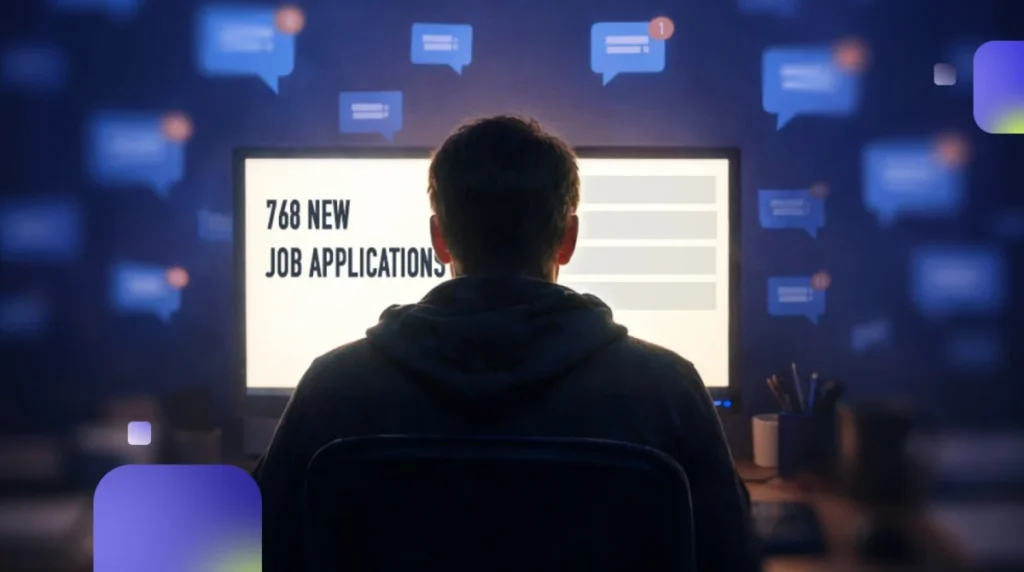
A major paradigm shift is rapidly reshaping the landscape of modern hiring, fundamentally altering how job seekers engage with potential employers and challenging traditional recruitment methodologies. This profound transformation is largely driven by the burgeoning adoption of artificial intelligence (AI) mass-apply tools by candidates, a phenomenon that Workable, a leading hiring platform, observes daily. Currently, approximately 10% of all job applications processed through Workable’s extensive platform are submitted via these sophisticated AI-powered systems. This significant statistic prompts critical questions for employers: Does this trend represent a genuine disruption to established recruitment practices, or is it merely a misunderstood evolution in candidate behavior that demands strategic adaptation rather than outright resistance?
The Shifting Tides of Candidate Engagement
The emergence of AI mass-apply tools marks a pivotal moment in the ongoing digitalization of the job search. For decades, the process of finding and applying for jobs has evolved from physical submission of resumes to digital applications via email, then through company websites and dedicated applicant tracking systems (ATS). Each phase brought new efficiencies and challenges. The advent of the internet in the late 1990s revolutionized access to job postings, allowing candidates to apply to multiple roles with unprecedented ease, yet still largely requiring manual input for each application. The subsequent rise of professional networking sites and specialized job boards further streamlined the discovery phase, but the application itself often remained a labor-intensive endeavor, necessitating tailoring resumes and cover letters to specific job descriptions.
However, the current wave of generative AI has introduced a new level of automation. These tools can analyze job descriptions, customize resumes and cover letters, and even complete application forms across numerous platforms with minimal human intervention. This capability is particularly appealing to candidates navigating increasingly competitive job markets, where the sheer volume of applications often dictates a scattergun approach to increase the odds of securing an interview. In a climate where a single corporate role can attract hundreds, if not thousands, of applicants, leveraging AI to manage this volume becomes a strategic advantage for job seekers.
A Misunderstood Revolution: Beyond "Fake" Candidates
Workable CEO Nikos Moraitakis offers crucial insight into this evolving dynamic, dispelling a common misconception among some recruiters. Moraitakis emphatically states, "These aren’t ‘fake’ candidates. The vast majority are real people with real resumes." This distinction is critical; it reframes the issue from one of fraudulent activity to one of technological enablement. Candidates are not fabricating their identities or qualifications; they are simply employing advanced tools to streamline a historically cumbersome process. This perspective underscores that the core intent of the candidate – to secure employment – remains authentic, even if the method of application has been automated.
The initial reaction among some recruiters to the surge in AI-assisted applications has been one of alarm, often described as feeling like "pollution" inundating their systems. This instinct frequently leads to proposals for blocking such applications entirely. However, Moraitakis offers a powerful cautionary analogy, comparing the refusal of AI-assisted applications in 2025 to "refusing applications that came from the web in 1997." This historical parallel highlights the inevitability of technological progress in recruitment. Just as the internet fundamentally altered how businesses operated and communicated, AI is poised to embed itself deeply within the hiring ecosystem. To resist this shift is not only futile but also risks alienating and excluding a significant portion of qualified, proactive talent who are simply adopting the latest tools available to them.
Chronology of AI in Talent Acquisition: A Gradual Integration
The integration of artificial intelligence into talent acquisition is not a sudden occurrence but rather a progression spanning over a decade, accelerating significantly in recent years:
- Early 2010s: Foundational AI/ML for Screening: Initial applications of AI focused on basic tasks within Applicant Tracking Systems (ATS), primarily keyword matching and rudimentary resume parsing. This aimed to automate the first pass of applications, identifying candidates whose resumes contained specific terms from job descriptions.
- Mid-2010s: Predictive Analytics and Sourcing: AI began to be used for more sophisticated tasks like predictive analytics, helping identify patterns in successful hires and suggesting optimal candidate profiles. AI-powered sourcing tools emerged, automating the discovery of passive candidates on professional networks.
- Late 2010s: Automation of Candidate Interaction: Chatbots and conversational AI started to be deployed for initial candidate screening, answering FAQs, and automating interview scheduling. This freed up recruiters’ time from repetitive administrative tasks.
- Early 2020s: Generative AI’s Emergence: The breakthrough in large language models and generative AI brought unprecedented capabilities. This era saw the rise of sophisticated tools capable of generating tailored resumes, crafting personalized cover letters, and automating the submission process across multiple job platforms. This marked the shift from AI assisting recruiters to AI directly assisting candidates in their job search, leading to the current challenge of managing AI-generated application volume.
- Present Day: The "Counter-AI" Imperative: As candidate-side AI tools become more prevalent, the focus for employers and HR tech providers like Workable shifts to developing "counter-AI" measures. This involves using AI to effectively process and analyze the influx of AI-generated applications, ensuring fairness, efficiency, and the identification of genuine talent.
Industry Reactions and the Imperative for Adaptation
The initial "pollution" sentiment among some recruiters is understandable. The sheer volume of applications can overwhelm human screening capabilities, leading to concerns about diminishing signal-to-noise ratios. A recent informal survey among HR professionals revealed that over 60% reported an increase in application volume by at least 25% in the past year, with a significant portion attributing this to automated tools. This surge necessitates a fundamental re-evaluation of how talent acquisition teams operate.
Workable’s approach, championed by Moraitakis, is clear: adapt, don’t resist. The real challenge for employers is not to block these tools, but to develop sophisticated mechanisms for separating genuine interest and qualified candidates (the "signal") from the sheer volume of automated submissions (the "noise"). This requires a deeper understanding of who is applying, how frequently, and with what level of intent.
To address this, Workable is actively enhancing its platform by improving identity and intent signals throughout the inbound application funnel. By leveraging proprietary data and analyzing behavioral patterns visible only at Workable’s scale, the platform aims to empower hiring teams to:
- Identify unique candidates: Distinguish individual applicants from repeated, automated submissions that might mask a single candidate’s interest across many roles.
- Assess genuine intent: Analyze patterns of engagement, past application history, and specific responses to tailored questions to gauge a candidate’s true interest in a particular role or company.
- Filter effectively: Implement intelligent screening layers that can discern relevant qualifications and experience within the context of AI-generated applications, ensuring that legitimate candidates are not overlooked.
- Streamline communication: Automate initial responses and follow-ups in a personalized manner, improving candidate experience even in a high-volume environment.
As Moraitakis succinctly puts it, "The winners will be the employers with tools that can separate signal from noise." This highlights a strategic imperative for organizations to invest in advanced HR technology that can not only cope with but also leverage the new reality of AI-driven applications.
AI as an Essential Countermeasure for Recruiters
The escalating volume of applications, whether human-driven or AI-assisted, underscores an undeniable truth: AI must be employed to process AI. This isn’t about replacing human judgment but augmenting it, allowing recruiters to focus on high-value activities that truly require human insight and empathy. Workable, recognizing this necessity, is equipping recruiters with advanced screening tools designed to ensure:
- Accuracy in candidate matching: AI algorithms can swiftly and precisely match candidate profiles against job requirements, identifying the most relevant applicants even within a massive influx of submissions.
- Fairness and reduced bias: By applying consistent, data-driven criteria, AI tools can help mitigate unconscious biases that might inadvertently creep into manual screening processes, promoting a more equitable hiring environment.
- Efficiency in initial screening: Automating the first pass of applications frees up recruiters from tedious, time-consuming tasks, allowing them to dedicate more time to engaging with promising candidates, conducting interviews, and building talent pipelines.
- Focus on human interaction: By automating the initial filtering, recruiters can pivot their energy towards meaningful interactions with top-tier candidates, fostering stronger relationships and enhancing the overall candidate experience.
Moraitakis encapsulates this necessity: "We’re going to need AI as a countermeasure to AI." This statement underscores the cyclical nature of technological adoption in the digital age. As new tools emerge to automate one side of a process, corresponding tools become essential to manage the resulting changes on the other side.
Broader Impact and the Future of Talent Acquisition
The proliferation of AI in both candidate and employer toolkits signifies a profound expansion in the scale of processes that were once considered inherently human and intimate. While the essence of hiring – finding great people – remains unchanged, the methods for achieving this are undergoing radical transformation. Recruiters are no longer just evaluators of resumes; they are becoming strategists, data interpreters, and relationship builders, supported by sophisticated technological infrastructure.
Looking ahead, several trends are clear:
- Smarter Candidate Tools: AI tools available to job seekers will continue to evolve, becoming even more sophisticated in tailoring applications, identifying suitable roles, and potentially even simulating interview responses.
- Increased Application Volume: The ease of applying will inevitably lead to a sustained increase in the sheer number of applications for open positions, making effective screening more critical than ever.
- Data-Driven Decisions: Employers will increasingly rely on advanced analytics and AI insights to make hiring decisions, moving beyond gut feelings to evidence-based approaches.
- Hybrid Recruitment Models: The future will likely see a blend of AI-powered automation for initial stages and enhanced human judgment for critical decision points and personalized candidate engagement.
Workable’s mission, despite these shifts, remains steadfast: to help employers find and hire great people. The core challenge is to ensure that technological advancements serve to enhance this mission, making hiring more effective, fairer, and ultimately, still rooted in discerning human potential.
As Moraitakis concludes, the job market is undergoing an irreversible evolution. "The job market isn’t going back. It’s time to build the infrastructure that lets great hires rise to the top – no matter how they knock on the door." This forward-looking perspective emphasizes that resistance is not an option; adaptation and innovation are paramount. The focus must be on developing resilient, intelligent hiring infrastructure that can navigate the complexities of AI-driven applications, ensuring that genuine talent is always identified and celebrated, regardless of the technological conduit through which they present themselves. The employers who embrace this reality and invest in the necessary tools and strategies will be the ones best positioned to attract and secure the best talent in an increasingly automated world.






