The landscape of human resources and talent acquisition is undergoing a significant transformation, driven by the rapid advancements and pervasive integration of artificial intelligence. At the forefront of this revolution are AI-powered job description tools, poised to automate menial tasks, eradicate subconscious biases, and elevate the consistency and accuracy of job postings. These sophisticated platforms are not merely digital assistants; they are strategic partners, ensuring job descriptions precisely reflect role requirements, employ consistent language across all posts, and ultimately attract a more diverse and qualified talent pool. As of early 2026, the adoption of these tools is accelerating, reshaping how organizations approach the critical initial step of the hiring process.
The Evolution of Job Description Management
Historically, crafting job descriptions has been a time-consuming, often subjective endeavor. HR professionals and hiring managers would spend countless hours drafting, reviewing, and refining documents, a process prone to human error, inconsistency, and unconscious bias. The inherent challenges included maintaining a uniform brand voice, accurately capturing complex role requirements, and ensuring legal compliance. The rise of digital job boards brought some efficiencies, but the core task of content creation remained largely manual, often leading to generic or poorly optimized postings that failed to resonate with ideal candidates.
The advent of AI marks a pivotal shift. Initially, basic templates offered a degree of standardization, but these lacked the intelligence to adapt to nuanced roles or detect subtle biases. Today’s AI tools, however, leverage machine learning (ML) and natural language processing (NLP) to understand context, identify patterns, and generate highly optimized content. This technological leap addresses long-standing pain points, allowing HR teams to transition from administrative overhead to more strategic talent engagement. The emphasis on Diversity, Equity, and Inclusion (DEI) initiatives has further amplified the need for AI-driven solutions that can proactively identify and neutralize exclusionary language, ensuring a level playing field for all applicants.
Core Benefits of AI in Job Description Optimization
The integration of AI into job description creation offers a multifaceted array of benefits:
- Automation and Efficiency: AI tools can generate comprehensive job descriptions from minimal input (e.g., a job title) in seconds. This drastically reduces the time human resources professionals spend on drafting, allowing them to focus on more strategic aspects of talent acquisition, such as candidate engagement and pipeline development.
- Bias Reduction and DEI Enhancement: Perhaps one of the most significant contributions of AI is its ability to identify and eliminate subconscious biases embedded in language. Many traditional job descriptions inadvertently use gendered terms, ageist phrases, or cultural jargon that can deter diverse candidates. AI tools are trained to flag these terms and suggest inclusive alternatives, demonstrably broadening the applicant pool and supporting organizational DEI goals.
- Consistency and Accuracy: AI ensures that job descriptions adhere to a consistent tone, style, and brand voice across an organization. It also helps in accurately articulating job responsibilities, required skills, and qualifications, minimizing ambiguity and ensuring that postings truly reflect the role’s demands.
- Improved Visibility and SEO: Modern AI job description generators often incorporate search engine optimization (SEO) principles. They can analyze trending keywords used by job seekers and optimize job titles and content to rank higher on job boards and search engines, increasing the visibility of open positions to a wider, more relevant audience.
- Data-Driven Insights and Predictive Analytics: Advanced AI platforms offer predictive scoring systems that evaluate the potential impact of a job description on candidate engagement. By analyzing vast datasets of past job postings and hiring outcomes, these tools can provide real-time feedback and recommendations to optimize post quality and predict applicant reactions.
Leading AI Tools Transforming Job Description Creation
While not all AI tools are created equal, a growing number of sophisticated platforms are emerging to meet the evolving demands of modern HR. These tools allow organizations to harness the power of machine learning while retaining the invaluable personal expertise of human resources professionals.
1. Ongig’s Text Analyzer:
Ongig’s Text Analyzer stands out as a powerful solution for bias reduction in job description language. It meticulously reviews content to identify and eliminate gendered terms, which research suggests can deter applicants. By making job descriptions as gender-neutral as possible, companies can see application rates increase significantly, with some studies indicating up to a 29% boost. Beyond gender, Ongig’s tool detects and helps remove racially sensitive language, ageist phrases, and other forms of bias, promoting truly inclusive hiring practices. The Text Analyzer also identifies overly lengthy or "boring" content and industry jargon that might alienate ideal candidates, pulling these elements for review. Furthermore, its SEO evaluation process for job titles helps optimize visibility, ensuring posts reach the widest possible target audience.
2. Grammarly:
Widely recognized for its grammar-checking capabilities, Grammarly has expanded its offerings to include free generative AI tools designed to compose grammatical, natural-sounding job descriptions. A basic version is freely accessible, allowing users to leverage its core functionalities before committing to a paid subscription. Grammarly’s AI can draft content from scratch, or edit, clarify, and rewrite existing text. Its latest grammar check version intelligently flags potentially exclusionary terms like "guru" or "ninja," preventing subtle but impactful JD mistakes that could deter valuable hires. For businesses, the premium version offers advanced features, including content evaluation and composition based on a brand’s specific tone and style guidelines, offering flexibility, customizability, and affordability.
3. Jobsoid:
As a comprehensive HR tool, Jobsoid excels in applicant management, task automation, and multi-platform job posting. It provides free, customizable job description templates, which can be further refined using other AI tools. Jobsoid’s strength lies in its ability to centralize and simplify the hiring process. Post-customization, users can create personalized careers sites and simultaneously distribute job postings to over 125 free and premium job boards globally, efficiently reaching a wider target audience. A standout feature for 2026 is its AI-scoring dashboard, which instantly unifies hiring pipelines and ranks top candidates based on skills and career potential, reducing guesswork and boosting engagement. Jobsoid effectively automates tedious hiring aspects, freeing HR teams to focus on tasks requiring a personal touch.
4. Datapeople:
Acknowledging that even AI-generated content may inadvertently carry biases, Datapeople serves as a crucial AI job description review system. It’s specifically designed to scrutinize job descriptions, particularly those created from templates or other AI systems, before publication. Datapeople’s AI identifies biased language, ensures compliance with regulations, and enforces stylistic consistency—a feature also offered by Ongig. Its predictive scoring system, informed by sentiment analysis from over 100 million jobs and their outcomes, provides insights into how likely a prospect is to react positively to a JD. Each job description receives a performance score, highlighting missing sections and offering guidance for optimization. The integrated smart editor allows for instant adjustments within the platform, streamlining the refinement process across Applicant Tracking Systems (ATS).
5. GoHire:
Trusted by over 3,000 global businesses, GoHire is an HR software that leverages AI to simplify the search for ideal candidates. It boasts an extensive library of over 700 job description templates, seamless one-click integrations with over 15 major job boards (including LinkedIn and Indeed), and user-friendly branding tools. GoHire provides robust applicant management tools, including a built-in system, smart search functionalities, and offer forms. Its easy screening tools enable teams to quickly focus on candidates with desired skills. Based in the UK, GoHire also ensures full compliance with GDPR regulations, making it a reliable choice for international hiring efforts.
6. Recooty:
Recooty’s Free Job Description Generator enables rapid creation of effective job descriptions for any position. Users simply input the job title, and the AI generates a draft, which can then be customized with company name and industry. A significant advantage is its multi-language support, allowing JDs to be generated in Spanish, German, French, Arabic, Portuguese, Polish, and Italian, which is invaluable for global recruitment. Recooty can post jobs to over 250 job boards worldwide and integrates intuitively with existing ATS. It also offers bonus tools like an Email Template Generator, an AI Interview Question Generator for tailored discussions, and an Employee Onboarding Poster Creator to welcome new hires warmly.
7. HighPerformr:
HighPerformr’s Job Description Generator simplifies hiring by crafting AI-generated descriptions in seconds. Users input the role and company, and the tool delivers detailed, accurate descriptions based on recruiter input. HighPerformr prioritizes user privacy, ensuring company details remain secure. It allows for unlimited role generation and extensive customization to align with specific organizational needs, offering a straightforward yet powerful solution for quick JD creation.
8. RecruitRyte:
RecruitRyte’s AI-powered job description generator analyzes input to produce tailored and accurate job advertisements. Its keyword optimization tool enhances JD visibility on search engines and applicant tracking systems. RecruitRyte offers pre-designed templates and facilitates collaboration among team members, allowing for real-time sharing, feedback, and editing of drafts. Crucially, it tracks JD performance metrics like views, clicks, and applications, providing valuable insights into recruitment efforts and enabling continuous optimization.
9. HireQuotient:
HireQuotient provides a free job description generator that allows recruiters to craft an unlimited number of JDs without requiring a signup. Users simply fill in basic information—Job Title, Company Name (optional), Industry type (optional), and Language—and click "Generate." The content is editable directly on the platform. The platform claims impressive results for its users, including a fivefold increase in applicants, a 90% reduction in JD creation time, and 100% DEI optimization, achieved through incorporating trending job seeker keywords for an SEO boost.
10. Skima AI:
Skima AI’s job description tool leverages the latest AI technology to identify common JD pitfalls and suggest optimal content for promoting open positions. The platform offers a 14-day free trial. It benefits users through its application of role-specific data, maximizing job appeal and driving candidate engagement. The "regenerate" button allows for quick iteration based on the same prompt, ensuring alignment with hiring expectations. Skima AI also learns from user activity, adapting its voice and structure to maintain a standardized, on-brand aesthetic across campaigns. An immediate candidate search alignment feature tracks suitable candidates within an ATS and database that best match JD requirements.
11. Workable:
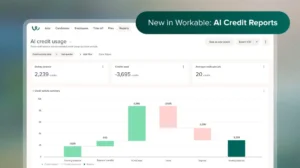
Workable, a leading recruitment software company, offers a free AI job description generator designed for speed and compelling content. Users input the job title, and the AI instantly produces a basic job description. The tool also provides options to customize the tone, select an industry, and specify a job level. Beyond its generator, Workable offers an extensive library of pre-written job description templates and comprehensive guides on crafting effective JDs.
12. Easy-Peasy.AI:
Easy-Peasy.AI streamlines JD creation by guiding users through a series of preset fields for job title, key skills, company overview, and benefits. This process takes mere minutes. The platform offers an advanced version utilizing GPT-5 technology, enhancing the quality of JD generation. While a free version is available, premium subscriptions unlock unlimited customizations and faster generation times, making it a highly efficient tool for rapid, high-quality JD production.
13. LogicBalls:
LogicBalls provides a free Job Description Generator designed to attract top talent. Users input the role, skills, desired years of experience, and language to generate a JD, which can then be edited. A premium version offers unlimited job postings, storage, and organization. LogicBalls is versatile, capable of generating job postings for all levels—entry, mid, senior, executive—and across technical and non-technical domains, catering to a wide range of organizational needs.
14. Aptahire:
Aptahire offers a free JD generator that simplifies ad creation based on industry, experience level, and key responsibilities. A unique feature is the ability to toggle between three tones—"professional," "generic," or "friendly"—to match company culture. Aptahire also provides a specialized LinkedIn JD generator, optimizing ads for LinkedIn’s unique platform features to improve user search and engagement directly on the site.
15. Dweet AI:
Dweet AI’s job description tool instantly creates optimized ads based on a job title prompt, specifically catering to talent in the fashion and luxury sectors. The AI solution supports both English and French languages and includes a built-in AI editor for fuss-free modifications. Users can request changes to tone or conciseness within the app. Upon completion, generated JDs can be exported to a professional email address or downloaded directly.
The Broader Impact and Future Implications for HR
The widespread adoption of AI in job description creation signifies a profound shift in the broader talent acquisition landscape. This move is not merely about automating tasks but about fundamentally enhancing the strategic capacity of HR teams. By offloading the repetitive aspects of JD drafting and ensuring compliance and inclusivity, HR professionals are freed to engage in higher-value activities, such as developing sophisticated recruitment strategies, fostering candidate relationships, and championing organizational culture.
From a DEI perspective, these tools are instrumental. They provide a measurable and consistent approach to eliminating bias, which has historically been a stubborn challenge in hiring. This proactive stance ensures that job opportunities are genuinely accessible to a diverse pool of candidates, thereby enriching workplaces and fostering innovation. The economic implication is also significant: by reducing time-to-hire, improving candidate quality, and decreasing the risk of bad hires, companies can realize substantial cost savings and productivity gains.
However, the rapid embrace of AI also brings forth critical considerations. Ethical AI development, continuous training of models to avoid perpetuating new biases, and robust data privacy measures are paramount. While AI can automate and optimize, human oversight remains indispensable. HR professionals must act as the ultimate arbiters, ensuring that the AI’s output aligns with company values, strategic goals, and legal requirements.
Conclusion: A Collaborative Future for AI and Human Expertise
The array of AI job description tools available today, from Ongig’s bias detection to Jobsoid’s comprehensive hiring platform, underscores a new era in recruitment. These tools offer varying price points and features, catering to diverse business needs and scales. What is clear is that the future of job description creation is a collaborative one, where sophisticated AI algorithms enhance human expertise, not replace it. By intelligently integrating these powerful technologies, organizations can create more effective, inclusive, and engaging job descriptions, ultimately attracting the best talent and building stronger, more diverse workforces for the challenges and opportunities of 2026 and beyond.