
The global job market is undergoing a profound transformation, characterized by a striking paradox: widespread layoffs dominating headlines alongside an explosive demand for artificial intelligence (AI) skills, where compensation reaches unprecedented heights. This fundamental shift, as described by industry experts, creates a dual-speed economy where certain specialized professionals are flourishing, while a significant portion of the workforce grapples with uncertainty and the potential obsolescence of traditional roles. The narrative emerging from this dynamic landscape, particularly in the lead-up to May 2026, suggests that career advancement is no longer solely tied to tenure but is increasingly driven by a blend of AI fluency, adaptability, and distinctly human capabilities.
The Accelerating Demand for AI Expertise
While economic anxieties persist and many sectors experience retrenchment, the demand for individuals proficient in AI technologies stands in stark contrast. Specialists in machine learning, data science, AI ethics, natural language processing, and advanced robotics are witnessing unparalleled opportunities. A recent report from Randstad, a global HR services firm, underscores this trend, noting that workers who hold verified AI certifications are excelling in the job market, securing roles that offer both high compensation and significant growth potential. This surge is not merely about technical prowess; it encompasses the ability to design, implement, manage, and ethically deploy AI solutions across diverse industries, from healthcare and finance to manufacturing and retail.
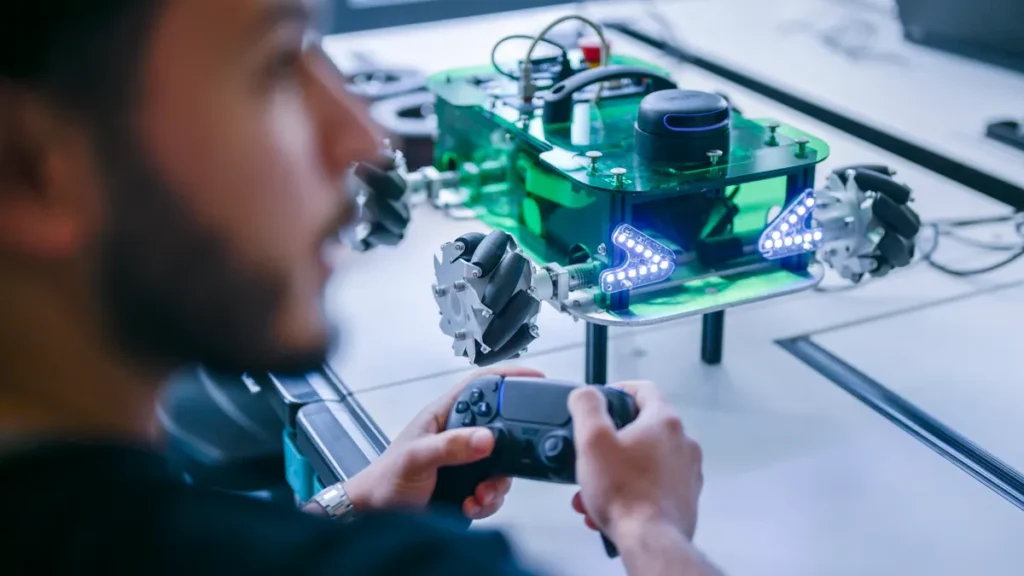
For instance, a study published in early 2026 by the AI Workforce Institute indicated a 350% increase in job postings for AI-related roles over the past two years. Average salaries for senior AI engineers and machine learning architects have reportedly surpassed $250,000 annually in major tech hubs, with lucrative signing bonuses and equity packages becoming common. This competitive environment reflects the urgent need for companies to integrate AI into their operations, enhance efficiency, and innovate at a pace dictated by technological advancements. The image depicting apprentices working on projects using artificial intelligence at a Siemens technology group training center in Dusseldorf, Germany, in April 2026, visually encapsulates this proactive investment in AI skill development. It highlights a growing recognition among leading industrial companies that fostering an AI-competent workforce is critical for maintaining a competitive edge in the evolving global economy.
The Unsettling Reality of Layoffs and Workforce Languishing
In stark contrast to the booming AI market, a significant portion of the global workforce continues to face economic headwinds. Layoffs, particularly within the technology sector that had experienced rapid expansion during the early 2020s, have become a recurring feature in news cycles. Companies, often citing economic recalibration, inflation pressures, and the need for greater efficiency, have initiated widespread workforce reductions. This has led to what many describe as a period where "most workers languish," as noted in a Gallup report earlier in 2026, which detailed a continued downward spiral in worker engagement. The underlying causes are multifaceted, including rising interest rates impacting investment, post-pandemic demand normalization, and in some cases, a strategic pivot towards AI-driven automation that reduces the need for certain human roles. This creates a challenging environment for many, prompting concerns about job security and the future trajectory of traditional career paths.
The Ascendancy of Uniquely Human Capabilities
Paradoxically, as AI capabilities expand, so too does the demand for skills traditionally considered exclusive to human intellect and interaction. Randstad’s analysis reveals a dramatic increase in the requirement for uniquely human capabilities. Emotional intelligence and creativity, for example, have seen an astounding 173% and 168% rise in demand, respectively. Beyond these, problem-solving, critical thinking, and ethical judgment skills are also experiencing significantly higher demand.
This trend is not coincidental but rather a direct consequence of AI’s growing prevalence. As AI systems become more sophisticated in handling repetitive, data-intensive, and even some analytical tasks, the value of human abilities that AI cannot replicate becomes amplified. These include the capacity for abstract thought, complex strategic planning, nuanced interpersonal communication, empathetic leadership, and the ability to navigate moral dilemmas. In an increasingly automated world, it is these ‘soft skills’ that differentiate human workers, enabling them to innovate, build meaningful relationships, and provide the ethical oversight necessary for responsible AI deployment. Companies are realizing that while AI can optimize processes, it is human creativity and emotional intelligence that drive innovation, foster resilient company cultures, and ensure ethical decision-making, especially in critical customer-facing or strategic roles.
Gartner’s Warning: Millions of Careers to be "Broken Down"
While the long-term outlook for AI suggests it will ultimately create more jobs than it destroys, the transition phase is predicted to be tumultuous. A Gartner report earlier in 2026 painted a stark picture, warning that the process will "break down millions of careers." This isn’t necessarily about outright job destruction but rather a fundamental reshaping of roles and responsibilities. As old roles vanish or are significantly altered by automation, new ones will emerge, demanding different skill sets.

This perspective places immense pressure on human resources (HR) professionals. Gartner emphasizes that HR departments will need to prioritize skill development and training as a core strategic imperative. This involves proactively identifying skills gaps, designing robust upskilling and reskilling programs, fostering a culture of continuous learning, and implementing agile talent management strategies. The challenge lies in managing this transition equitably and effectively, ensuring that workers whose careers are impacted by AI have pathways to acquire new competencies and transition into emerging roles. Without proactive intervention, there is a risk of widening the skills gap and exacerbating economic inequality.
The "Mismatch Problem" and Strategic Employer Responses
Further compounding the complexities of the evolving job market is what an Indeed economist and economic researcher described earlier in May 2026 as a "mismatch problem." This refers to the growing disconnect between the jobs workers currently hold or aspire to, and the jobs the economy genuinely needs. This mismatch is a critical bottleneck, hindering both individual career progression and broader economic growth. It suggests that simply having jobs available isn’t enough; the workforce must possess the specific skills required for those opportunities.
To address this, the Indeed report recommended that employers focus significantly on retraining and reforming credentialing systems. This entails moving beyond traditional degree requirements to recognize skills-based qualifications, micro-credentials, and experiential learning. Employers are increasingly being urged to invest internally in their workforce, creating pathways for current employees to acquire new skills relevant to AI-driven roles and other emerging demands. Collaboration with educational institutions, vocational schools, and government-backed training programs is also seen as crucial. This could involve co-developing curricula, offering apprenticeships (like those at Siemens), and providing internship opportunities that bridge the gap between academic learning and practical industry needs.
A Chronology of AI’s Labor Market Impact
The current state of the labor market, particularly its bifurcation, isn’t an overnight phenomenon but the culmination of several accelerating trends.

- Pre-2010s: Automation primarily impacted manufacturing and routine administrative tasks, often referred to as "blue-collar" automation. The internet revolution had already begun to shift information-based jobs.
- 2010s: The rise of big data, cloud computing, and early machine learning algorithms began to influence white-collar work. Data science emerged as a distinct, highly sought-after field. Concerns about AI’s impact on employment started to gain more mainstream attention.
- Late 2022 – Early 2023: The public release of advanced generative AI models, such as ChatGPT, marked a significant inflection point. The rapid accessibility and demonstrable capabilities of these tools dramatically accelerated awareness and adoption of AI across virtually all sectors. This period saw an explosion in investment in AI startups and an urgent scramble by established companies to integrate AI into their products and services.
- 2024-2025: Initial waves of "AI-driven restructuring" began, with some companies announcing layoffs partly attributed to increased automation and efficiency gained through AI. Simultaneously, the demand for specialized AI talent surged, creating the paradox observed today. Educational institutions and training providers began to rapidly adapt their offerings.
- May 2026 (Present Context): The trends are now firmly established. The job market is overtly bifurcated, with a clear premium on AI and uniquely human skills. The focus has shifted from theoretical discussions about AI’s impact to practical strategies for workforce development, reskilling, and ethical deployment, as evidenced by the articles and reports published around this time.
Inferred Statements and Broader Implications
While specific statements from all parties are not provided, their reactions and strategic shifts can be logically inferred given the context:
- Tech Industry Leaders: Would likely emphasize the need for continuous innovation and a highly skilled workforce, advocating for increased investment in AI research and development, alongside calls for robust educational pipelines. They would stress the ethical imperative in AI development.
- Educational Institutions: Universities, colleges, and vocational training centers are almost certainly overhauling their curricula to integrate AI literacy, data science, and ethics into various disciplines. They would be promoting interdisciplinary programs and partnerships with industry to ensure graduates are job-ready.
- Government Policy Makers: Would likely be exploring new policies related to workforce retraining programs, unemployment benefits for those displaced by AI, and potential regulatory frameworks for AI ethics and job security. Initiatives to boost digital literacy across the general population would also be a priority.
- Labor Unions and Worker Advocacy Groups: Would be increasingly focused on protecting workers impacted by AI, negotiating for reskilling opportunities, fair severance packages, and potentially advocating for universal basic income or other social safety nets to mitigate the economic disruption.
The broader implications of this bifurcated job market are profound. Economically, there is a risk of exacerbating income inequality, creating a divide between a highly compensated AI-skilled elite and a struggling segment of the workforce. Societally, it necessitates a fundamental re-evaluation of education systems, emphasizing lifelong learning and adaptability from an early age. The traditional concept of a linear career path is being replaced by a dynamic journey requiring constant upskilling and reinvention. For nations, the ability to cultivate and retain AI talent will be a critical factor in global economic competitiveness and national security. The ethical dimensions of AI, particularly concerning job displacement and algorithmic bias, will also continue to be a central focus for policymakers and civil society.
In conclusion, the job market of May 2026 stands at a pivotal juncture, simultaneously experiencing the pressures of widespread layoffs and the immense opportunities presented by artificial intelligence. The message is clear: adaptability, continuous learning, and a strategic focus on both cutting-edge AI skills and timeless human capabilities are no longer optional but essential for navigating this complex and rapidly evolving professional landscape. The responsibility for successful adaptation rests not only with individuals but also with employers, educational institutions, and governments, all of whom must collaborate to forge a more inclusive and resilient future of work.






