
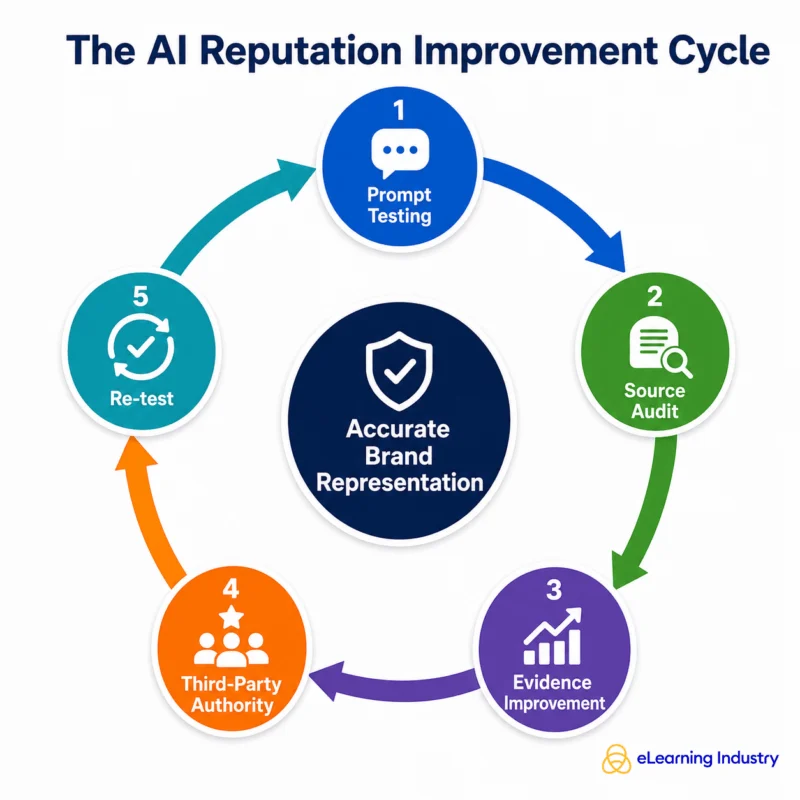
The digital landscape has fundamentally transformed how corporate reputation is built, maintained, and defended, moving far beyond the traditional confines of search engine optimization and press release distribution. In the contemporary market, a company’s public standing is no longer dictated solely by its owned media or the first page of search results; instead, it is the product of a complex, interconnected ecosystem comprising customer reviews, industry directories, executive visibility, and, increasingly, the synthesized narratives provided by generative artificial intelligence. For modern enterprises, particularly those in the B2B and technology sectors, online reputation management (ORM) has evolved from a reactive crisis-control function into a proactive, cross-functional strategy centered on the three pillars of accuracy, authority, and trust.
The Evolution of Reputation: From SEO to Algorithmic Synthesis
To understand the current state of ORM, one must view it through the lens of a twenty-year technological evolution. In the early 2000s, reputation management was largely synonymous with "search engine suppression"—the act of pushing negative content to the second or third page of Google through aggressive backlinking and keyword optimization. By the mid-2010s, the rise of social media and dedicated review platforms like G2, Trustpilot, and Glassdoor shifted the power dynamic toward the consumer, making "social proof" the dominant currency of trust.
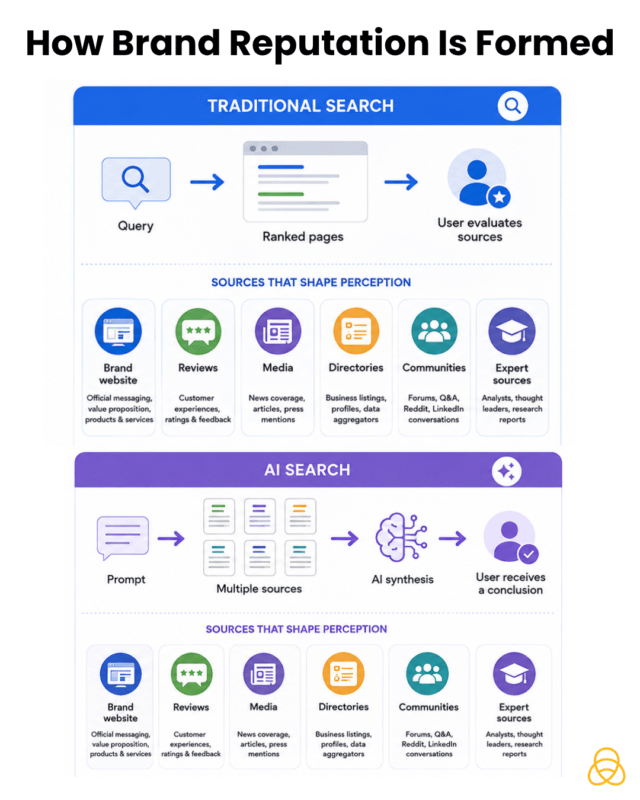
Today, we have entered the era of algorithmic synthesis. Prospective buyers no longer rely on a linear path of clicking through individual websites. Instead, they interact with AI assistants and Large Language Models (LLMs) that aggregate data from across the web to provide a summarized verdict on a brand’s reliability. This shift has necessitated a move away from "managing results" toward "managing the evidence" that feeds these systems. Industry data suggests that nearly 75% of B2B buyers now consult three or more sources before even visiting a vendor’s website, and the emergence of "zero-click" searches means that a company’s reputation is often decided within the interface of an AI chatbot or a search engine results page (SERP) feature.

The PROOF Framework: A Strategic Approach to Credibility
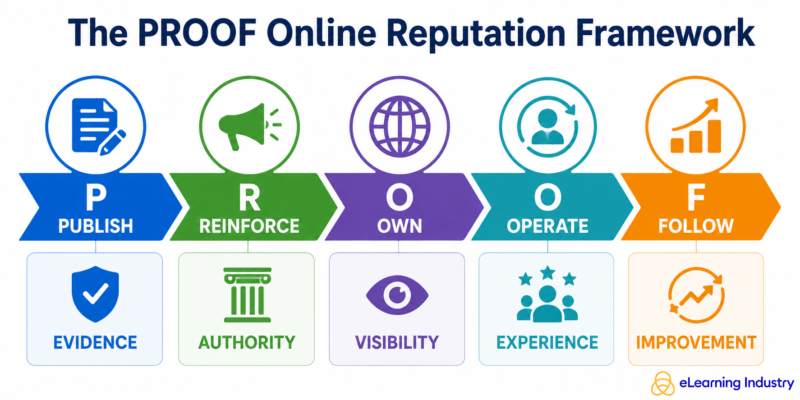
As the research process becomes more fragmented, organizations are adopting structured frameworks to ensure consistency across all digital touchpoints. The "PROOF" framework—Publish, Reinforce, Own, Operate, and Follow—has emerged as a standard for high-growth firms looking to stabilize their digital narrative.
P – Publish Accurate Brand Evidence
The foundation of a modern reputation is the proactive publication of high-fidelity data. This includes clear documentation regarding product capabilities, security protocols (such as SOC2 or GDPR compliance), and transparent pricing models. By being the primary source of factual information, a company reduces the likelihood of AI systems or third-party sites filling the "information vacuum" with outdated or speculative data.
R – Reinforce Trust Through Third Parties
Authority is rarely self-bestowed. It must be earned through third-party validation, including media coverage, guest contributions in industry journals, and citations in academic or market research. In the HR and learning technology sectors, for instance, visibility on specialized platforms serves as a critical signal to both human buyers and search algorithms that the brand is a recognized entity within its specific niche.
O – Own and Optimize Critical Search Assets
While a company cannot control every mention of its name, it can "own" the most visible real estate. This involves claiming and meticulously maintaining profiles on industry directories, social platforms, and review sites. An unmanaged directory profile with a 2021 timestamp can signal corporate stagnation to a buyer, even if the company’s internal product development is thriving.
O – Operate Credibly Across Customer Touchpoints
Reputation is the public shadow cast by private operations. If a marketing department promises a seamless onboarding experience but the customer success team is understaffed, the resulting friction will inevitably manifest as negative reviews or social media criticism. Strategic ORM requires a feedback loop where reputation signals (such as recurring complaints in reviews) are used to drive operational improvements in the product or service delivery.
F – Follow and Improve the Narrative
Monitoring is the final, ongoing phase. This involves tracking not just keyword mentions, but "Share of Voice" in AI-generated summaries and sentiment trends across customer communities. By treating reputation as a dynamic metric rather than a static asset, companies can pivot their communication strategies before a minor misunderstanding escalates into a full-scale brand crisis.
The Impact of Generative AI on Brand Narrative
The integration of AI into the search experience represents the most significant disruption to ORM in a decade. Traditional search engines provide a list of sources; generative engines provide a conclusion. When a user asks an AI assistant, "What are the common complaints about Brand X?" the system does not just link to a review site; it synthesizes hundreds of reviews into a bulleted list of perceived weaknesses.
Market analysts note that this "summarization risk" puts brands with inconsistent digital footprints at a disadvantage. If a company’s website describes its software as "enterprise-ready" while five-year-old reviews describe it as "buggy and difficult to scale," the AI may conclude that the company has a history of stability issues. Consequently, modern ORM now includes "Generative Engine Optimization" (GEO)—the practice of ensuring that the corpus of data available to LLMs is current, authoritative, and factually dense.
Auditing the Digital Footprint: A Methodology
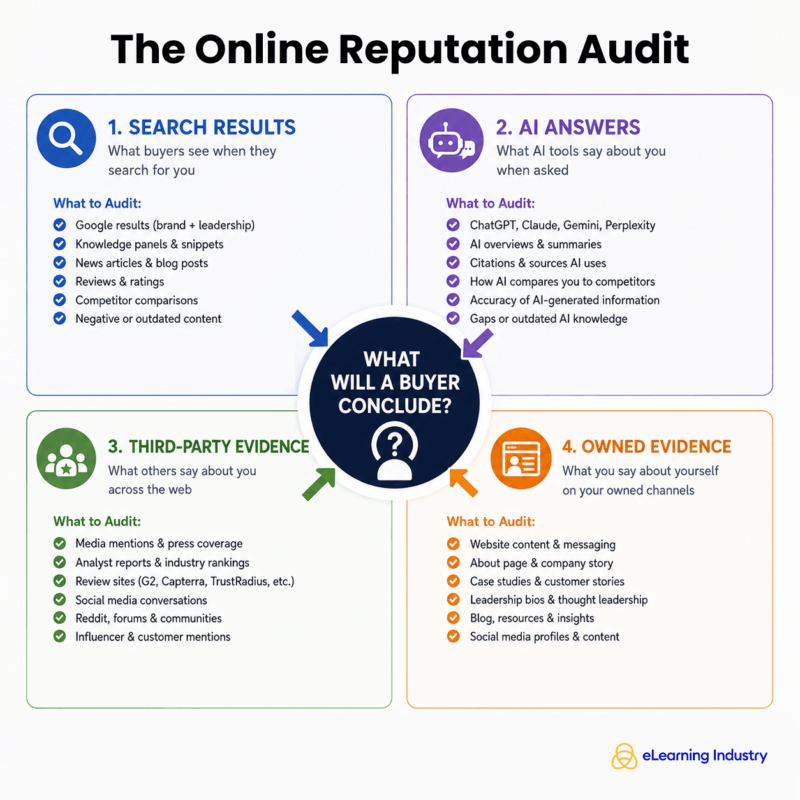
A professional reputation audit must look beyond simple Google rankings. It requires a three-tiered investigation:
- Branded Search Evaluation: Analyzing what appears when users search for the company name plus modifiers like "pricing," "alternatives," or "security." This also includes an audit of executive names, as leadership visibility is a major trust factor in enterprise partnerships.
- AI Narrative Testing: Systematically prompting various LLMs to describe the company’s category, strengths, and weaknesses. This helps identify "hallucinations" or outdated narratives that the AI might be propagating.
- Third-Party Evidence Review: Assessing the health of profiles on external platforms. Are the screenshots current? Is the "About Us" section consistent with the latest brand positioning? Are negative reviews being addressed with professional, solution-oriented responses?
Risk Management and the Response to Misinformation
In an era of deepfakes and coordinated social media attacks, the ability to respond to reputation threats is paramount. However, legal experts and PR consultants warn against "over-responding." Not every negative comment requires a public statement. Journalistic standards for crisis response suggest a tiered approach:
- Accurate Criticism: Should be met with operational changes and a private attempt to resolve the customer’s issue.
- Outdated Information: Requires a polite request for correction backed by evidence.
- Malicious Misinformation: Necessitates formal escalation through platform reporting tools and, if necessary, legal counsel.
The goal of modern risk management is not to "erase" the negative, but to surround it with such a high volume of current, verifiable, and positive evidence that the outlier loses its influence over the broader narrative.
Supporting Data and Market Implications
Recent surveys of B2B decision-makers indicate that "trustworthiness" has overtaken "price" as a primary driver in vendor selection for long-term contracts. Furthermore, data from SEO industry leaders suggests that companies with a diverse "mention profile"—those cited by multiple independent, high-authority sources—rank significantly better in both traditional and AI-driven search results.
The financial implications of reputation are also quantifiable. Studies in the hospitality and software sectors have shown that a one-star increase in aggregate review ratings can correlate with a 5% to 9% increase in revenue. Conversely, a single prominent negative news story or a major security breach can result in an immediate and sustained drop in lead generation and organic traffic.
Conclusion: The Shift Toward Cross-Functional Governance
The most successful organizations are moving away from treating reputation as a "marketing problem." Instead, they are establishing cross-functional governance teams that include representatives from Legal, Product, Customer Success, and HR. This ensures that the brand promise made in the digital sphere is consistently backed by the reality of the employee and customer experience.
As AI continues to refine its ability to judge and summarize corporate entities, the companies that thrive will be those that prioritize the "evidence of excellence" over the "veneer of marketing." Online reputation management is no longer about winning an argument on a message board; it is about building a credible, authoritative, and accurate digital identity that can withstand the scrutiny of both human buyers and the algorithms that guide them. By focusing on the PROOF framework and embracing the complexities of the modern search ecosystem, brands can build a foundation of trust that serves as a durable competitive advantage in an increasingly transparent global market.






