Employee retention software platforms are no longer a luxury but a strategic imperative for organizations striving to maintain a competitive edge in the evolving talent market of 2026. While no technological solution can single-handedly resolve every facet of employee churn, these sophisticated tools provide unparalleled insights into workforce dynamics, enabling proactive intervention and fostering environments where top talent chooses to stay. They move beyond the limitations of manual processes and static spreadsheets, offering data-driven approaches to understand behavioral patterns, identify attrition risks, and translate feedback into actionable strategies.

The urgency for robust retention strategies is underscored by compelling research. Gallup, for instance, reports that nearly half of all employees are actively seeking new job opportunities, a statistic that highlights a pervasive challenge across industries. This widespread sentiment signals that good intentions alone are insufficient; a systematic, technology-backed approach is essential for modern retention efforts. As companies refine their talent strategies or upgrade existing technological infrastructure, the market for employee retention software offers a diverse array of solutions tailored to various organizational needs. This article delves into 15 platforms that are poised to make significant waves in the retention landscape of 2026, guiding organizations toward the optimal fit for their unique corporate culture and objectives.
The Evolving Landscape of Employee Retention
The concept of employee retention has undergone a profound transformation over the past decade, driven by significant shifts in the global economy, workforce demographics, and technological advancements. Traditionally, retention strategies often revolved around compensation, benefits, and hierarchical career paths. However, the rise of the "Great Resignation" era, fueled by the COVID-19 pandemic, brought into sharp focus the critical importance of employee experience, well-being, psychological safety, and a sense of purpose. This period saw millions voluntarily leave their jobs, prompting a fundamental re-evaluation of the employer-employee relationship.
Today, employees seek more than just a paycheck; they demand flexibility, meaningful work, opportunities for growth, strong leadership, and a culture of appreciation and belonging. The increasing prevalence of remote and hybrid work models has further complicated retention, requiring organizations to find innovative ways to foster connection, engagement, and productivity across distributed teams. The cost of turnover remains staggering, with estimates suggesting that replacing an employee can cost 1.5 to 2 times their annual salary, encompassing recruitment, onboarding, training, and lost productivity. This financial burden, coupled with the intangible costs of diminished morale and institutional knowledge loss, elevates retention to a top-tier business priority.
A Chronology of Retention Strategies and Technology
The evolution of employee retention strategies can be traced through distinct phases, each influenced by prevailing economic conditions, management philosophies, and technological capabilities:
- Pre-2000s: The Era of Manual HR and Compensation Focus: Retention was largely managed through traditional HR departments relying on manual record-keeping, annual performance reviews, and competitive salary and benefits packages. Employee feedback was often collected via infrequent, paper-based surveys, providing limited real-time insights.
- Early 2000s: Rise of HR Information Systems (HRIS): The advent of digital HRIS platforms streamlined administrative tasks like payroll, benefits administration, and basic employee data management. While improving efficiency, these systems were primarily transactional and offered limited analytical capabilities for proactive retention.
- 2010-2015: Emergence of Employee Engagement Surveys: As the importance of employee morale gained recognition, dedicated survey platforms became popular. These tools facilitated regular pulse surveys and annual engagement questionnaires, providing aggregated data on employee sentiment. However, the challenge often lay in translating this data into effective, timely action.
- 2015-2020: Focus on Employee Experience (EX) and Recognition: The concept of "employee experience" began to dominate HR discourse. Companies started investing in platforms that offered more than just surveys, incorporating peer-to-peer recognition, goal-setting, and continuous feedback mechanisms. The aim was to create a holistic, positive journey for employees from hire to retire.
- 2020-Present: AI-Powered Insights and Holistic Platforms: The current era is characterized by sophisticated, integrated platforms leveraging Artificial Intelligence (AI) and machine learning. These tools analyze vast datasets to identify patterns, predict turnover risks, personalize development paths, and offer real-time, actionable insights. They often combine recognition, performance management, feedback, and learning modules into a unified ecosystem, moving towards proactive retention rather than reactive damage control.
- 2026 and Beyond: Hyper-Personalization and Predictive Analytics: Looking ahead, the focus will intensify on hyper-personalized employee experiences, driven by advanced predictive analytics. Retention software will not only flag at-risk employees but will also suggest tailored interventions, learning opportunities, and recognition moments, ensuring every employee feels uniquely valued and supported. Integration with broader enterprise systems will also become seamless, creating a truly connected digital workplace.
Statements and Expert Perspectives
Industry analysts and HR thought leaders consistently emphasize that technology serves as a powerful enabler, but not a replacement, for human connection and empathetic leadership. "While the sophistication of retention software is impressive, its true value lies in how organizations leverage the insights it provides to foster a culture of trust and development," states Dr. Anya Sharma, a leading HR technology consultant. "The data helps HR leaders make informed decisions, but authentic engagement still requires managers to act on that feedback, provide meaningful recognition, and invest in their teams’ growth."
Furthermore, CEOs are increasingly recognizing the direct link between a strong retention strategy and sustained business performance. "In a competitive market, our people are our greatest asset," commented Maria Rodriguez, CEO of a rapidly growing tech firm. "Investing in tools that help us understand and nurture our talent is not just an HR initiative; it’s a fundamental business strategy that impacts our innovation, customer satisfaction, and ultimately, our profitability." This sentiment reflects a broader understanding that a healthy, engaged workforce is a cornerstone of competitive advantage.
Broader Impact and Implications
The widespread adoption of advanced employee retention software has several far-reaching implications:
- Strategic Empowerment of HR: HR departments are transitioning from administrative functions to strategic business partners. With data-driven insights, HR professionals can proactively shape organizational culture, influence business decisions, and demonstrate a clear return on investment for people initiatives.
- Enhanced Employee Experience and Voice: These platforms empower employees by providing regular channels for feedback, ensuring their voices are heard and acted upon. This fosters a sense of psychological safety and belonging, crucial for engagement and loyalty.
- Improved Managerial Effectiveness: Managers gain access to tools and data that help them better understand their team members’ needs, performance drivers, and engagement levels. This supports more effective coaching, personalized development, and timely intervention.
- Data Ethics and Privacy: As more personal data is collected, the ethical implications and privacy concerns become paramount. Companies must ensure robust data protection measures and transparent policies to build and maintain employee trust.
- Competitive Talent Landscape: Organizations that effectively leverage retention software will become more attractive employers, gaining a significant advantage in the ongoing war for talent. Conversely, those that lag risk losing their best people to more forward-thinking competitors.
Top 15 Employee Retention Software Platforms in 2026

The following platforms represent a curated selection of the leading solutions driving employee retention in 2026, offering diverse functionalities to meet various organizational needs:
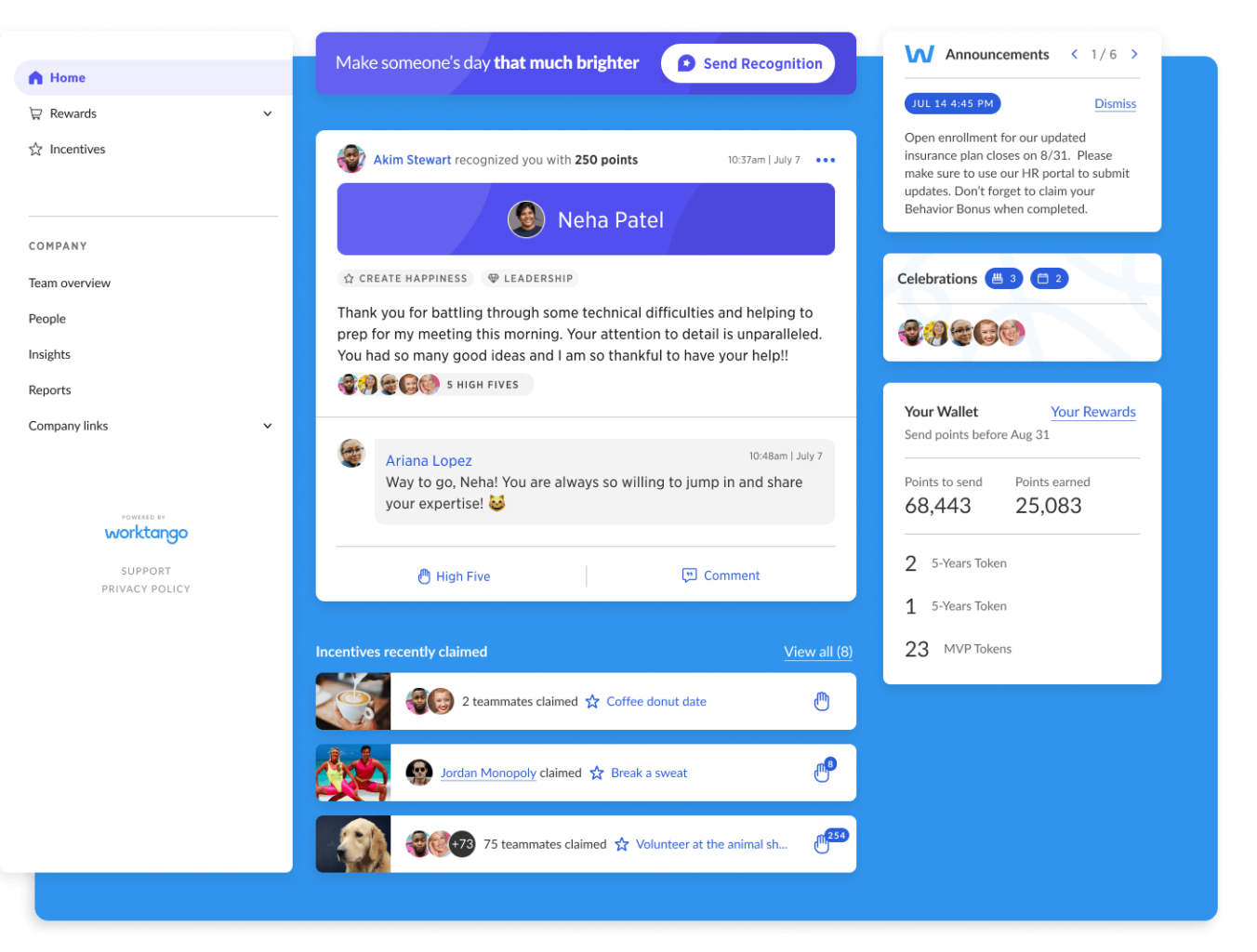
1. Achievers
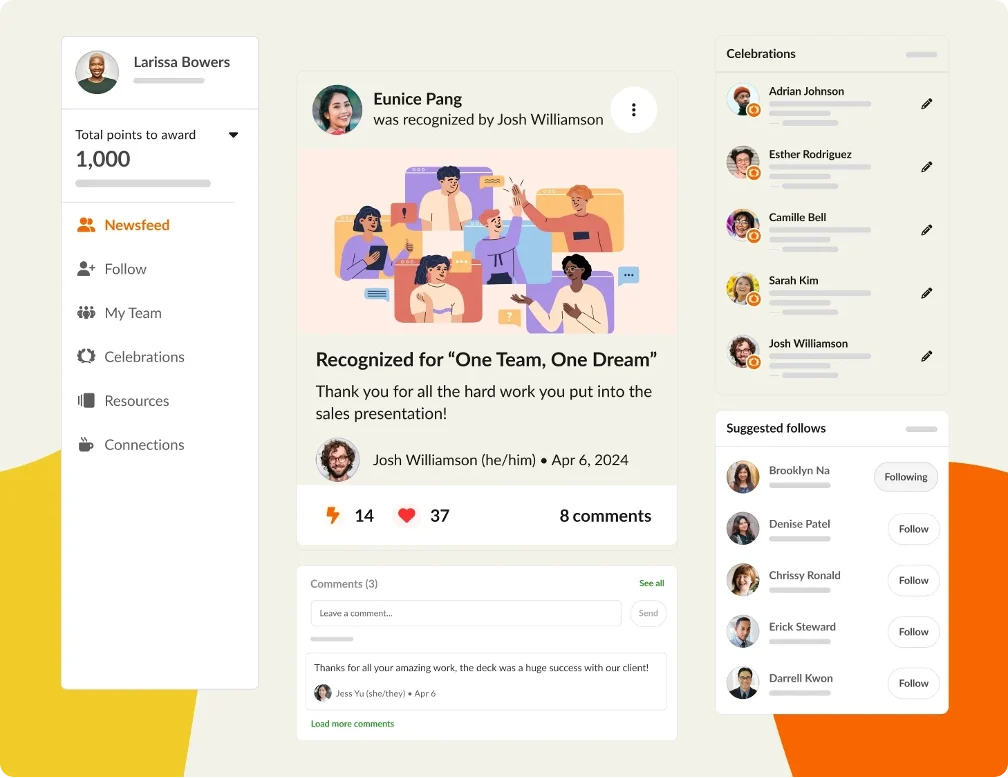
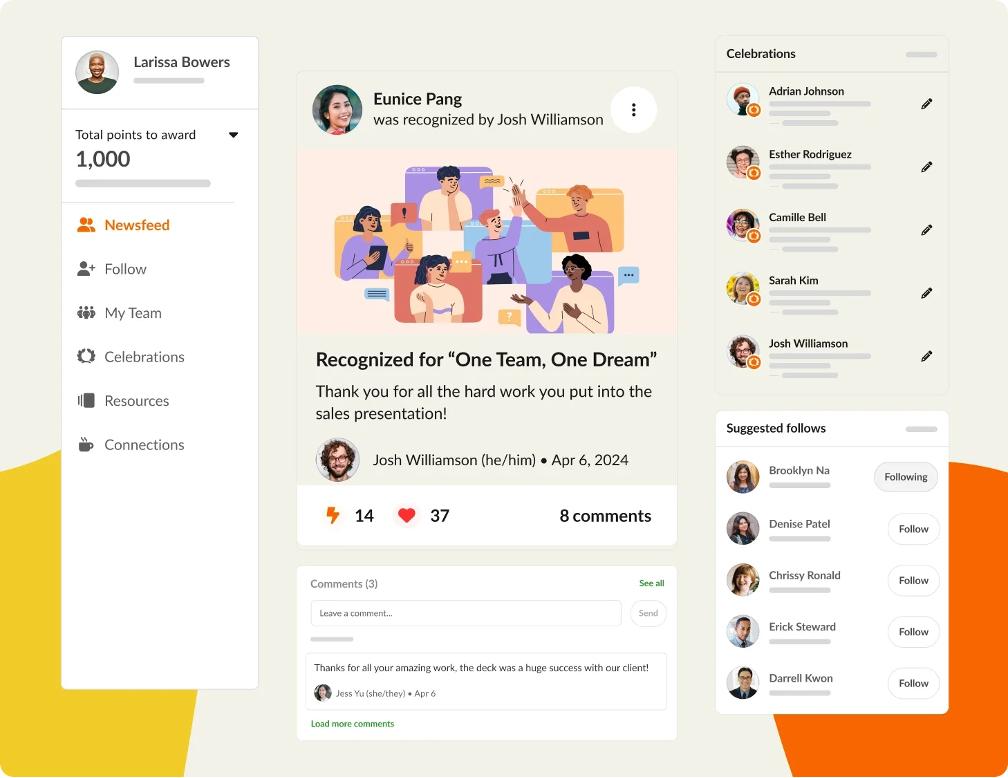
Achievers stands out as a dedicated recognition and rewards platform meticulously engineered to cultivate retention through consistent and meaningful engagement. Its core strength lies in democratizing recognition, making it effortlessly accessible for every employee, not just HR leaders. This approach has yielded impressive results, boasting a 93% global employee adoption rate and an average of 13 recognitions per employee annually. Achievers users recognize colleagues twice as frequently as those on competing platforms, leading to a five-fold impact on engagement, performance, and, crucially, retention. The platform is designed for global scalability, offering a multilingual experience and facilitating rewards fulfillment in nearly 190 countries, free from customs issues, markups, or hidden fees. Employees can recognize and redeem rewards from any location, seamlessly integrated with widely used tools such as Workday and Microsoft Teams. For HR leaders, Achievers provides comprehensive, self-serve insights and AI-powered analytics, enabling faster, more intelligent decisions regarding culture, performance, and retention strategies. Beyond the software, Achievers emphasizes partnership, offering award-winning 24/7 support in over 200 languages, a rich library of on-demand recognition campaigns, and a dedicated success team to guide clients from initial implementation to sustained impact.

- Best for: Organizations prioritizing a dedicated recognition platform that supports frequent appreciation, global reward delivery, and pervasive everyday engagement.
- Key features: Global peer-to-peer recognition, customizable rewards catalog, AI-powered analytics for culture insights, seamless HRIS integrations, multilingual support.
- Weakness: Its deep focus on recognition and rewards means companies seeking a comprehensive HR suite might need to integrate it with other HR systems for broader functionalities like payroll or core HR administration.
- Review: "I think what stands out most about Achievers is their commitment to creating a positive and engaging workplace culture. Their focus on employee recognition and fostering strong, meaningful connections sets them apart. They prioritize creating an environment where people feel valued, appreciated, and empowered, whether through peer-to-peer recognition programs or leadership initiatives. That level of investment in employee satisfaction can boost morale and overall productivity." — Samantha Z., Flight Communications Officer, G2
- G2 rating: 4.7/5
2. SurveyMonkey
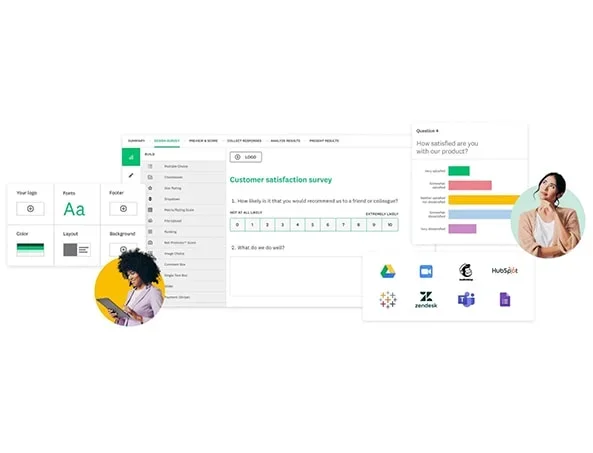
SurveyMonkey offers robust tools for organizations to gather employee feedback and continuously monitor engagement levels. Its versatile survey capabilities allow teams to gauge everything from overall job satisfaction to specific sentiment regarding company initiatives, making it easier to identify potential issues early and gather data to inform retention strategies. The platform is particularly well-suited for teams seeking a flexible and user-friendly solution to streamline their feedback collection processes.
- Best for: Organizations needing a versatile tool to run general surveys across various audiences, including employees, customers, or market segments.
- Key features: Customizable survey templates, multiple question types, real-time results, basic reporting, integration with various tools.
- Weakness: While excellent for data collection, companies with more complex analytical needs or those requiring automated action plans based on survey insights may find it necessary to supplement SurveyMonkey with additional tools.
- Review: "I found SurveyMonkey to be an excellent resource for building and generating somewhat simple research surveys it fulfill a variety of objectives and needs. Granted, I was either utilizing the free and then the basic level, which was understandably limited. For a novice, this is an amazing resource, though it can become challenging if experience in modeling is low." — Gabriel, Senior Digital Strategist, via Capterra
- G2 rating: 4.4/5
3. Motivosity
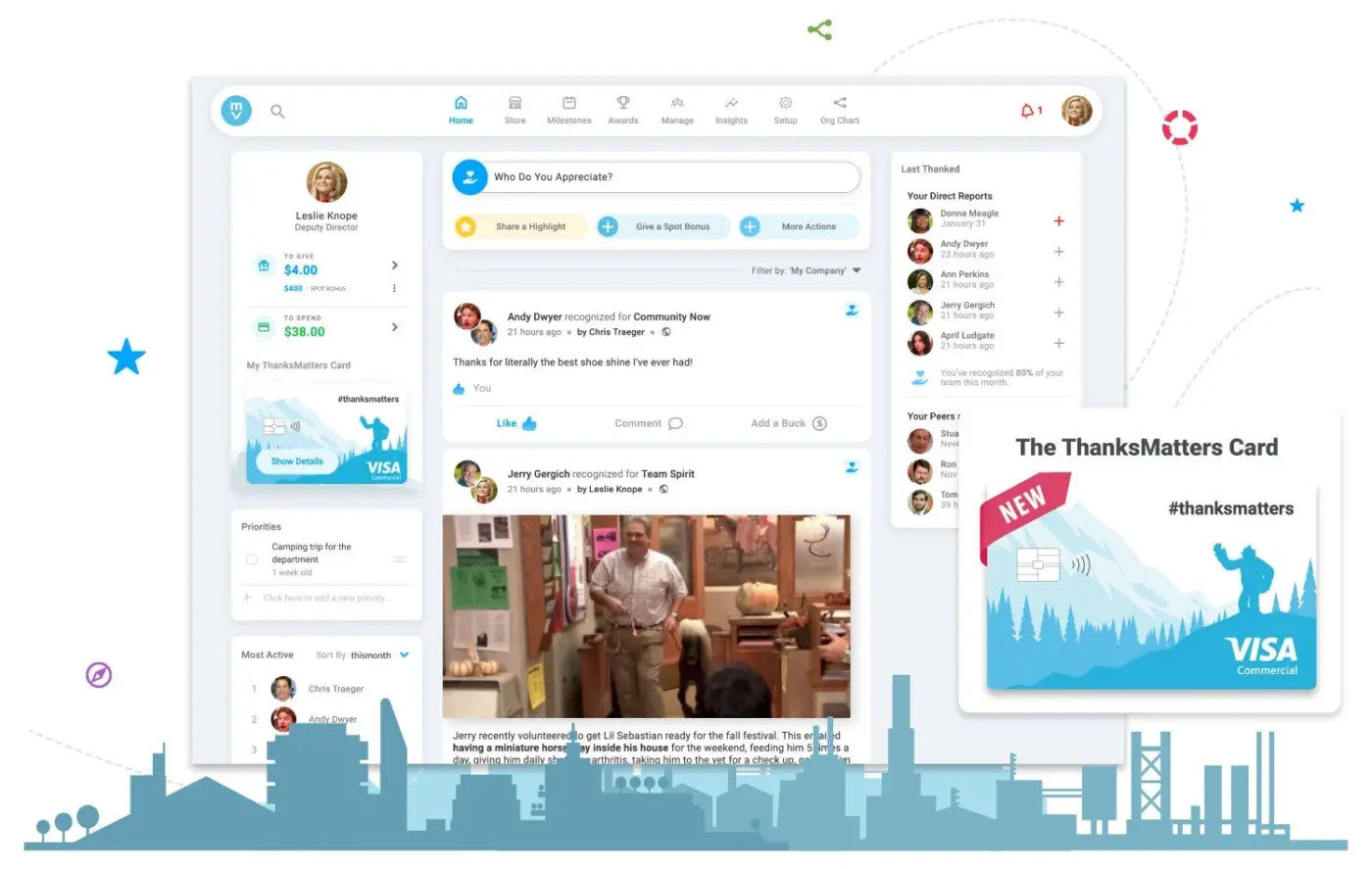
Motivosity is an employee retention software primarily focused on cultivating a culture of appreciation through robust peer-to-peer recognition. It simplifies the process for employees to celebrate daily accomplishments, share positive feedback through comments, and strengthen connections across diverse teams. The platform aims to make recognition an integral part of the daily work experience, fostering a more positive and collaborative environment.
- Best for: Small to mid-sized teams seeking an effective solution to facilitate peer recognition and enhance team connectivity.
- Key features: Peer-to-peer recognition feed, monetary rewards, customizable award categories, social feed for team interaction, manager dashboards.
- Weakness: While its recognition tools are strong, implementing and integrating Motivosity into more complex HR ecosystems might require significant planning. Early adoption, especially in larger or geographically dispersed teams, may also demand considerable upfront effort to ensure widespread usage and impact.
- Review: "This is a great solution to our goal of engaging remote employees and still connecting with each other. The admin side isn’t as user friendly, but it’s a great product!" — Review via Gartner
- G2 rating: 4.7/5
4. BambooHR
BambooHR excels at simplifying core HR tasks, offering a user-friendly interface combined with essential tools for performance management, seamless onboarding, and employee self-service. This comprehensive approach helps organizations streamline operational efficiencies while simultaneously bolstering employee engagement. Its customizable reporting features provide HR teams with critical visibility into workforce trends, and its extensive integration capabilities extend the platform’s utility across various HR functions.
- Best for: Companies seeking a straightforward, centralized HR system to manage their comprehensive people operations effectively.
- Key features: Applicant tracking system (ATS), employee database, onboarding tools, performance management, time-off tracking, customizable reports.
- Weakness: Organizations specifically looking for advanced, built-in recognition and rewards programs may find BambooHR’s offerings in this area limited and might need to integrate it with a specialized platform to fully support such initiatives.
- Review: "BambooHR makes it much easier and less time consuming to do most of the administrative work of HR. The reports are super easy to pull, create and manipulate if needed to get the information I need to make informed decisions and presentations. I really like having (almost) everything HR in one place." — Jennifer F., Director of People and Culture, via G2
- G2 rating: 4.4/5
5. Sparkbay
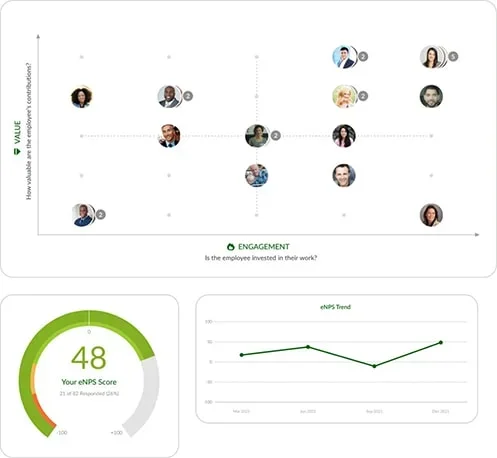
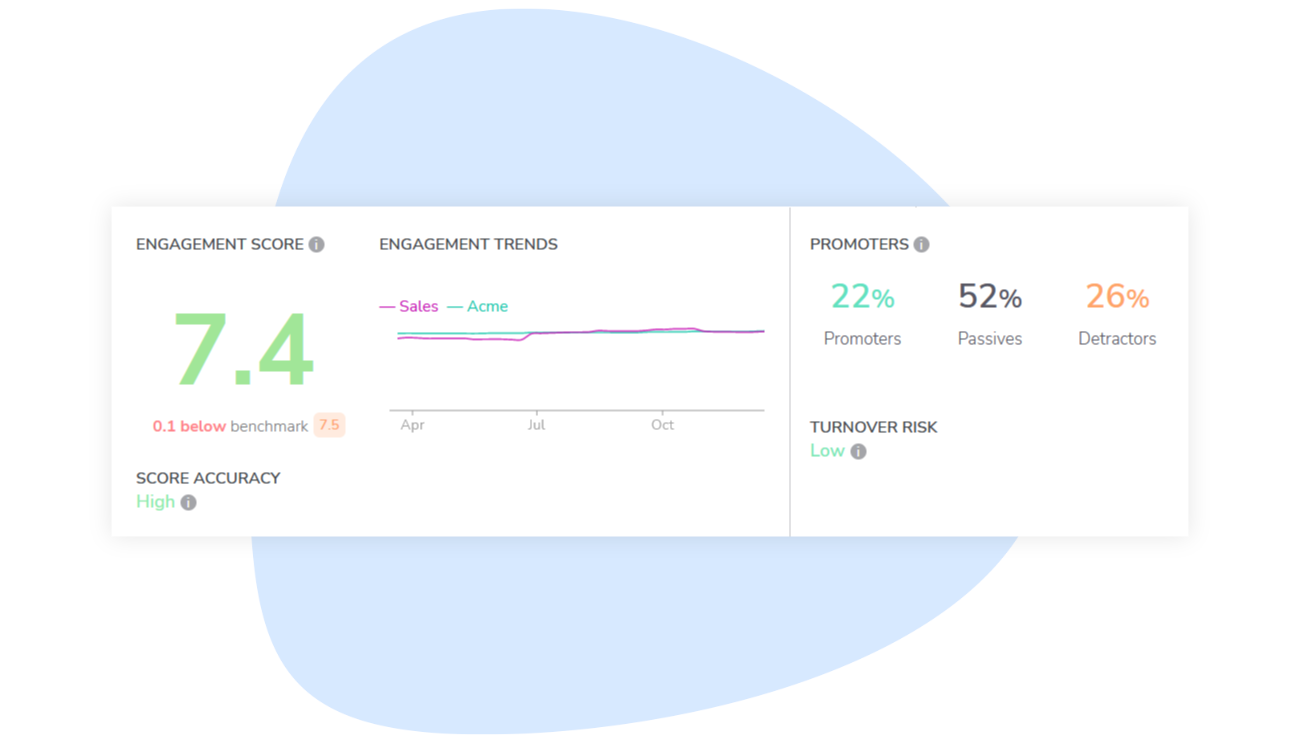
Sparkbay provides an insightful platform designed to help organizations pinpoint the underlying causes of employee turnover by meticulously tracking feedback across the entire employee journey. Its predictive insights are a key strength, highlighting early indicators of attrition risk and offering HR teams enhanced clarity on where potential challenges may be emerging. By analyzing patterns from onboarding through to exit interviews, Sparkbay empowers more informed decision-making regarding retention strategies.
- Best for: Organizations committed to identifying turnover risks proactively and understanding long-term engagement trends through data-driven insights.
- Key features: Engagement surveys, pulse surveys, predictive analytics for turnover risk, customizable dashboards, action planning tools.
- Weakness: Sparkbay’s primary focus is on feedback collection and advanced analytics. Consequently, companies may still require additional tools for broader recognition programs, internal communication, or other general employee engagement initiatives beyond data gathering.
- Review: "The tool is easy to use and powerful at the same time. When we got our first people data, we were amazed at how much information was made available to us." — Lewis, Human Resources Generalist, via Capterra
- G2 rating: 5/5
6. Confetti
Confetti offers an extensive catalog of virtual and in-person team-building experiences, significantly simplifying event planning for companies. The platform streamlines the process by providing hosts, logistical support, and comprehensive planning tools, allowing teams to book activities efficiently and execute them smoothly from beginning to end. This focus on experiential engagement can be a powerful driver of team cohesion and morale.
- Best for: Companies seeking a straightforward and comprehensive solution for booking hosted team-building events, celebrations, and diverse employee experiences.
- Key features: Curated event catalog, virtual and in-person options, dedicated event hosts, full logistical support, customizable experiences.
- Weakness: Confetti’s specialization is team-building experiences. Therefore, organizations requiring tools for ongoing engagement, formal recognition programs, or other employee development initiatives outside of specific events will likely need to integrate other platforms.
- Review: "Confetti is fun! It is easy to use and the options are unlimited. It is very customisable depending on your needs." — Carla, Manager, via Capterra
- G2 rating: N/A (Note: G2 rating was N/A in original content, so I keep it as is.)
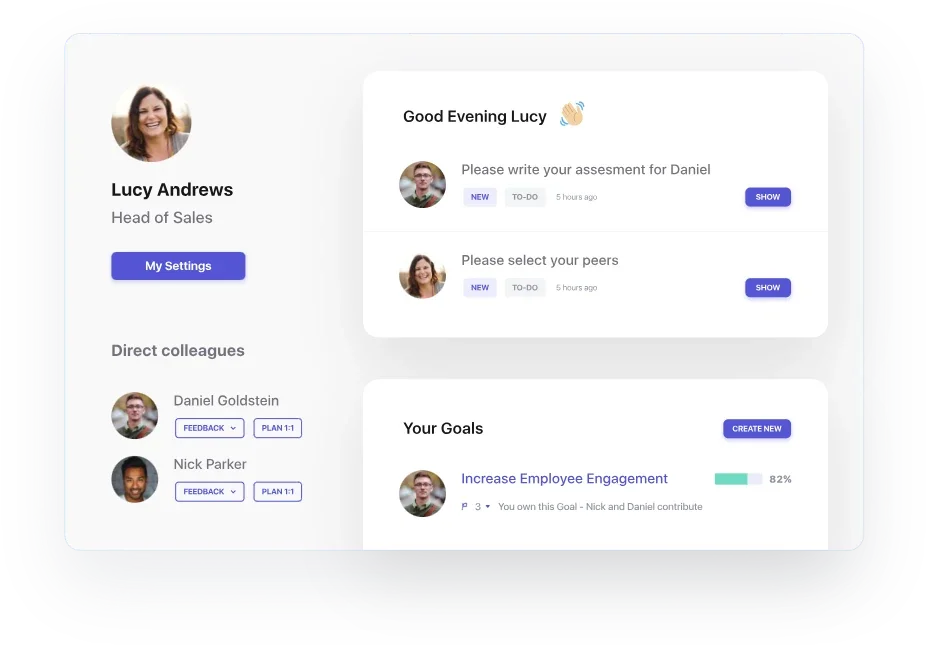
7. PerformYard
PerformYard is designed to streamline performance management processes, offering integrated tools for conducting reviews, setting clear goals, and capturing continuous feedback within a single, unified platform. Its innovative AI features assist managers in summarizing feedback and drafting reviews more efficiently, significantly reducing administrative burden. The flexible workflows allow HR teams to mirror their existing performance processes without the need for extensive manual effort or system overhauls.
- Best for: Teams seeking structured, customizable performance review processes complemented by AI support for feedback summarization and goal management.
- Key features: Customizable review cycles, 360-degree feedback, goal setting and tracking (OKRs/KPIs), continuous feedback, AI-assisted review writing.
- Weakness: PerformYard’s core strength lies in performance management and reviews. Companies looking for broader recognition and rewards systems or more extensive culture-building tools beyond performance metrics may need to integrate additional platforms.
- Review: "I really like how intuitive and flexible PerformYard is. It makes it easy to set goals, track progress, and give continuous feedback without feeling overwhelming." — Devon N., Account Executive, via G2
- G2 rating: 4.7/5
8. Zoho
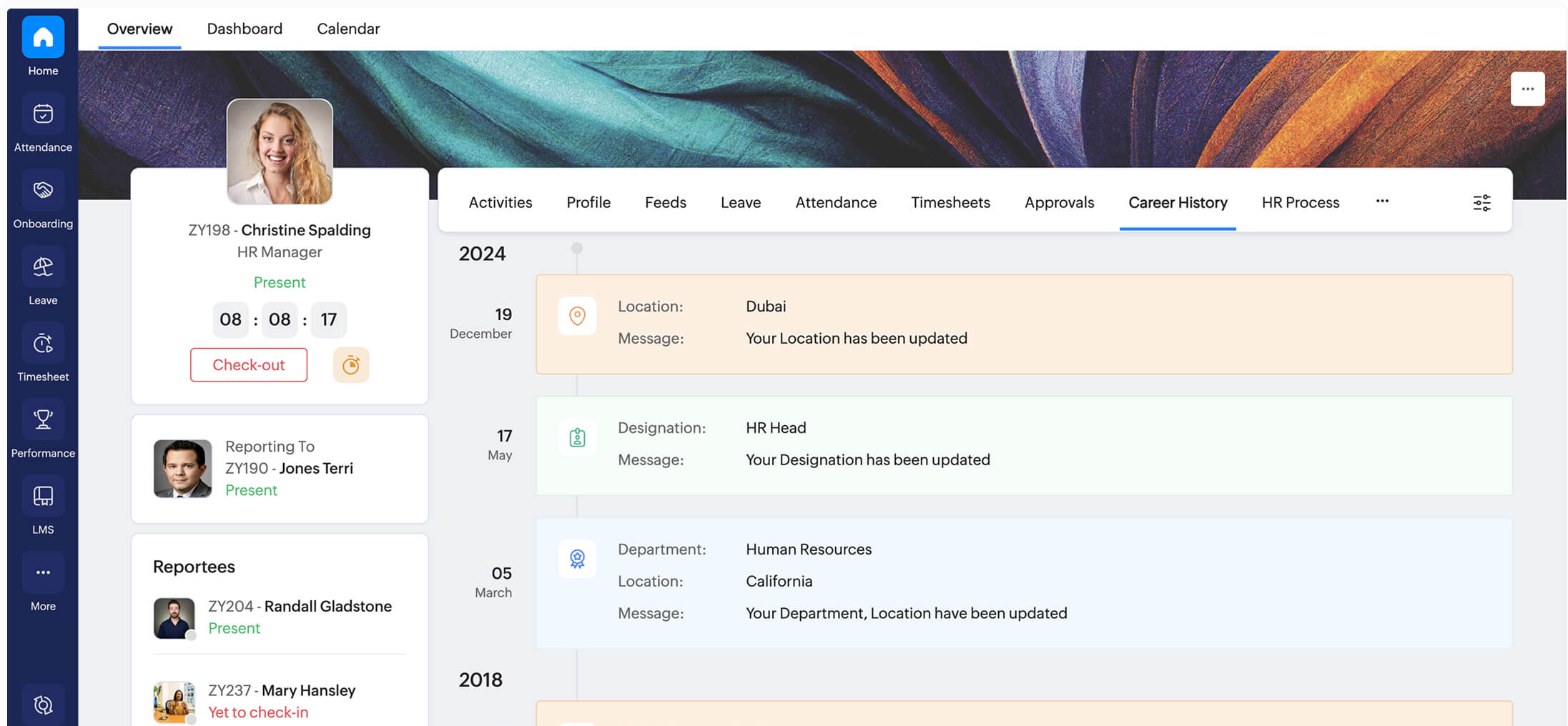
Zoho provides an extensive suite of HR tools consolidated into a single platform, simplifying the management of hiring, core HR functions, performance tracking, learning and development, and payroll within one integrated system. Its modular design and seamless integrations with other Zoho products offer considerable flexibility for companies aiming to centralize their HR processes and reduce reliance on multiple vendors.
- Best for: Teams seeking an all-in-one HR system that comprehensively covers onboarding, attendance, performance management, learning, and engagement surveys.
- Key features: Core HRIS, applicant tracking, payroll management, performance reviews, learning management system (LMS), employee self-service.
- Weakness: Due to its broad functionality encompassing many HR areas, teams specifically seeking advanced recognition, sophisticated rewards programs, or highly specialized culture-building tools may find Zoho’s offerings less granular in these specific areas and might require supplementary platforms.
- Review: "The best is it is affordable and easy to use tool. Anyone with a basic understanding of CRM platform can use it easily. It is a fantastic option for companies looking for flexible, cost effective CRM solution." — Pradeep S., Senior Project Management Executive, via G2
- G2 rating: 4.1/5
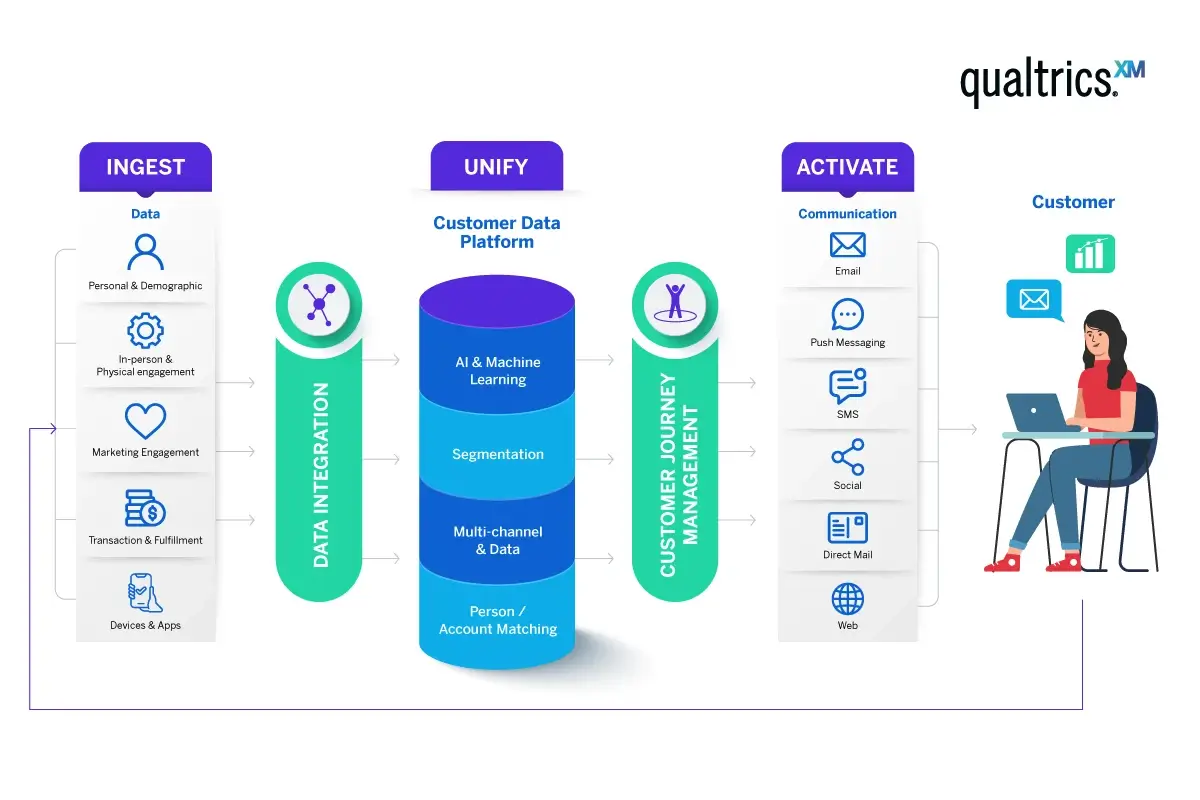
9. Qualtrics
Qualtrics offers advanced analytics capabilities designed to help organizations deeply understand the root causes of employee attrition, pinpoint existing experience gaps, and identify which factors most significantly influence retention. Equipped with powerful dashboards, segmentation tools, and sophisticated modeling features, teams can swiftly connect data points across the entire employee lifecycle, transforming raw information into clear, actionable insights for strategic talent management.
- Best for: Organizations requiring deep, research-grade analytics to understand attrition drivers and accurately measure the impact of their talent and experience programs.
- Key features: Employee experience surveys, sentiment analysis, predictive attrition modeling, journey mapping, customizable dashboards, advanced statistical analysis.
- Weakness: While powerful for data analysis, some users have noted that the interface can become quite complex and "heavy," particularly when managing very large datasets or numerous dashboards, potentially making it challenging to quickly grasp the full scope of information presented.
- Review: "Sometimes the interface can get really, really heavy, especially when dealing with large datasets or multiple dashboards. It gets hard to comprehend the scale of the situation and understand what’s in front of you." — Aryan., Freelancer, via G2
- G2 rating: 4.4/5
10. Empuls
Empuls is an employee retention software that aims to foster a more connected and motivated workforce through a combination of recognition, feedback mechanisms, and data-driven engagement tools. The platform empowers organizations to embed appreciation into the everyday employee experience. Empuls provides highly customizable programs for rewards and recognition, alongside comprehensive tools for deploying employee surveys and gathering actionable feedback, creating a holistic approach to engagement.
- Best for: Teams seeking a general employee engagement platform that offers a broad mix of features, including recognition, surveys, and feedback capabilities.
- Key features: Social recognition feed, rewards catalog, pulse surveys, employee NPS, personalized engagement insights, communication hub.
- Weakness: For some organizations, the initial setup and integration with existing HR or payroll systems might demand a certain level of planning, especially if extensive customization is a key requirement to align with unique organizational structures or processes.
- Review: "Empuls provides facility to encourage and appreciate our colleagues serving as a booster for continued growth and development. It also helps with custom wish quotes, sharing points as rewards, etc. which helps in boosting employees growth." — Sri D., Associate Software Engineer, via G2
- G2 rating: 4.6/5
11. Leapsome
Leapsome is an employee retention software that strategically unifies performance management, employee engagement, and professional development within a single, cohesive platform. By offering tools for continuous feedback, goal setting, learning and development, and engagement surveys, it enables organizations to cultivate a more transparent and growth-oriented employee experience, directly linking individual progress to broader business objectives.
- Best for: Companies aiming to seamlessly connect individual employee development with overarching business goals through integrated performance and learning management.
- Key features: Continuous performance reviews, 360-degree feedback, OKR management, learning paths, engagement surveys, skills framework.
- Weakness: For smaller teams, the extensive depth and feature set of the platform might require a considerable investment of time for initial setup and effective scaling. Depending on an organization’s existing technology stack, integrating Leapsome might also necessitate some upfront configuration work.
- Review: "I liked the simplicity of the software, the confidence booster it gives to fellow coworkers for there work performance. The positive feedback keeps them engaged in the program building there work performance up!" — Verified reviewer via Capterra
- G2 rating: 4.8/5
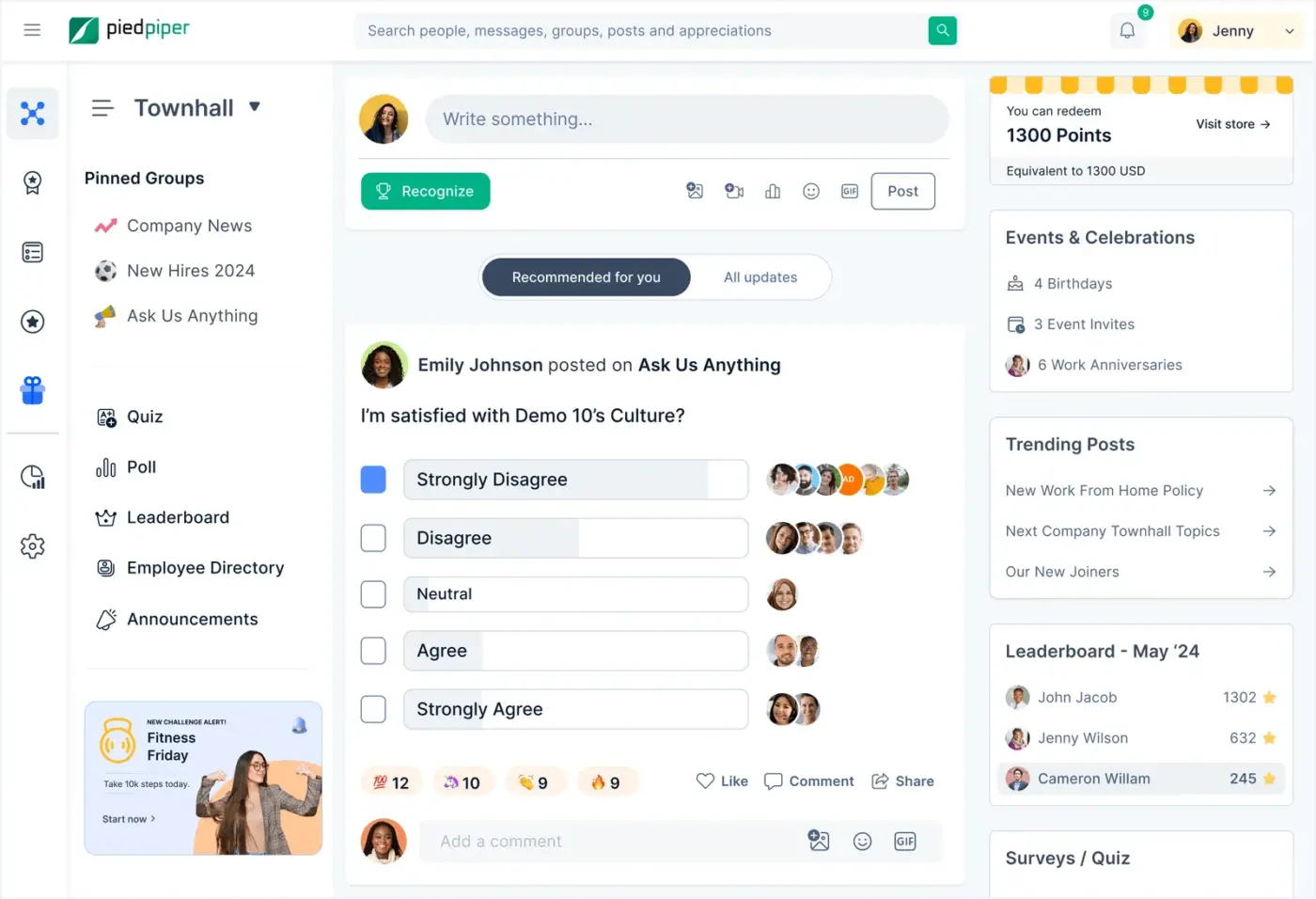
12. WorkTango
WorkTango offers employee retention software built around the principles of continuous feedback and proactive engagement. The platform empowers organizations to effortlessly gather employee input through various channels, including surveys, polls, and pulse checks, and critically, to translate that feedback into meaningful and measurable action, thereby closing the feedback loop effectively.
- Best for: Companies that prefer a unified system offering both robust feedback collection and recognition features to drive engagement and retention.
- Key features: Employee surveys (pulse, lifecycle, annual), peer recognition, rewards and incentives, goal setting, real-time insights, action planning.
- Weakness: While the platform is undeniably robust and feature-rich, new users might require some time to fully grasp its extensive capabilities and optimize its use. Integration with existing HR systems can also demand specific configuration, and pricing models may vary significantly based on company size and the selection of features, which smaller organizations should consider.
- Review: "Easy to implement, need little training for user and administrators. It saves lots of time for surveys and data analytics based on survey data, leads to better employee retainment and satisfaction." — Review via Gartner
- G2 rating: 4.7/5
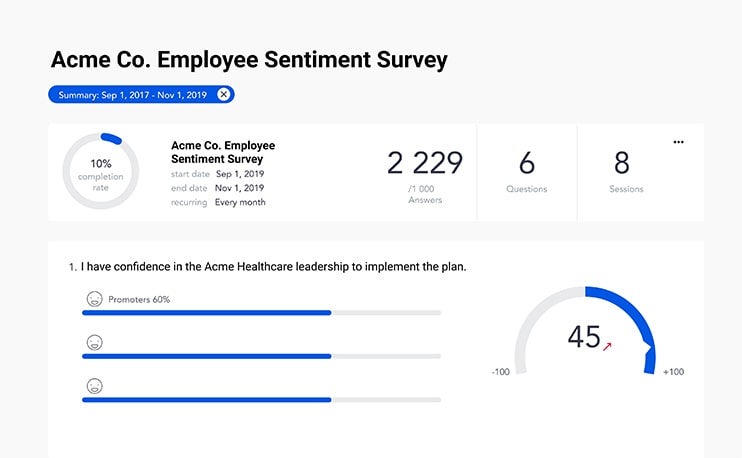
13. Cooleaf
Cooleaf is an employee retention software that leverages recognition, rewards, and gamification to cultivate a more engaged and motivated workforce. Through interactive features like challenges, badges, and a points-based system, the platform infuses a sense of enjoyment and momentum into daily work, simultaneously reinforcing desired behaviors and significantly boosting morale. The platform also provides extensive customization options for rewards programs, allowing them to be perfectly aligned with specific company culture and strategic objectives.
- Best for: Teams seeking a dynamic platform that integrates recognition, comprehensive surveys, and engaging team activities to foster a vibrant culture.
- Key features: Peer-to-peer recognition, gamified challenges, customizable rewards, wellness programs, survey tools, activity feed.
- Weakness: Depending on the organization’s unique structure and existing systems, the initial setup and full implementation of Cooleaf might necessitate additional planning and resource allocation. Pricing structures can also vary, which is an important consideration for smaller teams or those with more constrained budgets.
- Review: "I enjoy the number of features like personalizing our profiles, joining community groups, weekly activities to encourage engagement, recognizing peers for their kindness, and all while getting to earn rewards. I frequently use this app and is fairly easy to use." — Aracely R., Repo Specialist, via G2
- G2 rating: 4.9/5
14. Mo
Mo is an employee retention software specifically designed to enhance engagement through real-time feedback, impactful recognition, and highly customizable rewards. Its core purpose is to facilitate stronger team connections and sustained motivation by making it simpler to celebrate outstanding work, share constructive feedback, and continuously monitor engagement levels over time, ensuring a pulse on workforce sentiment.
- Best for: Organizations prioritizing a platform that actively supports day-to-day appreciation and fosters continuous connection among employees.
- Key features: Real-time recognition, customizable rewards marketplace, peer feedback, pulse surveys, team building activities, social feed.
- Weakness: Depending on an organization’s existing IT infrastructure and workflows, fully integrating Mo might require a degree of coordination and effort. As with many feature-rich platforms, there can also be an initial learning curve for users. Additionally, pricing structures are variable, which could be a factor for smaller teams or those with budget constraints to meticulously evaluate.
- Review: "This is an excellent and effective platform to acknowledge my work peers success and as a recognition between co-workers… I feel that monthly Mo’s point distributed among workers isn’t enough and would be better if administrator can set the limit themself." — Baharom, Customer Support Manager, via Capterra
- G2 rating: 4.6/5
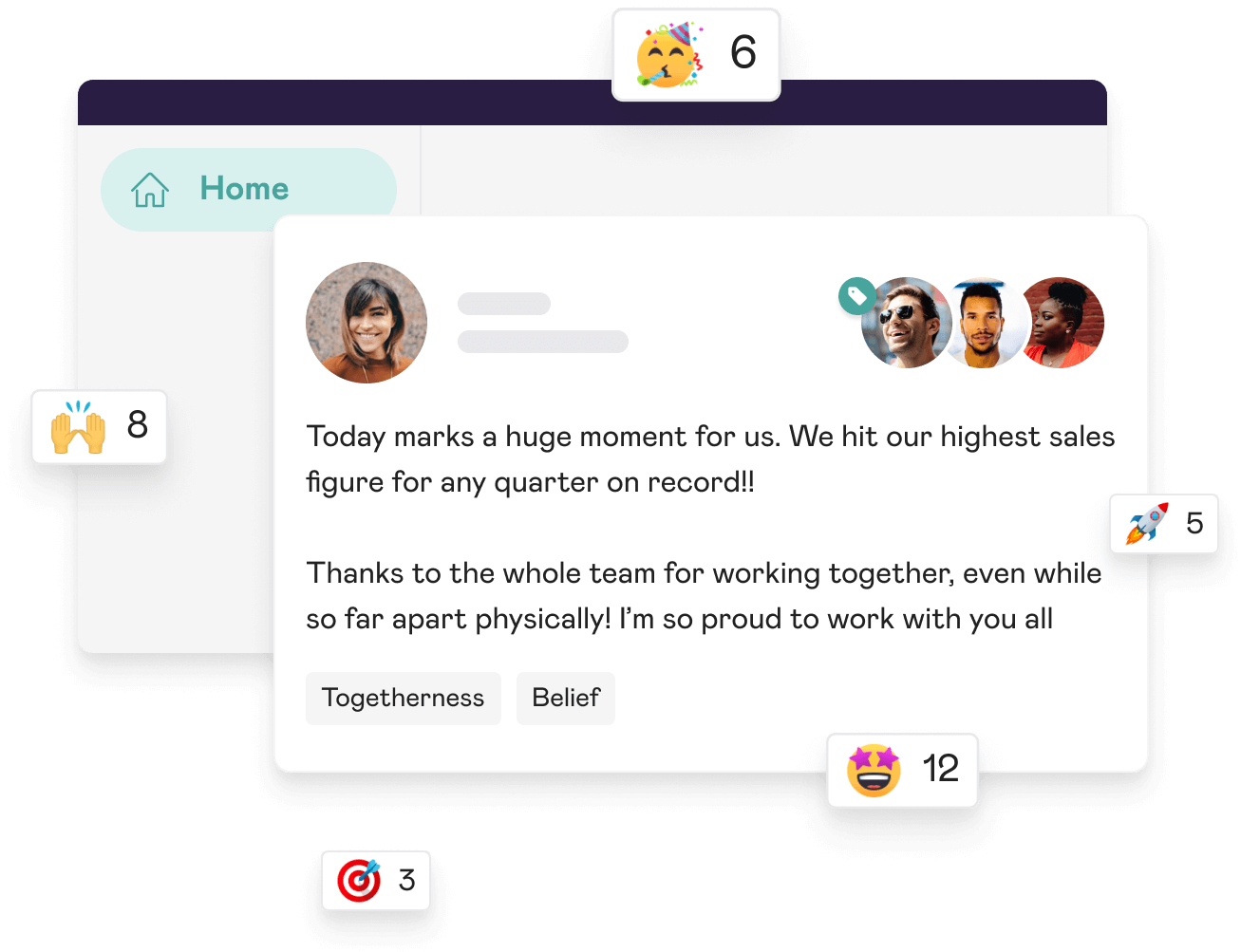
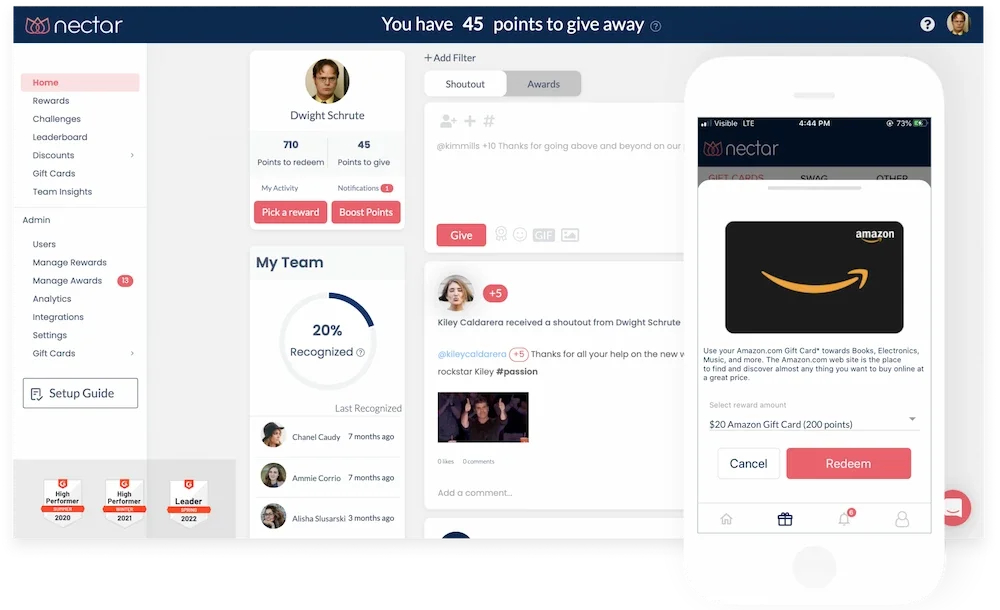
15. Nectar
Nectar offers a comprehensive solution that integrates recognition, rewards, and feedback mechanisms to help cultivate a stronger organizational culture and significantly boost employee engagement. It serves as a centralized hub where organizations can celebrate achievements, gather invaluable employee input, and effectively monitor key engagement trends, providing a holistic view of workforce health.
- Best for: HR teams aiming to adopt a more data-driven and strategic approach to keeping their employees actively engaged and satisfied.
- Key features: Peer-to-peer recognition, rewards catalog (digital gift cards, custom items), challenges, health and wellness initiatives, 1:1 feedback, analytics.
- Weakness: Depending on the size and structural complexity of a team, the initial setup and onboarding process for Nectar might require a notable time investment. Furthermore, some users have indicated that the customization options available within the platform can feel somewhat limited, potentially impacting the ability to perfectly align with highly specific organizational needs.
- Review: "What I love most about Nectar is how simple and fun it makes recognition. Giving shoutouts with GIFs adds a personal, lighthearted touch that never gets old… If I had one wish, it’d be for more flexibility with PayPal withdrawals. Having to create a PayPal account tied to my work email wasn’t ideal, and a bit of added control here would go a long way." — Max L., IT Engineer, via G2
- G2 rating: 4.7/5
Retention Starts with Strategic Platform Selection
The pursuit of robust employee retention is fundamentally about understanding and valuing an organization’s most critical asset: its people. There is no universally applicable "one-size-fits-all" solution when it comes to retention strategies, primarily because every workplace possesses a unique culture, operational dynamics, and employee demographic. Therefore, the most effective employee retention software is the one that seamlessly integrates with how employees genuinely work, resonates with their core values and aspirations, and aligns with the strategic direction and future growth trajectory of the company.
Organizations must critically evaluate what truly matters most in their specific context: Is the priority to streamline and enhance the process of recognizing exceptional work? Is it to establish more effective mechanisms for gathering candid employee feedback and acting upon it? Or is it to gain a clearer, data-driven picture of the precise factors that are driving engagement—or, conversely, impeding it? The ideal platform should feel intuitive to use, offer sufficient flexibility to adapt to evolving needs, and be demonstrably built for real-world application rather than merely fulfilling a theoretical wish list. When faced with a multitude of options, booking a live demonstration of a prospective platform is an invaluable step. Witnessing the software in action provides the most authentic understanding of its capabilities, user experience, and how well it can integrate with existing people, workflows, and future organizational plans. By making an informed and strategic choice, companies can lay a strong technological foundation for fostering a loyal, engaged, and productive workforce well into 2026 and beyond.
*Information and pricing in this blog post was sourced from each vendor’s website.