
The rapid evolution of artificial intelligence, marked by sophisticated chatbots, advanced video generation, and AI-driven capabilities in research, content creation, and simulation, has paved the way for a groundbreaking new concept: the "digital twin." While the term may sound futuristic, its roots trace back to the ambitious endeavors of NASA in the 1960s. The agency’s engineers, faced with the catastrophic oxygen explosion aboard Apollo 13, developed a precise digital replica of the spacecraft. This virtual model, encompassing all its intricate electronics and power systems, served as a critical tool for simulating the events leading to the accident, enabling them to devise solutions under immense pressure.
This foundational application of digital twins demonstrated their power in understanding and mitigating complex system failures. Since those early days, the technology has been refined and deployed across various industries. Major corporations like Boeing, Dassault, GE, and Siemens have leveraged digital twins to simulate and optimize intricate systems such as airplanes and complex train networks. By 2010, NASA formally defined a digital twin as "an integrated multi-physics, multi-scale, probabilistic simulation of an as-built vehicle or system that uses the best available physical models, sensor updates, and fleet history." This definition underscored the technology’s capacity to create dynamic, data-rich virtual representations of physical assets.
Now, in 2025, this paradigm is shifting dramatically, with the application of digital twin technology extending beyond machinery and infrastructure to encompass human beings. The proliferation of accessible AI tools—including sophisticated avatar creation, realistic voice synthesis, and advanced natural language processing—has created fertile ground for this evolution. As these technologies become commoditized, the logical next step is to explore their potential in replicating human capabilities and knowledge. Companies are now actively testing these human digital twins, with early results suggesting a transformative impact on how work is conducted and knowledge is shared.
The Genesis of the Human Digital Twin
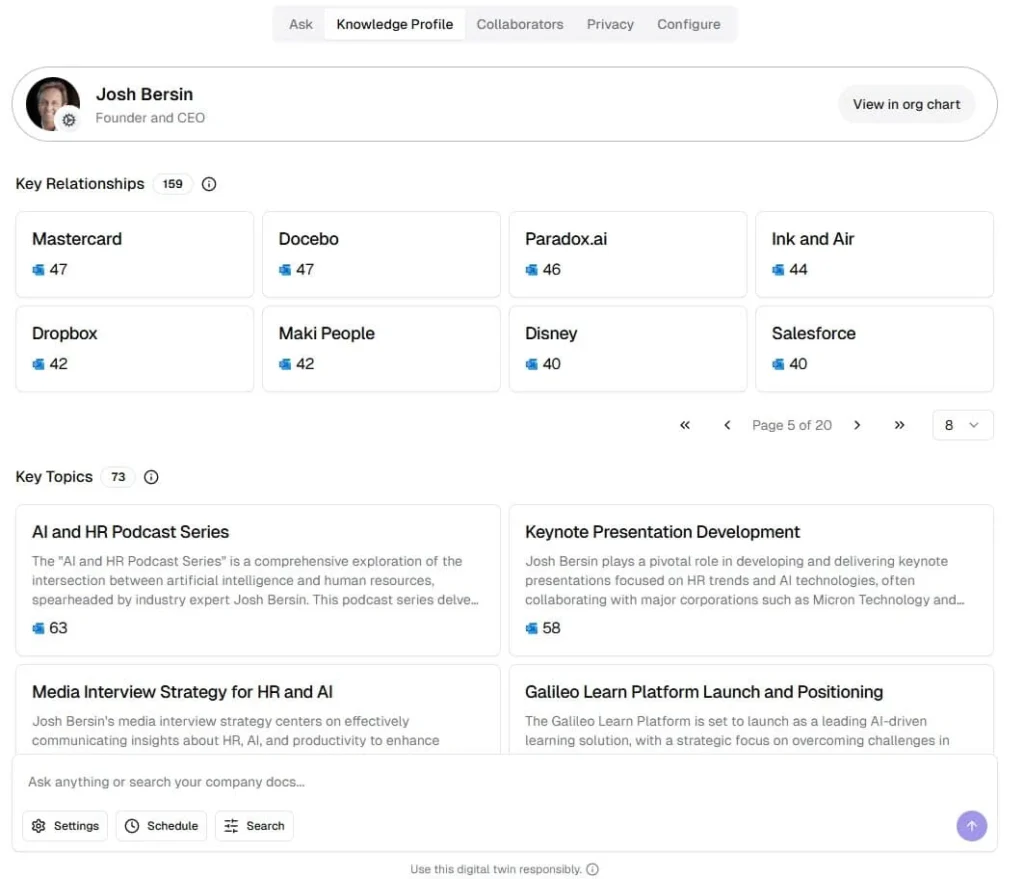
The recent launch of Viven.ai, a company founded by a team of AI experts spun off from Eightfold, marks a significant milestone in this development. Viven.ai has engineered a platform designed to create these human digital twins by ingesting a comprehensive array of an individual’s digital footprint within their professional life. This includes a vast spectrum of data points such as emails, meeting records, instant messages, documents, and virtually all activities logged within platforms like Microsoft Graph or Google Workspace. The system, currently implemented with Microsoft’s ecosystem, aggregates this information to construct a detailed online representation.
This digital replica doesn’t merely store data; it synthesizes it to present a nuanced understanding of an individual’s professional landscape. Key relationships, organizational structures, active projects, areas of expertise, and an individual’s overall persona are mapped out. The Viven.ai platform incorporates a highly configurable security framework, empowering users to meticulously control which aspects of their digital lives are included, thereby safeguarding personal emails, family information, and other non-work-related data from the system.
Unlocking Unprecedented Efficiency and Insight
The implications of such a comprehensive digital representation are profound. Imagine the ability to query an individual’s digital twin for specific information without needing to directly interrupt the person. For instance, a co-founder could ask a colleague’s twin, "What are your key action items for tomorrow?" or "What is the current status of our relationship with XYZ company?" Similarly, a finance professional’s twin could be queried for real-time financial data, such as accounts receivable, or the status of critical client engagements.
This capability is particularly impactful in "talent-dense" organizations, where individuals often wear multiple hats and engage directly with clients. A leader could, for example, pose a question like, "Who among our team has recently interacted with Liberty Mutual, and what was the essence of those conversations?" or "Who delivered the most recent Galileo demo, and what specific script did they employ?" This allows for rapid dissemination of crucial information and identification of relevant expertise within the organization.
On a personal level, each digital twin functions as an extension of the individual’s knowledge base. By retaining extensive historical data, such as fifteen years of emails, an individual’s twin can recall nuanced details of past interactions. A colleague could ask, "Josh, can you provide a history of your meetings with Workday and outline the key learnings accumulated over the years?" or even solicit feedback on a research document, prompting the twin to analyze and respond as the individual might.

"Collective Intelligence" and the Future of Collaboration
Each digital twin, in essence, embodies an individual’s accumulated knowledge and professional persona. This presents immense opportunities for roles in customer service, technical support, and training, offering immediate access to subject matter experts without the need for direct engagement. The Viven.ai platform provides transparency, allowing individuals to see who is querying their digital twin, revealing patterns of inquiry and identifying frequently sought-after expertise. This frees up valuable time for individuals by providing an asynchronous channel for knowledge sharing.
Consider a scenario where an urgent task requires input from legal, engineering, marketing, or contracts departments, but the relevant expert is unavailable or needs to be undisturbed. With a digital twin, one could pose the question directly to their virtual counterpart and, in many cases, receive a prompt and relevant answer. This drastically reduces delays and streamlines critical workflows.
One of the most significant applications, according to proponents, lies in enhancing "Collective Intelligence." In research and advisory firms, constant interactions with clients, partners, vendors, and the press generate a wealth of information. Instead of convening meetings for updates, digital twins can provide an immediate, real-time overview of these relationships and the insights gained from them. This enables the entire organization to function as a unified, highly connected entity, leveraging the collective knowledge of its members as if it were a single, integrated mind.
The vision extends to connecting these digital twins with advanced AI systems like Galileo. This would allow clients to query any staff member through their digital twin, receiving immediate responses. The time savings derived from eliminating the need for meetings or direct interruptions are substantial, fundamentally altering the pace and efficiency of business operations.
Navigating the Complexities of Security, Privacy, and Ownership
The deployment of human digital twins raises critical questions surrounding security, privacy, and intellectual property protection. Viven.ai acknowledges these concerns and has implemented robust measures to address them. These include:
- Granular Access Controls: Users can define precisely who can access their digital twin and what information they can retrieve.
- Data Encryption: All ingested data is encrypted both in transit and at rest, ensuring its confidentiality.
- Anonymization and Pseudonymization: Sensitive information can be anonymized or pseudonymized to protect individual privacy.
- Regular Security Audits: The platform undergoes continuous security assessments to identify and mitigate potential vulnerabilities.
Beyond technical safeguards, significant legal considerations arise, particularly concerning the ownership of digital twins when an employee departs from an organization. The question of who owns the digital replica and its accumulated knowledge becomes paramount. While legal interpretations may evolve, the general principle that intellectual property and work product generated during employment belong to the company suggests that digital twins could serve as a vital mechanism for retaining institutional knowledge, even after employees leave. This ensures that valuable expertise and historical context are not lost with personnel changes.
The Trajectory of Digital Employee Evolution
The technology underpinning human digital twins is still nascent, but its trajectory is undeniably steep. Given the exponential pace of AI advancement, it is reasonable to anticipate that within a year, we will see sophisticated digital replicas of key personnel become commonplace. These digital interview agents are already emerging, and the ability to converse with them, and even have them interact with each other, is rapidly approaching.
The potential for inter-twin communication is particularly exciting. Imagine asking a Vice President of Research’s digital twin to "check with the research team’s digital twins to identify who is most interested in this new project." Such capabilities open up a boundless realm of possibilities for optimizing team collaboration and project initiation.
The innovation demonstrated by Viven.ai represents a significant leap forward. For organizations seeking to explore this transformative technology, direct engagement with Viven.ai or its partners is recommended to witness firsthand the capabilities and potential applications of human digital twins. The era of the digital employee has truly begun, promising to redefine the landscape of work, knowledge management, and organizational efficiency. The implications for productivity, learning, and collaborative intelligence are vast and will undoubtedly shape the future of the professional world.







