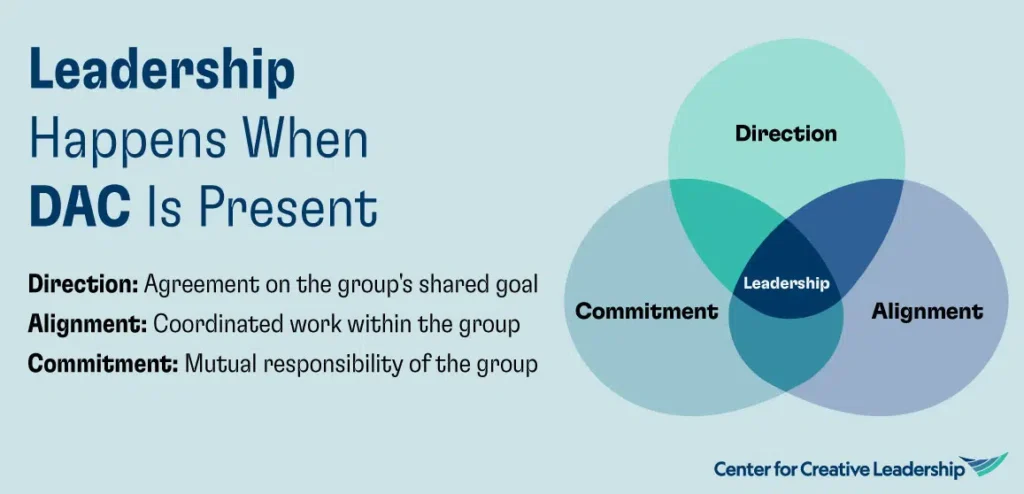
The distinction between management and leadership, often blurred in everyday discourse, carries significant weight in organizational effectiveness and personal development. While management focuses on the operational intricacies of getting tasks done, leadership encompasses a broader, more influential role in shaping vision and inspiring collective action. Understanding these nuances is crucial, particularly as organizations navigate an increasingly complex and dynamic global landscape. This exploration delves into the core tenets of leadership, drawing upon research that defines it not as an individual attribute, but as a social process yielding tangible outcomes: direction, alignment, and commitment (DAC).
Management vs. Leadership: Delineating Core Functions
At its most fundamental, management involves the processes of planning, organizing, directing, and controlling resources to achieve predefined goals. Effective managers excel at deploying personnel and resources efficiently, ensuring tasks are completed with a focus on quality and adherence to deadlines. Their purview typically centers on day-to-day operations, monitoring employee performance, delegating responsibilities, and resolving immediate conflicts. The emphasis is on maintaining order, optimizing processes, and ensuring that established expectations for performance and conduct are met.
Leadership, conversely, operates on a more expansive canvas. It is characterized by the ability to influence, inspire, and empower individuals to realize their full potential. Leaders possess a capacity for strategic foresight, seeing the broader context and helping others connect their individual contributions to overarching objectives. They motivate teams toward a shared vision, fostering an environment that nurtures innovation and supports both personal and professional growth. While managers ensure the smooth functioning of existing systems, leaders are instrumental in envisioning and driving necessary change and evolution. Both roles are indispensable for organizational success, and effective individuals often find themselves drawing upon aspects of both management and leadership, depending on the demands of their specific roles and the context of the situation.
Defining Leadership Through its Outcomes: Direction, Alignment, and Commitment (DAC)
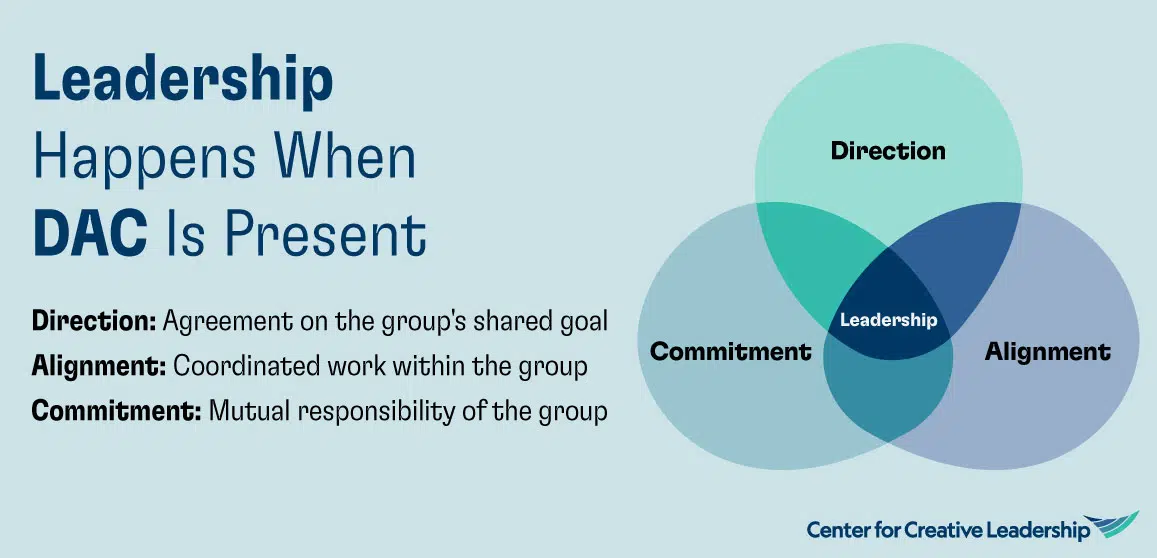
Center for Creative Leadership (CCL) research has distilled the essence of leadership into three pivotal elements: direction, alignment, and commitment, collectively known as DAC. This framework moves beyond a singular focus on the leader-follower dynamic and instead emphasizes the shared outcomes that signify leadership in action. When these three components are present, leadership is demonstrably occurring, regardless of formal title or hierarchical position.
The DAC model posits that leadership is not a solitary endeavor but a social process, an emergent property arising from the interactions, exchanges, and collaborative efforts of multiple individuals. While organizational leaders play a crucial role in setting the stage and facilitating the conditions for DAC to flourish, its creation is a collective responsibility. This understanding acknowledges that leadership potential resides within everyone and that contributions to direction, alignment, and commitment can be made by individuals at all levels of an organization.
Direction: Establishing a Shared Purpose
Direction represents the collective agreement within a group regarding its overarching goals and aspirations. It answers the fundamental question, "Where are we going?" A clear and shared sense of direction ensures that an individual’s and a team’s time, energy, and resources are channeled effectively towards what matters most. It provides clarity on what initiatives to pursue and which to decline, allowing individuals to see how their specific contributions align with broader organizational objectives. The act of setting direction transcends mere pronouncements of targets; it involves purpose-driven leadership that cultivates clarity, inspires motivation, and galvanizes collective effort. Data from numerous studies indicate that organizations with a clearly articulated and widely understood strategic direction exhibit significantly higher employee engagement and a greater capacity for innovation. For instance, a recent meta-analysis of organizational studies revealed a strong positive correlation between perceived strategic clarity and employee performance metrics, with organizations demonstrating a clear sense of direction outperforming their less clear counterparts by an average of 15%.
Alignment: Coordinating Collective Efforts
Alignment focuses on the intricate coordination of work within a group. It ensures that each member understands their role and how it interplays with the efforts of their colleagues. This synchronization minimizes confusion and miscommunication, leading to enhanced efficiencies, reduced duplication of tasks, and a more streamlined workflow. In today’s increasingly distributed work environments, achieving and maintaining alignment presents unique challenges. Remote and hybrid teams, operating across different time zones and geographical locations, require intentional strategies to foster coordination and interdependence. Research by organizations like Gartner consistently highlights communication breakdowns and a lack of role clarity as primary impediments to team effectiveness in hybrid settings. Effective leadership in these contexts demands a dual focus on both interpersonal relationships and task execution, actively building trust and fostering a sense of shared purpose. Studies have shown that teams with strong alignment report higher levels of trust and a greater willingness to collaborate, leading to faster project completion times and improved problem-solving capabilities.

Commitment: Cultivating Mutual Responsibility
Commitment signifies a willingness among individuals to prioritize the collective success of the group as a personal imperative. It fosters a sense of shared ownership, where individuals recognize that their own achievements are inextricably linked to the success of others. This creates an environment of mutual trust, where individuals are confident that everyone will exert the necessary effort to ensure the group’s prosperity, characterized by a balanced dynamic of giving and receiving. When a culture of minimal effort or resistance is replaced by a genuine sense of "being in it together," the need for constant oversight diminishes. Team members are more inclined to go the extra mile, driven by an increased sense of accountability and a shared ownership mentality. This fosters an environment where change is embraced, shared goals are achieved, and cultural transformation becomes a tangible reality. Research by the Harvard Business Review indicates that organizations with high levels of employee commitment experience lower turnover rates and higher profitability. One longitudinal study found that companies with highly committed workforces saw a 21% increase in profitability over a three-year period compared to those with lower commitment. Commitment cannot be mandated; it must be cultivated through an environment that respects individual differences and values diverse perspectives, fostering a sense of belonging and psychological safety.
The Transformative Power of a Refined Leadership Definition
A shared understanding of the significance and meaning of leadership can profoundly enhance its quality and consistency across an organization. By gaining clarity on what constitutes effective leadership, individuals and teams can more accurately assess their current strengths and weaknesses, enabling targeted interventions to improve collaborative efforts and achieve critical objectives. This clarity empowers individuals to identify where leadership is faltering and to take proactive steps to foster direction, alignment, and commitment.
Fueling the Social Process of Leadership: Diagnosing Challenges
When progress stagnates within a team, project, or organization, viewing leadership as an outcome to be achieved through DAC provides a potent diagnostic tool. This perspective helps pinpoint areas requiring focused attention to regain momentum. The initial step involves actively observing for signs of weakness in any of the DAC components. Unclear direction may manifest as a lack of enthusiasm, constant questioning of objectives, or a feeling of being adrift. Misalignment can be evidenced by duplicated efforts, conflicting priorities, and a pervasive sense of confusion about individual roles. Low commitment often presents as apathy, a reluctance to contribute beyond the minimum requirements, and a general disengagement from collective goals.
Bringing multiple viewpoints into the diagnostic process is essential. Engaging team members in candid conversations about the current state of DAC provides a more accurate and comprehensive picture of the challenges. Establishing an environment of psychological safety is paramount, ensuring that individuals feel comfortable sharing their honest assessments without fear of repréhension. This open dialogue allows for the identification of specific issues and potential solutions.
Based on these insights, targeted actions can be implemented. For instance, if direction and commitment are strong but alignment is weak, the focus should shift to improving processes and systems that facilitate coordinated work. Conversely, if low commitment or direction are the primary pain points, efforts should be directed towards re-energizing purpose and fostering a greater sense of collective responsibility. While immediate solutions may not always be apparent, consistent, small-scale improvements in how work is organized, communicated, and managed can yield significant progress in enhancing DAC levels. This might include implementing clearer communication protocols, redefining roles and responsibilities, or introducing collaborative problem-solving sessions.
Investing in Leadership at All Levels for Collective Impact
When every member of an organization understands the meaning of leadership and actively contributes to fostering direction, alignment, and commitment, the collective leadership capacity expands dramatically. This broader engagement leads to a cascade of positive outcomes, including enhanced innovation, increased agility, improved employee engagement, and greater overall organizational resilience.
Implications of a Relational Leadership Framework
This relational understanding of leadership has profound implications for leadership development initiatives. It underscores the necessity of moving beyond a singular focus on individuals in formal leadership positions or those designated as "high-potential." Instead, the emphasis must shift towards building leadership capacity for the collective – teams, workgroups, and the organization as a whole. Effective leadership at all levels does not emerge organically; it requires deliberate cultivation, fostering the skills, behaviors, and mindsets necessary to contribute to direction, alignment, and commitment.
The development process should acknowledge the unique starting points of each individual, nurturing self-awareness and enhancing leadership skillsets. Simultaneously, fostering a shared understanding of leadership within teams and groups creates a ripple effect, influencing the entire organizational culture.
Amplifying Leadership Potential Through Development
Providing timely and relevant learning opportunities for all talent, from individual contributors to senior executives, is pivotal for unlocking organizational performance, engagement, and retention. This involves encouraging exemplary leadership qualities such as integrity, self-awareness, courage, respect, compassion, and resilience. When individuals cultivate these attributes, the social process of leadership becomes more fluid and effective.
However, simply recognizing good leadership is insufficient. Decades of research indicate that individuals are more committed and engaged when they perceive clear career pathways, abundant professional development opportunities, and robust support systems. Leadership development equips individuals to navigate change and builds collective capacity to address complex challenges. Unfortunately, equitable access to such opportunities remains a significant concern. Reports consistently highlight disparities in access to leadership development, particularly for emerging professionals and underrepresented groups. Addressing these systemic inequities requires intentional action, including actively dismantling past barriers and implementing present-day strategies for equitable access. A comprehensive approach to leadership development can involve a variety of programs, courses, and tools, tailored to the specific needs of an organization and its workforce.
Furthermore, fostering high-performing teams necessitates a focus that extends beyond individual talent. While possessing the right people with strong leadership capabilities is crucial, it represents only one facet of team effectiveness. An effective team actively supports direction, alignment, and commitment, reflecting the essence of leadership as a collaborative endeavor aimed at achieving collective results. Instead of solely focusing on individual development, organizations should explore the power of teams growing and learning together. By establishing robust direction, alignment, and commitment, team members can collaborate more seamlessly, enhance their outputs, and amplify their collective impact.
Scaling leadership development enterprise-wide can create a transformative impact. A shared understanding of leadership, coupled with a unified vision and consistent behaviors, can align with critical business needs. When direction, alignment, and commitment are vibrant and pervasive, rather than abstract concepts, organizations can unlock new capabilities and foster the social processes essential for effective leadership. Investments in enterprise-wide leadership development have been repeatedly shown to enhance organizational performance, improve employee engagement, and boost retention rates. While delivering high-impact development to large populations can be challenging, organizations can leverage external expertise and proven providers to supplement internal resources and realize the numerous benefits of comprehensive leadership development.
Ultimately, as individuals, teams, and organizations embrace a more profound understanding of leadership and actively cultivate direction, alignment, and commitment, their leadership potential expands. This expansion creates a positive ripple effect, impacting not only their immediate work environment but also the broader spheres of influence they touch. Systemic societal challenges, often characterized by their complexity and scale, cannot be resolved by individuals acting in isolation. Confronting these "wicked problems" demands collective action, with numerous individuals collaborating to understand root causes and devise sustainable solutions. This reality underscores the transformative potential of embracing a relational and collective definition of leadership, opening avenues for profound change that extends from individuals and teams to entire organizations and, ultimately, to society at large.
What Does Leadership Mean to You?
With a research-based understanding of leadership as the achievement of direction, alignment, and commitment, and recognizing that DAC enables people to accomplish more together than they ever could alone, individuals are empowered to define what effective leadership means within their own contexts. Whether it’s for an organization, a group, or a community, this clarity allows for the identification of strengths and areas for improvement. By taking targeted and intentional actions, individuals can develop their own leadership capacity and inspire others to do the same, leading to greater potential realization, accelerated progress, and more effective solutions—collectively achieved.