
A meticulously crafted job description transcends a mere list of duties; it serves as a foundational expectation-setter, an ambassador for the company’s unique voice, and a crucial determinant in a candidate’s decision to pursue an opportunity. In the rapidly evolving landscape of talent acquisition, Artificial Intelligence (AI) has emerged as a transformative force, capable of generating polished draft job descriptions within minutes. This speed is invaluable for recruiters grappling with tight deadlines and escalating requisition loads, yet it introduces a subtler, pervasive challenge: the proliferation of similar language across job postings due to the shared underlying tools, prompts, and training data. Candidates are increasingly encountering a homogenized lexicon, with nearly every employer promising a "fast-paced environment" and seeking a "passionate self-starter," leading to a blurring of organizational identities. This article delves into the profound ways AI is reshaping job descriptions, dissecting why this creeping sameness undermines employer branding, and presenting six actionable strategies for integrating automation with specific, human-centric writing to maintain authenticity and attract the right talent.
The Transformative Rise of AI in Recruitment
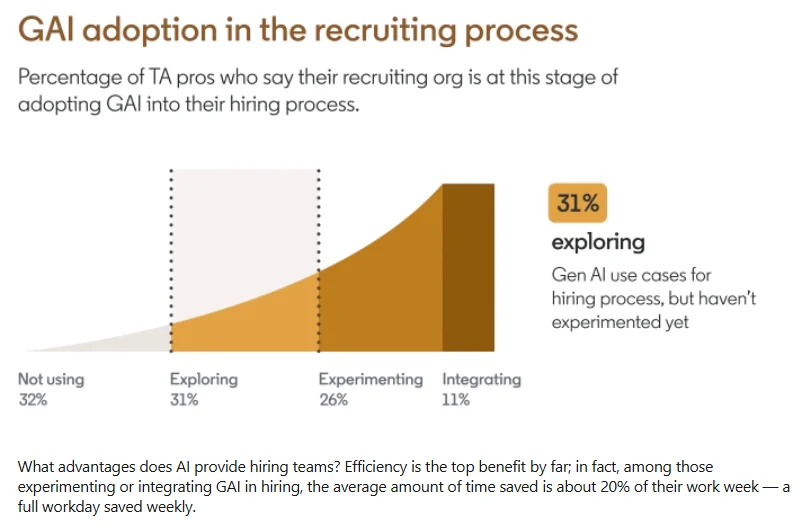
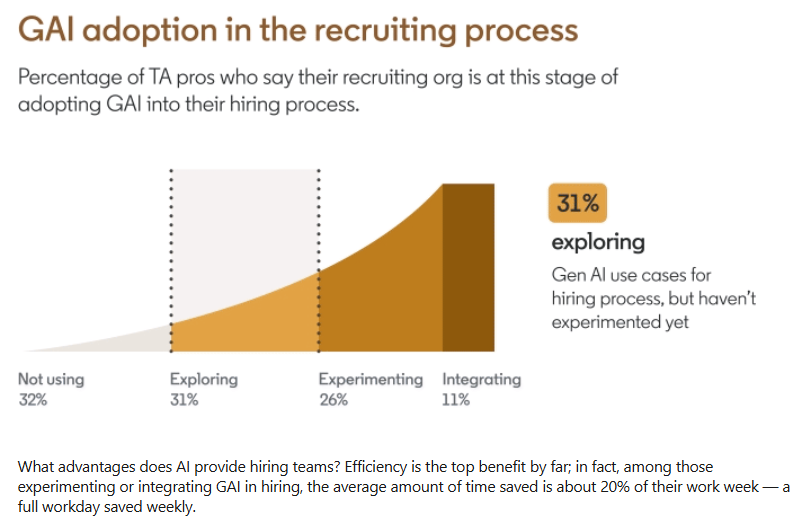
The adoption of generative AI in recruitment has seen a significant surge, driven by the persistent need for efficiency in a competitive talent market. A pivotal LinkedIn Future of Recruiting report revealed that a substantial 31% of talent acquisition professionals were actively exploring generative AI for hiring processes, with another 26% already experimenting with its capabilities. Those leveraging or integrating AI reported an impressive saving of 20% of their workweek – equivalent to a full day – a testament to its immediate practical benefits. This rapid integration underscores AI’s capacity to streamline historically time-consuming tasks, thereby freeing up valuable human capital for more strategic interactions.
AI’s footprint extends across the entire recruitment lifecycle, from initial candidate sourcing and meticulous screening to intricate scheduling, objective assessments, and, critically, job description writing. Hiring teams are now routinely utilizing AI features embedded within sophisticated applicant tracking systems (ATS), leveraging large language models (LLMs) for content generation, employing specialized language checkers for refinement, and adopting dedicated job description platforms designed to optimize content. Alex Byder, founder of BD Homebuyer, a company that recently scaled its acquisitions team through AI-driven hiring tools, highlights this practical shift. Byder observes, "AI has quietly become the first draft for almost every requisition we post. It handles the structure, the formatting, and the baseline language, which lets our recruiters spend their energy on the parts of hiring that actually require a human, like understanding what a team truly needs in its next hire."
The appeal of AI in this context is straightforward and compelling. Recruiters can swiftly generate a functional first draft, ensuring basic structural integrity and comprehensive coverage of key sections. This efficiency allows them to dedicate more time to high-value activities such as engaging with hiring managers to gain nuanced insights into team needs or conducting more personalized conversations with prospective candidates. Furthermore, a more robust and consistent job description process, facilitated by AI, simplifies internal reviews and approvals, a common bottleneck when multiple stakeholders must sign off on a posting. This operational improvement is particularly vital in large organizations with numerous concurrent openings.
Shifting Landscape: How AI Reshapes Job Descriptions
AI is fundamentally altering both the velocity and the character of job description development. Its influence can be categorized into several key areas:
- Faster Drafting and Editing: One of AI’s most immediate and impactful contributions is its ability to accelerate content creation. By simply providing core parameters—such as job title, seniority level, key responsibilities, and desired tone—AI can construct a structured draft within minutes. It adeptly transforms disparate notes from hiring managers into cohesive sections covering an overview, detailed responsibilities, essential qualifications, and benefits. This significantly reduces the initial blank-page paralysis and the manual effort involved in organizing information. While speed is undeniable, a Pew Research Center study cautioned that 40% of workers found AI chatbots highly helpful for completing work faster, compared to 29% who reported significant improvements in quality. This disparity serves as a crucial reminder that increased speed does not automatically equate to superior final output without human intervention.
- Greater Consistency Across Roles: AI tools excel at maintaining uniformity across dozens or even hundreds of open positions. They can enforce standard sections, preserve mandatory legal language, adhere to internal approval rules, and maintain consistent formatting, all while allowing for the customization of details pertinent to each specific role. This consistency can enhance perceived professionalism and ensure equitable information dissemination. However, this benefit must be carefully managed to prevent the erosion of unique departmental or team personalities. While a common frame supports clarity, it should not erase the distinct identity of individual roles. A finance analyst, a warehouse supervisor, and a software engineer, though sharing company values, should not be presented with identical summaries or working conditions; each requires a tailored narrative reflecting its unique decisions, collaborators, and measures of success.
- Skills-First and Tailored Descriptions: AI possesses the capability to map specific responsibilities to established occupational frameworks, aiding in the critical task of distinguishing truly essential skills from inherited or outdated requirements. This is particularly valuable in promoting a skills-first approach to hiring, which broadens talent pools and reduces reliance on traditional credentials. Moreover, AI can dynamically adjust vocabulary and tone to suit various job families, career levels, and target candidate audiences, making descriptions more resonant and effective. This adaptability makes scaling a skills-first strategy considerably more manageable for large enterprises.
- Bias and Compliance Checks: Language analysis tools powered by AI can be instrumental in flagging exclusionary terms, identifying potentially unnecessary degree requirements, and highlighting wording that might inadvertently discourage qualified but diverse candidates. They can also detect potential issues related to pay transparency or equal employment opportunity (EEO) concerns, providing a preliminary layer of compliance review. Despite these advancements, no automated check can fully comprehend every jurisdiction’s legal nuances or the complex social context of language. Human oversight remains indispensable to review AI’s recommendations, confirm adherence to local and national legal requirements, and critically assess whether each qualification is genuinely necessary and non-discriminatory.
- More Polished but Generic Language: While AI excels at producing grammatically correct and professionally sounding drafts, its output can often suffer from a lack of precision and distinctiveness. Without highly detailed and specific inputs, AI models tend to gravitate towards familiar, statistically probable phrases that, while polished, reveal little about the unique team, the specific manager, or the actual day-to-day work environment. This is the point where the pursuit of efficiency can inadvertently lead to widespread sameness, rendering job descriptions indistinguishable from one another and diminishing their power to attract top talent. Distinctive writing is paramount for capturing attention in a crowded talent market, long before a candidate even considers applying.
The Unintended Consequence: Homogenization and Its Perils
The problem of homogeneity in AI-generated job descriptions stems from the fundamental nature of how these models operate. AI models predict likely language based on vast training datasets, which often reflect prevailing industry norms and common phraseology. When given generic prompts, they naturally trend towards safe, average expressions. Consequently, common phrases rise to prominence not because they are uniquely descriptive of a particular workplace, but simply because they are ubiquitous.
Consider, for instance, job postings for product managers across disparate sectors like technology, finance, and healthcare. A candidate might encounter strikingly similar promises of "innovation," "collaboration," "competitive benefits," and "rapid growth," despite the fact that the actual decision-making processes, inherent risks, customer bases, and daily challenges in these roles are entirely distinct. These words are not inherently incorrect; rather, their vagueness renders them ineffective in helping a discerning candidate differentiate between opportunities.
Research from HR.com’s Future of Recruitment Technologies 2025–26 highlighted a significant concern: 51% of talent acquisition professionals expressed apprehension about AI potentially causing depersonalization in recruitment. This finding precisely captures the core risk associated with homogenized job descriptions. While drafting becomes undeniably faster, the resultant language often feels less human, less specific, and critically, less authentically connected to the actual workplace culture and daily realities. For employers, this pervasive repetition significantly weakens their differentiation in the talent market. If a Head of Customer Success posting sounds identical to that of a direct competitor, the organization has squandered one of its earliest and most potent opportunities to articulate its unique value proposition and the distinctiveness of the role.
Beyond candidate experience, search visibility can also suffer. Google’s spam policies explicitly recommend useful, original, people-first content and caution against repetitive material created primarily for search engines. Generic, AI-generated content that lacks originality may be penalized, reducing the reach and effectiveness of job postings. The imperative is clear: write for candidates first, with authenticity and specificity, rather than solely for algorithmic optimization.
Impact on Employer Branding and Candidate Experience
A job description frequently represents a candidate’s inaugural extended interaction with an employer’s brand. When this interaction feels generic or "canned," candidates can reasonably infer that the employee experience itself might be equally impersonal or lacking in distinctiveness. This challenge extends beyond job descriptions, as AI’s growing role in recruitment increasingly shapes how candidates interact with potential employers throughout their entire hiring journey, from initial screening to onboarding.
Specific and authentic language is the bedrock of credibility. Instead of broad platitudes, a compelling job description should articulate what specific problems the team is striving to solve, how decisions are made within the organization, the degree of autonomy afforded to the role, and concrete markers of success within the first 90 or 180 days. This level of detail provides a more realistic and compelling preview of the role. Language also profoundly influences who feels invited—or excluded—from applying. Psycnet research has demonstrated that gendered wording, even subtle instances, can significantly affect how individuals perceive roles, underscoring the critical importance of careful linguistic choices in fostering diversity and inclusion.
Moreover, clear day-to-day details offer candidates a more realistic job preview (RJP). Armed with better, more accurate information, candidates can self-select more effectively, reducing the likelihood of mismatches that polished but ultimately empty copy might otherwise obscure. This self-selection is crucial for long-term retention; ZipRecruiter’s Q2 2026 New Hire Survey found that 26% of new hires cited mismatched expectations as a reason they would begin seeking another job, reinforcing the urgent need for clear, honest, and outcome-oriented descriptions that define role boundaries explicitly.
Navigating the Balance: Strategies for Human-Centric AI Integration
The strategic imperative for hiring teams is not to choose between the efficiency of automation and the necessity of originality, but rather to master their synergistic integration. AI should be leveraged for its strengths: providing structure, generating alternative phrasings, and conducting initial compliance checks. Human judgment, however, must remain the ultimate arbiter, adding the crucial context, nuance, and strategic insight that a model cannot infer.
Every AI-generated draft should be regarded as raw material—a foundation upon which human creativity and specific organizational insights are built. This means actively injecting details about the team’s communication norms, the specific pressures inherent in the role, the critical trade-offs that routinely arise, and the precise accomplishments a successful hire is expected to achieve within a defined timeframe (e.g., six months).
Human editing is the definitive differentiator. A skilled editor should meticulously strip away clichés, rigorously test whether claims are genuinely supportable by evidence, and replace vague adjectives with concrete examples. A claim of a "collaborative culture," for instance, becomes believable and compelling only when the description elaborates on who collaborates, how often, and through what mechanisms (e.g., "cross-functional sprint reviews," "weekly brainstorming sessions with product and engineering," "pairing on complex problem-solving").
Practical Frameworks for Distinctive Job Descriptions
Companies can harness AI’s efficiency without succumbing to the pitfalls of publishing interchangeable content. The following six actions provide a robust framework for ensuring every job posting is clearer, more recognizable, and powerfully representative of the employer brand:
-
Build a Voice Guide and Cliché Blacklist: Establish a concise, one-page guide that meticulously outlines your company’s distinct communication style. This guide should specify preferred terminology, brand-aligned vocabulary, and a comprehensive blacklist of phrases to actively avoid (e.g., "rockstar," "ninja," "wear many hats," "dynamic environment"). Include illustrative examples of acceptable tone across various role types—technical, frontline, leadership—to ensure universal applicability. Integrate this guide into AI prompts, recruitment workflows, and review checklists to ensure consistent adoption by every contributor. This proactive measure ensures that AI output is aligned with brand identity from the outset.
-
Provide Authentic Company and Role Details: The quality of AI output is directly proportional to the specificity of its inputs. To generate distinctive copy, furnish AI with rich, authentic details: specific team practices, proprietary tools utilized, target customer segments, operational constraints, and concrete examples of past successful employees or projects. If the role involves an on-call rotation, a legacy system migration, adherence to a regulated workflow, or mandatory weekly customer reviews, these specifics must be explicitly included in the input. Generic inputs will invariably yield generic outputs; detailed, truthful inputs are the only pathway to truly specific and compelling copy.
-
Define Outcomes and Realistic Expectations: Shift the focus from a mere list of duties to clearly articulated 90- to 180-day outcomes. For example, instead of "Manage customer feedback," specify: "Within 90 days, establish a weekly customer feedback loop that informs the product roadmap and reduces churn risk by 10%." This approach provides candidates with a clear understanding of expected impact. Additionally, consider incorporating a brief "What this role is not" statement when the scope or boundaries of a position commonly lead to confusion. Candidates genuinely appreciate this level of honesty and clarity regarding scope, and managers consequently receive fewer mismatched applications, improving the quality of the applicant pool.
-
Use Inclusion and Compliance Checks Carefully: While AI language tools can flag potential biases, they are not infallible. Run language checks, but critically review every suggestion rather than blindly accepting them. Review inclusive job description examples to understand how subtle wording adjustments can broaden the invitation to diverse candidates without compromising standards. Organizations leveraging algorithms in employment decisions must also be intimately familiar with the EEOC’s adverse-impact guidance. Crucially, assign a named owner within the HR or legal department to confirm adherence to all local, state, and national legal requirements before any posting goes live, as AI cannot fully account for regional regulatory variations.
-
Test What Attracts Qualified Candidates: For roles with sufficient volume, implement A/B testing for various elements of job descriptions, including titles, opening summaries, specific requirements, and benefits sections. Beyond raw application volume, meticulously track key metrics such as the qualified application rate, completion rate, time-to-fill, interview conversion rates, and critically, the first-90-day performance of new hires. Document what changes after each revision and systematically apply these learnings to future postings, fostering a continuous optimization loop. This data-driven approach moves beyond subjective preferences to empirical effectiveness.
-
Audit Job Descriptions for Sameness: Regularly audit new job descriptions by comparing them against your internal library and similar public postings from competitors. Employ n-gram overlap or semantic similarity checks to proactively identify repeated passages before they reach potential candidates. Conduct quarterly audits of at least 10 postings, specifically highlighting repetitive openings, unsubstantiated claims, generic adjectives, and boilerplate benefit language. Challenge whether this repetition serves a legitimate policy objective or merely reflects ingrained habit. Maintain necessary consistency for legal or brand identity purposes, but ruthlessly rewrite anything that prevents a candidate from discerning the unique value and specific challenges of the role. Conclude by having a human reviewer replace generic sections with concrete, verifiable evidence about the role and team. Implement a recurring job description optimization review process to continuously monitor for readability, inclusivity, consistency, and time savings, all while safeguarding the organization’s distinct voice.
Future Outlook and Strategic Imperatives
AI offers recruitment teams an undeniable advantage in generating job descriptions with greater speed and consistency. However, speed alone is an insufficient measure of a posting’s utility or effectiveness. The most compelling and successful job descriptions represent a masterful blend of efficient AI-powered drafting with robust brand guidance, clear and concrete outcomes, meticulous inclusion checks, and an unwavering commitment to honest, granular details about the actual work environment.
An optimal workflow, manageable within 15 to 30 minutes, involves a structured process: leveraging AI to generate an initial draft, meticulously integrating team-specific context and unique selling propositions, systematically removing clichés and generic language, diligently verifying all requirements for accuracy and necessity, and concluding with a final, critical human review. By embedding this iterative, human-in-the-loop approach consistently, organizations can ensure their job openings transcend the noise of the talent feed. They will transform into distinct, compelling invitations from a particular team, offering meaningful, clearly defined work to the right candidates. This strategic fusion of AI efficiency and human insight is not merely an operational improvement; it is a critical imperative for competitive employer branding in the age of intelligent automation.
August 26, 2026 by Adam Stratton in AI Recruitment






