Despite the accelerating pace of technological innovation, particularly in artificial intelligence, employers are increasingly prioritizing "durable skills" – fundamental human capabilities that remain vital regardless of advancements in workplace technology. This critical insight comes from a recent Resume Now report, published on August 4, 2026, which analyzed O*NET data to identify the enduring competencies essential for navigating an evolving professional landscape. The report underscores a profound shift in workforce strategy, where human intelligence and adaptability are seen not as secondary to technological prowess, but as its essential guide and complement.
Unpacking the Resume Now Report: Methodology and Key Findings
The Resume Now analysis delved into the vast database of ONET, a comprehensive occupational information network sponsored by the U.S. Department of Labor, which provides detailed descriptions of the world of work for use by job seekers, workforce development professionals, and businesses. Specifically, the report examined importance ratings for 21 distinct cognitive abilities. From this extensive pool, Resume Now highlighted 10 abilities that consistently demonstrated an "importance score" of 3.00 or higher across a broad spectrum of occupations. The ONET rating scale, ranging from 1 to 5, assigns a higher numerical value to skills deemed more critical for job performance across various roles. This meticulous approach allowed the researchers to pinpoint skills that transcend specific industries or technological platforms, cementing their status as truly "durable."
At the forefront of these indispensable skills were oral comprehension and oral expression. These twin competencies emphasize the critical importance of effectively understanding, synthesizing, and communicating information in diverse professional settings. Beyond mere verbal fluency, these skills encompass active listening, the ability to interpret complex instructions, articulate nuanced ideas, and engage in persuasive discourse – all foundational elements of effective teamwork, client relations, and leadership. Their prominence highlights that even as machines become more adept at processing data, the human capacity for meaningful dialogue and interpretation remains irreplaceable.
Further down the list, but equally crucial, were problem sensitivity and deductive reasoning. Problem sensitivity refers to the ability to tell when something is wrong or is likely to go wrong, even if the issue is not immediately apparent. Deductive reasoning, on the other hand, involves applying general rules to specific problems to produce logical answers. Together, these skills form the bedrock of critical thinking, enabling professionals to diagnose challenges, anticipate obstacles, and devise innovative solutions in dynamic environments. The report also identified several other skills related to advanced forms of communication and information processing, such as inductive reasoning (combining pieces of information to form general rules or conclusions) and information ordering (arranging things or actions in a certain order or pattern according to a specific rule or set of rules). These findings collectively paint a picture of a future workforce where human cognitive agility and interpersonal finesse are paramount.
The Genesis of "Durable Skills": A Historical Context

The concept of "durable skills" is not entirely new but represents an evolution in how the workforce views essential competencies. For decades, discussions centered around "soft skills" – attributes like communication, teamwork, and adaptability, often contrasted with "hard skills" or technical proficiencies. As technology advanced, the term "power skills" gained traction, aiming to elevate the perceived importance of these human-centric attributes, positioning them as drivers of organizational success rather than mere supplementary traits. "Durable skills" takes this evolution a step further, emphasizing their timeless, foundational nature in an era of unprecedented technological disruption.
The shift in terminology reflects a growing understanding that while technical skills can become obsolete or automated, core human abilities remain relevant and indeed, become more valuable. This realization has been particularly sharpened by the rapid proliferation of artificial intelligence, which has demonstrated an ability to perform many routine cognitive tasks previously exclusive to humans. As AI continues to evolve, the distinction between what machines can do and what humans must do becomes clearer, solidifying the importance of skills that AI cannot replicate – skills rooted in human judgment, creativity, emotional intelligence, and complex communication.
Beyond Automation: The Imperative of Human-AI Collaboration
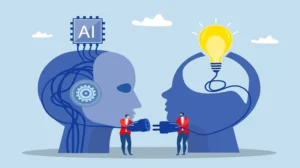
A central theme emerging from the Resume Now report and corroborated by numerous other studies is that these durable skills are not just resilient despite AI, but are essential for effectively managing and leveraging AI. The future of work is not one where humans are replaced by AI, but one where humans and AI collaborate, with human intelligence guiding artificial intelligence.
For instance, a compelling study from the McCombs School of Business at the University of Texas at Austin, in collaboration with accounting firm KPMG, revealed that workers who approached AI tools as "collaborators that needed direction and insight" consistently outperformed their peers who simply delegated tasks to AI. This distinction highlights that the efficacy of AI tools often depends on the user’s ability to provide clear prompts, critically evaluate outputs, and refine processes – all tasks that require strong durable skills such as problem sensitivity, deductive reasoning, and effective oral and written communication. Merely offloading work to AI without intelligent oversight can lead to suboptimal outcomes, emphasizing the strategic role of human judgment in the augmented workplace.
This perspective aligns with insights from leading research institutions. A report by the World Economic Forum on the Future of Jobs consistently identifies critical thinking, analytical thinking, creativity, and leadership as top skills for the future, directly echoing the durable skills identified by Resume Now. These reports collectively argue that as AI takes over more data-driven and repetitive tasks, the demand for uniquely human skills that drive innovation, strategic decision-making, and complex interpersonal interactions will only intensify. The value proposition of a human worker increasingly lies in their capacity to engage in tasks requiring abstract thought, ethical reasoning, and empathetic communication – domains where AI currently has significant limitations.
Supporting Data and Emerging Trends: A Broader Landscape

The Resume Now findings are situated within a larger body of research that underscores the critical role of human capabilities in the age of AI. For example, a report from DataCamp earlier this year declared data literacy skills as fundamental as the ability to write. While seemingly technical, data literacy – the ability to read, work with, analyze, and argue with data – is itself underpinned by durable skills such as critical thinking, problem-solving, and communication. Professionals need to understand not just how to use data tools, but why certain data points are relevant, how to interpret statistical findings, and how to effectively communicate data-driven insights to diverse audiences. This interplay between technical proficiency and durable skills is a hallmark of the modern workforce.
However, the transition to an AI-augmented workforce is not without its challenges. Recruiters are encountering significant "skills shortages" in areas that are crucial for human-AI productivity. The Graduate Management Admission Council (GMAC) has highlighted a lack of grit, emotional intelligence, and management skills among candidates. Grit, defined as perseverance and passion for long-term goals, is essential for navigating the continuous learning and adaptation required in a rapidly changing technological landscape. Emotional intelligence – the ability to understand and manage one’s own emotions, and to perceive, understand, and influence the emotions of others – is vital for effective team collaboration, conflict resolution, and leadership, especially when working alongside intelligent machines. Strong management skills are necessary to direct projects, lead teams, and strategically integrate AI tools into workflows, ensuring that technology serves human objectives rather than dictating them.
Adding to this concern, a recent report from The Conference Board indicated that employers may not be adequately training their workers for potential AI disruption. This gap in upskilling initiatives creates a significant vulnerability, as a workforce unprepared for AI’s impact could face decreased productivity, morale issues, and an inability to harness the full potential of new technologies. Without proactive investment in developing durable skills and AI literacy, organizations risk falling behind competitors who strategically empower their human capital. This oversight underscores a crucial opportunity for employers to guide fundamental upskilling for their workers, ensuring they possess the resilient competencies needed as technology rapidly evolves.
Strategic Imperatives for Employers: Upskilling and Talent Development
The implications of these findings for employers are profound and multifaceted. Firstly, organizations must recalibrate their talent acquisition strategies. While technical skills remain important, recruiters should increasingly prioritize candidates who demonstrate strong durable skills, as these individuals are more likely to adapt to new technologies, collaborate effectively, and drive innovation. Interview processes could be redesigned to assess problem-solving capabilities, communication styles, and examples of adaptive thinking.
Secondly, and perhaps more critically, employers have a strategic imperative to invest heavily in learning and development programs focused on durable skills. This isn’t just about offering a few workshops; it requires a systemic approach to continuous learning. Companies should establish internal academies or partner with educational institutions to provide structured training in areas such as advanced communication, critical thinking, complex problem-solving, emotional intelligence, and leadership. These programs should be integrated into career development pathways, ensuring that employees at all levels have opportunities to cultivate and refine these essential competencies. The ROI on such investments is likely to be substantial, leading to a more adaptable, resilient, and productive workforce.
Furthermore, fostering a culture of curiosity and continuous learning is paramount. Employers can encourage experimentation with new technologies, provide psychological safety for employees to learn from mistakes, and recognize efforts in skill development. Mentorship programs, cross-functional projects, and exposure to diverse challenges can also help cultivate durable skills organically within the organizational structure. Leadership buy-in is crucial here, with senior management actively championing the importance of these human-centric abilities.

Navigating the Future: A Call to Action for Workers and Educators
For individual workers, the message is clear: personal and professional resilience in the AI era hinges on the continuous development of durable skills. This means taking proactive ownership of one’s learning journey. Beyond mastering technical tools, individuals should actively seek opportunities to enhance their communication abilities, refine their critical thinking processes, cultivate emotional intelligence, and practice adaptive problem-solving. Online courses, professional development workshops, volunteer roles, and even self-reflection can contribute significantly to building this personal "durable skills" portfolio. The goal is to become an indispensable collaborator with AI, rather than a competitor.
Educational institutions also bear a significant responsibility. Universities, colleges, and vocational schools must re-evaluate their curricula to ensure they are adequately preparing students for the demands of the future workforce. This involves integrating durable skills development across all disciplines, moving beyond rote memorization to foster critical inquiry, collaborative projects, ethical reasoning, and effective communication. Experiential learning, internships, and interdisciplinary studies can provide invaluable opportunities for students to apply and hone these skills in real-world contexts, ensuring they graduate not just with technical knowledge, but with the foundational human capabilities that will serve them throughout their careers.
Conclusion: The Resilient Workforce of Tomorrow
The Resume Now report serves as a timely reminder that amidst the dazzling advancements of artificial intelligence, the most enduring assets in the workplace remain distinctly human. Durable skills – encompassing oral comprehension, oral expression, problem sensitivity, deductive reasoning, and a host of other cognitive and interpersonal abilities – are not merely desirable traits but are becoming the bedrock of professional success and organizational resilience. As technology continues its relentless march forward, these human capabilities will enable individuals to effectively guide, leverage, and innovate alongside AI, ensuring that human intelligence remains at the core of progress. For employers, workers, and educators alike, recognizing and investing in these timeless skills is not just a strategic advantage; it is an imperative for building the resilient and prosperous workforce of tomorrow.