The artificial intelligence landscape is currently dominated by intense speculation surrounding the potential public offerings of AI powerhouses OpenAI and Anthropic. With their respective CEOs frequently making headlines, these companies represent the dramatic narrative of the contemporary AI industry. As more details emerge about their prospective market entries, industry observers and investors alike are keenly dissecting how these two titans will compete, and more importantly, how they will navigate the complex enterprise market. While the focus often remains on the cutting-edge models themselves, a compelling argument can be made that the ultimate beneficiary of this evolving ecosystem may not be the AI labs directly, but rather a foundational technology giant: Microsoft.
The enterprise market for AI can be broadly segmented into three critical layers, each presenting unique challenges and opportunities for market players. Understanding these layers is crucial to appreciating Microsoft’s strategic advantage.
Layer 1: The Core AI Models and Their Specializations
The first and most fundamental layer comprises the AI models themselves, the sophisticated algorithms trained on vast datasets to perform specific tasks. The initial enthusiasm for a single, all-encompassing AI model has given way to a more nuanced understanding: different applications require specialized models. This realization is shaping product development and market strategy.

For instance, the question arises whether coding and analytical applications should leverage Anthropic’s Claude, while OpenAI’s models might be better suited for narrative and document generation. Similarly, Google’s Gemini could be optimized for analysis and scientific inquiry, and Grok might find its niche in robotics and motion applications. Nvidia’s ambition to develop a "world model" further complicates this picture, suggesting a future where specialized models cater to a diverse range of needs.
This product-market fit is still in its nascent stages. AI laboratories are continuously refining their algorithms and data training methodologies to address the unique demands of various sectors. The understanding that a single model cannot effectively serve all purposes is now widely accepted. Model training extends far beyond mere computational power; it crucially involves the meticulous collection, labeling, and "fixing" of data to ensure optimal performance for specific domains. A pharmaceutical company, for example, would seek an AI model specifically trained to understand proteins and advanced genetics, rather than a general-purpose model.
Anthropic has notably set a rapid pace in code generation, a foundational capability for many AI applications. However, the strategic direction of major players remains a subject of intense interest. Will OpenAI pivot more decisively into healthcare applications? Will Google dedicate significant resources to biological AI? Which models will become dominant in the physical world, powering robotics, manufacturing, and transportation? Nvidia, and potentially Grok, are strong contenders in these areas.
Consequently, business buyers will likely require a portfolio of AI models. Claims of AI solutions that do "everything" are increasingly viewed with skepticism. This trend mirrors the development of specialized AI tools like AI Galileo, which has demonstrated remarkable intelligence by focusing laser-like on HR, labor market dynamics, skills, and management. Its deep specialization has allowed it to function as a sophisticated management consultant for a wide array of human capital challenges.
Layer 2: The AI Harness – The User and Application Experience
The second critical layer is the "surface" or application experience that surrounds the AI model. This encompasses the user interface, development tools, integration capabilities, and overall ease of use that makes AI accessible and valuable to end-users and developers. These are not merely models; they are applications built upon AI. Factors such as memory capacity, personalization features, user experience (UX), and seamless interaction with external data and systems are paramount.
This crucial layer is often referred to as the "AI Harness." The emphasis on user experience has never been greater. A hypothetical scenario where Apple’s Siri becomes exceptionally intelligent and user-friendly could easily garner a billion users within months, regardless of the specific underlying AI model it employs.
Microsoft’s historical success in the PC market offers a powerful precedent. The company achieved market dominance not only by licensing and adapting graphical interfaces but also by relentlessly focusing on the application experience of its productivity suite: Excel, PowerPoint, and Outlook, integrated within the Windows operating system. While competitors like Lotus 1-2-3 and Multiplan were earlier to market, Microsoft’s superior "fit and finish" of its M365 ecosystem ultimately prevailed, evidenced by its 450 million paying users.
Today, business developers and IT professionals face a similar challenge: the need for comprehensive AI solutions. This includes intuitive interfaces, robust development toolkits, seamless integration with existing enterprise systems (such as SAP, Oracle, Workday, Salesforce, ServiceNow, QuickBooks, and HubSpot), and comprehensive IT management capabilities. The failure of an AI integration, as experienced when testing Claude’s integration with HubSpot, highlights the critical importance of the "surface" layer. Despite the underlying model’s potential, a poorly executed connection and context layer can render the entire solution ineffective, as demonstrated by the system’s inability to retrieve data and subsequent timeout.
This underscores the reality that AI success in the enterprise hinges not solely on the power of the model, but on how effectively that model is integrated and presented through a user-friendly and functional application layer.
Layer 3: The Ecosystem – Partnerships and Interoperability
The third vital layer is the ecosystem surrounding the AI platform. Businesses require AI solutions that are supported by a broad range of applications, integrations, tools, and third-party developers. As companies like AI Galileo have discovered, customer demand for seamless integration with existing enterprise systems is a constant. The ability to connect an AI platform to policy databases, leadership models, and compliance training is no longer a peripheral feature but a core requirement.
In the enterprise space, where significant AI-driven profit is anticipated, vendors must cultivate ecosystems of partners who can thrive by building upon their platforms. This collaborative approach is essential for delivering comprehensive and adaptable AI solutions.
Discussions with HR and IT leaders consistently reveal a dual need: readily packaged AI tools for immediate employee use, and more importantly, a robust platform for building, acquiring, and managing "agentic" applications. These applications are intended to complement and, in many cases, replace existing, often trillions of dollars worth of enterprise systems. Crucially, businesses are wary of vendor lock-in in such a dynamic and rapidly evolving market. Therefore, the focus shifts from the core AI "engine" to the "surface" and the surrounding ecosystem.
The term "AI surfaces" has gained prominence, referring to the application experience rather than just the underlying large language model (LLM). The combination of a well-designed surface and a powerful model creates the ultimate user experience. In the corporate context, this translates to tools that are fast, intuitive, possess ample historical context, and feature a sophisticated semantic connectivity layer that extracts valuable data from integrated systems.
Microsoft’s Ascendancy in the Enterprise AI Market
The current market dynamics suggest that Microsoft is strategically positioned to capture a significant share of the enterprise AI market. While OpenAI and Anthropic are commanding attention for their foundational models, the revenue generated from the "surface" layer appears to be increasingly flowing towards Microsoft.
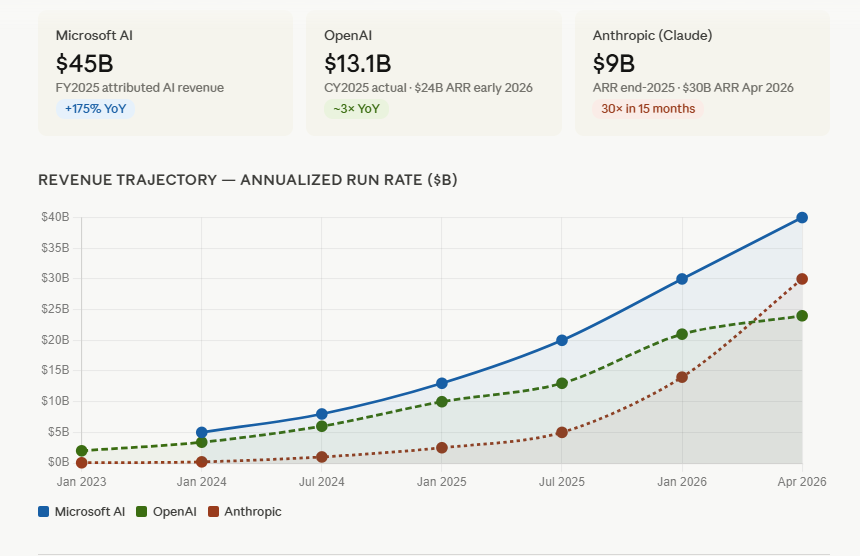
Recent financial analyses indicate that a substantial portion of OpenAI’s projected revenue comes from consumer subscriptions, and Anthropic’s revenue is largely derived from selling AI compute capacity to other providers. This model, while significant, differs from direct enterprise application revenue.
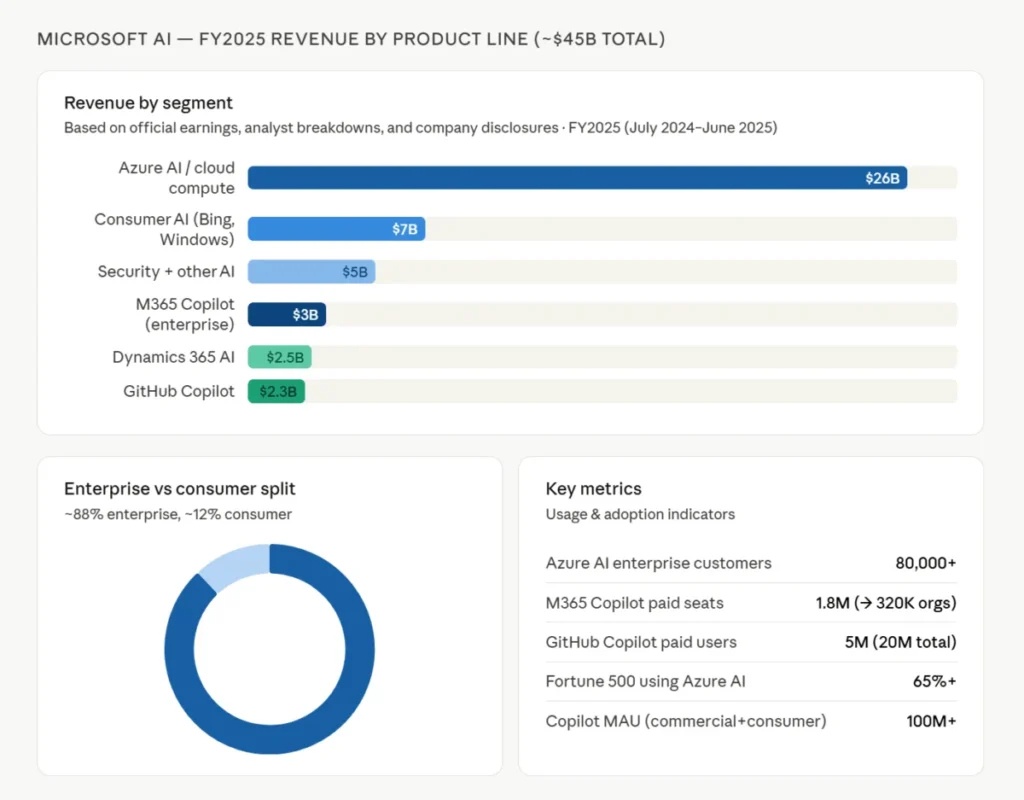
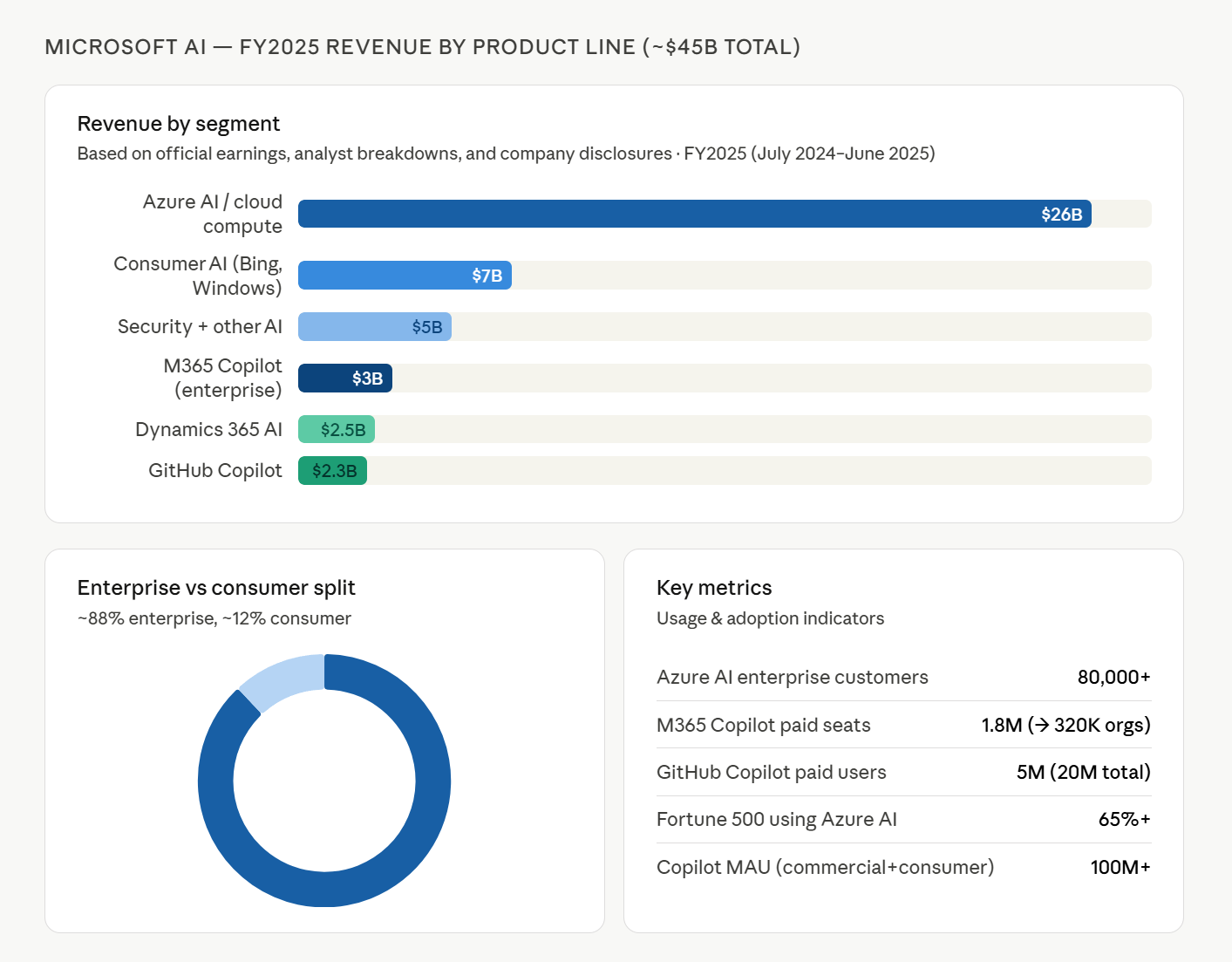
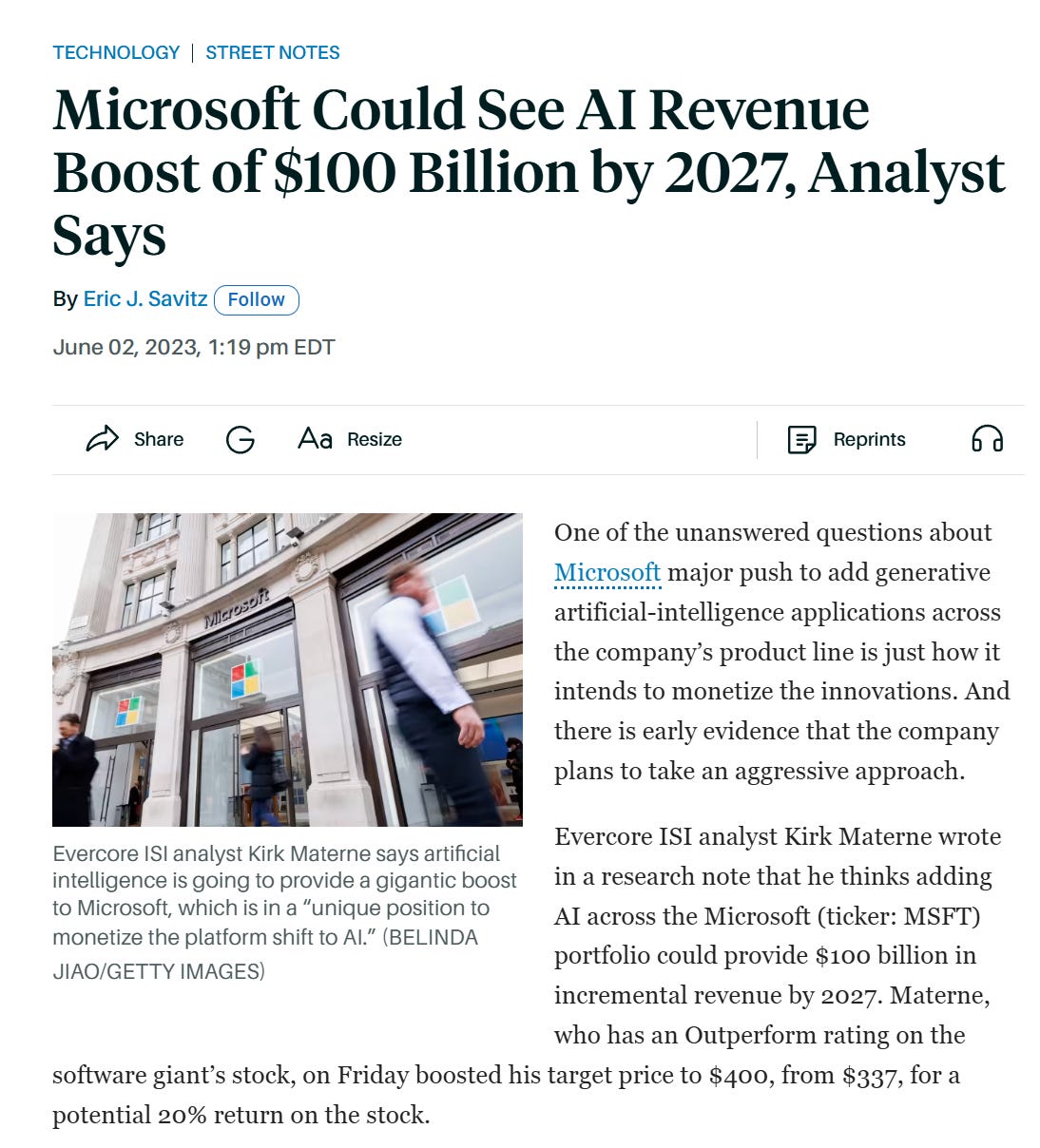
Microsoft, conversely, has made substantial inroads into the enterprise through its Copilot initiative. The company reports 15 million licensed users of Copilot, and at an average price of $25 per month, this alone generates substantial recurring revenue. When combined with fees for Azure API services, Microsoft’s AI revenue is estimated to be in the tens of billions of dollars annually, with robust growth rates. Projections from Microsoft and industry analysts suggest that AI could contribute over $100 billion in new revenue within the next three years.
The Evolution of Microsoft Copilot: From Plugin to Integrated Platform
A key factor in Microsoft’s growing dominance is the strategic evolution of its Copilot offering. Initially perceived as a collection of plugins for individual Microsoft products, Copilot has transformed into an integrated platform capable of leveraging models from OpenAI, Anthropic, and other providers, while simultaneously accessing and contextualizing proprietary corporate information.
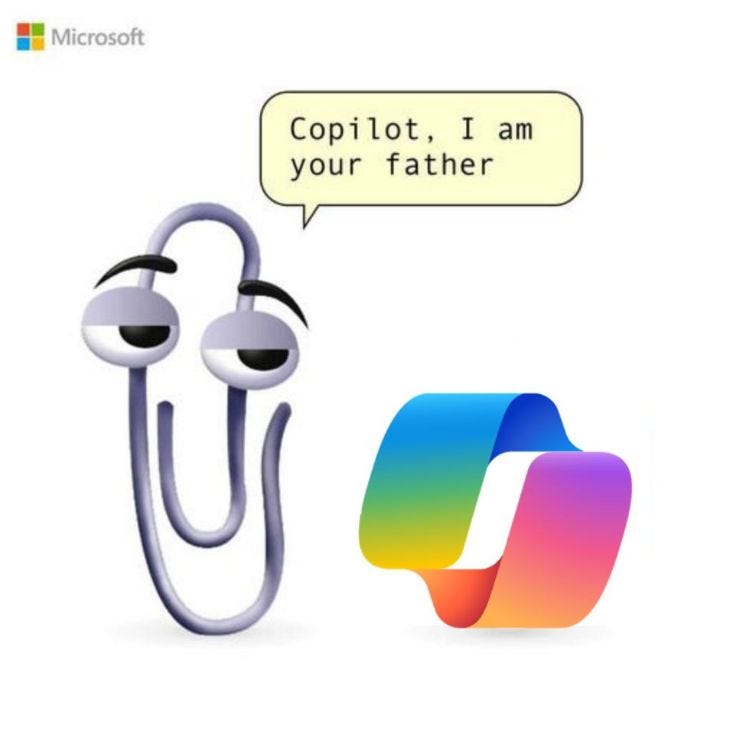
The journey began with Microsoft’s significant investment in OpenAI and the integration of ChatGPT into Bing. This evolved into the broader Microsoft Copilot vision, which initially appeared as an advanced iteration of the familiar "Clippy" assistant. However, Microsoft rapidly expanded this concept, launching Copilot for M365, and specialized versions within Dynamics, Excel, GitHub, and other applications. The development of Copilot Studio, Agent 365, and Work IQ further demonstrated an ambitious strategy to create a comprehensive suite of AI-powered tools.
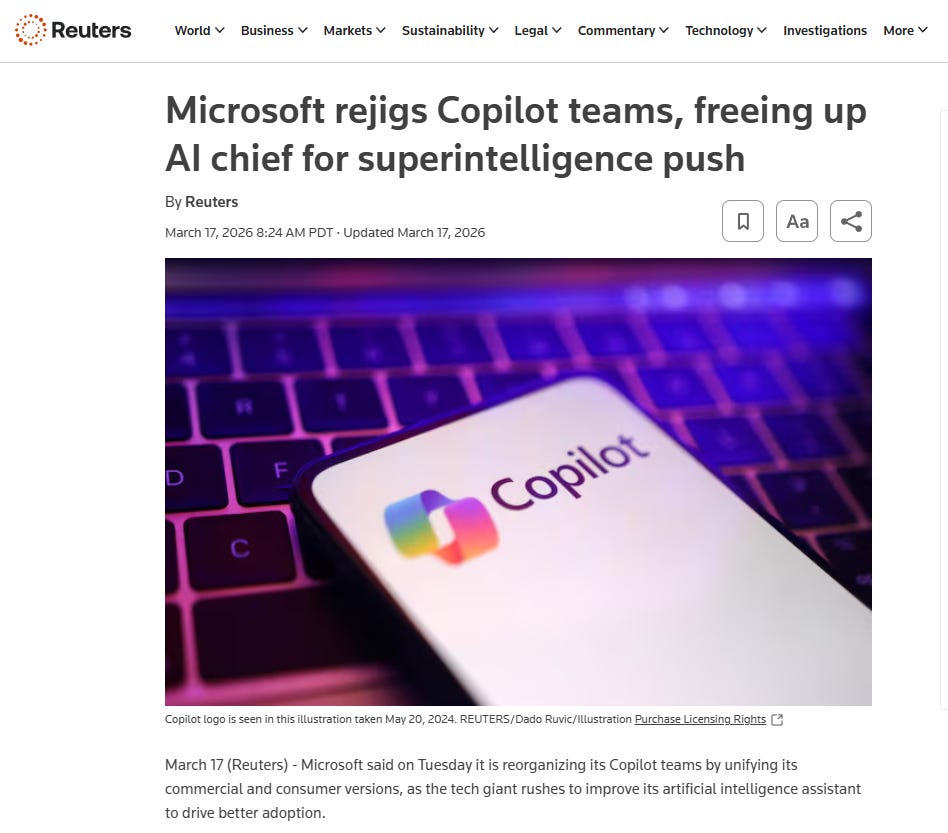
This rapid pace of innovation, while impressive, initially led to a somewhat disjointed product landscape. Recognizing this, Microsoft underwent a significant strategic reorganization, consolidating Copilot product teams under a single leadership structure. This move, spearheaded by Satya Nadella, aims to create a more cohesive and unified AI experience for both corporate and consumer users. The appointment of Jacob Andreou (ex-Snap) to lead Copilot growth signals a strong focus on user adoption and market expansion. The leadership team, including Ryan Roslansky (LinkedIn), Perry Clarke (Copilot Core), and Charles Lamanna (Agents and Apps), is now positioned to drive an integrated strategy focused on overall agent enablement and corporate user value, rather than siloed functionalities within individual applications.
This integrated approach allows Microsoft to operate with a unified strategy, akin to Nvidia’s integrated engineering layers, optimizing the entire AI stack from foundational models to end-user applications.
Microsoft’s Strategic Advantages in the Enterprise
Microsoft’s current trajectory points towards a significant advantage in the enterprise AI market due to several key factors:
- Integrated Enterprise Toolset: The corporate market demands a cohesive suite of tools that includes desktop applications, development environments, IT management capabilities for AI agents, and seamless connectivity to legacy systems. Microsoft’s strategic focus on WorkIQ, Agent365, and Copilot Studio, coupled with its extensive partner network, positions it to deliver this integrated solution.
- Developer Ecosystem and APIs: The vast application development world is actively seeking more integrated toolsets. Microsoft is providing APIs that allow a wide array of ERP, financial, productivity, and analytics vendors to build applications within the "Copilot-land" ecosystem. While navigating the various connection points (Teams, Graph, WorkIQ, Fabric) can be complex, the path towards integration is becoming clearer.
- End-User Familiarity and Desktop Integration: The current user experience of Copilot is continuously improving, and Microsoft’s deep integration into the Windows desktop environment provides a familiar and accessible entry point for billions of users. The company’s commitment to enhancing the UI design of Copilot promises to further beautify and streamline the user experience.
- Strengthened Partner Network: With the release of WorkIQ APIs, Microsoft is fostering an even more robust partner network. Corporate cloud vendors, concerned about potential disruption from AI agents, are increasingly looking for opportunities to integrate with and build upon the Microsoft Copilot platform.
The Value-Add of Microsoft’s Open Platform Approach
Microsoft’s commitment to an open platform approach for Copilot unlocks significant value-add:
- Deep Research Capabilities: Features like the "Researcher" button, which can delve into the Microsoft Graph to analyze calendar data and provide contextual advice, offer substantial value to individuals and leaders. As this capability expands with enhanced memory and context, its utility will only grow.
- Intelligent Routing and Optimization: New Microsoft Agents are being developed to compare queries against multiple AI models, helping users optimize token usage and cost. Over time, these agents will be capable of decomposing complex AI tasks and distributing them across various specialized agents.
- Agentic Interface for Core Applications: The new Copilot experience allows for direct interaction with complex documents in Word, Excel, and PowerPoint. Users can ask questions, modify tables, run reports, and create graphs directly within Copilot, seeing changes reflected in the application. This extends the "in-app" Copilot functionality across the Microsoft suite.
- Contextual Layer for Agentic Workflows: The forthcoming Work IQ API will enable companies to import and build custom "context" into Copilot. This is a crucial step towards transforming Copilot into a true agent for specific business functions like HR, finance, and sales, enabling highly specialized and intelligent automation.
For instance, AI Galileo has already been integrated through the Graph connector and as a fine-tuned model, allowing employees to access its specialized research and advisory capabilities directly within the Microsoft ecosystem. This expanded API facilitates the development of even more use cases for Galileo, solidifying its position as a leading management and HR advisor within corporate environments.
Conclusion: A New Era of Enterprise AI Dominance
As OpenAI and Anthropic navigate the complexities of their public market debuts, the battle for enterprise AI dominance is far from solely a competition of raw model power. Microsoft’s strategic focus on building a comprehensive "AI harness" – an integrated platform that combines powerful underlying models, a seamless user experience, and a robust ecosystem of applications and partners – positions it to be a significant, if not the dominant, player in the enterprise AI arena. The company’s historical strengths in enterprise software, its vast existing customer base, and its ongoing strategic investments in AI infrastructure and product development suggest a powerful trajectory. The future of enterprise AI may well be defined by the platforms that can effectively integrate diverse AI capabilities into the daily workflows of businesses, and in this regard, Microsoft appears to be leading the charge.