
A robust performance review template is far more than a mere administrative form; it’s a powerful strategic tool designed to cultivate clarity, foster trust, and ignite genuine employee growth. When a performance review form is meticulously structured, it ensures that managers and employees are aligned on expectations, can concentrate on impactful behaviors and tangible results, and engage in fair, productive dialogue. The implementation of consistent, feedback-rich employee review templates promotes transparency, ultimately driving enhanced development and engagement across an entire organization.
The Critical Role of Constructive Feedback in Performance Reviews
At the heart of any effective performance review lies constructive feedback. This feedback mechanism is indispensable for boosting employee performance and accelerating professional development. It empowers managers to guide their teams toward growth, skill enhancement, and continuous improvement. Exceptional feedback is characterized by its specificity, timeliness, and actionable nature.

Research from Quantum Workplace underscores the profound impact of frequent feedback. Employees who receive more regular performance feedback are demonstrably more engaged, exhibiting twice the engagement levels compared to their peers. Furthermore, they are three times less likely to seek employment elsewhere and 1.4 times more likely to remain with their current organization. This data clearly indicates that impactful feedback transcends mere suggestions; it is a cornerstone of employee engagement and retention.
Deconstructing the Performance Review Template
A performance review template serves as a standardized framework, guiding evaluative conversations between managers and employees. Its primary function is to ensure consistency in the review process, clearly delineate performance expectations, facilitate equitable assessment based on defined criteria, and meticulously document an employee’s progress. A well-designed template also ensures that employees possess a clear understanding of their evaluation criteria, recognize their strengths, and identify specific areas for professional development.
The utilization of a structured performance review template, employee review template, or employee review form streamlines the entire process, making it more focused, organized, and manageable for both parties involved. For Human Resources departments, this standardization is paramount. Templates serve to mitigate unconscious bias, standardize performance discussions across the organization, bolster compliance documentation, and generate clean, comparable performance data. This data is invaluable for identifying organizational trends, providing effective support to managers, and continuously refining the performance management strategy.

The Compelling Rationale for Employing Performance Review Templates
The adoption of a performance review template significantly simplifies the process for managers, enabling them to grasp the purpose of performance reviews and deliver feedback that genuinely contributes to employee growth. A well-structured employee review template or form guarantees that performance conversations remain focused, fair, and consistent.
These templates also equip managers with the tools to provide constructive feedback, effectively highlighting both an employee’s accomplishments and areas requiring improvement in a manner that is motivating rather than discouraging. For HR professionals, this consistency is non-negotiable. It ensures that every employee receives clear, actionable guidance, supports equitable evaluations, and simplifies the tracking and analysis of performance data throughout the organization.
Key Pillars of an Effective Performance Review Template
Best practices dictate that a performance review form should incorporate clear and specific performance criteria. It should offer concrete examples of employee achievements and areas for development, striking a balanced approach. While a rating system can be included, it should not become the sole focus of the evaluation. Ample space must be provided for qualitative comments and feedback from both the reviewer and the employee. Crucially, the template should be forward-looking, actively supporting employee growth through the establishment of clear goals and development plans.
An effective performance review process encompasses several critical components, each designed to ensure that review conversations are meaningful, transparent, and fair. A thoughtfully designed performance appraisal template provides a consistent structural foundation across the entire organization, simultaneously reducing the administrative load on managers and enabling them to initiate impactful conversations with greater ease.
Pitfalls to Avoid in Employee Performance Review Templates
Certain common pitfalls can undermine the effectiveness of performance reviews. A well-crafted performance review template can proactively address some of these common issues. For instance, avoiding vague language, focusing solely on past performance without considering future potential, or failing to provide specific examples can all detract from the review’s value. Similarly, a template that does not encourage two-way dialogue or provide sufficient space for qualitative feedback can lead to unproductive or one-sided conversations. The inclusion of objective criteria and the promotion of open communication are vital to circumvent these common missteps.
Diverse Applications: A Spectrum of Performance Review Templates
Employee review templates inject consistency, clarity, and structure into performance conversations. They serve as invaluable guides for both managers and employees, offering structured questions, facilitating goal alignment, and encouraging thoughtful reflection. By integrating these templates throughout the performance cycle, organizations can cultivate a consistent rhythm of meaningful, growth-oriented discussions.
The landscape of performance review templates is diverse, catering to various organizational needs and evaluation frequencies. Understanding these different types can help businesses select the most appropriate tools for their specific context.
1. The G.O.O.D. Performance Review Template
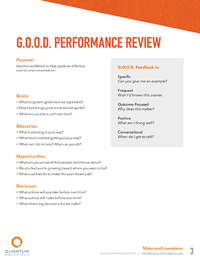
A particularly noteworthy template is the G.O.O.D. (Goals, Obstacles, Opportunities, Decisions) framework, a staple within Quantum Workplace’s own performance management culture. This template is exceptionally well-suited for monthly one-on-one meetings, enabling managers and employees to gain a broader perspective and revisit overarching objectives.
- Goals: This section focuses on what the employee aims to achieve. It encourages setting clear, measurable objectives that align with broader team and organizational targets.
- Obstacles: Here, employees and managers identify any challenges or roadblocks hindering progress. This proactive approach allows for timely problem-solving and support.
- Opportunities: This segment explores potential avenues for growth, improvement, or innovation. It encourages forward-thinking and strategic development.
- Decisions: This final component addresses any necessary actions or choices required to move forward, ensuring that discussions translate into tangible next steps.
The G.O.O.D. template’s primary advantage lies in its ability to foster conversation, encourage reflection, and promote future planning. While it may not explicitly include metrics for direct comparison between employees, this aligns with an approach that prioritizes qualitative development over quantitative ranking.
2. Quarterly Check-In Template
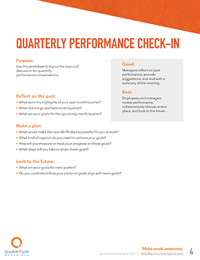
For organizations where monthly reviews may not be feasible, quarterly check-ins offer a viable alternative. This template guides collaborative discussions on performance, action plans, and future outlook.
- Reflect on the Past: This section prompts a review of accomplishments, challenges, and lessons learned during the previous quarter.
- Make a Plan: It facilitates the creation of concrete action plans to address identified areas for improvement and capitalize on opportunities.
- Look to the Future: This segment focuses on setting priorities and goals for the upcoming quarter, ensuring continued alignment and momentum.
While quarterly reviews allow for quicker action on findings, they may occasionally lack the long-term strategic focus inherent in more frequent evaluations.
3. Mid-Year Performance Review Template
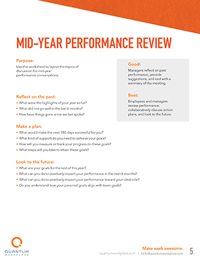
The mid-year review is a crucial juncture for assessing progress toward annual goals and making necessary adjustments. This template emphasizes key highlights, obstacles, and future planning.
- Reflect on the Past: This section reviews performance against goals set at the beginning of the year, identifying successes and challenges.
- Make a Plan: It involves refining existing action plans or creating new ones to address any performance gaps or capitalize on emerging opportunities.
- Look to the Future: This segment sets the stage for the remainder of the year, ensuring continued focus on key objectives.
A significant benefit of the mid-year review is its ability to allow for recalibration before the year concludes. However, if it’s the only formal review conducted, it can leave substantial gaps between evaluations.
4. Annual Performance Review Template
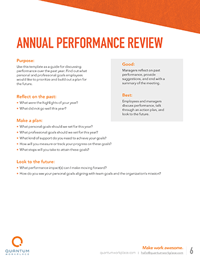
The annual performance review serves as a comprehensive summary of an employee’s performance throughout the year. It also provides an excellent opportunity to identify employee aspirations for the next performance cycle.
- Reflect on the Past: This section offers a broad overview of the employee’s performance over the entire year, examining key contributions and areas of growth.
- Make a Plan: It involves setting overarching goals and development plans for the upcoming year, aligning with organizational objectives.
- Look to the Future: This segment establishes a clear vision for the employee’s continued development and contributions.
While the annual review provides a valuable big-picture perspective, condensing an entire year’s performance into a single conversation can be challenging.
5. One-Page Performance Review Template
For organizations seeking a concise and straightforward approach, a one-page template offers a quick evaluation. These templates typically feature a defined rating scale for rapid assessment.
- Pros: Quick and easy to complete.
- Cons: May offer limited space for detailed feedback or encourage a less dynamic, two-way discussion.
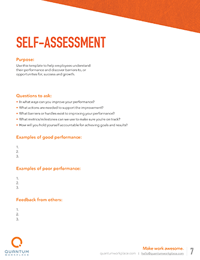
6. Self-Assessment Template
Empowering employees to reflect on their own performance is a key benefit of self-assessment templates. These tools help individuals identify personal barriers and opportunities, giving them a voice in their career trajectory and providing managers with valuable coaching insights.
- Questions to Ask: Prompts encourage employees to evaluate their contributions, identify areas of success, and pinpoint areas needing improvement.
- Share Examples: Employees are asked to provide specific instances illustrating both strong performance and areas where they could develop.
The primary advantage of self-assessments is fostering reflective habits and employee ownership of performance. However, they do not inherently incorporate feedback from peers or managers.
7. Upward Feedback Template
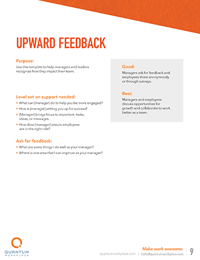
The upward feedback template is crucial for fostering a culture of accountability among leadership. It allows employees to provide feedback on their manager’s performance to the manager’s superior.
- Level Set on Support Needed: This section focuses on the resources and support employees require from their managers.
- Ask for Feedback: It prompts employees to share observations on their manager’s leadership style, communication, and effectiveness.
This approach opens the door for a constructive dialogue regarding managerial effectiveness. However, employees may sometimes hesitate to provide candid feedback due to concerns about potential repercussions.
8. Team Performance Review Template
High-performing teams are fundamental to organizational success. This template is designed to build trust by fostering an open feedback culture within teams.
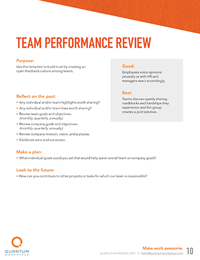
- Reflect on the Past: Team members discuss collective achievements, challenges, and lessons learned.
- Review Team Goals: It assesses progress against monthly, quarterly, and annual team objectives.
- Make a Plan: The team collaboratively develops strategies to overcome obstacles and enhance future performance.
- Look to the Future: It sets forward-looking objectives for the team.
While this template provides insights into overall team performance, the contributions of a few individuals can sometimes skew the results.
9. 360 Performance Review Template
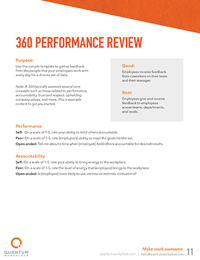
The 360-degree review offers a comprehensive perspective by gathering feedback from an employee’s peers, direct reports, and managers. This multi-rater approach can illuminate strengths and challenges that might otherwise go unnoticed.
- Performance Self: Employees assess their own performance in key areas.
- Accountability Self: This section focuses on an individual’s ability to take ownership and contribute effectively.
A significant benefit of 360 reviews is their ability to provide a holistic view of an employee’s actions. However, accurately judging performance across diverse working relationships can sometimes be challenging for individuals.
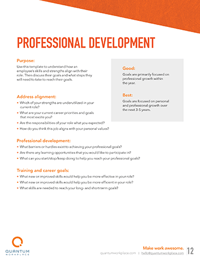
10. Professional Development Template
Professional development and career growth are vital drivers of employee engagement and sustained performance. This template facilitates discussions about aligning employee strengths, skills, and aspirations with their current roles and future career paths.
- Address Alignment: It examines how an employee’s current skills and goals fit within their role and the organization.
- Discuss Development: This section explores opportunities for skill enhancement and career progression.
- Talk Through Training and Goals: It outlines specific training initiatives and career goals for the next 3-5 years.
This template promotes aligned expectations and supports long-term career planning.
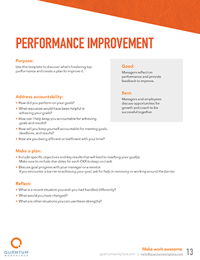
11. Performance Improvement Template
For employees who are not consistently meeting expectations, a performance improvement plan (PIP) is often necessary. This template helps identify the root causes of performance deficits and outlines a clear plan for improvement.
- Address Accountability: It clearly defines the performance expectations and areas requiring improvement.
- Make a Plan: This section details specific actions, resources, and timelines for improvement.
- Reflect: It includes provisions for ongoing monitoring and feedback.
The performance improvement template offers a structured approach to course-correcting declining performance and providing employees with a fair opportunity to improve.
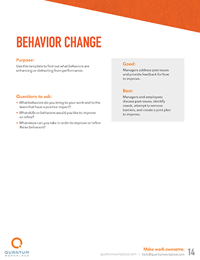
12. Behavior Change Template
Employee behaviors can significantly impact individual and team success. This template assists in identifying and addressing behaviors that either enhance or hinder performance.
- Questions to Ask: Prompts guide discussions on observable behaviors and their impact.
- Identify Needs and Barriers: This section explores the underlying factors contributing to specific behaviors.
This template is most effective when employees are self-motivated and willing to engage in open dialogue about their behavioral patterns.
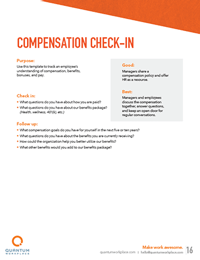
13. Compensation Check-In
Open and transparent discussions about compensation are crucial for employee satisfaction and retention. This template facilitates conversations about salary, benefits, bonuses, and pay adjustments.
- Check-in: It provides a framework for initial discussions about compensation.
- Follow-up: This section outlines steps for ongoing dialogue and clarification.
These check-ins promote pay transparency and ensure that employees have their compensation-related questions answered.
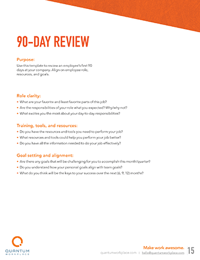
14. 90-Day Review Template
The initial 90 days of employment are critical for new hires to acclimate and demonstrate their potential. This template provides a structured review of their onboarding experience.
- Role Clarity: It ensures new hires understand their responsibilities and expectations.
- Training, Tools, and Resources: This section assesses whether the employee has received adequate support.
- Goal Setting and Alignment: It establishes short-term goals and aligns the new hire’s vision with the organization’s.
This template offers clarity and early performance feedback for new employees, helping to set them on a path to success.
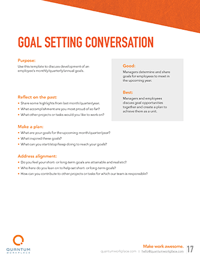
15. Goal Setting Conversation Template
Effective goal setting is a cornerstone of performance management. This template guides conversations to establish measurable, aligned goals for employees on a monthly, quarterly, or annual basis.
- Reflect on the Past: It reviews previous goals and outcomes.
- Make a Plan: This section focuses on defining new, actionable goals.
- Address Alignment: It ensures that individual goals contribute to broader team and organizational objectives.
This template is essential for ensuring employees have clear targets and understand how their work contributes to the company’s success.
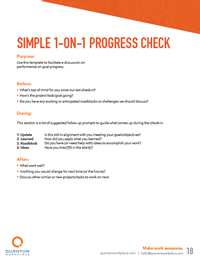
16. Simple 1-on-1 Progress Check
While formal reviews are important, regular informal check-ins are equally vital. This template facilitates weekly discussions to address obstacles and monitor progress in real-time.
- Progress Updates: Employees share updates on their current tasks and projects.
- Obstacles and Support: This section identifies any challenges and discusses necessary support.
- Next Steps: It outlines immediate actions and priorities.
These frequent check-ins foster better communication and agility within teams, though managers must dedicate specific time for each employee.
Elevating Performance Reviews from Administrative Tasks to Strategic Initiatives
Performance reviews are instrumental in aligning teams with organizational objectives, driving both employee and business success, and enhancing engagement and company culture. By emphasizing the value of constructive feedback, reviews transform from mere administrative burdens into powerful tools for development and career advancement.
Simple performance review templates empower HR and managers by:
- Providing a consistent framework for evaluations.
- Facilitating objective and constructive feedback.
- Ensuring alignment on goals and expectations.
- Creating a historical record of performance.
- Identifying development needs and opportunities.
- Supporting informed talent management decisions.
How Quantum Workplace Streamlines Performance Reviews
Performance conversations need not be a source of dread or inefficiency. Quantum Workplace’s performance review software is designed to keep managers and employees synchronized through engaging and effective reviews. The platform provides teams with reliable context, enabling more objective and impactful discussions.
Key features of Quantum Workplace’s solution include:
- Customizable Reviews: The platform allows for the creation of flexible review modules, enabling organizations to tailor evaluations to their specific culture and the diverse needs of different teams.
- Manager Coaching Support: Integrating the performance process into existing workflows helps managers develop positive performance habits. Formal conversation cycles ensure consistent and appropriate touchpoints.
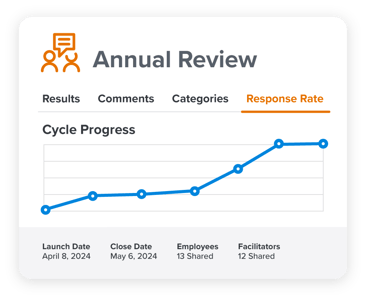
- Response Rate Tracking: The system facilitates easy monitoring of review cycle status, promoting accountability and providing real-time insights into performance ratings.
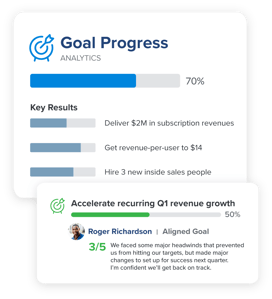
- Integrated Performance Goals: Goals can be directly embedded within performance evaluations, enabling managers to conduct objective, effective, and growth-oriented conversations.
- Multi-Rater Feedback Integration: The platform incorporates feedback from various sources, offering valuable insights for development-oriented performance conversations.
- Performance Data Visualization: A comprehensive talent dashboard allows for a high-level view of organizational performance, aiding in informed talent management decisions.
Performance Review Template FAQs
What are the most important sections in an employee review template?
The most effective performance review templates feature clear, structured sections that guide managers and employees through meaningful dialogue. Essential components typically include:
- Goal Review: Evaluating progress against established objectives.
- Strengths and Accomplishments: Recognizing and detailing notable achievements.
- Areas for Development: Identifying specific skills or behaviors that require improvement.
- Future Goals and Development Plan: Setting objectives and outlining a roadmap for growth.
- Employee Comments: Providing a space for the employee’s perspective and input.
- Manager Comments and Signatures: Documenting the manager’s assessment and commitment.
These sections ensure consistency, fairness, and alignment across teams, while also providing HR with visibility into performance trends.
How to write a good performance review template?
Crafting an effective performance review template requires a strategic approach focused on clarity, alignment, and actionable outcomes. Begin by defining what constitutes excellent performance within your organization. Subsequently, develop prompts that encourage both reflection and future-oriented planning. An effective employee review form should:
- Be clear and concise, avoiding jargon.
- Focus on observable behaviors and measurable results.
- Encourage two-way communication and feedback.
- Promote future-oriented goal setting and development.
- Be adaptable to different roles and levels.
The best templates strike a balance between structure and flexibility, supporting both strategic evaluation and human-centered dialogue.

What is an example of a good performance review?
A good performance review effectively highlights achievements, evaluates progress toward goals, and sets clear expectations for the future. Quantum Workplace’s G.O.O.D. Performance Review Template, for instance, utilizes four key pillars—Goals, Obstacles, Opportunities, and Decisions—to foster a holistic, two-way conversation.
A strong example would include:

- Specific Recognition: Detailing concrete examples of successful project contributions or problem-solving initiatives.
- Constructive Feedback: Providing actionable advice on areas needing improvement, supported by specific instances.
- Forward-Looking Goals: Establishing clear, measurable objectives for the next review period.
- Development Plan: Outlining training or experiential learning opportunities to support growth.
- Employee Input: Actively soliciting and incorporating the employee’s perspective and self-assessment.
This approach strengthens trust, enhances clarity, and supports both employee engagement and overall organizational performance.
What are the 5 words for a performance review?
To ensure employee review forms facilitate productive conversations and actionable growth, consider these five guiding principles:
- Goals: Focus on objectives and what needs to be achieved.
- Obstacles: Identify and address challenges hindering progress.
- Opportunities: Explore avenues for growth and improvement.
- Decisions: Determine necessary actions and next steps.
- Development: Emphasize learning and future progression.
The G.O.O.D. model, as championed by Quantum Workplace, encapsulates these key ideas, providing a framework for meaningful reviews and check-ins.
How can HR create effective performance review templates?
HR teams can design effective performance review templates by prioritizing fairness, clarity, and strategic alignment. Key steps include:
- Define Performance Standards: Clearly articulate what constitutes successful performance at each level.
- Incorporate Competencies: Align review criteria with core organizational competencies.
- Balance Quantitative and Qualitative Feedback: Include both measurable metrics and space for narrative assessment.
- Ensure Legal Compliance: Review templates to ensure they adhere to all relevant labor laws and regulations.
- Pilot and Refine: Test templates with a small group and gather feedback for iterative improvements.
- Provide Manager Training: Equip managers with the skills to conduct effective performance reviews using the templates.
An effective employee review form should simplify performance conversations, rather than complicate them, ultimately serving as a catalyst for growth and improved organizational outcomes.
By embracing well-designed performance review templates and integrating them into a comprehensive performance management strategy, organizations can transform evaluations from a procedural necessity into a powerful engine for employee development, engagement, and sustained business success.