The landscape of talent acquisition is undergoing a profound transformation, driven by evolving candidate expectations and advancements in artificial intelligence. For over a decade, the standard for AI-powered recruitment interviews largely revolved around recorded, one-way video submissions. Candidates would record their answers to a predefined set of questions, and recruiters would review these submissions asynchronously. While this method represented a significant leap forward in scaling recruitment processes beyond traditional phone screens, it is increasingly being perceived as a relic of the past. The current paradigm shift is moving beyond the question of whether candidates can be assessed asynchronously to a demand for genuine, responsive conversations that can occur anytime and in any language. This evolution is precisely the gap that Eightfold AI Interviewer aims to bridge.
Historically, companies like HireVue were pioneers in establishing the one-way video interview model as the de facto standard for AI-native recruitment. This approach offered a scalable solution for assessing large volumes of candidates efficiently. However, the efficacy and candidate experience of this model are now being re-evaluated. The core of the issue lies in the passive nature of recorded interviews. Candidates are tasked with performing for a webcam, essentially delivering a monologue, and then waiting for a recruiter’s review. This format lacks the dynamism and interactivity that modern candidates, accustomed to real-time digital interactions, now expect. The bar has been raised, and the industry is moving towards solutions that can facilitate authentic, two-way communication.
Eightfold AI Interviewer represents a significant departure from the established one-way video paradigm. Unlike legacy systems that pair recorded video with separate, validated assessments for scoring, AI Interviewer facilitates a real-time, adaptive conversation. This means that if a candidate provides an incomplete answer or one that lacks the expected depth, the AI interviewer is designed to dynamically pose follow-up questions. This intelligent probing aims to elicit a more comprehensive response, ensuring that candidates have the opportunity to fully articulate their skills and knowledge. This fluid conversational approach allows the AI to seamlessly transition between technical, functional, and reasoning-based questions within a single, cohesive interaction. The intelligence powering this capability is the same sophisticated engine that drives matching and internal mobility across the broader Eightfold platform, leveraging insights from over a billion career profiles.
The implications of this shift are particularly pronounced across various hiring scenarios. For organizations engaged in high-volume and hourly hiring, the ability for candidates to interview the moment they apply, 24/7, and in over 22 languages, is a critical differentiator. Eightfold AI Interviewer includes CEFR-based language proficiency assessment directly within the interview, a feature that significantly enhances global recruitment efforts. In contrast, the reliance on candidates remembering to return to complete a one-way recording often leads to lower completion rates. The immediacy and accessibility of a real-time conversational interview can dramatically improve candidate engagement and throughput in these fast-paced hiring environments.

The impact is also substantial for early-career and campus hiring. Students, often juggling demanding academic schedules and multiple job opportunities, can now interview on their own terms. Instead of being constrained by recruiter availability or rigid campus event timelines, they can engage with an AI interviewer at a time that suits them. Furthermore, the adaptive nature of the conversation provides an invaluable opportunity for entry-level candidates, whose résumés may be light on extensive experience, to fully elaborate on their potential and reasoning abilities. This allows employers to gain a more nuanced understanding of a candidate’s fit beyond what a static résumé might convey.
In the realm of technical hiring, the ability to conduct coding, reasoning, and functional knowledge assessments within a single, adaptive conversation is a game-changer. This integrated approach eliminates the need for candidates to navigate separate, potentially disjointed testing environments. It allows for a more holistic evaluation of technical acumen as part of a natural dialogue, providing richer insights into a candidate’s problem-solving capabilities and thought processes.
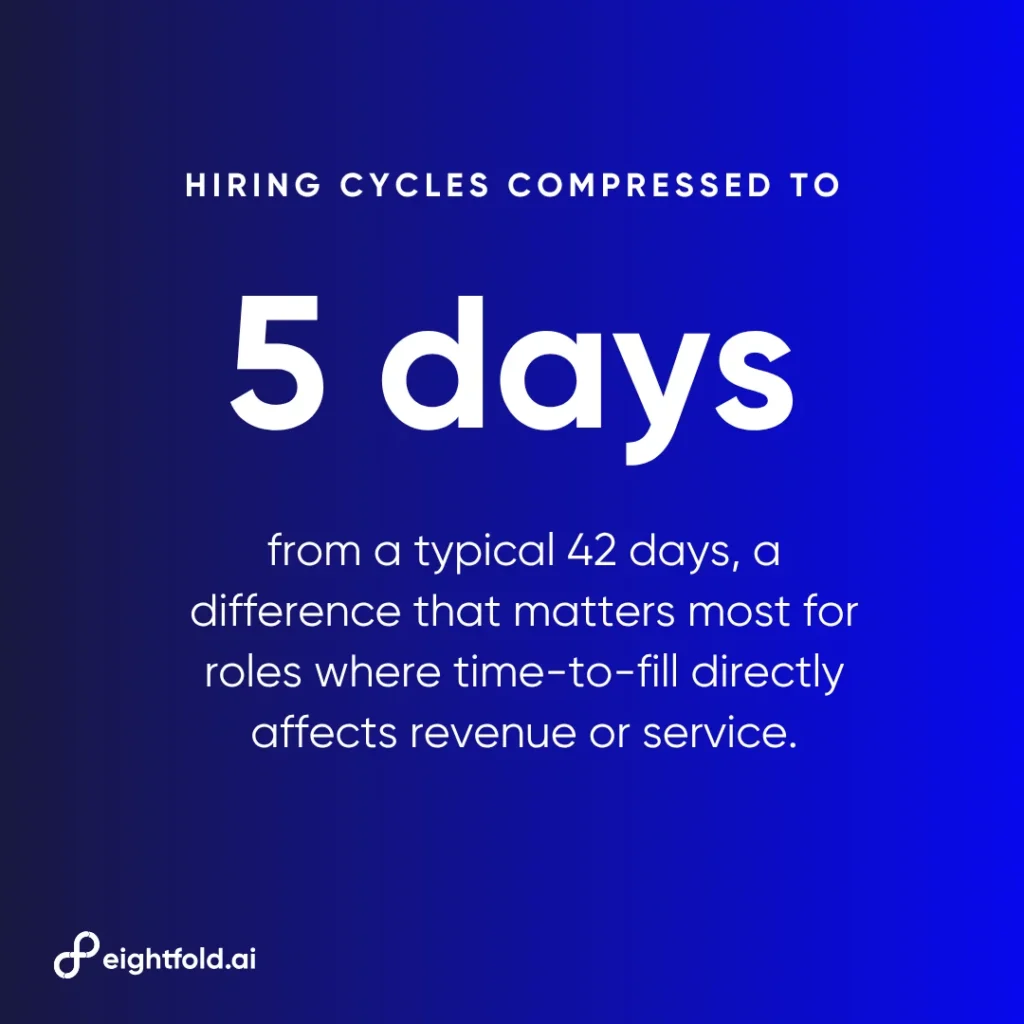
The integration of Eightfold AI Interviewer with Oracle Recruiting Cloud further streamlines the modernization of talent acquisition technology. For organizations already leveraging Oracle’s robust recruitment platform, AI Interviewer offers a more direct and integrated pathway to adopting advanced interview solutions. Instead of being a separate add-on, it is embedded directly within existing Oracle Recruiting Cloud workflows. This seamless integration is further facilitated by its availability through the Oracle Cloud Marketplace, allowing procurement via existing Oracle Universal Credits. This approach can significantly reduce the administrative burden and financial hurdles associated with adopting new technologies, enabling teams to implement these advanced solutions without the need to create new budget lines. Early enterprise deployments have demonstrated a remarkable impact on hiring speed, with recruitment cycles that typically span around 42 days being compressed to as few as five days. This accelerated time-to-fill is particularly crucial for roles where rapid hiring directly influences revenue generation or the maintenance of critical service levels.
The competitive landscape of AI interviewing technology is evolving rapidly. HireVue, a long-standing player in this space, has recently introduced its own voice AI interviewing capability, following its acquisition of Hireguide in March 2026. HireVue positions its new voice interviewer as a tool to qualify candidates earlier in the recruitment funnel, preceding the initial recruiter call. However, Eightfold AI Interviewer has been established in the market for a considerable period as a comprehensive, multimodal interviewer that integrates with matching and assessment across the entire hiring lifecycle. Companies evaluating these solutions are advised to scrutinize the depth of integration and the proven track record of the underlying AI agents, rather than simply focusing on the presence of a particular feature. The true measure of an AI interviewing solution lies in its ability to deliver consistent, reliable, and insightful assessments within a broader talent acquisition strategy.
Eightfold distinguishes itself by augmenting, rather than replacing, traditional assessment methods. While validated, static assessments remain valuable for measuring specific skills, Eightfold introduces a crucial layer of live, adaptive conversation. This conversational element is powered by a continuously learning engine that draws upon an extensive dataset of over a billion career profiles. This combination provides talent teams with a far more comprehensive understanding of a candidate’s potential and suitability than either a static test or a recorded video can offer in isolation.
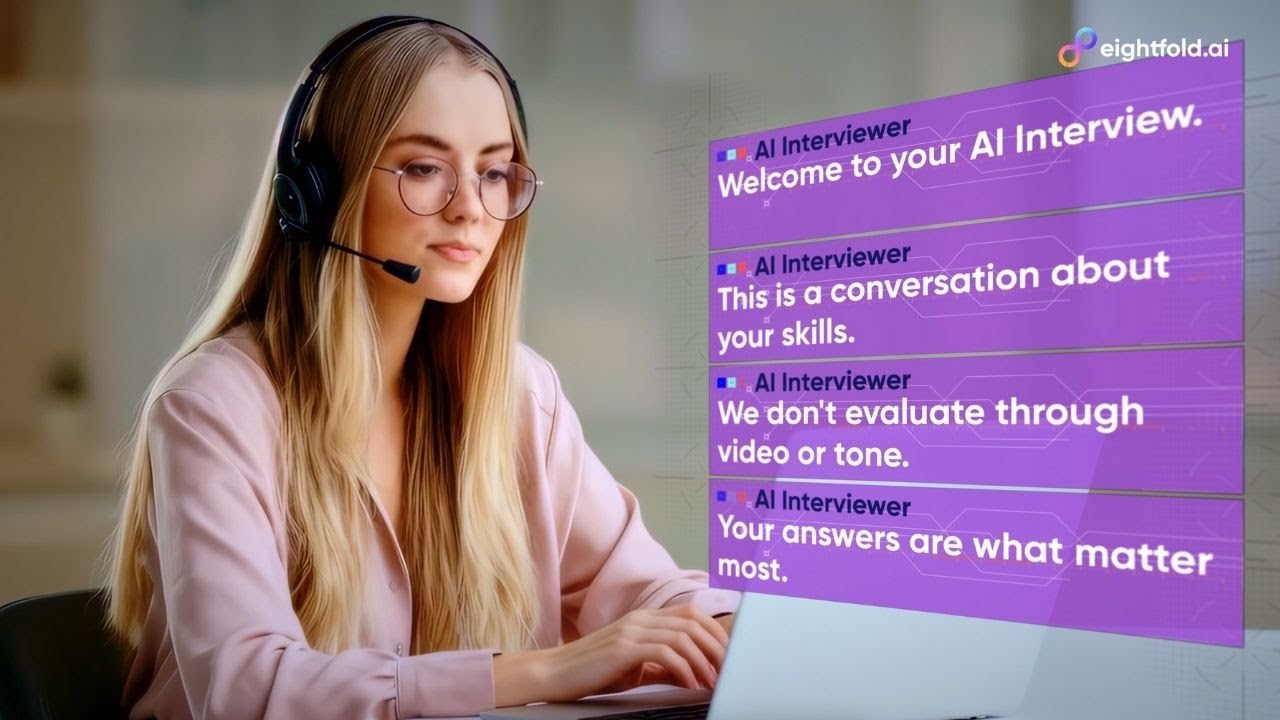
The depth of language support is another area where Eightfold emphasizes practical application over sheer breadth. While supporting numerous languages is important, the true value lies in the depth of engagement facilitated by a genuinely adaptive, two-way conversation. Such interactions are far more effective at revealing a candidate’s fit, communication skills, and critical thinking abilities than a one-way recorded monologue, regardless of the number of languages it is available in.
Governance and security are paramount in enterprise hiring, and Eightfold highlights its commitment to responsible AI practices. The company holds ISO 42001 certification for AI management systems, underscoring its dedication to ethical and robust AI deployment. Customers can integrate interviews with identity verification through partners like CLEAR. Furthermore, Eightfold offers features designed to detect potential interview cheating, including tab-switching detection, providing essential controls for the scrutiny and scale required by modern enterprise recruitment. These capabilities are crucial for maintaining the integrity and fairness of the hiring process in an increasingly digital world.
The historical context of recorded video interviews reveals their origin as a solution to a specific problem at a particular stage of recruitment evolution. They addressed the need for scalability and efficiency when human resources were constrained. However, the market has matured, and candidate expectations have shifted dramatically. Today’s candidates are seeking interactions that more closely resemble genuine human conversations. Talent acquisition teams, in turn, require systems that can meet these evolving demands. This fundamental shift in expectations is prompting organizations that are currently reliant on legacy systems to re-evaluate their approach and explore the capabilities of real-time, conversational interviewers.
For companies evaluating their current talent acquisition technology stack, the transition to a solution like Eightfold AI Interviewer presents a compelling opportunity to enhance hiring volume and significantly reduce time-to-fill metrics. The prospect of a more engaging and insightful candidate experience, coupled with the efficiency gains for recruiters, makes this a critical area of focus for forward-thinking organizations.
The bottom line is that while recorded video interviews served a purpose, their limitations are becoming increasingly apparent in the current talent market. The future of AI in recruitment lies in its ability to facilitate authentic, dynamic, and responsive interactions that provide a richer, more accurate assessment of candidates while simultaneously elevating the candidate experience. As the industry continues to embrace these advancements, the emphasis will remain on solutions that offer genuine conversational capabilities, deep integration, and a commitment to responsible AI governance.