
The global corporate training market, valued at over $380 billion, is currently undergoing a fundamental transformation driven by the integration of generative artificial intelligence. While the initial wave of AI adoption focused primarily on the speed of content creation, a significant shift is occurring toward the quality and efficacy of learning outcomes. Industry experts and Learning and Development (L&D) professionals are increasingly concerned that the mere acceleration of content production may lead to "learning fatigue" and a decline in critical thinking skills. This transition marks a move away from generic, one-size-fits-all modules toward sophisticated, human-centered systems that prioritize adaptive learning, realistic simulations, and measurable performance improvements.
The Paradox of AI-Driven Content Proliferation
Since the emergence of large language models (LLMs) in late 2022, the L&D sector has leveraged AI to reduce the time required to develop training materials by as much as 70%. However, this efficiency has introduced a secondary challenge: the "generic content trap." When AI is used without rigorous human oversight or contextual grounding, it tends to produce homogenized information that lacks the nuance of specific organizational cultures or job roles.

Research into cognitive load and adult learning suggests that simplified, AI-generated summaries may inadvertently weaken a learner’s ability to engage in deep reflection. If assessments remain predictable and answers are instantly available via AI assistants, the "desirable difficulty" necessary for long-term memory retention is lost. Consequently, organizations are finding that while they have more training content than ever before, the gap between knowledge acquisition and behavioral change in the workplace remains wide.
Bridging the Gap: The Rise of Adaptive Learning Environments
In response to these challenges, platforms such as gAImify Hub are pioneering a more disciplined approach to AI implementation. The focus is shifting toward "Bloom’s 2 Sigma" ideal—a concept introduced by educational psychologist Benjamin Bloom in 1984, which posits that a student tutored one-on-one performs two standard deviations better than a student in a traditional classroom. For decades, scaling this level of personalization was financially and logistically impossible. AI now offers the technical infrastructure to simulate one-on-one coaching at scale.
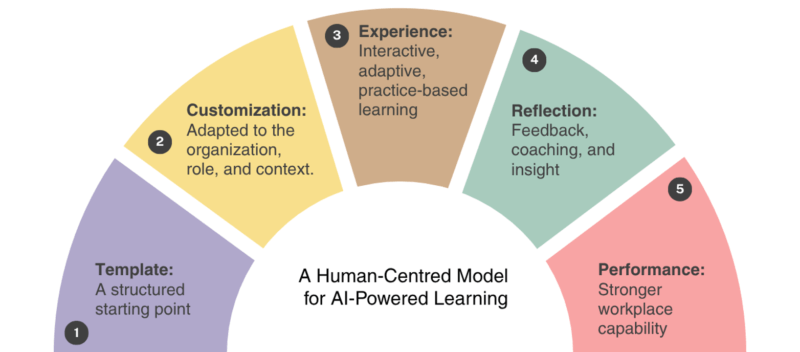
The methodology adopted by leaders in the field, such as Human Asset, involves a human-centered model that moves progressively from structure to capability. This model does not seek to replace human expertise but rather to extend it. By utilizing structured templates and contextual customization, AI can be directed to generate scenarios that are specific to a company’s unique challenges, regulatory environment, and brand voice.
Technological Frameworks for Enhanced Engagement
The modern AI-powered learning ecosystem is built upon several core technological pillars designed to foster active rather than passive learning.
1. Adaptive Assessment Engines
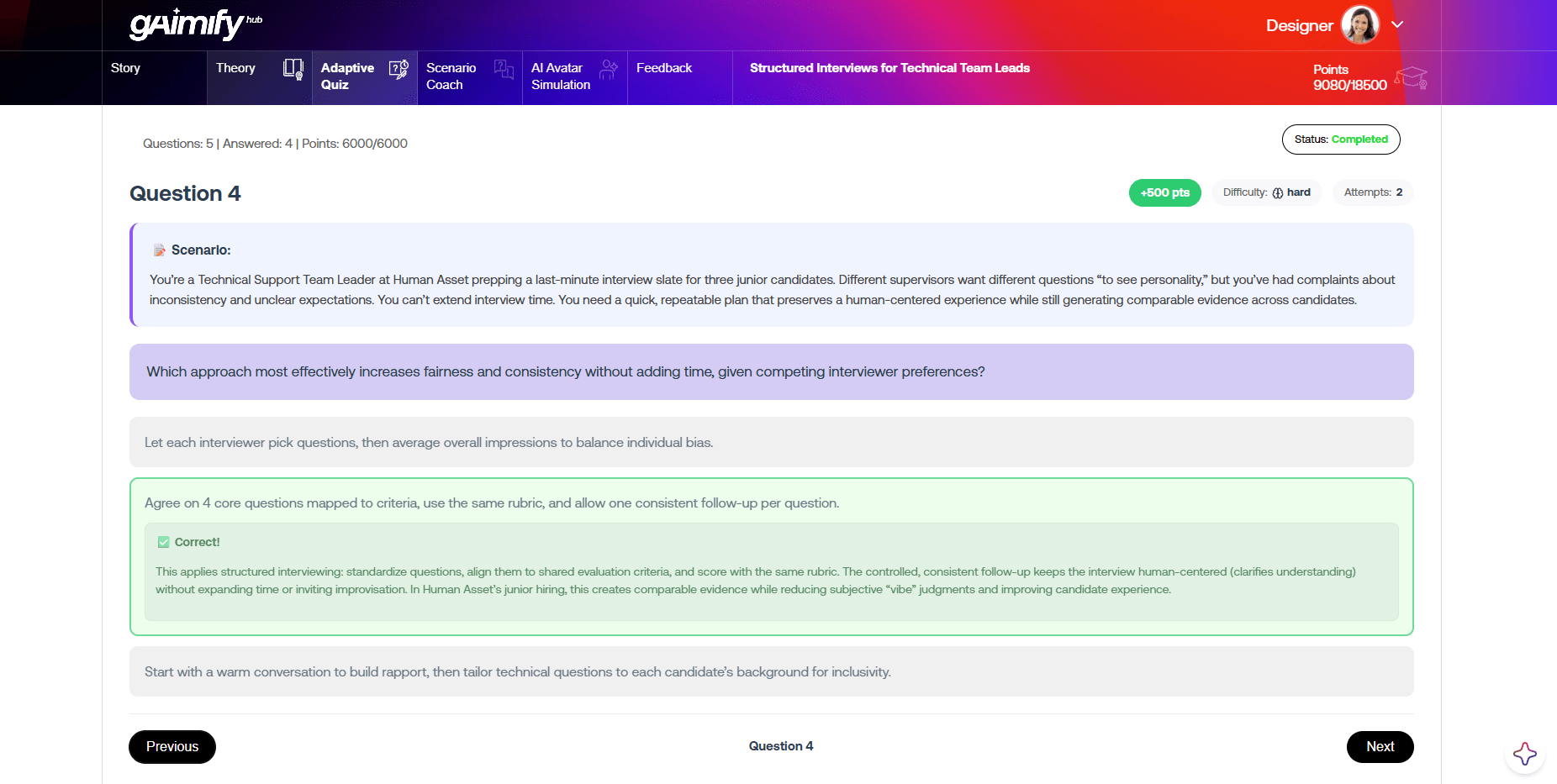
Traditional e-learning quizzes often follow a linear path where every participant encounters the same questions. Adaptive quizzes, powered by machine learning algorithms, adjust their difficulty in real-time based on the learner’s performance. If a learner demonstrates mastery of a concept, the system introduces more complex, higher-order thinking questions. Conversely, if a learner struggles, the AI provides immediate, scaffolded feedback and redirects them to foundational materials. This ensures that the learner remains in the "Zone of Proximal Development," where the challenge is sufficient to engage without being overwhelming.
2. Open-Ended Scenarios and Natural Language Feedback
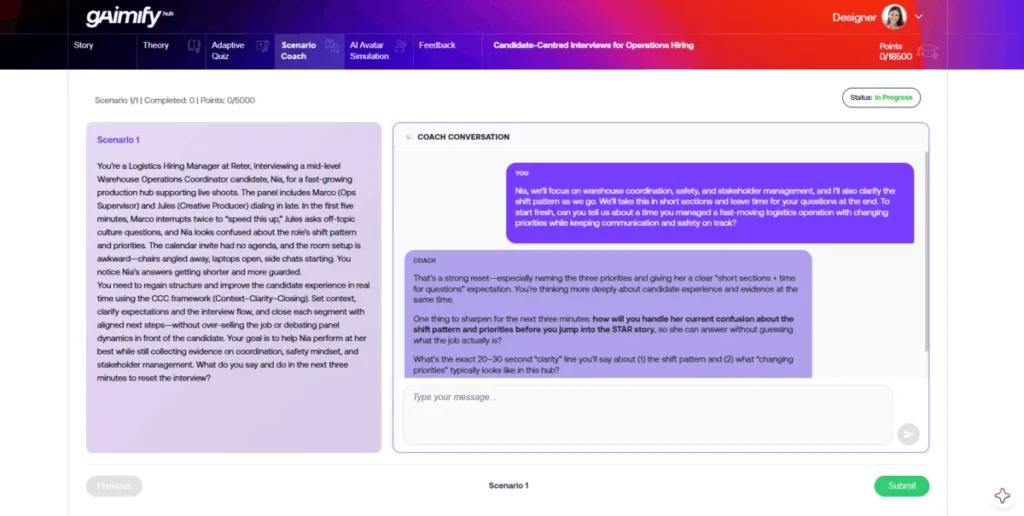
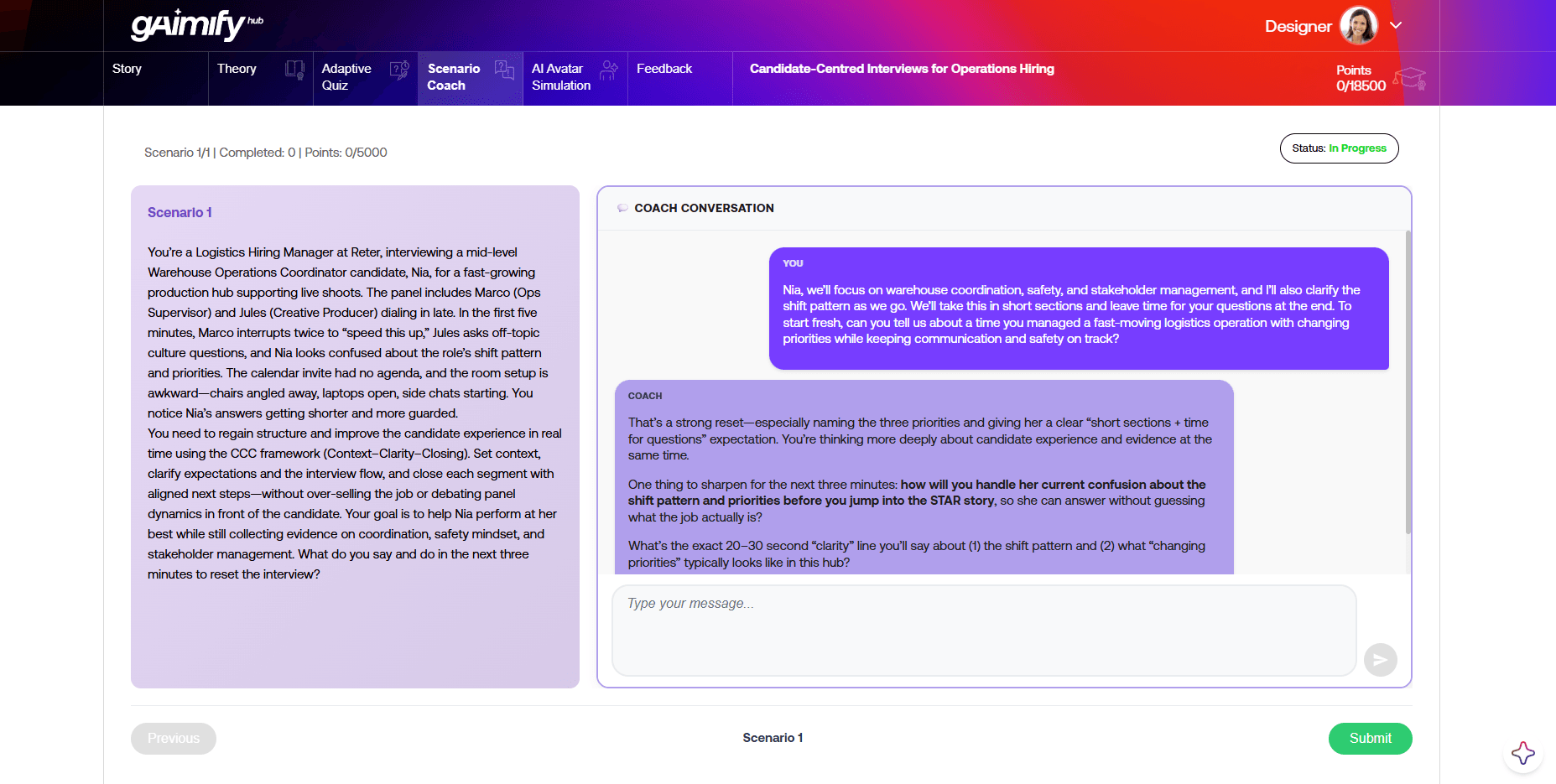
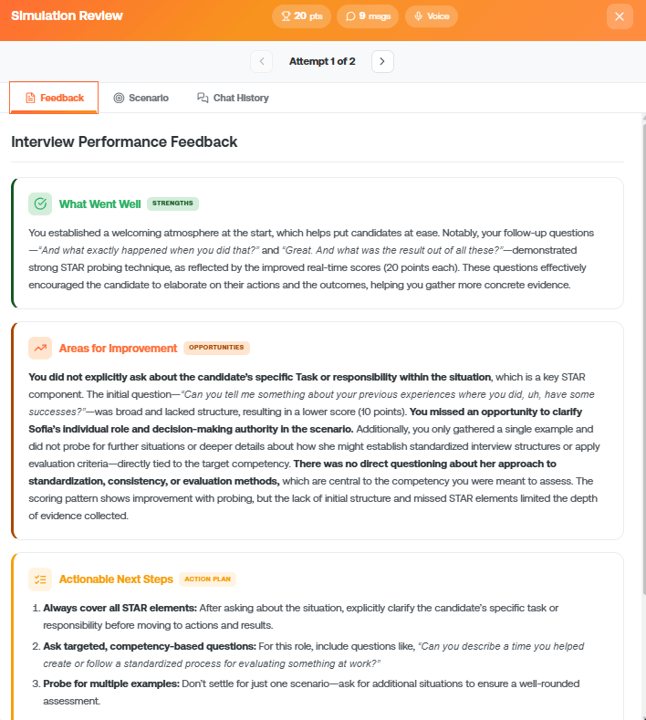
One of the most significant advancements in AI learning design is the move away from multiple-choice questions toward open-ended responses. In leadership or customer service training, judgment and tone are as important as factual knowledge. AI engines can now analyze a learner’s written or spoken response to a scenario, evaluating it against specific rubrics such as empathy, clarity, and intent. This provides a coaching-style feedback loop that mirrors human interaction, allowing learners to understand the "why" behind their performance scores.
3. AI Avatar Simulations and Behavioral Rehearsal
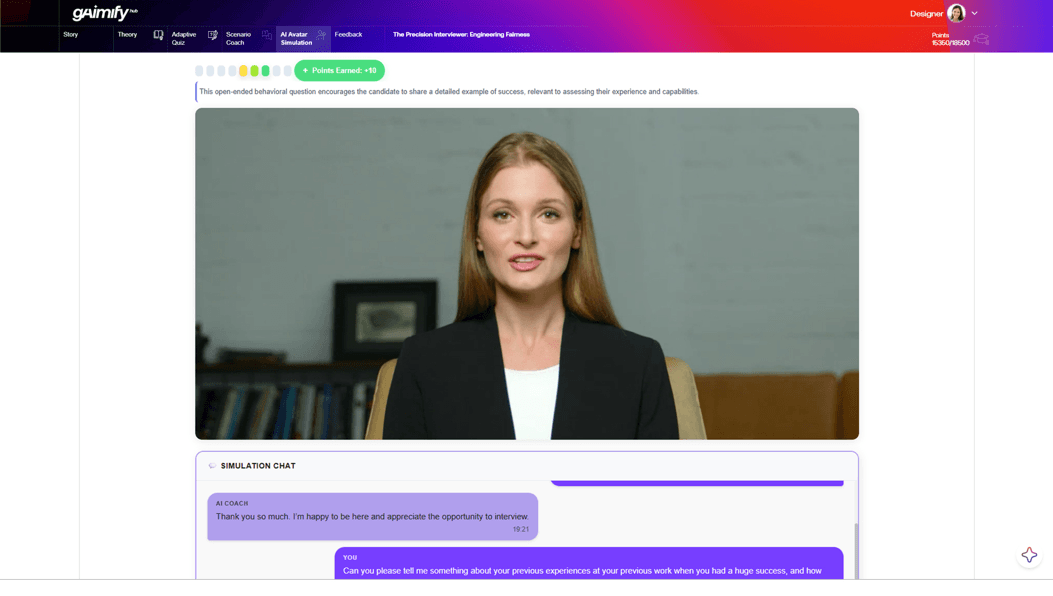
The development of voice-to-voice AI avatars has revolutionized soft-skills training. Learners can now engage in real-time, verbal simulations of difficult workplace conversations, such as performance reviews, conflict resolution, or high-stakes sales negotiations. These simulations provide a "safe-to-fail" environment where employees can rehearse behaviors repeatedly until they achieve fluency. Unlike static video or text-based modules, these simulations build muscle memory and confidence, which are critical for real-world application.
Data-Driven Insights and Qualitative Analytics
The integration of AI also enhances the analytical capabilities of L&D departments. Beyond simple completion rates, modern platforms provide deep-dive analytics into learner behavior and competency gaps.
- Competency Heatmaps: Visual representations of where an entire workforce stands in relation to specific skill sets.
- Sentiment and Tone Analysis: Data on how learners are interacting with simulations, identifying common areas of frustration or misunderstanding.
- Engagement Metrics: Tracking "momentum" within a learning journey, identifying where storytelling or gamification elements are most effective at sustaining attention.
These data points allow administrators to make informed decisions about where to allocate future training resources and how to refine existing content for better ROI.
Regulatory Compliance and the Ethical Use of AI
As organizations integrate AI into their human capital development strategies, the legal and ethical landscape is becoming more complex. The impending enforcement of the EU AI Act and the continued evolution of GDPR requirements necessitate a "human-in-the-loop" approach. Responsible AI in learning design requires that AI-generated content be reviewed, edited, and approved by human subject matter experts to prevent algorithmic bias and ensure accuracy.
Data privacy is another critical concern. Organizations must ensure that the data used to train or prompt AI models—especially personal learner data or proprietary corporate information—is handled within secure, closed-loop systems. The philosophy of "Responsible AI" emphasizes that technology should support reflection and judgment rather than automating the "thinking" process out of the learning experience.
Chronology of Innovation in Learning Technology
The journey to the current state of AI-powered learning has moved through several distinct phases:
- The SCORM Era (2000s–2010s): Focus on standardization and tracking of static content.
- The LXP Revolution (Mid-2010s): Introduction of "Netflix-style" content discovery and social learning.
- The Generative AI Explosion (2022–2023): Mass production of text, images, and videos, leading to a surplus of generic content.
- The Performance Era (2024–Present): A pivot toward specialized AI tools that prioritize behavioral change, adaptive pathways, and human-centered design.
Broader Impact and Organizational Implications
The transition to sophisticated AI learning design has profound implications for the future of work. As automation handles more technical and repetitive tasks, "human" skills—such as critical thinking, emotional intelligence, and complex problem-solving—become the primary drivers of organizational value.
For L&D teams, the role is shifting from "content curators" to "experience architects." The ability to design a learning journey that combines the speed of AI with the nuance of human coaching is becoming a core competency. Furthermore, tools like inSCORM AI are allowing organizations to breathe new life into legacy content. By "upgrading" older SCORM packages with AI-driven quizzes and simulations, companies can protect their historical investments while meeting the expectations of a modern, tech-savvy workforce.
Conclusion: A Strategic Path Forward
The evidence suggests that the most successful organizations will be those that view AI not as a replacement for training, but as a catalyst for more meaningful human development. There are two primary strategic paths for implementation:
Path 1: Greenfield Development. Leveraging platforms like gAImify Hub to build new, high-impact learning journeys from the ground up, incorporating storytelling, gamification, and voice-simulated practice.
Path 2: Legacy Transformation. Using AI to enhance existing training assets, transforming passive reading materials into interactive, adaptive experiences that provide real-time feedback.
As the workplace continues to evolve, the demand for learning that is relevant, adaptive, and connected to real performance will only intensify. The shift from "more content" to "better learning" is not just a technological upgrade; it is a strategic necessity for any organization aiming to maintain a competitive edge in the age of artificial intelligence.






