Candidate expectations have undergone a significant transformation, mirroring advancements in the underlying technology that powers the recruitment process. What was once considered cutting-edge, such as recorded, one-way video interviews, is increasingly being perceived by job seekers as a regressive step rather than a forward-thinking innovation. This shift signals a broader industry recalibration, moving beyond the question of whether candidates can be assessed asynchronously to a more sophisticated demand for genuine, responsive conversations that accommodate individual schedules and linguistic preferences.
For over a decade, the paradigm of an AI-native interview was largely defined by the one-way video model. In this format, candidates would record their responses to a predetermined set of questions, with recruiters subsequently reviewing these playback sessions. Industry leaders like HireVue built their category upon this foundation, and while it undeniably represented an improvement over scaled phone screenings, the static, asynchronous nature of this approach has become increasingly misaligned with the evolving demands of today’s job market. This gap is precisely what emerging technologies, such as Eightfold AI Interviewer, aim to address by facilitating dynamic, real-time interactions.
From Static Recording to Dynamic Dialogue: A Paradigm Shift
The fundamental distinction between legacy systems and newer AI interview platforms lies in their approach to candidate interaction. Older models, exemplified by HireVue’s initial offerings, typically combined a one-way video recording with a separate, validated assessment to gauge specific skills. The evaluation process was inherently retrospective, with recruiters reviewing the recorded output after the candidate had completed their submission. This created a passive experience for the applicant, akin to performing for an unseen audience with no immediate feedback.
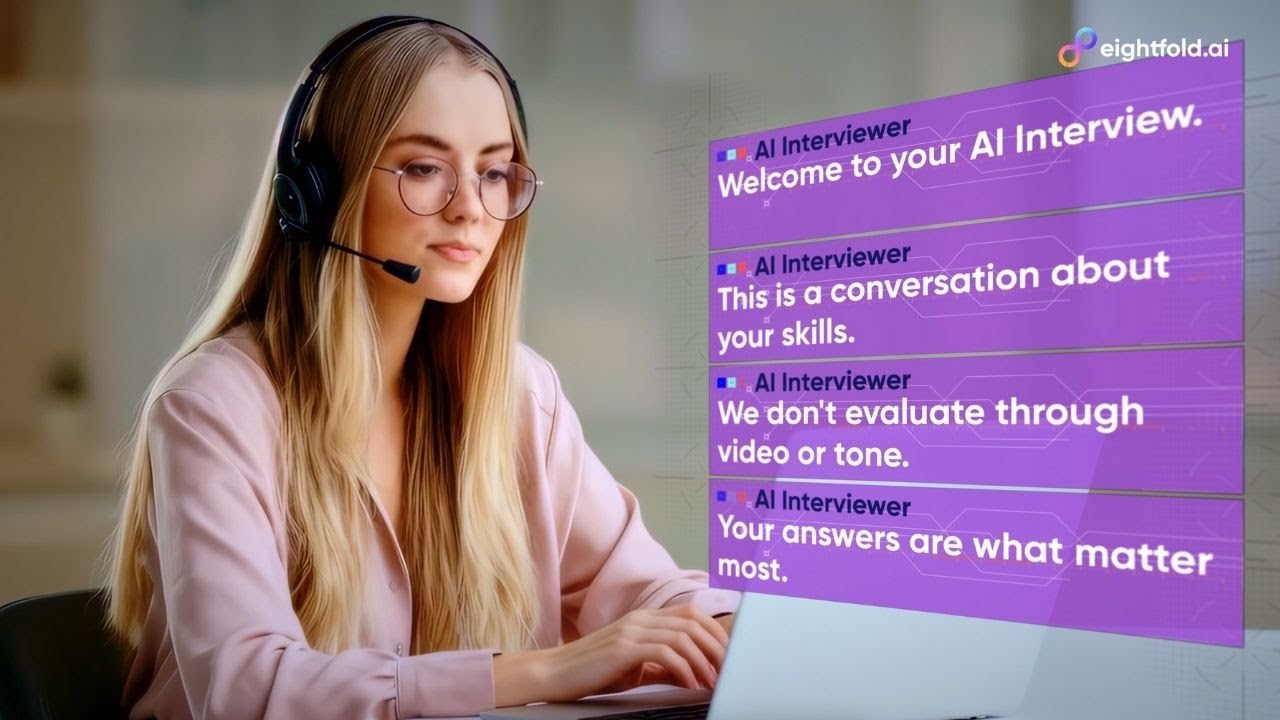
In stark contrast, Eightfold AI Interviewer simulates a more authentic and interactive interview experience. When a candidate provides an incomplete or less-than-ideal response to a question, the AI agent is designed to dynamically pose follow-up questions. This adaptive approach aims to elicit a more comprehensive answer, rather than simply moving to the next pre-scripted prompt. This capability allows for a fluid progression through technical, functional, and reasoning-based queries within a single, cohesive conversation. The underlying intelligence powering this real-time interaction is the same sophisticated engine that drives matching and internal mobility across the broader Eightfold platform, leveraging a vast dataset of over one billion career profiles.
This evolution is not merely a technological upgrade; it represents a strategic response to the changing dynamics of talent acquisition. The ability to conduct a real-time, adaptive conversation offers significant advantages across various hiring scenarios, addressing pain points that have become increasingly apparent with the limitations of older methods.
Tailoring the AI Interview Experience to Specific Hiring Needs
The impact of advanced AI interviewing capabilities is particularly pronounced when tailored to the specific demands of different role types and hiring volumes.
High-Volume and Hourly Hiring: For roles that require rapid and continuous recruitment, such as those in retail, hospitality, or logistics, the ability for candidates to interview the moment they apply is crucial. AI Interviewer offers this 24/7 accessibility, supporting over 22 languages and incorporating CEFR-based language proficiency assessment directly within the interview. This stands in contrast to one-way video interviews, which often rely on candidates remembering to return and complete a recording, leading to significantly lower completion rates. The immediacy and multilingual support of a real-time AI interview streamline the process, ensuring a consistent flow of qualified candidates.

Early Career and Campus Hiring: The recruitment of recent graduates and entry-level talent presents unique challenges. Students often juggle academic commitments, exams, and multiple job applications. The flexibility of an AI-powered interview that can be conducted on their own schedule, rather than being dictated by recruiter availability or campus event slots, is a significant advantage. Furthermore, the adaptive conversational nature of these interviews allows less experienced candidates to elaborate on their skills and potential, providing them with an opportunity to fully articulate their qualifications even when their resumes may be light on formal work experience. This offers a more nuanced assessment than a static resume review or a one-way recorded response.
Technical Hiring: For specialized roles requiring deep technical expertise, the integration of coding, reasoning, and functional knowledge assessment within a single, adaptive conversation offers a more holistic evaluation. Rather than treating these assessments as separate, potentially disconnected exercises, AI Interviewer can seamlessly weave them into the interview dialogue. This allows recruiters and hiring managers to gain a more integrated understanding of a candidate’s problem-solving abilities and technical proficiency in a context that mimics real-world work scenarios.
The Oracle Recruiting Cloud Advantage: Seamless Integration and Accelerated Time-to-Hire
For organizations already invested in the Oracle Recruiting Cloud ecosystem, the integration of Eightfold AI Interviewer presents a particularly compelling proposition. The solution is designed to be embedded directly within existing Oracle Recruiting Cloud workflows, functioning as an integral part of the recruitment process rather than an external add-on. This seamless integration streamlines implementation and enhances user experience for recruiting teams.
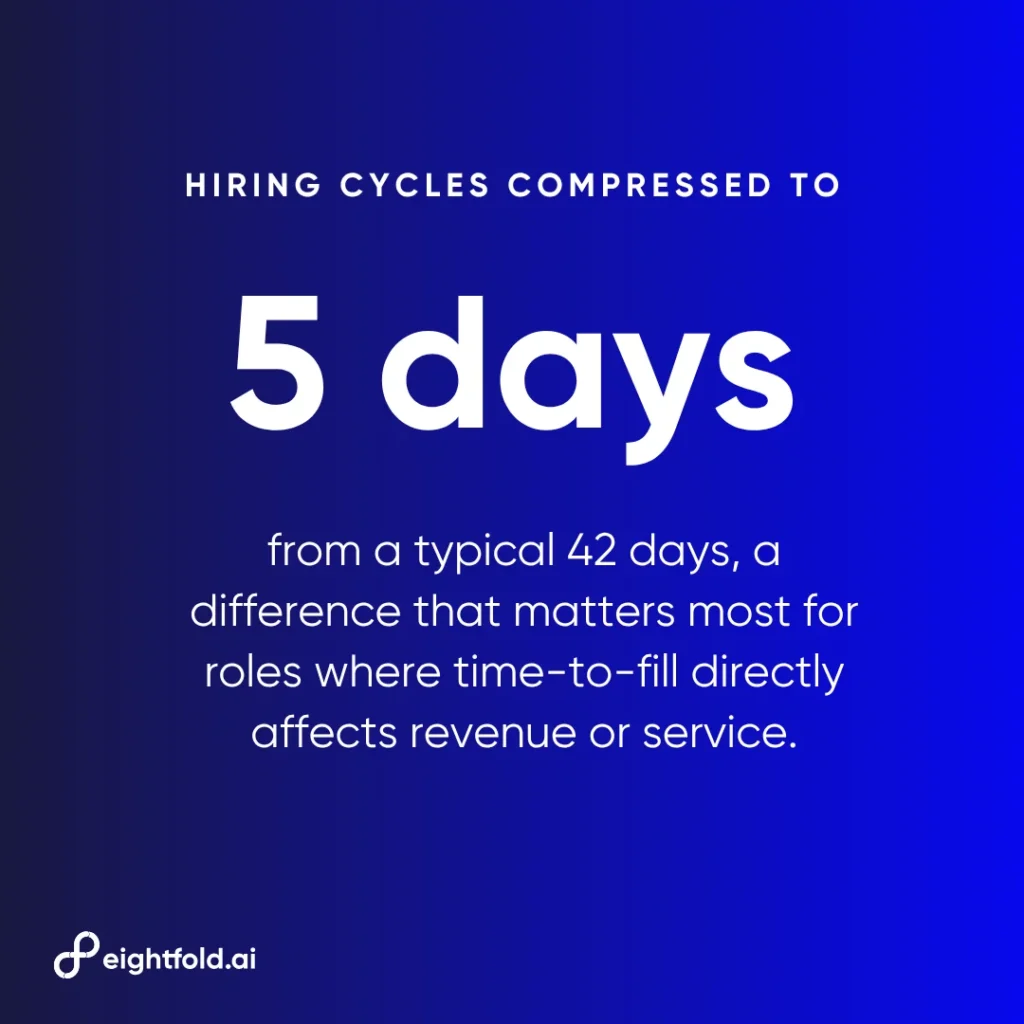
Furthermore, procurement through the Oracle Cloud Marketplace, utilizing existing Oracle Universal Credits, eliminates the need for new budget allocations, allowing teams to adopt the technology more readily. The impact on hiring speed has been demonstrably significant for early enterprise adopters. Hiring cycles that traditionally spanned approximately 42 days have been compressed to as few as five days in some instances. This dramatic reduction in time-to-fill is particularly critical for roles where prompt staffing directly influences revenue generation or the maintenance of service levels.
Addressing the Evolving Competitive Landscape: A Leap Beyond Voice AI
The competitive landscape for AI in recruitment is rapidly evolving. In March 2026, HireVue announced its acquisition of Hireguide, signaling a strategic move to incorporate voice AI interviewing capabilities into its offerings. HireVue has positioned its new voice interviewer as a tool to qualify candidates earlier in the recruitment funnel, potentially reducing the need for initial recruiter calls.
However, Eightfold AI Interviewer has been in the market for a considerable period as a comprehensive, multimodal interviewer. Its integration extends beyond simple conversational AI, encompassing matching and assessment functionalities across the entire hiring lifecycle. For talent acquisition teams evaluating these solutions, the critical consideration is not merely the existence of a feature, but the depth of its integration, the maturity of its underlying agent, and its proven track record within broader talent management strategies. The focus should be on the robustness and comprehensiveness of the AI’s capabilities rather than a singular feature.
Eightfold’s Strategic Advantages in the AI Recruitment Arena
Eightfold differentiates itself by offering a more comprehensive and integrated approach to AI-driven recruitment. While validated, static assessments retain their value for measuring specific, discrete skills, they often fall short in capturing the full spectrum of a candidate’s potential. Eightfold augments these assessments with a live, adaptive conversational layer powered by a continuously learning engine that has processed over a billion career profiles. This synergistic combination provides talent teams with a richer, more nuanced understanding of a candidate than either a standalone test or a recorded video interview could offer individually.
The sophistication of language support also highlights a key differentiator. The emphasis is not merely on the breadth of languages covered but on the depth of engagement and the quality of the interaction. A genuinely adaptive, two-way conversation is far more effective at revealing a candidate’s suitability, communication skills, and cultural fit than a one-way recorded monologue, regardless of the number of languages that monologue is available in.
Furthermore, Eightfold places a strong emphasis on governance and responsible AI. The company holds ISO 42001 certification for AI management systems, underscoring its commitment to ethical and secure AI deployment. For enterprise clients, this translates into robust controls and partnerships that enhance the integrity of the hiring process. Integrations with identity verification partners like CLEAR, coupled with the ability to capture interview signals that detect potential academic dishonesty or interview manipulation, such as tab-switching detection, provide a level of assurance necessary for large-scale, scrutinized hiring operations. These advanced security and integrity measures are crucial in an era where the authenticity of candidate submissions is paramount.
Data-Driven Insights: The Quantifiable Impact of Advanced AI Interviews
While specific quantitative data points were not detailed in the original content, the implications of the described advancements can be inferred from broader industry trends and the claimed benefits. The shift from asynchronous to synchronous AI interviews, for instance, directly impacts candidate engagement and completion rates. Research from various HR technology providers consistently shows that higher candidate engagement correlates with improved offer acceptance rates and a more positive candidate experience.
Moreover, the acceleration of hiring cycles, as evidenced by the reduction from 42 days to as few as five days, has significant financial implications. According to industry reports, the cost of a delayed hire can range from thousands to tens of thousands of dollars per day, depending on the role’s seniority and impact on revenue. Therefore, the ability of AI Interviewer to compress hiring timelines translates directly into cost savings and faster revenue realization for organizations.
The multilingual capabilities of AI Interviewer are also critical in a globalized economy. Companies operating across diverse markets face the challenge of reaching and assessing a global talent pool. Providing interviews in over 22 languages significantly broadens the potential candidate base and ensures that language barriers do not preclude qualified individuals from consideration. This inclusive approach can lead to a more diverse workforce, which is increasingly recognized as a driver of innovation and business success.
The Bottom Line: Adapting to the Future of Talent Acquisition
Recorded video interviews served a vital purpose in addressing the scaling challenges of recruitment at a specific point in the evolution of hiring practices. However, the current landscape demands more. Candidates now expect an experience that mirrors genuine human interaction, a responsive and engaging conversation that respects their time and individuality. Talent teams, in turn, require sophisticated systems that can deliver this enhanced experience efficiently and effectively.
This ongoing shift is prompting enterprises that rely on legacy systems to re-evaluate their talent acquisition stacks and explore the capabilities of real-time, conversational AI interviewers. The move towards more dynamic and interactive AI in recruitment is not just a technological upgrade; it is a fundamental recalibration of how organizations connect with and assess potential employees, ensuring a more equitable, efficient, and ultimately, more successful hiring process. For organizations considering such a transition, exploring solutions like Eightfold AI Interviewer offers a pathway to significantly impact hiring volume, accelerate timelines, and elevate the overall candidate experience.
To understand the practical application and impact of these advancements, interested parties are encouraged to request a demonstration of AI Interviewer in action, providing a firsthand look at how this technology is reshaping the future of talent acquisition.