
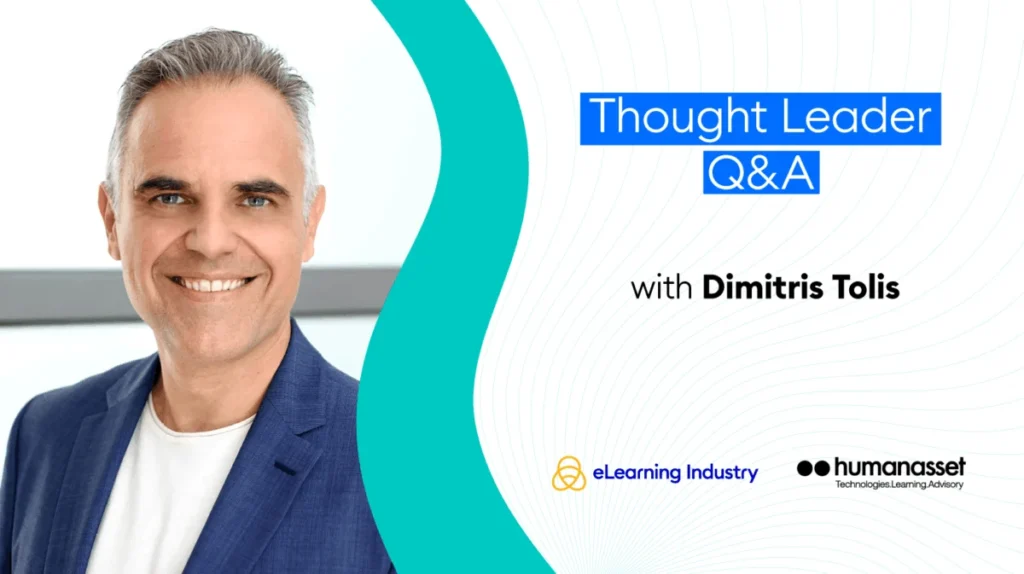
The global landscape of Learning and Development (L&D) is currently undergoing a radical transformation, driven by the rapid integration of generative artificial intelligence. While the initial wave of AI adoption focused heavily on the speed of content production, a new consensus is emerging among industry leaders: efficiency without instructional depth is a recipe for organizational stagnation. Dimitris Tolis, Founder and CEO of Human Asset and a veteran with over 25 years in the field, is at the forefront of this shift. Through his work with high-stakes European agencies and international organizations, Tolis is advocating for a move away from static eLearning and toward adaptive, competency-driven experiences that prioritize human-centered design.
As an AI researcher at the University of Turku, Finland, and a Senior Instructional Designer, Tolis bridges the gap between educational technology and neuroscience. His recent insights highlight a critical juncture in the industry. While AI can generate thousands of slides in seconds, the challenge remains in ensuring those slides translate into measurable workplace performance. This evolution marks a transition from "AI-as-a-generator" to "AI-as-an-architect," where the focus is on building capabilities rather than merely delivering information.
The Risks of High-Speed Mediocrity in L&D
The primary allure of AI in the workplace has been its ability to solve the "content bottleneck." Organizations that once took months to develop a curriculum can now produce modules in days. However, Tolis warns that this speed often solves the wrong problem. The risk is the creation of "content mediocrity at scale." When AI is used as a shortcut rather than a tool, it often results in weaker instructional depth, a lack of originality, and a diluted learner experience.
Tolis identifies the "little God" effect—a cognitive bias where stakeholders believe that because content can be generated instantly, the underlying learning science has also been addressed. Without rigorous instructional design, this leads to "content inflation," where learners are overwhelmed by volume but starved for substance. Furthermore, there is the growing concern of "cognitive offloading." When AI provides instant summaries and simplified feedback, learners may bypass the critical thinking and reflection necessary for deep retention. This overdependence can weaken judgment and problem-solving skills over time, creating a workforce that knows how to find answers but does not understand the principles behind them.
Perhaps the most technical risk involves "AI hallucinations." Large Language Models (LLMs) are designed for fluency, not necessarily for factual accuracy. In high-stakes environments—such as legal, medical, or law enforcement training—an authoritative-sounding but incorrect AI output can have disastrous consequences. Tolis emphasizes that these risks do not necessitate a retreat from technology but rather a more disciplined approach to its design.
A Chronology of Educational Technology Integration
To understand the current state of AI in learning, it is essential to view it within the context of the last three decades of educational technology evolution:
- The Early Digital Era (1995–2005): The rise of the Learning Management System (LMS) and the standardization of SCORM (Sharable Content Object Reference Model). The focus was on digitizing classroom materials and tracking completion.
- The Mobile and Microlearning Wave (2006–2015): The shift toward shorter, "bite-sized" content accessible on smartphones. This era focused on convenience and just-in-time information delivery.
- The Data-Driven Personalization Phase (2016–2021): The use of basic algorithms to recommend content based on user history, similar to Netflix or Amazon.
- The Generative AI Revolution (2022–Present): The current phase, initiated by the public availability of LLMs. This era began with a focus on automated content creation but is now pivoting toward adaptive simulations and human-in-the-loop instructional design.
Tolis’s work represents the vanguard of this fourth phase, where the objective is to move beyond "information delivery" to "capability building."
Moving Toward Capability-Based Learning Experiences
One of the most significant overlooked opportunities in AI-powered learning is its potential for adaptive practice. Traditional corporate training often relies on multiple-choice quizzes that test recall rather than application. Tolis suggests that AI can transform these assessments into developmental tools. Through adaptive quizzes, the level of challenge can shift dynamically based on the learner’s performance, reinforcing weak areas and providing custom feedback that guides the learner forward.
This is particularly vital for "soft skills" or behavioral competencies, such as conflict resolution, leadership, and empathetic communication. These skills cannot be mastered through static slides. AI allows for open-ended practice where learners respond in their own words. AI coaching personas can then analyze these responses for tone, clarity, and intent, offering a level of personalized guidance that was previously impossible to achieve at scale.
This approach aligns with Aristotle’s ancient insight that learning requires effort and Bloom’s "2 Sigma" research, which underscores the efficacy of one-on-one tutoring. AI, for the first time in history, offers the possibility of providing every employee with a personalized tutor and a safe environment for high-stakes practice.
Human-in-the-Loop: The Necessity of Instructional Guardrails
To mitigate the risks of hallucinations and "prompt and pray" outputs, Tolis advocates for a "human-in-the-loop" (HITL) framework. This methodology ensures that AI operates within specific competency frameworks and grading rubrics defined by human experts. In this model, AI serves as the engine for generating practice scenarios and feedback, while human instructional designers remain responsible for the quality, alignment, and ethical standards of the output.
By implementing strict moderation logic and instructional guardrails, organizations can move AI from "improvisation" to "disciplined design." This makes the learning environment more reliable and transparent. For Tolis, human-centered AI is not just a safety measure; it is what makes the technology useful for professional development. It ensures that the speed of AI is balanced by the pedagogical integrity of human expertise.
Case Study: AI Transformation in Law Enforcement Training
A practical application of these principles can be seen in Human Asset’s collaboration with a major European law enforcement academy. The project involves a "Train-the-Trainers" capacity-building program designed to strengthen the instructional design skills of academy instructors.
The program does not simply add AI as a novelty; it uses it to redesign the learning experience itself. Key features include:
- Structured Templates: AI-assisted design that follows the academy’s specific contextual requirements.
- Adaptive Quizzes: Moving away from simple recall to situational judgment tests.
- AI Avatar Simulations: Allowing trainers to rehearse realistic facilitation moments and receive coaching-style feedback on their delivery.
- Competency Alignment: Using human-in-the-loop reviews to ensure all AI-generated scenarios meet the rigorous standards required for law enforcement.
This project serves as a representative use case for how AI can be utilized to build "capabilities" rather than just "content." It demonstrates that the value of AI lies in its ability to facilitate practice and reflection, rather than just producing faster modules.
Innovation in Action: gAImify Hub and inSCORM AI
As part of the effort to institutionalize these better design practices, Human Asset recently launched the gAImify Hub. This platform is an AI-powered, gamified learning environment that reflects Tolis’s philosophy of meaningful design. It integrates AI-assisted course design, contextual customization, and real-time simulations to create a journey where learners must think and respond rather than passively click through slides.
Furthermore, recognizing that many organizations have massive libraries of legacy content, the "inSCORM AI" initiative was developed. This tool allows organizations to "upgrade" existing SCORM courses by injecting them with adaptive elements and AI-driven practice scenarios, effectively bridging the gap between old-school eLearning and the future of AI-driven development.
Crucially, these platforms are designed with a focus on ethical AI and legal readiness, including GDPR compliance. As the European Union’s AI Act begins to influence global standards, the emphasis on data protection and human oversight in training becomes a foundational requirement for any enterprise-level innovation.
The Future of Adaptive Learning Academies
The future of AI in corporate learning will likely be defined not by those who produce the most content, but by those who design the most meaningful experiences. Tolis remains optimistic that AI will enable academies to evolve from static content libraries into living ecosystems for growth.
In the coming years, we can expect to see a more sophisticated use of adaptive assessments and simulation-based practice. The goal is to create "the right kind of challenge, with the right support, at the right moment." If the industry avoids the trap of passive dependence and focuses on human-centered design, AI has the potential to make workplace learning more engaging, more challenging, and ultimately, more human.
The transition from static eLearning to competency-driven, AI-powered design is not merely a technological upgrade; it is a pedagogical shift. By prioritizing the "learner as a practitioner" over the "learner as a consumer," organizations can ensure that their investment in AI leads to a more capable, resilient, and skilled workforce. As Tolis concludes, the most inspiring future for AI is one where it helps humans reflect, improve, and perform at their highest potential.






