The rapid advancement of artificial intelligence has sent shockwaves through the corporate world, particularly within the Learning and Development (L&D) sector. As generative AI tools become more integrated into daily workflows, a palpable sense of anxiety has taken hold among L&D professionals. Many are questioning the long-term viability of their roles as machines increasingly handle content creation, skill assessments, and even personalized coaching. However, a closer examination of emerging workplace trends suggests that while the nature of work is changing, the necessity for human-led learning is not diminishing; rather, it is shifting from the development of individual skills to the cultivation of collective intelligence.
The Shift from Individual to Collective Performance
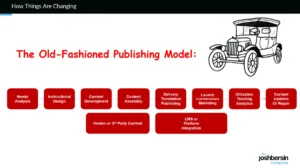
For decades, the standard operating procedure for corporate training has focused on the individual. The logic was linear: by improving the skills of a single employee, the organization would see a proportional increase in productivity and innovation. This "individual-first" model fueled the growth of Learning Management Systems (LMS) and vast catalogs of asynchronous courses designed to be consumed by solo learners.
However, as automation absorbs routine and procedural tasks, the value of individual output in isolation is declining. According to a 2023 report by McKinsey & Company, up to 30 percent of hours currently worked across the US economy could be automated by 2030. The work that remains—and indeed, the work that will define competitive advantage—is characterized by high levels of creativity, complex judgment, and collaborative problem-solving. These are tasks that cannot be effectively performed by a single individual, no matter how skilled, but require the "friction" and synergy of a high-functioning team.
This shift has introduced a new focal point for L&D leaders: team cognition. Defined as the collective capacity of a group to process information, coordinate knowledge, and make unified decisions in high-stakes environments, team cognition represents the next frontier of organizational development.
Chronology of the L&D Evolution
The current crisis in L&D is the latest stage in a multi-decade evolution of how businesses approach human capital development. Understanding this timeline is crucial for contextualizing the current shift toward team-based learning.
- The Compliance and E-Learning Era (1990s–2010): Focus was primarily on digitizing classroom training and managing regulatory compliance. The "unit of performance" was the individual’s completion record.
- The Experience and Personalization Era (2010–2020): The rise of Learning Experience Platforms (LXPs) emphasized the learner’s journey. Organizations began using data to provide "Netflix-style" recommendations, still largely focusing on individual skill acquisition.
- The Skill-Based Organization Era (2020–2022): Prompted by the pandemic and the "Great Reshuffle," companies moved toward mapping skills rather than jobs. This era introduced more sophisticated tracking of individual competencies.
- The Generative AI and Collective Intelligence Era (2023–Present): With the democratization of AI, the focus has pivoted toward how humans and machines interact and how human teams can outperform algorithmic outputs through collective judgment.
Supporting Data: The Economic Reality of AI Integration
Data from the World Economic Forum’s Future of Jobs Report 2023 indicates that analytical thinking and creative thinking remain the most important skills for workers in 2024. Furthermore, companies surveyed reported that "bridging the gap between human capability and AI efficiency" is their top priority.
Research from MIT’s Center for Collective Intelligence has shown that a group’s "c factor" (collective intelligence) is not strongly correlated with the average or maximum IQ of individual members. Instead, it is correlated with the social sensitivity of the group members, the equality of distribution in conversational turn-taking, and the proportion of women in the group. This data underscores the argument that L&D must stop optimizing for individual brilliance and start designing for group dynamics.
The Three Pillars of a Team Cognition Culture
To navigate this transition, L&D leaders are being urged to move beyond content curation and toward the deliberate engineering of team environments. Experts identify three core pillars that are essential for building team cognition.
1. Explicit Communication Norms
In an AI-augmented workplace, the "black box" nature of algorithmic decision-making must be countered by radical transparency among humans. High-performing teams in the modern era are characterized by their ability to make their thinking visible. This involves naming assumptions, surfacing uncertainties, and inviting dissent before a strategy is finalized.
When AI tools are used to generate drafts or analyze data, the human team must be explicit about where the machine’s contribution ends and human judgment begins. Without this clarity, trust—the bedrock of collaborative work—begins to erode.
2. Shared Mental Models
A shared mental model is a common framework or "map" that allows team members to understand their goals, roles, and the environment in which they operate. When a team lacks a shared model, they spend a disproportionate amount of time in "alignment meetings" that yield little actual progress.
L&D’s role is changing from providing content to providing the "architectural blueprints" for these models. This includes structured onboarding that focuses on team culture rather than just company history, and the implementation of rituals that allow teams to reconcile diverging perspectives in real-time.
3. Trust Architecture
Trust is often viewed as a "soft" metric, but in the context of team cognition, it is a structural necessity. A "trust architecture" refers to the designed conditions that allow for experimentation and small-scale failure.
In the AI era, this architecture must also address the ethical and psychological implications of automation. Employees are often hesitant to use AI for fear of being replaced or seen as "cheating." A leader who openly discusses these tensions and establishes clear norms around AI usage builds the psychological safety required for genuine innovation.
Strategic Enablers and Official Responses
For L&D functions to survive the current wave of corporate restructuring, they must transition from being perceived as a cost center to a strategic partner. This requires two specific enablers:
Alignment with Business Strategy: Industry analysts, including those from Gartner, have noted that L&D programs often fail because they are "strategically disconnected." To be indispensable, L&D leaders must be able to demonstrate how a team-building initiative directly impacts a specific business outcome, such as reducing time-to-market for a new product or increasing customer satisfaction scores.
Technological Fluency over Adoption: There is a critical difference between adopting AI and achieving fluency. Official responses from Chief Information Officers (CIOs) across the Fortune 500 suggest that the "adoption phase" of AI is largely complete; the focus has now shifted to "enablement." L&D’s task is to ensure that teams do not just use AI as a shortcut to bypass thinking, but as a "thought partner" that enhances the team’s collective output.
Broader Impact and Implications
The implications of this shift extend beyond the L&D department. If the unit of performance is indeed the team, then traditional HR structures—such as individual performance reviews, individual bonuses, and individual-based hiring—may become obsolete.
We are likely to see a rise in "team-based hiring," where entire cohorts are recruited for their proven ability to work together. Furthermore, compensation models may begin to favor those who contribute most to the "collective intelligence" of their group rather than those with the highest individual output.
For the L&D leader, the path forward is challenging but offers a significant opportunity. The fear of job loss is real, but it is predicated on the idea that L&D is about "teaching people things." If L&D is instead redefined as "building high-cognition teams," the function becomes more critical than ever.
As the "human" slice of work becomes more concentrated, the value of those who can optimize that work increases. The focus is no longer on whether humans can compete with machines, but on how effectively humans can think together in a world where machines handle the rest. The leaders who recognize this shift and move quickly to implement team-centric frameworks will not only survive the AI era but will define the future of work itself.