Corporate diversity statements, once seen as straightforward declarations of commitment to inclusion and equity, are undergoing a significant transformation in 2026. These succinct public pledges, typically found on career portals, dedicated Diversity, Equity, and Inclusion (DEI) pages, or appended to job descriptions, serve as a critical touchpoint for prospective candidates. Their effectiveness, however, is increasingly being redefined, shifting from mere public promises to demonstrable, data-backed results, all while companies navigate a complex and evolving legal and political environment. The emphasis now lies on specificity, honesty, and an intrinsic link to an organization’s core mission, moving beyond superficial buzzwords to tangible action.
The Shifting Paradigm: From Promises to Performance
The year 2026 marks a pivotal moment where the efficacy of inclusion efforts is predominantly measured by quantifiable outcomes rather than aspirational statements. This paradigm shift compels organizations to fortify their internal practices, ensuring they can withstand rigorous legal scrutiny by prioritizing robust data collection and strict compliance frameworks. This heightened emphasis on measurable results and legal resilience stems from a series of significant policy changes and public discourse that began to reshape the corporate DEI landscape in the preceding years.
A notable catalyst for this re-evaluation occurred in early 2025, when federal executive orders led to the dismantling of agency-level DEI programs. While these directives primarily targeted government bodies, they sent reverberations across the private sector, prompting many corporations to re-assess their own DEI strategies and public communications. The post-inauguration period saw an immediate reaction, with Gravity Research reporting that at least 40 major corporations publicly adjusted their DEI approaches. Despite these visible shifts, a significant 80% of these companies concurrently reaffirmed their overarching commitments to inclusion, belonging, or accessibility in some form, signaling a strategic recalibration rather than an outright abandonment of these principles.
Tactical Rebranding and Language Neutralization
In response to the evolving climate, a tactical rebranding of DEI terminology has become evident, particularly among S&P 500 companies. A comprehensive review of 1,000 corporate filings revealed a discernible reduction in the use of the acronym "DEI," replaced by more neutral, business-centric language. Departments previously labeled as "Diversity, Equity, and Inclusion" are now frequently being renamed to "People & Culture," "Employee Experience," or similar titles. This linguistic shift is not merely cosmetic; it represents a deliberate strategy to shield internal programs from potential legal challenges or political backlash. By reframing inclusion efforts within broader human resources or organizational development contexts, companies aim to underscore their business imperative and intrinsic value, making them less susceptible to ideologically charged debates. This strategic pivot highlights a conscious effort to integrate diversity and inclusion into the fundamental operational fabric of the business, rather than presenting it as a standalone, potentially contentious, initiative.
Crafting Impactful Diversity Statements: Best Practices for a New Era
In this dynamic environment, the art of writing an effective diversity statement has become more critical than ever. The objective is to create a statement that resonates authentically with candidates, stakeholders, and employees alike, while also aligning with contemporary legal and social expectations. Ongig’s Text Analyzer software, utilized by industry professionals, provides a robust framework for evaluating the linguistic nuances of these statements, examining factors such as masculine versus feminine language, the presence of offensive terms, overall positive or negative sentiment, and readability. Complementing this, several key principles guide the creation of compelling diversity statements:
-
Specificity and Authenticity: Generic statements risk appearing disingenuous. The most effective diversity statements name real groups, back claims with verifiable data, and explicitly connect to the company’s core mission. For instance, rather than a vague pledge to "value diversity," a statement might mention specific employee resource groups (ERGs) or initiatives supporting particular underrepresented communities. This level of detail fosters trust and demonstrates genuine commitment.
-
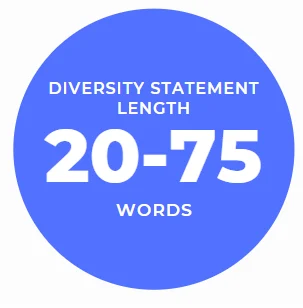
Conciseness and Impact: For primary diversity statements appearing on career pages or job descriptions, a length of 20 to 75 words is generally optimal. This brevity ensures quick comprehension by busy candidates. For companies dedicating entire web pages to DEI, this concise statement serves as an impactful introduction, supported by more extensive details and examples further down the page.
-
Compelling Headlines: A strong headline is crucial for capturing attention and conveying the essence of the commitment. Beyond a simple "Diversity Statement," a headline like T-Mobile’s, which uses evocative language, can immediately engage the reader. For example, Google’s "We’re building a Google for all of us to build helpful products for everyone" instantly communicates a mission-driven approach to inclusion.
-
Optimized Readability: Accessibility in communication is paramount. While many employers aim for an 11th-grade reading level, the most inclusive statements are crafted for an 8th-grade level or lower. This ensures that the message is easily understood by a broader audience, including individuals for whom English might not be their first language or those with varying educational backgrounds. Simple, plain English, free of jargon, maximizes retention and comprehension.
-
Sentence Structure for Clarity: Short sentences significantly enhance readability and retention. Research indicates that sentences of eight words or less can achieve 100% comprehension, while retention rates decline sharply with longer sentences. By breaking down complex ideas into concise phrases, companies ensure their message is absorbed effectively.
-
Positive and Inclusive Language: The choice of words deeply influences perception. Diversity statements should be imbued with positive, affirming language that evokes feelings of belonging and opportunity. Words such as "inclusive," "equitable," "opportunity," "thrive," "belonging," "respect," and "empower" contribute to an inviting and supportive tone.
-
Mission Alignment: Integrating the diversity commitment with the company’s overarching mission statement lends authenticity and strategic weight. Amazon’s statement, "Amazon’s mission is to be the earth’s most customer-centric company, and this mission is central to our work in diversity and inclusion," exemplifies how inclusion is woven into the very fabric of the business strategy, recognizing that diverse teams better serve diverse customer bases. Similarly, Uber’s "At Uber, our mission is to ignite opportunity by setting the world in motion. We see direct parallels between how we ignite opportunity through our company and how we ignite it within our company," connects internal inclusion to external impact.
-
Tangible Examples and Data: Specific examples, such as mentioning employee resource groups (ERGs) as Stanley Black & Decker does, or outlining specific programs, lend credibility. When possible, incorporating data about diversity metrics or program outcomes can further reinforce transparency and accountability, demonstrating a commitment to results.
Navigating the AI Frontier in DEI Communications
While artificial intelligence (AI) offers efficiency in content generation, its application to diversity statements requires careful consideration. AI tools, by nature, often produce generic language. When applied to DEI statements, this can result in messages that lack the unique voice and specific commitment essential for genuine engagement. Psychology and Marketing research indicates that audiences who perceive diversity representation as artificially generated, rather than authentically intentional, experience a reduced sense of belonging and may develop a negative perception of the brand.
The solution is not to eschew AI entirely but to leverage it strategically for refinement and editing, rather than initial drafting. A human-centric diversity statement is characterized by elements that AI struggles to replicate authentically: the naming of specific employee resource groups, explicit mention of underrepresented communities, clearly stated metrics or commitments, and a headline that is uniquely tailored to the company’s identity and mission. These human touches are vital for conveying sincerity and fostering genuine connection.
Implications and the Future of Corporate Inclusion
The evolving landscape of diversity statements and DEI initiatives reflects a broader maturation in corporate social responsibility. The shift towards measurable results, legal compliance, and tactical rebranding suggests a pragmatic adaptation to a complex environment. While some may view the renaming of departments or the reduction of the "DEI" acronym as a retreat, others interpret it as a strategic move to embed inclusion more deeply into core business functions and human capital strategies.
For job candidates, the changes necessitate a more discerning eye. Vague promises will likely be met with skepticism, while specific examples of inclusive policies, ERGs, and demonstrable progress will be highly valued. Companies that can articulate their commitment through authentic narratives, transparent data, and a clear link to business success will likely retain their appeal to diverse talent pools.
The future of corporate inclusion will likely be characterized by greater integration, accountability, and adaptability. DEI will increasingly be seen not as a separate program but as an integral component of talent management, innovation, and market competitiveness. The discourse will continue to evolve, but the underlying principle — that diverse, equitable, and inclusive environments foster better outcomes for employees, customers, and the business as a whole — remains a powerful driver for organizational success. As companies navigate these shifts, their diversity statements will serve as living documents, continuously refined to reflect their authentic journeys toward a truly inclusive workplace.