
The corporate world is experiencing a significant recalibration in its approach to Diversity, Equity, and Inclusion (DEI), a shift vividly reflected in the transformation of job titles and organizational structures. While the period immediately following 2020 saw an unprecedented surge in specialized DEI roles, recent years, particularly leading into 2026, indicate a pivot from standalone DEI departments to more integrated and data-driven functions within broader human resources, people operations, and cultural development frameworks. This evolution underscores a strategic effort to embed DEI principles deeply into the organizational fabric rather than treating them as separate initiatives, prompting a reevaluation of what diversity titles best serve the contemporary business landscape.
Defining DEI: Beyond the Buzzwords
Understanding the core vocabulary is paramount in navigating the complex world of DEI job titles. While often used interchangeably, "diversity," "inclusion," and "equity" represent distinct but interconnected concepts. Diversity refers to the "what"—the demographic characteristics and backgrounds of an organization’s workforce, encompassing aspects like gender, ethnicity, age, disability, sexual orientation, socioeconomic status, and education. Inclusion, conversely, is the "how"—the behaviors, policies, and social norms that foster an environment where every individual feels welcomed, respected, valued, and empowered to participate fully. It’s about creating a culture where diverse voices are heard and considered.
Adding to this lexicon, "equity" and "equality" frequently appear in modern DEI titles. While equality aims to provide everyone with the same resources and opportunities, equity recognizes that different individuals or groups may require different resources and support to achieve the same outcomes, addressing historical and systemic barriers. For instance, Salesforce utilizes "equality," emphasizing uniform opportunities, while Slack opts for "equity," focusing on tailored support to achieve fairness. This distinction is crucial, as titles often signal a company’s specific strategic emphasis within the broader DEI spectrum.
The DEI Boom: A Post-2020 Phenomenon
The rapid expansion of dedicated DEI roles across corporate America was a direct response to heightened social awareness and calls for racial justice, particularly in the aftermath of the Black Lives Matter movement in 2020. Companies globally committed to fostering more diverse, equitable, and inclusive workplaces, leading to a dramatic increase in job postings for Chief Diversity Officers, Diversity Managers, and a host of other specialized positions. This period marked a crucial turning point, signaling a formal corporate acknowledgment of DEI as a strategic imperative, not just a moral one. Organizations invested heavily in building dedicated teams, developing new programs, and setting ambitious diversity targets, recognizing the tangible benefits of diverse workforces, including enhanced innovation, improved decision-making, and stronger financial performance.
Shifting Tides: The Decline and Evolution of Dedicated DEI Roles
However, the rapid growth phase has given way to a period of recalibration. Data from ESG Dive reveals a 43% decline in DEI job posting demand from its peak in August 2022 through July 2024. This trend suggests that dedicated DEI positions, often perceived as cyclical, are susceptible to economic pressures and shifts in corporate priorities. Major tech companies like Google, Meta, and Zoom, which had previously expanded their DEI teams, have reportedly cut these roles since 2023.
Despite these reductions, the narrative isn’t one of complete abandonment but rather one of transformation. A Resume Templates survey indicated that only 5% of companies had eliminated DEI programs entirely by 2025, with 65% maintaining their budget and 22% planning increases. This suggests that while standalone DEI teams may be shrinking, the commitment to DEI principles is evolving. The business consequences of rolling back DEI initiatives are also becoming clear; Target, for instance, experienced a 6% average fall in foot traffic over eight weeks after announcing DEI rollbacks, contrasting sharply with Costco, which saw growth during the same period by standing firm on its DEI programs.
Revelio Labs further illuminates this shift, reporting that 55% of DEI workers who left their roles transitioned into non-DEI positions at new organizations, while 37% moved into different functions within the same company. This data underscores that DEI expertise is being integrated into broader roles, leading to the emergence of titles like "People and Culture" or "Employee Experience" managers, which now encompass DEI responsibilities. The essence of the work persists, but its packaging and organizational placement are adapting.
Mapping the DEI Ecosystem: A Hierarchy of Evolving Roles
The organizational structure for DEI functions, while undergoing changes, generally follows a recognizable hierarchy, from executive leadership to individual contributors and support staff. This hierarchy reflects the strategic importance, operational execution, and administrative support required for effective DEI initiatives.
Strategic Leadership Roles: At the apex of the DEI structure are roles responsible for setting the vision, strategy, and overall direction.
- Chief Diversity Officer (CDO): The most common top diversity title, often reporting directly to the CEO, COO, head of HR, or General Counsel. CDOs are responsible for the overarching DEI strategy, ensuring alignment with business objectives, and driving organizational change. Their influence extends beyond employee-focused initiatives to include supplier diversity and customer engagement.
- Chief Inclusion Officer: Similar to a CDO, with a specific emphasis on fostering inclusive environments and behaviors.
- Chief Equity Officer: Focuses on systemic fairness and equal opportunities, often through policy and program design.
- Vice President (VP) of Diversity, Inclusion, or Equity: These roles typically lead specific segments of the DEI strategy or manage larger DEI teams, reporting to a CDO or directly to senior HR leadership. Examples include VP of Global Diversity & Inclusion, VP of People & Culture (incorporating DEI), or VP, Head of Diversity and Belonging.
- Director of Diversity, Inclusion, or Equity: These roles manage specific programs, initiatives, or regional DEI efforts. Common titles include Director of Global Diversity & Inclusion, Director of Culture and Engagement, or Director of DEI Talent Acquisition.
Operational and Management Positions: These roles are critical for implementing programs and managing day-to-day DEI activities.
- Managers of Diversity, Inclusion, or Equity: Oversee specific projects, manage teams, and drive the execution of DEI strategies. Examples include Diversity Program Manager, Inclusion & Belonging Manager, or Manager of Talent Acquisition, Diversity & Inclusion.
- Individual Contributor Diversity Titles: These are hands-on roles focused on specific aspects of DEI, often requiring specialized expertise. Examples include Diversity & Inclusion Specialist, Culture & Engagement Lead, Diversity Recruiter, or Supplier Diversity Analyst.
Entry-Level and Support Roles: These positions provide essential administrative and logistical support for DEI initiatives.
- Diversity Coordinator: Supports managers and directors in implementing DEI policies, coordinating events, tracking metrics, and managing communications.
- Diversity Assistant: Provides administrative support to DEI leadership, assists with scheduling, data entry, and project coordination.
Spotlight on Key Functions: Job Descriptions in Detail
The evolution of DEI is best understood through the detailed responsibilities of key roles:
-
Chief Diversity Officer (CDO): Beyond strategic oversight, a CDO is responsible for developing comprehensive DEI recruitment strategies, establishing diversity metrics, fostering an inclusive work environment, managing employee resource groups (ERGs), and ensuring compliance with diversity-related regulations. They are critical in advocating for DEI at the executive level and driving cultural transformation.
-
Director of Culture: This role has broadened to integrate DEI deeply. A Director of Culture now leads strategies that enhance employee engagement, develop innovative DEI programs to attract and retain talent, and foster internal partnerships to embed inclusion across all departments. They are custodians of the company’s values and ensure an equitable experience for all.
-
Supplier Diversity Manager: This specialized role focuses on creating a diverse supply chain. They develop business strategies to ensure procurement of goods and services from businesses owned by diverse groups, conducting research, vetting potential suppliers, and ensuring equitable contracting practices. This extends DEI impact beyond internal workforce to the broader economic ecosystem.
-
Diversity Recruiter: More than just hiring, this role involves creating company policies that promote equality, leading training for HR managers on inclusive hiring, crafting job descriptions with inclusive language, and actively networking with underrepresented groups to build diverse talent pipelines. Their ultimate goal is to attract, hire, and retain a truly diverse workforce.
-
Diversity Business Partner: This role signifies the integration of DEI. A Diversity Business Partner collaborates directly with business leaders across departments, identifying best practices, distributing DEI resources, and co-creating measurable solutions tailored to specific business units. They act as internal consultants, fostering teamwork and inspiring inclusive leadership.
-
DEI Technology Specialist: An emerging and crucial role, the DEI Tech Specialist implements and manages software solutions that support DEI activities. This includes diversity hiring tools, analytics dashboards, and employee engagement platforms. They partner with HR, DEI, and IT to evaluate systems, provide training, and recommend tech improvements aligned with DEI goals, ensuring data-driven effectiveness and fairness in digital processes.
-
Head of Diversity Analytics: This advanced role oversees the collection, analysis, and interpretation of all diversity data. They are responsible for monitoring DEI metrics, evaluating program effectiveness, providing insights into workforce trends (demographic analysis, pay equity, promotional parity), and ensuring data integrity and confidentiality. This role is vital for evidence-based DEI strategy.
The Future of DEI: Trending Titles for 2026 and Beyond
The evolution of DEI is characterized by an increasing emphasis on data, technology, and a holistic employee experience. The following roles are projected to gain prominence:
- Head of Diversity Analytics: Focuses on leveraging data to inform DEI strategies and measure impact.
- Inclusive Culture Manager: Develops programs to embed inclusivity into daily operations and employee experience.
- DEI Technology Specialist: Implements and manages tech solutions for DEI, ensuring bias-free processes.
- Diversity Recruitment Manager: Strategizes and executes efforts to build diverse talent pipelines.
- DEI Learning and Development Manager: Designs and delivers educational programs to foster an inclusive workplace.
- Equity Program Manager: Focuses on systemic fairness, including pay equity audits and equal career development opportunities.
- DEI Program Specialist: Assists in the operational execution of DEI programs and events.
- Diversity Data Analyst: Collects, analyzes, and reports on diversity-related data to identify trends and inform strategy.
- DEI Communications Manager: Develops and implements internal and external communication strategies for DEI initiatives.
- DEI Employee Experience Manager: Designs strategies to improve the overall employee experience for all backgrounds, ensuring inclusivity in onboarding, performance, and career growth.
Candidate Perspectives: What Job Seekers Prioritize
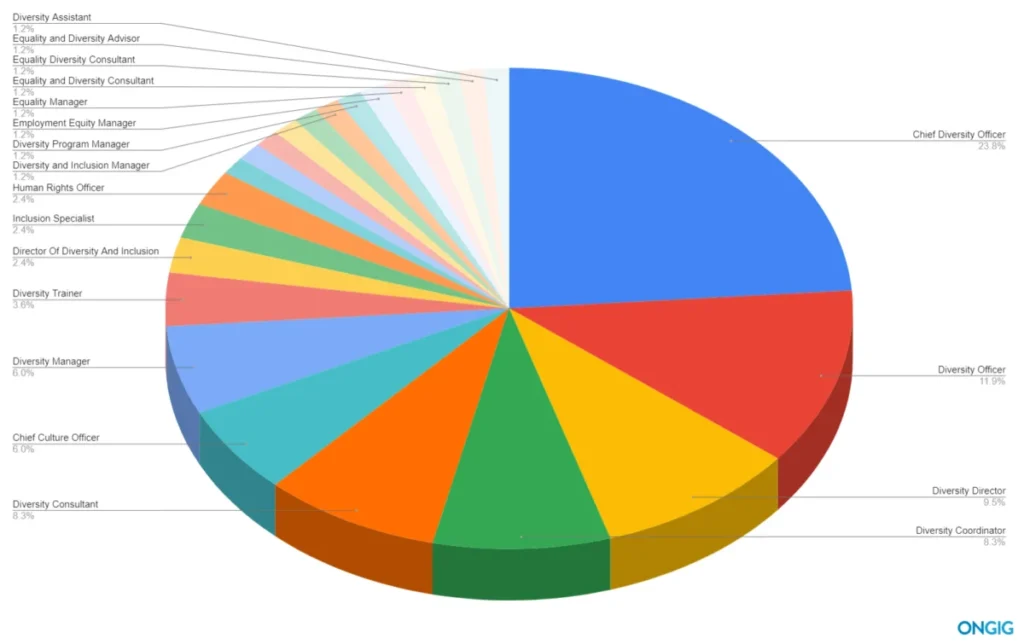
Job seekers’ interests in diversity titles reflect the evolving market. Internal research indicates that candidates frequently search for roles that clearly define their DEI function. The top 20 diversity titles searched on Google by job seekers highlight a strong interest in direct "Diversity and Inclusion" roles, as well as specific managerial and specialist positions. This suggests that while companies may be integrating DEI, candidates still look for explicit DEI functions in their career paths.
Addressing Common Questions: Navigating the DEI Career Path
-
What is the highest diversity job title? The Chief Diversity Officer (CDO) or Chief Inclusion Officer typically sits at the top of most DEI organizational charts. The reporting line, whether to the CEO or CHRO, often signifies the organizational weight and strategic importance of the role.
-
What is the difference between a Diversity Manager and a Diversity Business Partner? A Diversity Manager generally oversees organizational-level DEI programs and reporting. In contrast, a Diversity Business Partner is embedded within a specific business unit, working directly with department leaders to implement tailored DEI practices in hiring, retention, and team culture, acting as a strategic advisor.
-
What skills do you need for a DEI job title? Core skills include robust data analysis for measuring representation and pay equity, strong program management capabilities, expert facilitation, and effective change management. Increasingly, AI fluency is becoming essential, as DEI professionals are now expected to audit AI hiring tools for potential biases and ensure fair outcomes in sourcing and screening processes.
Conclusion: A Transformed but Enduring Mandate
The landscape of Diversity, Equity, and Inclusion job titles is undergoing a significant transformation. While the initial boom in dedicated DEI roles may have tempered, the underlying mandate for fostering inclusive and equitable workplaces remains strong. The shift towards embedding DEI responsibilities within broader People, Culture, and Employee Experience functions signals a maturation of the field, moving from an add-on initiative to an integrated core business practice. For organizations, this means a more holistic approach to talent management and culture. For professionals, it means adapting to roles that demand a blend of specialized DEI expertise with broader HR, analytical, and technological competencies, underscoring that DEI is not disappearing but rather evolving into a more pervasive and strategically integrated force within the modern enterprise.






