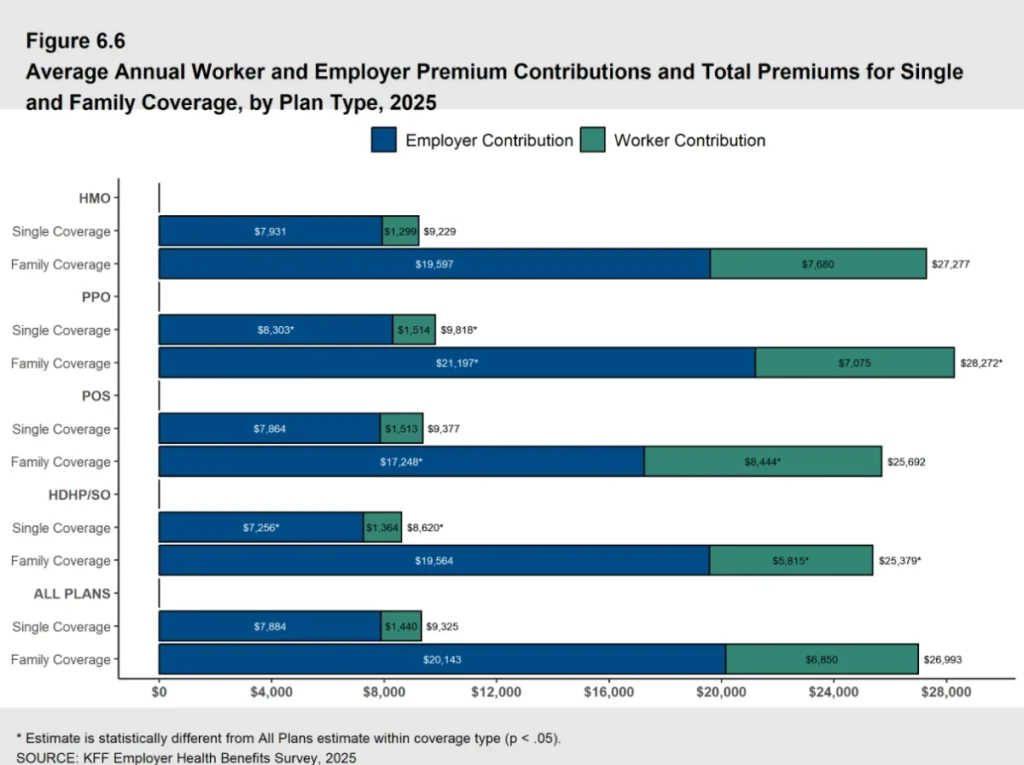
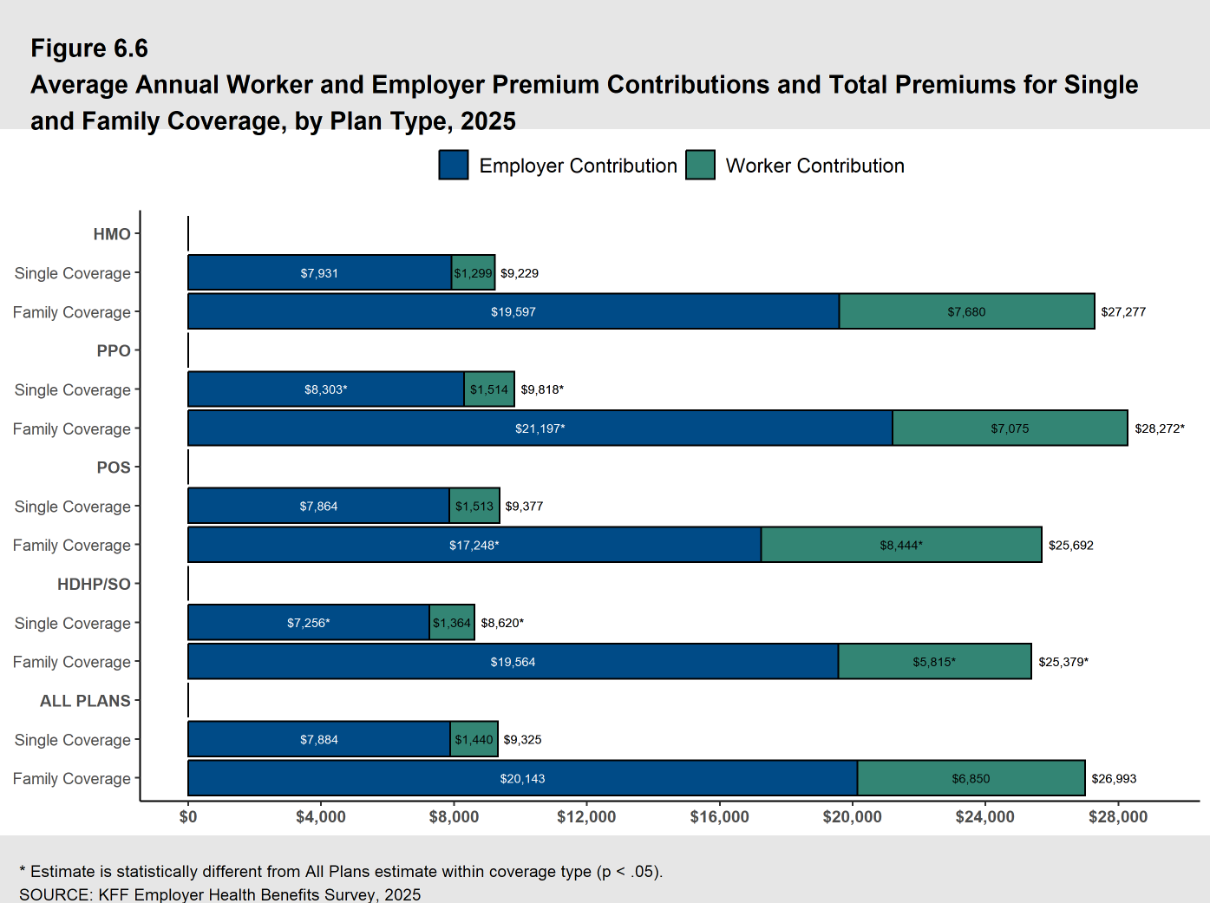
In an era defined by persistent inflationary pressures and a tightening labor market, the cost of employer-sponsored health insurance has reached a critical juncture for American businesses. As of mid-2026, health insurance is no longer viewed merely as a secondary employee benefit; it has emerged as the most significant and most expensive component of total compensation packages. Driven by a confluence of rising hospital operational costs, an aging workforce with increasingly chronic health conditions, and a surge in demand for high-cost specialty medications, healthcare expenditures for organizations have seen a steady, unrelenting climb over the past decade. Business owners and human resource executives are now forced to confront a stark reality: the average annual cost of employer-sponsored health insurance premiums has reached $26,993 for family coverage and $9,325 for single coverage, according to the 2025 KFF Employer Health Benefits Survey.
The financial burden of these premiums is compounded by the necessity of the benefit for talent acquisition and retention. Data from internal industry surveys, including those conducted by PeopleKeep, indicate that 92% of employees rank health coverage as their most valued benefit. For organizations, the decision to forgo health insurance to save on overhead is increasingly viewed by analysts as a strategic error that leads to higher turnover costs and diminished competitiveness in the hiring market. Consequently, the central challenge for modern enterprises is not whether to offer health benefits, but how to structure them in a way that remains sustainable amid projected annual cost increases of 8.5% for group plans.
A Decade of Escalating Costs: The Chronology of Healthcare Inflation
To understand the current fiscal environment, one must look at the trajectory of healthcare costs over the last ten years. Since 2016, the average cost of family premiums has increased by approximately 47%. In the last five years alone, premiums have surged by 26%. This trajectory reflects broader systemic issues within the U.S. healthcare infrastructure.
The timeline of this escalation can be traced through several key phases. Following the initial stabilization period after the implementation of the Affordable Care Act (ACA), costs began to rise as hospital systems underwent significant consolidation, reducing competition and increasing bargaining power for providers. By the early 2020s, the COVID-19 pandemic introduced new volatilities, including labor shortages in the nursing sector and a backlog of elective procedures that drove up utilization rates in subsequent years.
By 2024 and 2025, the primary drivers shifted toward the pharmaceutical sector. The introduction and widespread adoption of specialty medications—including gene therapies and highly effective but expensive weight-loss and diabetes treatments—added significant weight to insurance claims. Concurrently, the prevalence of chronic conditions such as hypertension and diabetes among the workforce required more consistent, long-term medical intervention, further inflating the "utilization" component of insurance premiums.
Analyzing the Financial Split: Employer vs. Employee Contributions
The burden of these rising costs is shared between the organization and the worker, though the distribution remains heavily weighted toward the employer. In 2025, the average employer contribution toward group health insurance premiums stood at 85% for single coverage and 75% for family coverage. In practical terms, this means employers are paying an average of $20,143 annually for every employee with a family plan and $7,884 for those with single coverage.

For the employee, the remaining percentage translates to an annual out-of-pocket premium cost of $6,850 for family coverage and $1,440 for single coverage. These contributions are typically managed through pre-tax payroll deductions, providing a small measure of tax relief for the worker. However, as premiums continue to rise, the absolute dollar amount deducted from employee paychecks has begun to outpace wage growth in several sectors, leading to "benefit fatigue" where employees feel the financial weight of their insurance despite the high employer subsidy.
Industry analysts at PwC’s Health Research Institute have noted that while the projected rate of increase has remained relatively stable at around 8.5% for the past three years, this represents a significant jump from the 5.5% growth rates seen in the previous decade. This sustained high growth rate has prompted many firms to move away from traditional fully-insured models in favor of more flexible or self-funded arrangements.
The Structural Divide: Fully-Insured vs. Self-Funded Models
Organizations typically navigate two primary pathways when providing traditional group health insurance: fully-insured and self-funded plans.
In a fully-insured model, the employer pays a fixed premium to an insurance carrier. The carrier assumes the financial risk of medical claims and handles all administrative functions. While this provides budget predictability on a month-to-month basis, it often comes with higher administrative fees and "one-size-fits-all" plan designs that may not align with a diverse workforce’s specific needs. Furthermore, small group plans under this model are subject to strict rating factors; insurers can only vary premiums based on age, family size, geography, and tobacco use.
Conversely, self-funded plans involve the employer taking on the direct risk of employee medical expenses. Rather than paying a premium to a carrier, the employer pays for claims as they are incurred. To mitigate the risk of catastrophic claims, most self-funded employers purchase "stop-loss" insurance. This model offers greater flexibility and potential cost savings if the workforce is relatively healthy, but it requires a high degree of financial liquidity and risk tolerance. Many employers utilizing this model also invest heavily in wellness programs and telemedicine to proactively manage health issues before they escalate into expensive hospitalizations.
The Emergence of Health Reimbursement Arrangements (HRAs)
As traditional group insurance costs become unsustainable for small and mid-sized enterprises (SMEs), Health Reimbursement Arrangements (HRAs) have emerged as a dominant alternative. HRAs allow employers to move from a "defined benefit" model to a "defined contribution" model, providing greater control over the benefits budget.
There are three primary HRA structures currently utilized in the market:
- The Qualified Small Employer HRA (QSEHRA): Established by the 21st Century Cures Act, this is designed for businesses with fewer than 50 full-time equivalent employees. It allows the business to set a monthly allowance for employees, who then purchase their own individual health insurance. The business reimburses the employee tax-free for premiums and qualifying medical expenses.
- The Individual Coverage HRA (ICHRA): Available to employers of any size, the ICHRA offers more customization than the QSEHRA. Employers can scale allowance amounts based on employee classes (e.g., full-time vs. part-time, or by geographic location). This has become particularly popular for organizations with remote workforces spread across multiple states, where a single group plan would be impractical.
- The Group Coverage HRA (GCHRA): Also known as an integrated HRA, this is used in tandem with a high-deductible group health plan. The employer uses the HRA to reimburse employees for out-of-pocket costs like deductibles and copays, effectively lowering the employee’s financial burden while allowing the employer to opt for a lower-premium group policy.
The primary advantage of an HRA is budget predictability. Employers are not subject to the annual "rate shocks" common in the group market; they simply decide how much they can afford to contribute each year. Furthermore, reimbursements are tax-deductible for the employer and tax-free for the employee, provided the employee maintains minimum essential coverage (MEC).
Health Stipends and the Impact of Tax Credits
For some organizations, particularly those with many employees eligible for federal premium tax credits, a health stipend may be preferred over a formal HRA. A stipend is essentially additional taxable wages earmarked for healthcare costs. Unlike HRAs, stipends have very few regulations and are highly customizable.
However, the tax implications of stipends are significant. Because they are considered gross income, they are subject to payroll and income taxes, which can reduce the effective value of the benefit by 20% to 30%. Additionally, stipends do not satisfy the ACA’s employer mandate for Applicable Large Employers (ALEs).
The interaction between employer benefits and the Premium Tax Credit (PTC) is a critical consideration. If an HRA is deemed "affordable" by IRS standards, the employee loses their eligibility for federal subsidies on the health insurance marketplace. If the HRA is "unaffordable," the employee must choose between the HRA and the tax credit. For lower-income employees, the federal tax credit is often more valuable than a small employer HRA contribution, leading some businesses to offer stipends so that employees can keep their subsidies while still receiving some financial support from their employer.
Broader Implications for the 2027 Fiscal Year and Beyond
Looking forward, the trend of shifting from group plans to individual coverage models (like ICHRA) is expected to accelerate. Analysts suggest that as the individual insurance market becomes more robust and competitive, the "group-centric" model of American healthcare may begin to decentralize.
The implications for business strategy are clear: organizations must move away from a passive acceptance of annual premium hikes and toward an active management of benefit structures. This involves a three-pronged approach: leveraging data to understand workforce demographics, exploring tax-advantaged reimbursement models, and integrating wellness technology to curb long-term chronic care costs.
In conclusion, while health insurance remains a daunting expense, the diversification of benefit options—from self-funding and GCHRAs to ICHRAs and stipends—provides a toolkit for employers to maintain their status as "employers of choice" without compromising their financial stability. The organizations that thrive in the coming years will be those that view healthcare not as a fixed overhead cost, but as a dynamic variable that can be optimized through strategic planning and modern administrative platforms. For many, the transition to an HRA represents the most viable path toward balancing employee needs with the fiscal realities of the 2026 economy.