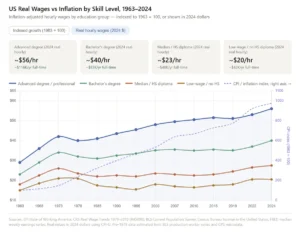
Frontline workers, comprising over 70% of the workforce, are the backbone of industries ranging from hospitality and retail to transportation and service. Their compensation, often driven by hourly wages, is a critical factor influencing their job mobility and satisfaction. The dynamic for these roles, typically requiring no extensive prior specialization, is characterized by a highly competitive labor market. Job seekers frequently apply to numerous positions simultaneously, making rapid employer response and competitive pay paramount. A slight increase in hourly earnings can often trigger a job hop, as employees seek to maximize their income.
This phenomenon is amplified by the proliferation of automated job application platforms. Websites and bots designed to streamline the application process allow workers to apply to dozens of jobs with minimal effort. Consequently, a job offer accepted on a Friday might be rescinded by Monday if a competitor offers a mere $5 per hour more. This rapid churn is not an anomaly but a common occurrence in sectors where skills are transferable and hourly wages are the primary differentiator.
The Centrality of Wages in Frontline Employment
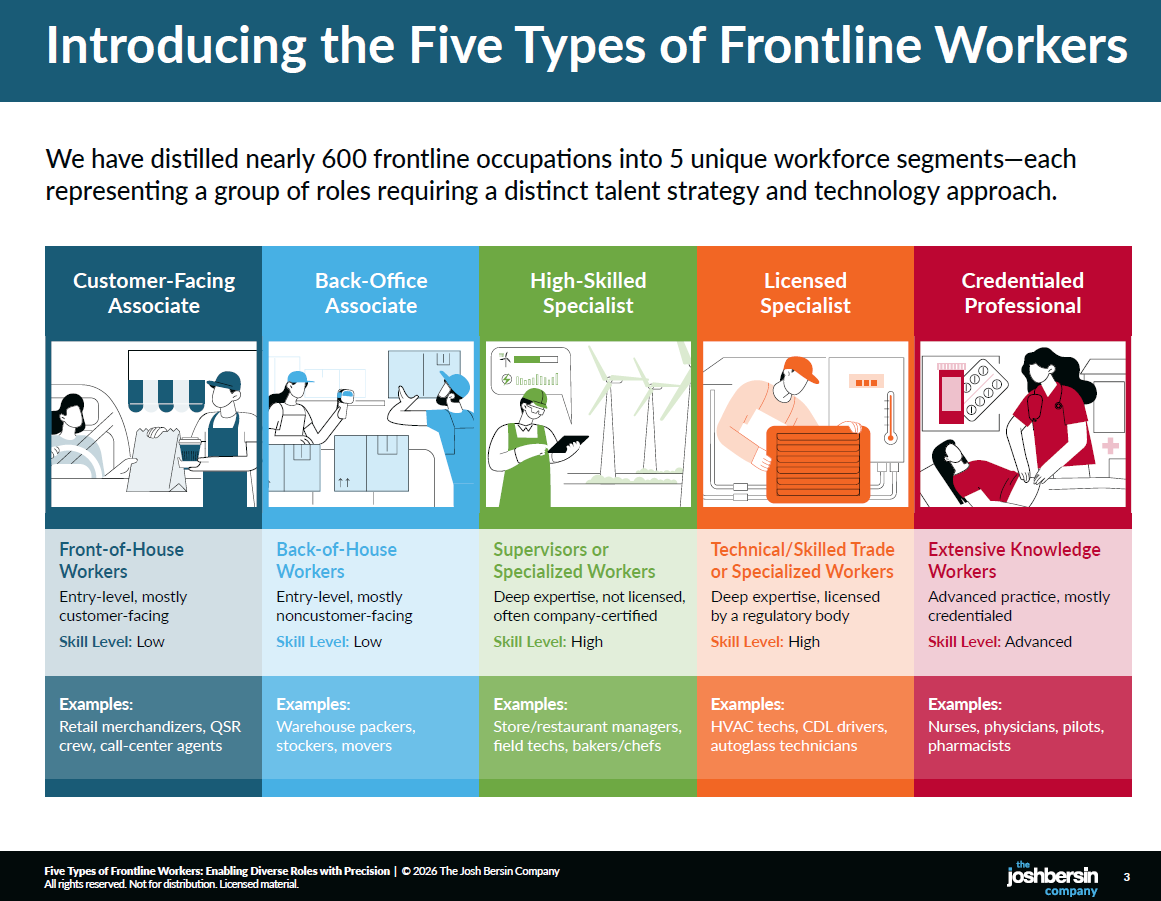
The fundamental principle underpinning frontline worker retention and attraction is compensation. While factors such as company culture, job satisfaction, working conditions, and career advancement opportunities undoubtedly play a role, the hourly wage often serves as the primary benchmark. For roles classified as Type 1 and Type 2 in the frontline worker model, where specialized skills are not a prerequisite, the labor market operates on a near-instantaneous evaluation of monetary value. Employers who fail to offer competitive wages risk losing their workforce to competitors who do.

The recruitment process itself is often a race against time. Employers facing a high volume of applicants must efficiently screen, interview, and conduct background checks. Store managers, in particular, can become bogged down in administrative tasks if this process is not streamlined. The speed at which an offer is extended and accepted is crucial, but even a swift hiring process can be undone by a slightly more lucrative offer received shortly thereafter.
The Unseen Impact of Tips and Tax Policy
A significant, and increasingly complex, factor influencing frontline compensation is the role of tips. Companies can be broadly categorized into those that collect tips directly from customers and those that do not. This distinction has become more pronounced due to evolving federal guidelines and the increasing prevalence of digital payment systems.
For companies that facilitate tip collection, whether through cash or digital transactions, these tips are generally treated as an employee liability rather than company revenue or expense. This accounting treatment means tips do not directly impact a company’s profit margins, revenue figures, or capital requirements. From an employer’s perspective, this makes facilitating tips an attractive proposition, as it can incentivize employees to provide superior service without direct cost to the business. While the traditional notion of tipping in the U.S. has been to reward excellent service, the widespread integration of tipping prompts into every transaction, from ride-sharing apps to fast-food kiosks, has led to a more pervasive tipping culture, with some critics suggesting it has shifted from a reward to an expectation.
This creates a distinct advantage for "tipping" companies, such as Starbucks or Uber, over "non-tipping" companies like Target, Walmart, Costco, or FedEx. The former can effectively offer higher total compensation to their employees at a lower operational expense.
A Lucrative Shift: The IRS and Tip Income
Recent changes in IRS regulations have amplified this advantage, creating a substantial financial benefit for tipped workers. According to the IRS, the implementation of the "no tax on tip" provision, which allows for certain tax benefits related to tip income, resulted in approximately 3.5 million filings in the first half of 2026. These filings led to an average tax refund or reduction of $1,300 per individual. This equates to a substantial government subsidy, totaling an estimated $4.5 billion, distributed through tax benefits related to tip income.
While this represents a significant benefit for individuals, its distribution and ultimate impact on worker earnings are subjects of ongoing analysis. The IRS data suggests that approximately 2.1% of all U.S. workers are benefiting from this provision. If the average tip income translates to between $7 to $11 per hour, as suggested by an analysis of the tax refunds, this could represent an increase of nearly one-third or more to the average non-managerial hourly wage, which the Bureau of Labor Statistics (BLS) reports at around $32 per hour.
Calculation Breakdown:
- Estimated Annual Tip Income: Assuming an average federal tax rate of 8-10% for hourly workers (with some low-wage earners paying no federal tax), a $1,300 tax refund implies an annual tip income of roughly $13,000 to $16,000.
- Hourly Tip Income: With an average of 1,700 work hours per year, this annual tip income translates to an additional $6 to $10 per hour.
- Total Tipped Compensation: Adding the tax refund value to the hourly tip income further solidifies the per-hour benefit, potentially ranging from $7 to $11 per hour.
This analysis highlights the considerable financial incentive that tips, coupled with favorable tax treatment, provide to workers in tipped roles.

Shifting Competitive Dynamics
The magnitude of this tip-related benefit has significant implications for the competitive landscape of frontline employment.
Employer Advantage in the "Tipping" Economy
Companies that collect tips now possess a considerable advantage in attracting and retaining talent. They can offer a higher effective hourly rate to their employees without incurring the same direct labor costs as their non-tipping counterparts. This could lead to a scenario where companies that do not facilitate tipping are compelled to increase their base wages to remain competitive, while tipping companies can potentially maintain lower base wages, knowing that tip income supplements overall earnings.
The implication is that while the government’s intention may have been to benefit tipped employees, the financial advantage might disproportionately accrue to the employers, allowing them to operate with a lower overall labor cost structure. This could mean that the federal subsidy, in some cases, does not translate into a proportional increase in net worker earnings if base wages are adjusted downwards accordingly.
Consumer Experience and the Tipping Culture
The pervasive integration of tipping prompts into virtually every consumer transaction is reshaping the customer experience. Many service apps, including those for ride-sharing and food delivery, now make it difficult or impossible to opt out of tipping. This has led to a noticeable increase in the expectation of tips across a broader range of service interactions.
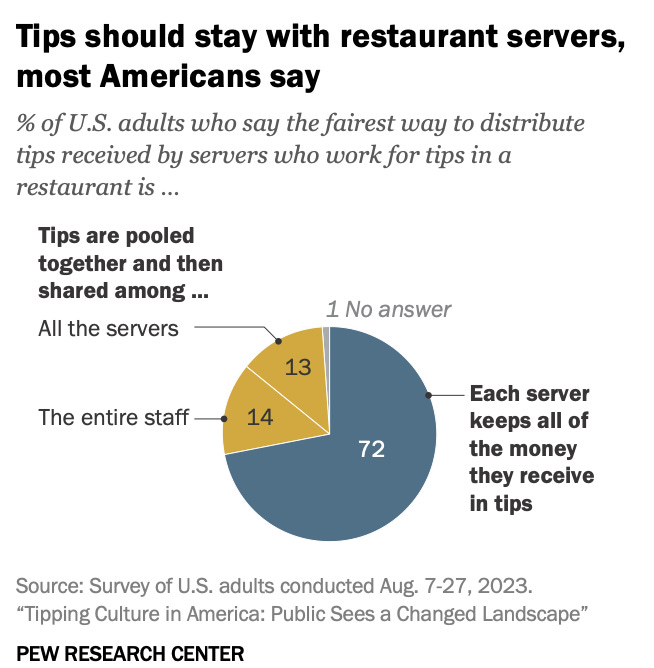
Consumers are increasingly expressing a sense of tipping fatigue, with a significant portion of the population believing that tipping culture has become excessive. Surveys indicate that a substantial percentage of Americans feel that tipping expectations have gone too far, leading to a backlash against the constant solicitations for tips, even for services that traditionally did not involve them. This sentiment is further complicated by concerns about the equitable distribution of tips among service staff. While digital collection makes tracking easier, ensuring that tips reach the individuals who provided the service, rather than being pooled or allocated by management, remains a point of contention for many consumers.
Broader Economic and Societal Impacts
The tax benefits associated with tip income represent a substantial allocation of public funds, totaling billions of dollars annually. This raises questions about the efficiency and equity of using tax policy to subsidize a particular compensation model. While the political intent may have been to support hourly workers, the outcome suggests a potential for widening income inequality.
The government’s financial support for companies that utilize tipping as a primary compensation mechanism, while not extending similar support to those that do not, could inadvertently create a bifurcated labor market. This policy might be seen as favoring certain industries and business models over others, potentially skewing market forces and influencing corporate strategy.
Furthermore, the increasing reliance on tips can be viewed as a move towards a more "gig" or "task-based" employment model, aligning with broader trends of "decoupling" between employers and employees. This shift can incentivize employees to focus on immediate customer satisfaction but may also reduce the employer’s direct responsibility for ensuring consistent and adequate compensation.
The long-term societal implications of this evolving tipping landscape are still unfolding. While the immediate goal may be to enhance worker earnings, the broader economic and social consequences, including potential impacts on income inequality and the fundamental nature of the employer-employee relationship, warrant careful observation and further study.
As tipping continues its upward trajectory, becoming integrated into an ever-wider array of service transactions, it is plausible that tip prompts will become a ubiquitous feature of nearly all consumer interactions, fundamentally altering how services are compensated and how workers are valued. The policy choices made today regarding tip income and taxation will likely have lasting effects on the structure of the American workforce and the dynamics of consumer service.