The contemporary business environment is characterized by unprecedented volatility, driven by the rapid acceleration of artificial intelligence and significant shifts in global political and economic landscapes. These transformative forces are fundamentally reshaping the very nature of leadership, demanding a re-evaluation of established paradigms and the adoption of new approaches. This article delves into the critical changes impacting leadership today, drawing insights from extensive research and industry analysis to provide a comprehensive understanding of the evolving leadership mandate.
The historical evolution of leadership thought offers a rich tapestry of influential figures and their corresponding methodologies. From the foundational principles of Peter Drucker, who emphasized effectiveness and management science, to the command-and-control era epitomized by Jack Welch’s tenure at General Electric, leadership models have continuously adapted to prevailing economic and societal conditions. Later, the concept of servant leadership, championed by figures like Howard Schultz of Starbucks, shifted focus towards employee well-being and ethical conduct. More recently, the "first-principles" approach, associated with innovators like Elon Musk, underscores a drive for radical problem-solving and technological advancement. However, the question for today’s leaders is not merely about emulating past successes but about identifying and implementing the most effective models for the current, rapidly changing world.
While core leadership responsibilities such as setting direction, defining mission, and aligning people remain constant, the behavioral expectations and operational strategies are undergoing a profound transformation. This analysis is significantly informed by recent research into the emergence of the "Supermanager" and the broader implications of AI integration within organizations.
The Rise of the "Voluntary Army": A Paradigm Shift in Employee Engagement
Perhaps the most significant evolution in leadership over the past half-century is what can be termed the "decoupling" of the employee from the traditional organizational structure. Historically, particularly during the industrial age, leadership operated on a more direct boss-subordinate dynamic. Leaders could issue directives, and employees, largely bound by economic necessity and ingrained organizational structures, would comply. This model, deeply embedded in corporate culture and human resources practices, is rapidly becoming obsolete.
Today’s workforce, encompassing full-time employees, contingent workers, and increasingly, AI-powered "Superworkers," operates under a different set of motivations and expectations. These individuals do not simply accept assignments; they actively "opt-in" on a daily basis, a phenomenon driven by their individual needs, career aspirations, and the pursuit of meaningful opportunities. This shift fundamentally alters the levers of power available to leaders. Traditional authority and hierarchical structures, once potent tools, are yielding to a more nuanced and often more fragile foundation: trust.
Building and sustaining trust in this new environment requires a deliberate and multi-faceted approach. Leaders must excel at clearly articulating organizational mission and vision, fostering environments where individuals feel empowered and supported in their professional development. Crucially, they must cultivate a culture of open dialogue, actively soliciting and valuing new ideas. In an era of hyper-specialization, where individual expertise can often surpass that of leadership, empowering these knowledgeable individuals and actively seeking their input is not just beneficial but essential for organizational success. The potential for a single engineer or a highly skilled professional to disrupt or redefine an entire business model necessitates a leadership style that prioritizes listening, engagement, and empowerment across all levels of the organization. This trend, which has been gradually unfolding for decades, is now being dramatically amplified by the pervasive integration of artificial intelligence.

From Perfection to Iteration: Embracing Agility in the AI Era
A second critical shift in leadership is the transition from an emphasis on achieving "perfection" to a commitment to continuous "iteration." The rapid deployment and inherent non-deterministic nature of AI technologies present a significant challenge. Leaders are under immense pressure to adopt AI solutions to remain competitive, often leading to a natural inclination to meticulously research, plan, and strive for a flawless implementation before any action is taken.
However, industry observations, including interactions with major organizations like IBM, Standard Chartered, and Mastercard, reveal that the pursuit of a perfectly optimized solution is a common pitfall. Waiting for ideal conditions or comprehensive understanding creates significant risk in a landscape defined by rapid technological advancement and evolving market demands.
The industrial age often dictated a wait-and-see approach, delaying product launches or system implementations until they met stringent perfection standards. In contrast, the AI age demands a greater comfort with imperfection and a willingness to embrace iterative development. Companies like IBM, for instance, demonstrated this by replacing their Workday system with SuccessFactors within an aggressive 18-month timeframe, acknowledging that the initial implementation would not be flawless. Similarly, Microsoft is actively deploying Copilot agents across its HR functions globally, even as new use cases and potential challenges are continuously being identified. The notion of waiting until a solution is "done" and perfect is no longer a viable strategy.
Leaders must now accept that the path from an initial concept to a fully realized outcome is rarely linear. It is a dynamic process characterized by a series of iterations, inevitable mistakes, and continuous improvements. The leader’s role shifts to maintaining organizational focus on the core problem or customer need while simultaneously empowering teams to experiment, learn from failures, and adapt their approaches. This requires a fundamental change in mindset, moving away from risk aversion associated with mistakes towards a proactive embrace of learning through experimentation.
Rekindling Trust: The Primacy of Ethics, Values, and Inclusion
The third significant transformation in leadership is a renewed emphasis on core values, ethical conduct, and moral principles. In an era marked by pervasive misinformation, often amplified by AI-generated content, and a decline in public discourse, the ability to discern truth is increasingly challenging. Recent high-profile cases, such as the fallout from the Epstein files and escalating political polarization, highlight the erosion of trust in public institutions and a normalization of what are sometimes termed "alternative facts."
Leaders are now tasked with actively combating this trend. The rationale is rooted in the fundamental human desire for integrity and authenticity. Most individuals possess an inherent ethical compass and seek to align themselves with organizations they can trust. When leaders compromise ethical standards, bend rules, or engage in unfair practices, the repercussions extend far beyond legal liabilities. Such actions can profoundly damage employee morale, stifle innovation, and ultimately, crush the human spirit that drives organizational success.
This emphasis on values is crucial, as highlighted in research on "Irresistible" organizations. The enduring power of the human spirit, fueled by a sense of purpose and fairness, remains a paramount, albeit often overlooked, asset in the business world.
The Plummeting Trust in Institutions and the Leadership Imperative
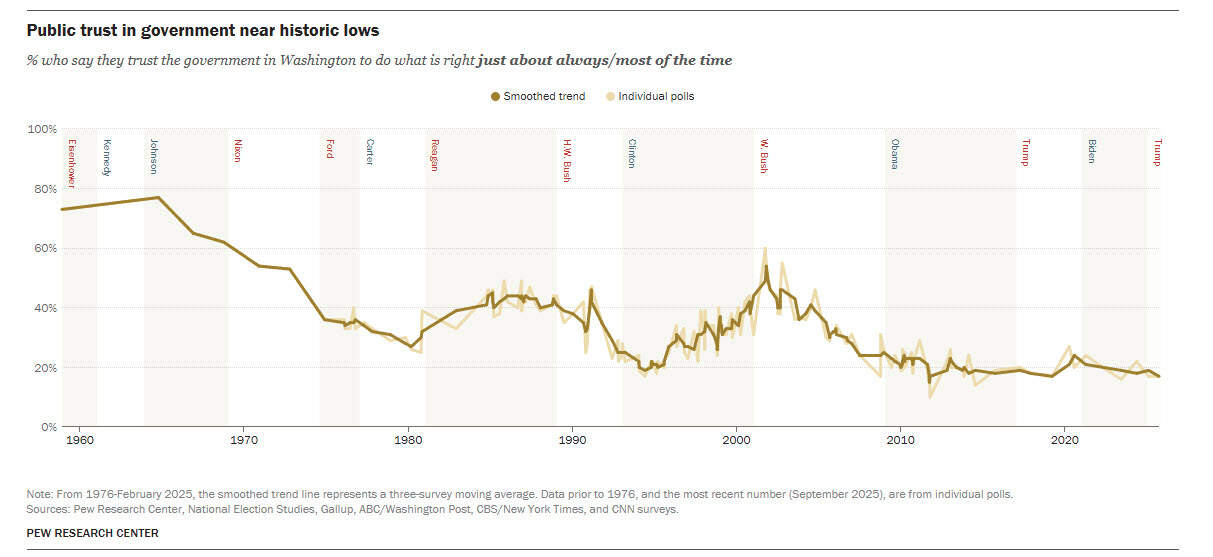
The current societal climate is one of complexity and, in many regions, a significant decline in institutional trust. In the United States, for example, public trust in government has experienced a dramatic downturn. While approximately 80% of Americans expressed trust in their government in the 1960s, recent surveys indicate this figure has plummeted to around 17%. This deficit creates a void that organizational leaders are increasingly expected to fill.
The imperative for leaders to bridge this trust gap is undeniable. This can be achieved through active listening to employees, steadfast adherence to core values, and the application of common sense in decision-making. Speaking truth to power, taking clear stances on important societal issues, and demonstrating genuine empathy and respect for diverse perspectives are values that are not only relevant but essential, even in the face of challenges like the politicization of Diversity, Equity, and Inclusion (DEI) initiatives. Leaders who embody these principles foster environments where individuals feel valued, understood, and motivated to contribute their best.
Developing Leaders for the Future: A Strategic Imperative
The overarching conclusion is that a fundamental reassessment of leadership models is not just advisable but a strategic necessity. An organization’s capacity to adapt and thrive in the face of constant change is inextricably linked to the quality and adaptability of its leadership. Leaders who can effectively drive transformation, cultivate enthusiasm, and consistently uphold core values are the most critical assets any organization can possess.
The development of these future-ready leaders is more important than ever. This requires investing in programs and resources that equip leaders with the skills and mindset necessary to navigate the complexities of the AI era and the evolving global landscape. This includes fostering an understanding of AI’s potential and limitations, cultivating an iterative approach to problem-solving, and reinforcing ethical decision-making frameworks.
For organizations seeking to enhance their leadership capabilities, exploring specialized research and leveraging advanced tools is increasingly becoming the norm. Initiatives like "The Rise of the Supermanager" research provide deep dives into the evolving demands on leadership. Furthermore, AI-powered platforms, such as Galileo, are being developed to offer personalized leadership development pathways. These platforms are trained on extensive historical data, encompassing decades of leadership research and numerous case studies, enabling them to provide tailored guidance and training for both individual leaders and entire teams.
The landscape of leadership is in constant flux, demanding a proactive and adaptive approach. By understanding and embracing these evolving dynamics, organizations can cultivate leaders who are not only effective in the present but also well-equipped to navigate the challenges and opportunities of the future. The ongoing commitment to research, development, and strategic adaptation in leadership will be a defining factor in organizational resilience and success in the coming years.