
The modern workplace is characterized by a persistent tension: the drive for business agility and performance often clashes with employees’ fundamental needs for clarity, growth, and recognition. This dichotomy leaves many Human Resources leaders feeling stuck, caught between optimizing for organizational objectives and fostering a supportive employee experience. A recent analysis from Quantum Workplace highlights a critical framework for addressing this challenge, proposing that true organizational success lies not in resolving these tensions, but in creating conditions where both business and employee needs can flourish simultaneously.
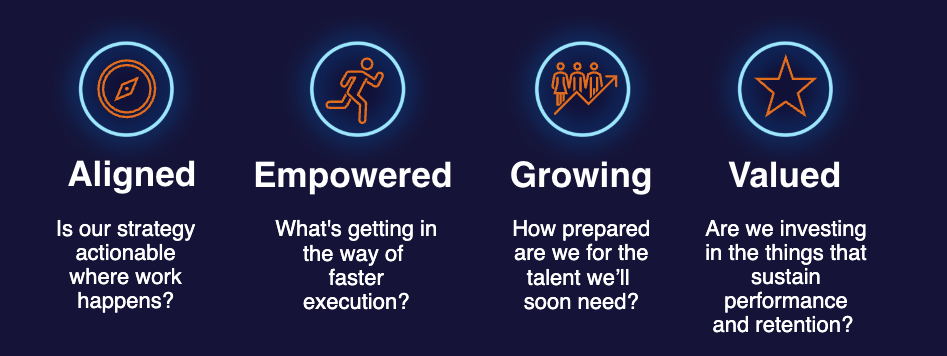
This perspective challenges the traditional HR instinct to prioritize one aspect over the other. Instead, it advocates for a strategic shift towards building environments where teams are not only high-performing but also deeply connected and engaged. This approach, rooted in understanding the underlying dynamics of organizational effectiveness, identifies four key pillars that contribute to a thriving team: Alignment, Empowerment, Growth, and Value. Each pillar represents a specific tension that HR leaders must navigate, and by asking the right diagnostic questions, organizations can uncover actionable insights to foster sustainable success.
The Core Tension: Business Demands vs. Employee Needs

At its heart, the challenge facing HR leaders stems from a fundamental misalignment between what businesses require and what employees expect. Businesses demand speed, agility, and future-ready talent to maintain competitive advantage and sustained performance. Simultaneously, employees seek clarity in their roles and the strategic direction of the company, meaningful growth opportunities that align with their aspirations, and a clear sense that their contributions are recognized and valued.
"The organizations feeling stuck aren’t lacking effort or intention," states the Quantum Workplace analysis. "They’re caught in a structural pull—where solving for the business can feel like it comes at the expense of the employee, and vice versa." This creates a cycle where strategies stall because they attempt to optimize for one side at the detriment of the other. The proposed solution is not to find a compromise, but to fundamentally reframe the problem: "What if we stopped trying to resolve these tensions and started building the conditions where both sides become possible?" This reframing signifies a "different job entirely" for HR, moving beyond reactive problem-solving to proactive ecosystem building.
What Constitutes a Thriving Team?
A thriving team, according to Quantum Workplace’s research, is defined by a dual focus on strong performance and strong connection. Teams that excel in performance without genuine connection are described as "straining," while those with high connection but low performance are "drifting." Neither scenario is sustainable in the long run. The framework for achieving this balance rests on four interdependent conditions:
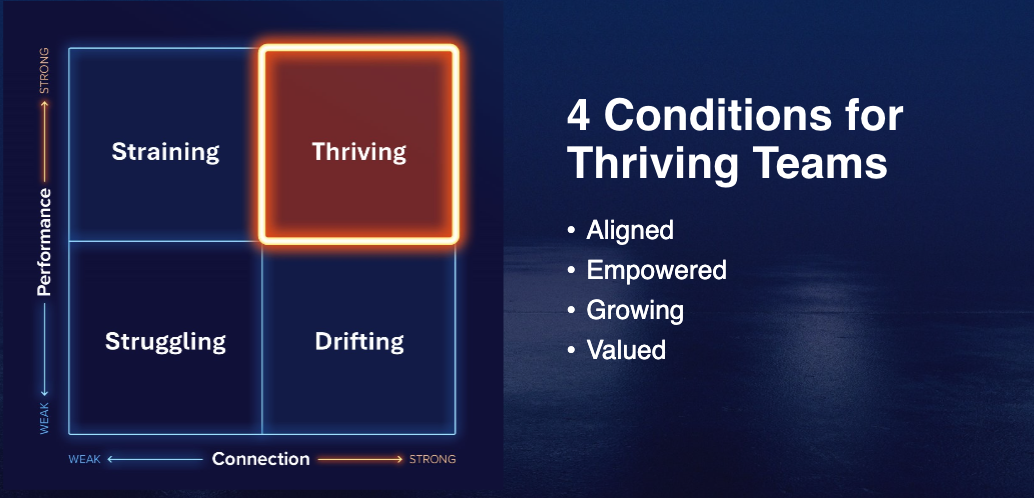
1. Alignment: Is Our Strategy Actionable Where Work Happens?
The Tension: Organizations need speed; employees need clarity.
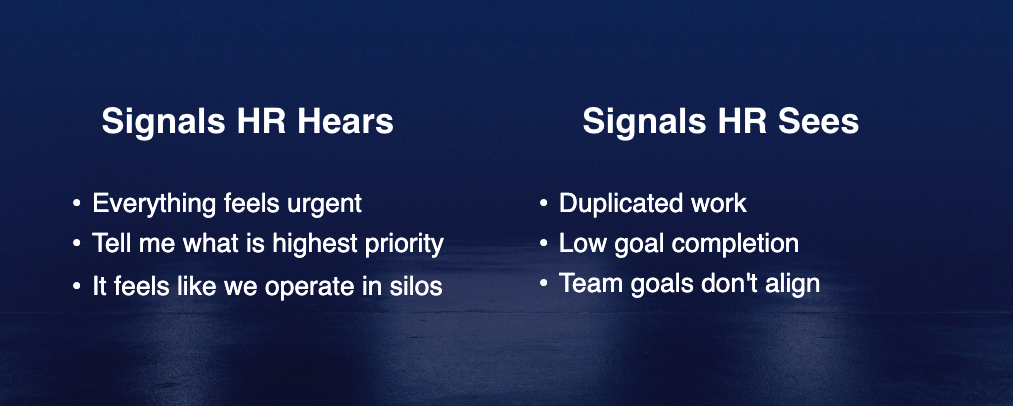
The urgency for rapid execution often clashes with the employee’s need for a clear understanding of overarching strategies and their individual roles within them. HR leaders frequently observe symptoms of this misalignment, such as duplicated efforts, low goal completion rates, and a disconnect between individual or team objectives and broader organizational goals. The analysis points out that "everything feels urgent," and teams often operate in silos, leading to a perpetual state of "tell me what’s highest priority."
Quantum Workplace emphasizes that the diagnostic question for alignment should go beyond simply asking if employees know the strategy. A more profound inquiry is whether clarity differs based on performance levels. If top performers lack clarity, it signals an organization-wide issue that cannot be solely addressed through manager coaching. This points to systemic communication breakdowns or a lack of accessible strategic information.
Furthermore, the analysis probes whether teams feel genuinely accountable for the strategy or if it feels imposed upon them. This distinction is crucial. Survey responses, when analyzed effectively, can reveal areas where employees are truly engaged with the strategy versus those where they have mentally disengaged. This data can then be segmented with other outcomes, such as engagement scores and turnover risk, to quantify the cost of this misalignment.
Actionable Insights for Alignment:
- Strategic Communication Overhaul: Implement consistent, multi-channel communication strategies that translate high-level business objectives into clear, actionable goals for every team and individual. This involves more than just annual strategy rollouts; it requires ongoing reinforcement and context.
- Empowerment at the Frontlines: Equip managers with the tools and training to effectively communicate strategy and empower their teams to contribute to its execution. This includes fostering an environment where employees feel comfortable asking clarifying questions and providing feedback on strategic implementation.
- Data-Driven Clarity: Utilize employee feedback mechanisms to identify gaps in strategic understanding and perceived accountability. Regularly review performance data and engagement surveys to pinpoint teams or departments struggling with alignment and tailor interventions accordingly.
- Cross-Functional Collaboration Initiatives: Encourage and facilitate collaboration between departments to break down silos and ensure a shared understanding of how different parts of the organization contribute to the overall strategy.
2. Empowerment: What’s Getting in the Way of Faster Execution?
The Tension: Organizations need faster execution; employees need fewer barriers.
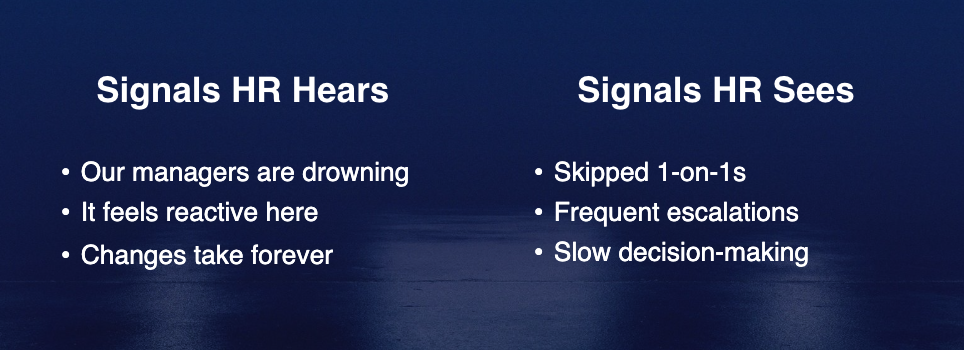
The drive for speed in business operations can be severely hampered by the presence of obstacles that impede employees’ ability to perform their tasks efficiently. Common signals of this tension include managers feeling overwhelmed, a reactive work environment, and prolonged decision-making processes. This can manifest as skipped one-on-one meetings, frequent escalations, and delays in critical decisions.
The analysis highlights a surprising correlation between business Key Performance Indicators (KPIs) and employee feedback. For instance, in one organization, the data revealed that the availability of materials was not the primary differentiator for on-time delivery; rather, the adoption of AI technologies played a more significant role. This underscores the importance of connecting operational data with employee sentiment to uncover hidden barriers.
A particularly striking insight from the data reveals a significant "manager experience gap." Managers consistently score lower than non-managers on crucial metrics such as recognition for contributions, clarity of performance measurement, understanding their role in future organizational plans, opportunities for skill development, and overall organizational commitment. This disparity is critical: managers who do not feel empowered cannot effectively empower their teams. This is identified as a "structural problem, not a personality one," indicating a systemic deficit in how managers are supported and valued.
Actionable Insights for Empowerment:
- Streamline Decision-Making Processes: Identify and remove bureaucratic hurdles that slow down decision-making. Empower managers at appropriate levels to make critical decisions without unnecessary escalation.
- Invest in Manager Development: Prioritize training and support for managers, focusing on skills related to delegation, feedback, performance management, and fostering a sense of empowerment within their teams. Address the identified manager experience gap by ensuring they have clarity, recognition, and growth opportunities.
- Technology Adoption and Training: Evaluate and implement technologies that can enhance efficiency and reduce manual barriers. Crucially, ensure adequate training and support for employees to effectively utilize these tools, as seen with the AI adoption example.
- Data Integration for Barrier Identification: Integrate operational data with employee feedback to gain a holistic view of what truly impedes execution. This allows for targeted interventions that address the root causes of inefficiency.
3. Growing: How Prepared Are We for the Talent We’ll Soon Need?
The Tension: Organizations need future-ready talent; employees want meaningful growth.
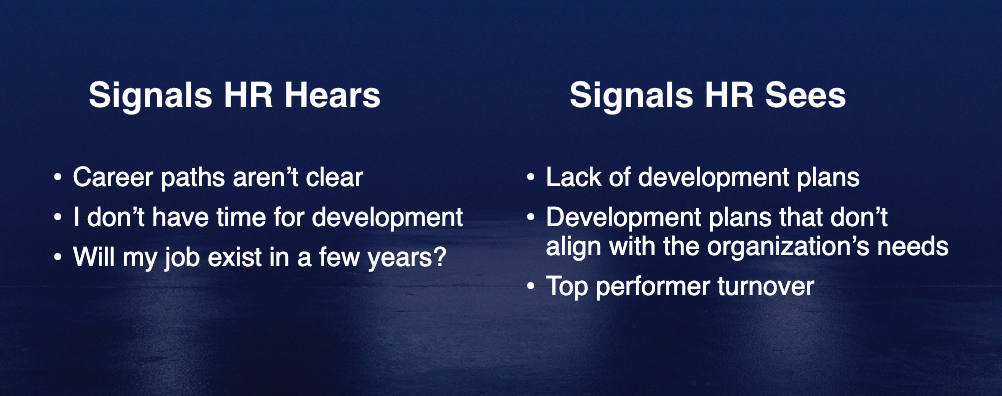
The rapid pace of technological advancement and evolving market demands necessitates a workforce equipped with future-ready skills. However, employees often express concerns about unclear career paths, a lack of dedicated time for development, and uncertainty about the long-term viability of their roles. This creates a disconnect between the organization’s need for a adaptable talent pool and the individual’s desire for a fulfilling and secure career trajectory.
The diagnostic question here shifts from simply asking about development plans to assessing whether these plans are active and integrated into employees’ daily experiences. A documented growth plan that remains on a shelf is ineffective. Conversely, assigning stretch projects that build skills critical for the organization’s future represents a more impactful approach to development.
Succession planning data offers another valuable perspective. By correlating candidate status with employee feedback, organizations can ascertain whether they are proactively developing critical future talent or merely assuming it will happen organically. Furthermore, feedback from a candidate’s team can offer insights into their actual leadership effectiveness. The key takeaway is to "shift growth from a periodic process to an everyday experience embedded in work—using projects, challenges, and real priorities as the primary vehicle."
Actionable Insights for Growth:
- Embed Development in Daily Work: Integrate learning opportunities directly into job responsibilities through stretch assignments, cross-functional projects, and problem-solving initiatives. This makes development an ongoing experience rather than a separate, periodic event.
- Transparent Career Pathing: Develop and clearly communicate potential career paths within the organization, outlining the skills and experiences required for advancement. This provides employees with a roadmap for their professional journey.
- Proactive Succession Planning with Data Integration: Utilize talent management systems to identify high-potential employees and track their development progress. Connect succession data with performance and engagement feedback to ensure that development plans are aligned with both individual aspirations and organizational needs.
- Future Skills Forecasting: Proactively analyze industry trends and future business needs to identify the skills that will be critical in the coming years. Develop targeted training and development programs to build this future-ready talent pipeline.
4. Valued: Are We Reinforcing What Matters Most?
The Tension: Organizations need sustained performance; employees want to feel valued.
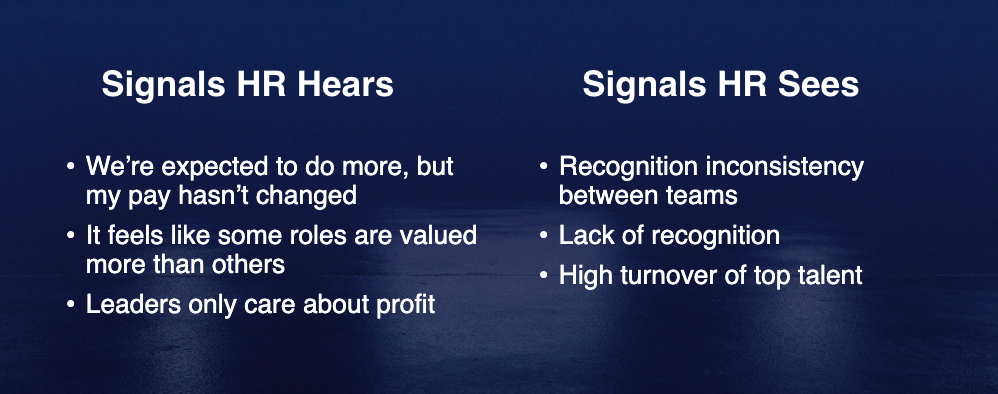
Achieving sustained organizational performance relies heavily on employee motivation and commitment, which are directly tied to feeling valued. However, employees often express feelings of being overburdened without commensurate recognition, perceive disparities in how different roles are valued, and feel that leadership’s primary focus is solely on profit. Data often reveals inconsistent recognition practices across teams and a high turnover rate among valuable employees.
The crucial diagnostic question revolves around Return on Investment (ROI). When turnover is driven by a lack of appreciation, recognition transforms from a purely cultural initiative into a financial imperative. By linking retention risk directly to recognition data, organizations can quantify the cost of employees feeling undervalued.
Moreover, feeling valued is not exclusively a concern for top performers. Solid contributors, who often constitute the largest segment of the workforce, also need to feel that their impact is acknowledged. Recognition programs that solely focus on stars can overlook the majority of employees. Analyzing talent reviews or performance ratings in conjunction with employee feedback can illuminate these patterns, ensuring that recognition efforts are inclusive and impactful across the entire organization.
Actionable Insights for Value:
- ROI-Driven Recognition Strategies: Quantify the financial impact of employee recognition by linking it to retention rates and productivity metrics. This business case can secure buy-in for robust recognition programs.
- Inclusive Recognition Programs: Design recognition initiatives that acknowledge and celebrate contributions at all levels and across all performance tiers. Move beyond solely rewarding top performers to ensure solid contributors also feel appreciated.
- Manager Accountability for Recognition: Train and hold managers accountable for providing regular, meaningful recognition to their team members. This can be integrated into performance reviews and development goals for managers.
- Transparent Compensation and Rewards: Ensure that compensation structures are perceived as fair and that reward systems are clearly communicated and understood. When employees feel their compensation reflects their contributions and market value, it significantly enhances their sense of being valued.
- Feedback Loops for Value Perception: Regularly solicit feedback on how employees perceive their value and recognition within the organization. Use this data to refine and improve recognition programs and management practices.
Conclusion: A New Paradigm for HR Leadership
The challenges of alignment, empowerment, growth, and value, while distinct, share a common structural root: the perceived conflict between business needs and employee aspirations. The traditional HR response of choosing sides is ultimately detrimental. The more effective, and indeed necessary, approach is to foster an environment where both can coexist and thrive.
Quantum Workplace posits that HR’s role is not to personally solve every individual tension but to equip the organization with the capacity to ask and answer smarter questions. This is where a comprehensive talent platform becomes indispensable. By integrating insights across engagement, performance, development, and recognition into a unified view, such platforms empower leaders at all levels with the clarity and confidence to act on what truly matters. The data to address these fundamental questions already exists within most organizations; the key lies in connecting it effectively to drive meaningful change and cultivate truly thriving teams, which are the bedrock of sustainable business performance.