
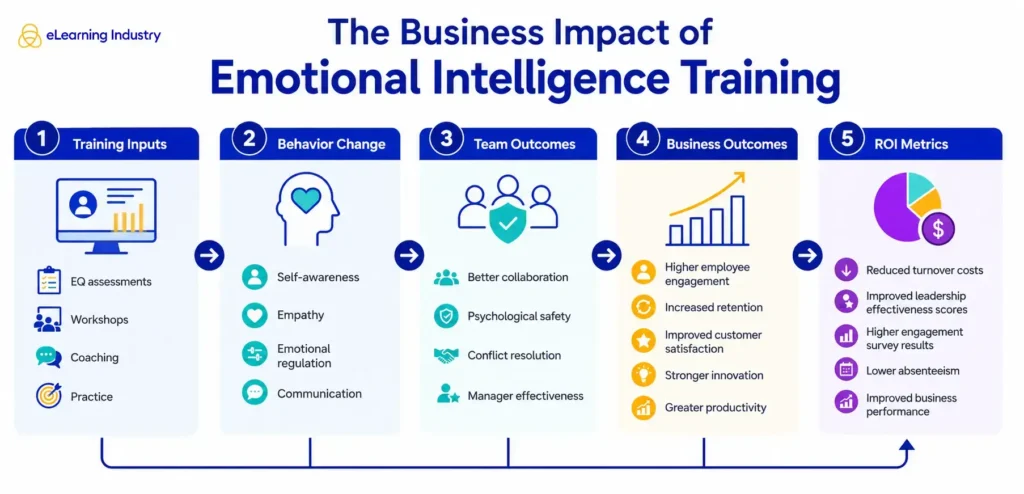
The rapid integration of generative artificial intelligence and automated systems into the global economy has triggered a fundamental shift in how organizations define and cultivate talent. As technical competencies—once the primary benchmark for professional success—are increasingly replicated or augmented by algorithms, a new hierarchy of workplace value has emerged. At the center of this transformation is Emotional Intelligence (EI) training, a structured developmental approach that is no longer viewed as a "soft" elective but as a critical business investment. For Human Resources (HR) and Learning and Development (L&D) leaders, the focus has shifted toward high-level human skills including leadership, nuanced communication, complex teamwork, and ethical judgment—faculties that technology currently cannot replicate.
The Evolution of Workplace Competencies: A Historical Context
The prioritization of Emotional Intelligence in the professional sphere has followed a distinct chronological trajectory over the last three decades. In the 1990s, the concept of the "Intelligence Quotient" (IQ) and technical mastery dominated hiring practices. However, the publication of Daniel Goleman’s seminal work on emotional intelligence in 1995 began to shift the conversation toward the "Emotional Quotient" (EQ).
By the mid-2010s, the rise of the "knowledge economy" highlighted the importance of soft skills, but it was the global pandemic of 2020 that served as the ultimate catalyst. The sudden transition to remote and hybrid work environments exposed significant gaps in traditional management styles, necessitating a more empathetic and self-aware approach to leadership. Today, as we enter the mid-2020s, the "AI Revolution" has solidified EQ as the primary differentiator for human workers. According to the World Economic Forum’s Future of Jobs Report, qualities such as empathy, active listening, and social influence are now among the top ten skills required for the modern workforce, with demand expected to grow by nearly 40% by 2030.
Defining the Framework of Emotional Intelligence Training
Emotional Intelligence training is a systematic methodology designed to help individuals recognize, interpret, and manage their own emotions while effectively navigating the emotions of others. Modern programs have moved away from abstract psychological theory toward practical, application-based learning. Most high-impact curricula are built upon five foundational pillars originally identified by researchers:
- Self-Awareness: The ability to recognize one’s own emotional triggers and understand how internal states affect external performance.
- Self-Regulation: The capacity to control impulsive reactions and maintain professional composure under high-stress conditions.
- Internal Motivation: Cultivating a personal drive for achievement that goes beyond external rewards like salary or status.
- Empathy: The skill of understanding the perspective of others, which is essential for conflict resolution and cross-cultural collaboration.
- Social Skills: The proficiency in managing relationships, building networks, and leading teams through persuasive communication.
The Intersection of AI, Hybrid Work, and Psychological Safety
The modern workplace is characterized by a "human-in-the-loop" model, where the most successful professionals are those who can bridge the gap between technological efficiency and human connection.
The AI Factor
As AI automates routine data processing and technical tasks, the human role is being redefined. In sectors like software engineering or financial analysis, where technical proficiency was once the only requirement, the focus is shifting to how these professionals collaborate with stakeholders. Emotional intelligence allows humans to handle the "gray areas" of business—negotiations, ethical dilemmas, and sensitive client relations—where AI lacks the contextual depth to provide adequate solutions.
Navigating the Hybrid Divide
Hybrid work has introduced a "cues gap." In a digital-first environment, the subtle nonverbal signals that build trust—tone of voice, body language, and micro-expressions—are often lost. EI training equips managers with the tools to "read between the lines" of a video call or a Slack message, allowing them to identify signs of burnout or disengagement before they lead to turnover.
The Economic Value of Psychological Safety
There is a direct correlation between emotionally intelligent leadership and psychological safety. When leaders demonstrate high EQ, they create an environment where employees feel safe to take risks and admit mistakes. Data suggests that organizations with high levels of psychological safety see a 27% reduction in turnover and a 12% increase in productivity. In this context, EI training serves as a preventative measure against toxic work cultures.
Strategic Stakeholders: Who Benefits Most?
While EQ training offers universal benefits, its impact is most pronounced among specific organizational cohorts:

- Emerging Leaders: The transition from individual contributor to manager is often fraught with difficulty. Technical "superstars" frequently fail in leadership roles because they lack the emotional tools to motivate others. Early-career EQ training ensures that new managers can provide constructive feedback and manage team dynamics without resorting to micro-management.
- Executive Leadership: The "emotional tone" of a company is set at the top. Executives with high EQ are better equipped to navigate mergers, acquisitions, and market volatility. Their ability to remain resilient and communicate transparently builds the institutional trust necessary for long-term stability.
- Customer-Facing Units: In sales and customer success, EQ is a direct revenue driver. The ability to empathize with a client’s pain points and manage one’s own frustration during a difficult negotiation can be the difference between a lost lead and a lifelong partnership.
- HR and L&D Professionals: These individuals act as the architects of culture. By mastering EQ themselves, they can more effectively design talent development programs that align with the human needs of the organization.
Anatomy of a High-Impact EI Training Program
Effective EI development is an iterative process rather than a one-off event. Industry experts suggest that the most successful programs follow a four-stage architecture:
1. Assessment and Baseline Measurement
Organizations must first identify the "EQ gap." This is typically achieved through 360-degree feedback, where an employee’s emotional competencies are rated by peers, subordinates, and supervisors. This provides a data-driven starting point for personal development.
2. Practical Skill Development
Training must move beyond the classroom. It involves "micro-learning" modules and "habit-stacking" exercises, such as the "six-second pause" before responding to a stressful email or the practice of active listening during weekly syncs.
3. Coaching and Reflection
Behavioral change requires a feedback loop. One-on-one coaching allows participants to unpack specific workplace interactions and identify alternative emotional responses. Reflective practices, such as journaling or peer-coaching circles, help solidify these new neural pathways.
4. Real-World Application
The final stage involves scenario-based learning. Participants engage in role-playing exercises that mimic high-stakes situations—such as delivering a performance warning or pitching to a skeptical board—allowing them to practice emotional regulation in a "low-stakes" environment.
Delivery Models and Market Trends
The delivery of EI training has evolved to accommodate the modern, decentralized workforce. While traditional instructor-led workshops (ILT) remain the gold standard for deep interpersonal work, blended learning models are gaining traction.
| Format | Best Use Case | Primary Advantage |
|---|---|---|
| Instructor-Led (ILT) | Leadership Cohorts | High engagement; immediate feedback. |
| Virtual (VILT) | Global/Remote Teams | Cost-effective; scalable across time zones. |
| Self-Paced Digital | General Workforce | High flexibility; consistent messaging. |
| Blended Learning | Enterprise-wide Rollouts | Combines scale with deep-dive sessions. |
| Executive Coaching | Senior Leadership | Highly personalized; addresses specific strategic goals. |
Implementation Strategy: A Roadmap for Organizations
For EI training to yield a return on investment, it must be integrated into the organizational DNA. The implementation process should follow five strategic steps:
- Step 1: Alignment with Business Goals: Identify specific pain points, such as high turnover in a specific department or declining customer satisfaction scores, and tie EQ training to these metrics.
- Step 2: Cultural Assessment: Determine the organization’s current "emotional maturity." This ensures the training is pitched at the right level—neither too basic nor too academic.
- Step 3: Securing Leadership Buy-in: Leadership must model the behaviors they wish to see. If executives do not demonstrate EQ, the training will be viewed as a "tick-box" exercise by the rest of the staff.
- Step 4: Continuous Practice: Embed EQ concepts into existing processes, such as performance reviews, hiring rubrics, and project debriefs.
- Step 5: Longitudinal Measurement: Track progress over 12 to 24 months. Success should be measured not just by "smile sheets" (post-training surveys) but by shifts in engagement scores and retention rates.
Expert Analysis and Official Response
Industry leaders emphasize that the value of EQ training extends far beyond individual well-being. Christopher Pappas, CEO and founder of eLearning Industry, notes that while technical expertise might facilitate entry into leadership roles, it is emotional intelligence that sustains high performance. "Organizations that invest in emotional intelligence training aren’t just developing better leaders but building more resilient businesses," Pappas stated. This sentiment reflects a growing consensus among corporate strategists: in a world of "artificial" intelligence, "human" intelligence—in its most empathetic and self-aware form—is the ultimate competitive advantage.
Broader Impact and Future Implications
The long-term implications of widespread EQ training are profound. As more organizations adopt these programs, we are likely to see a shift in the very nature of corporate culture. The "command and control" structures of the 20th century are being replaced by "connect and collaborate" models.
Furthermore, the focus on EQ is likely to have a positive impact on mental health in the workplace. By teaching employees how to manage stress and navigate conflict, organizations are effectively building a more resilient workforce capable of handling the rapid pace of technological change. In the final analysis, Emotional Intelligence training is not merely a tool for better communication; it is the foundational infrastructure for the future of work. Companies that fail to recognize this shift risk falling behind in the race for talent, innovation, and sustainable growth. Those that embrace it will find themselves better equipped to navigate the complexities of a world where the human touch is more valuable than ever.






