Performance reviews, often viewed with apprehension akin to a corporate report card, are undergoing a significant transformation. Far from being mere retrospective assessments, these crucial dialogues are evolving into powerful engines for employee retention, engagement, productivity, and morale. At their core, performance reviews are the bedrock of a robust performance management program, and forward-thinking organizations are recognizing the immense potential they hold when executed effectively. The prevailing sentiment is shifting from dread to anticipation, with a focus on sparking insightful conversations that drive forward momentum and foster meaningful feedback. This evolution necessitates a strategic approach, moving beyond a simple review of past actions to actively cultivating future growth and improvement.
Elevating the Impact of Employee Reviews
The traditional performance review, often characterized by a dry, checklist-style approach, is becoming obsolete. Organizations are now investing in revitalizing these essential conversations. By integrating more probing and insightful questions, the performance review process transcends the mere act of ticking boxes. Instead, it becomes a treasure trove of valuable insights, fostering an effective performance review culture that thrives on constructive feedback and pushes employees to reach their full potential. This paradigm shift is crucial for nurturing a workforce that is not only productive but also deeply engaged and committed to continuous improvement.
The Evolving Role of Managers in Performance Reviews
Managers are no longer viewed solely as evaluators but as architects of team success. Their intimate knowledge of their team members positions them as key facilitators in unlocking individual potential. Their mission extends beyond setting clear performance goals; it encompasses fostering a culture of frequent, high-quality feedback and transforming review periods into strategic dialogues centered on growth. The objective is to eliminate surprises during formal reviews, ensuring a mutual understanding of strengths, areas for development, and the employee’s career aspirations. This proactive approach ensures that performance discussions are collaborative and future-oriented, rather than retrospective critiques.
Transforming Standard Review Dialogue into Engaging Conversations
The true power of a performance review lies in its ability to align with an employee’s personal career ambitions. When managers tailor conversations to individual aspirations, they create a more engaging and personalized experience. This fosters an environment where open and honest exchanges are the norm, and where the focus is not just on past performance but on co-creating a roadmap for future success. This strategic alignment has a profound impact on employee engagement, as individuals feel more valued and invested in their professional journey.
Consider a stark contrast between a standard and an engaging review dialogue:
-
Standard Review Dialogue:
- Manager: "So, looking at your sales numbers, you’ve met the expected targets. That’s good. However, your client feedback scores need improvement. Try to work on that for the next quarter."
- Employee: "I understand. I’ll work on improving my client interactions."
-
Engaging and Effective Review Dialogue:
- Manager: "I’ve noticed you’ve hit your sales targets consistently, which is fantastic. What’s your secret to maintaining such steady performance?"
- Employee: "I think it’s about understanding the customer’s needs. But sometimes, it’s challenging to handle difficult clients."
- Manager: "I see, it sounds like you have a real strength in client understanding. How about we explore some advanced communication strategies to turn those challenging interactions into opportunities? I’d also love to hear about your career goals and how I can support you in reaching them."
- Employee: "That would be great! I’ve been thinking about leadership roles and how I could start preparing for that path."
- Manager: "Perfect, let’s outline some leadership development steps and see how we can align them with your daily work to give you exposure and experience in that area. How does that sound?"
- Employee: "Sounds like a plan. I’m excited to see where this can go."
In the standard scenario, the feedback is generic and lacks actionable guidance. The engaging dialogue, however, acknowledges achievements, probes for deeper understanding, and proactively discusses career aspirations and development paths. This creates a dynamic, future-oriented conversation that empowers the employee. Organizations are increasingly leveraging resources like extensive performance review examples, phrases, and comments to help transform these dialogues across their departments.
By revitalizing the performance review process, organizations move beyond mere performance assessment to actively spark transformation, propelling both individuals and teams toward shared success.
The Art of Asking: Crafting the Right Performance Review Questions

Employee engagement demonstrably increases when performance reviews are framed with the right questions. Effective questions serve as springboards for dynamic dialogue, initiating a deep dive into an individual’s daily achievements, unmet targets, and the underlying factors that contribute to their best work. The goal is to ask questions that not only unpack the story behind the data but also spark insights that can significantly accelerate an employee’s growth. Questions that explore an employee’s strengths and how they are leveraged in their role are prime examples of this effective approach.
Setting the Scene: Performance Review Questions on Overall Performance
Before delving into granular details, it is crucial to frame performance reviews with a holistic perspective. Taking a step back to view the entire landscape before focusing on individual brushstrokes allows for a more comprehensive understanding. Initial questions should capture the broad scope of an employee’s contributions and their overall satisfaction with their role.
-
Mediocre Questions:
- Did you meet your goals this year?
- Are you happy with your work?
-
Great Questions:
- Reflecting on the past year, what are you most proud of accomplishing, and how did it contribute to our team’s objectives?
- How do you feel your role has evolved this year, and what aspects of your work have brought you the most satisfaction?
- From your perspective, what were the biggest successes and challenges you encountered in achieving your objectives?
Unearthing the Gold: Performance Review Questions on Strengths & Challenges
The next step involves strategically probing for an employee’s inherent strengths and their resilience in navigating challenges. These inquiries are designed to spotlight their resourcefulness and their readiness to embrace improvement.

-
Mediocre Questions:
- What are your strengths?
- What do you need to improve?
-
Great Questions:
- Can you provide specific examples of how you’ve leveraged your key strengths to overcome obstacles or achieve exceptional results?
- When faced with a particularly demanding project or situation, what personal strengths did you rely on, and how did they help you succeed?
- What is one area where you feel you’ve experienced significant growth this past year, and what steps did you take to achieve that improvement?
- Looking ahead, what skills or competencies do you believe would be most beneficial for you to develop to further enhance your contribution to the team?
Looking Forward: Performance Review Questions on Future Outlook
Encouraging managers to shift their focus from the rearview mirror to a telescope is paramount. Future-oriented questions transform a standard review into a launchpad for career trajectory and skill development, benefiting both the employee and the organization. These questions set the stage for ongoing development discussions that will shape future performance reviews.
-
Mediocre Questions:
- Where do you see yourself in five years?
- Do you want a promotion?
-
Great Questions:
- What are your aspirations for your career growth within the next 1-3 years, and how can we best support you in achieving those goals?
- What new skills or experiences are you eager to acquire to advance your career path, and how might these align with the organization’s future needs?
- What kind of projects or responsibilities would excite you and allow you to further develop your talents?
- How can we, as an organization, provide you with the opportunities and resources necessary to realize your long-term career vision?
Getting Personal: Performance Review Questions for Individual Needs
Tailoring performance review questions is akin to curating a bespoke art gallery; each piece requires a unique frame. Managers should craft questions that resonate with the individual roles of their team members, probing the depths of their daily tasks and tapping into their personal career aspirations. This personalized approach ensures that each review contributes to an employee’s development, positioning them for success not only in their current role but also in advocating for their own growth and achieving their career goals more efficiently.
-
Mediocre Questions:
- Do you need anything?
- What training do you want?
-
Great Questions:
- What are the biggest obstacles you face in your day-to-day work, and what support or resources could help you overcome them more effectively?
- Are there any specific tools, technologies, or methodologies you believe would enhance your productivity and the quality of your work?
- What are your immediate professional development priorities, and how can we integrate learning opportunities into your current role?
- How can we better align your current responsibilities with your long-term career interests and development goals?
- What aspects of your role do you find most motivating, and how can we amplify those elements to further boost your engagement and performance?
Strengthening the Feedback Loop: Performance Review Questions for Continuous Growth
Cultivating a feedback loop within performance reviews is like nurturing a garden; it requires consistent care and attention to truly flourish. Managers should be guided to foster a culture where feedback is an integral part of the daily workflow, a steady rhythm rather than a once-a-year symphony. These refined questions not only nurture employee growth but also fortify the manager-employee relationship, ensuring that each team member’s development is an ongoing priority.
-
Mediocre Questions:
- Did you get feedback?
- What could be better?
-
Great Questions:
- How can I, as your manager, provide you with more effective or timely feedback to support your ongoing development?
- What are your thoughts on the feedback you’ve received from peers or other stakeholders, and how can we collaboratively act on it?
- What opportunities do you see for providing constructive feedback to your colleagues to foster a more collaborative and high-performing team environment?
- How can we ensure that the feedback you receive is not only constructive but also actionable and directly contributes to your professional growth?
- What methods or channels for feedback do you find most beneficial, and how can we incorporate them more consistently into our team’s practices?
Aligning the Stars: Performance Review Questions for Organizational Alignment
Connecting an employee’s daily contributions to the broader mission of the company is paramount. This ensures that each team member understands how their efforts propel the organization toward its objectives. These questions weave individual aspirations with the company’s overarching narrative, transforming the performance review into a collaborative exploration of alignment and impact. It’s about ensuring each employee feels like a pivotal part of the journey towards shared success.
-
Mediocre Questions:
- Do you know the company mission?
- Are you aligned with company values?
-
Great Questions:
- How do you see your current responsibilities and achievements contributing directly to our company’s strategic goals for this year?
- In what ways do you believe your work exemplifies our core company values, and are there opportunities to further integrate them into your daily practices?
- How can we better communicate the impact of your specific contributions on the organization’s overall success?
- What insights do you have on how our team’s objectives can be more closely aligned with the broader departmental and company-wide strategic priorities?
- Are there any emerging trends or challenges within our industry that you believe we should be proactively addressing, and how can your role contribute to that effort?
From Conversation to Action: Following Up on Performance Reviews
The journey of a performance review does not conclude with the conversation; it is merely the beginning. Translating the insights gleaned from these reviews into actionable steps is critical. Outlining clear, achievable steps based on the discussion, and establishing timelines for performance review follow-up, ensures that the momentum generated during the review propels forward movement and sustained growth.
Accountability is not a solo act but a partnership. Establishing robust support mechanisms, such as regular check-ins and providing necessary resources or training, reinforces the commitment to the employee’s development. This demonstrates the organization’s investment in turning aspirations into tangible achievements.
Fostering a Culture of Continuous Development
Human Resources departments play a pivotal role in nurturing a culture where growth and learning are embedded within the everyday fabric of the organization. Encouraging a mindset where development is ongoing and highly valued not only enhances individual careers but also enriches the organization as a whole.
The conclusion of a performance review should not signify the end of the conversation. Managers should be encouraged to maintain open lines of communication, fostering a dynamic where feedback and development discussions are an integral part of daily work life. This continuous dialogue ensures that development is a constant journey, not merely an annual event.
Quantum Workplace: Streamlining Performance Reviews for Enhanced Outcomes
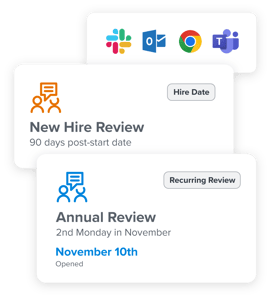
Performance conversations need not be a source of stress. Keeping managers and employees aligned is achievable with engaging performance reviews. Quantum Workplace’s performance review software provides teams with reliable context, facilitating more objective and engaging conversations. The platform offers several key benefits:
- Customization: Reviews can be easily tailored to fit organizational needs with flexible modules that adapt to diverse cultures and groups.
- Managerial Support: The software integrates performance processes into existing workflows, making it easier for managers to coach effectively and establish formal conversation cycles for consistent touchpoints.
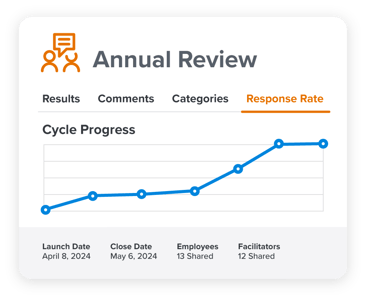
- Response Tracking: Real-time monitoring of review response rates helps teams stay accountable and provides insights into performance ratings.
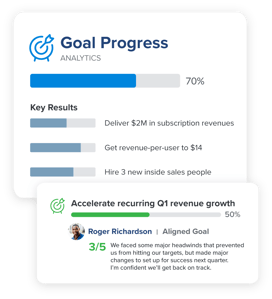
- Goal Integration: Performance goals can be seamlessly embedded into evaluations, enabling managers to conduct objective, effective, and growth-oriented conversations.
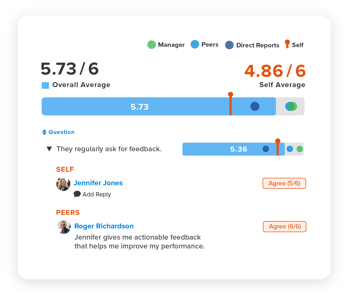
- Multi-Rater Feedback: Incorporating feedback from multiple sources provides valuable insights and orients performance conversations around development.
- Data Visualization: A talent dashboard offers a comprehensive view of organizational talent, enabling informed decisions about talent retention and development.
Conclusion
The evolution of performance reviews is a journey that encompasses the art of asking insightful questions, the creation of a conducive feedback environment, the translation of conversation into concrete actions, and the cultivation of a culture of continuous development. These elements are the foundational seeds for nurturing a vibrant, engaged, and high-performing team.
HR leaders are at the forefront of this new era of performance management, equipped with the tools to create an environment where growth, feedback, and development are intrinsically woven into the organizational DNA. By championing these practices, HR not only elevates individual careers but also propels the organization toward a future where continuous improvement and deep engagement are the established norms, not the exceptions.
Frequently Asked Questions:
What are the best performance review questions?
The most effective performance review questions encourage deep reflection, open communication, and demonstrable growth. They move beyond superficial assessments to explore the ‘why’ and ‘how’ behind performance.
What are performance review questions for achievements?
To effectively assess achievements, consider questions that prompt employees to detail their accomplishments, the impact of those achievements, and the strategies they employed. Examples include: "Can you describe your most significant accomplishment this past quarter and the steps you took to achieve it?" or "How did your contribution impact the team’s overall success or project outcome?"
What are performance review questions for strengths and areas of improvement?
To achieve a balanced evaluation, ask questions that highlight commendable skills and identify opportunities for growth. For instance: "What specific skills do you believe are your greatest assets in your current role, and how have you demonstrated them?" and "What is one area where you see potential for development, and what specific actions are you taking to address it?"
What are performance review questions for career growth?
For fostering career development, questions should encourage employees to reflect on their professional aspirations and how the organization can support them. Consider: "What are your long-term career aspirations, and what steps can we take together to help you achieve them?" or "What new skills or experiences are you interested in gaining to advance your career path?"
By implementing these refined approaches and leveraging supportive technology, organizations can transform their performance review processes into powerful catalysts for individual and collective success, ensuring a more effective, efficient, and engaging experience for all.