Most companies focus their recognition efforts primarily on the manager-to-employee dynamic. While this top-down approach has its merits, it often overlooks a critical component that can significantly amplify employee engagement, foster stronger teamwork, boost productivity, and even contribute to reduced absenteeism: peer-to-peer recognition. This article delves into the profound impact of employees recognizing and appreciating one another, supported by data and best practices for cultivating a thriving culture of appreciation from the ground up.
The current corporate landscape often emphasizes structured feedback loops originating from leadership. However, a recent study by Achievers, highlighted in their Engagement and Retention Report, reveals a stark contrast in employee experiences based on peer connection. Employees who report high levels of peer connection are a remarkable 4.7 times more likely to feel appreciated and engaged. Furthermore, they are 5.4 times more likely to feel supported in their well-being and exhibit a similar increase, 5.4 times, in their sense of belonging within the organization. This data underscores a fundamental truth: colleagues are often privy to the subtle yet significant contributions and everyday acts of heroism that may not always capture the attention of management. When these efforts are acknowledged by peers, it cultivates a deeper sense of connection, reinforces the shared purpose of the team, and ultimately nurtures a company culture where individuals are motivated to perform at their best.
Peer-to-peer recognition is defined as the practice where employees acknowledge and value each other’s meaningful contributions, collaborative efforts, and adherence to organizational values. Unlike traditional top-down recognition, this form of appreciation offers a more authentic reflection of how work actually gets accomplished. It captures the real-time impact of individuals and teams, reinforces shared standards of excellence, and highlights the daily behaviors that drive success, rather than solely focusing on outcomes measured during formal performance reviews. When supported by the right structural framework and technological tools, peer recognition transcends mere feel-good gestures. It creates essential visibility, reinforces core company values, and provides organizations with invaluable insights into the specific behaviors that are actively contributing to engagement and performance across all levels of the workforce. At its most effective, peer recognition transforms fleeting moments of appreciation into a consistent, embedded habit. This process ensures that employees feel genuinely seen, heard, and valued, while simultaneously equipping leaders with the necessary visibility to intentionally shape and refine their company culture.
Cultivating a Thriving Peer Recognition Culture: 15 Best Practices
Implementing a robust peer-to-peer recognition program can seem daunting, but by focusing on people-centric strategies, organizations can build a system that is both effective and sustainable. Here are 15 practical best practices to foster a culture of appreciation:
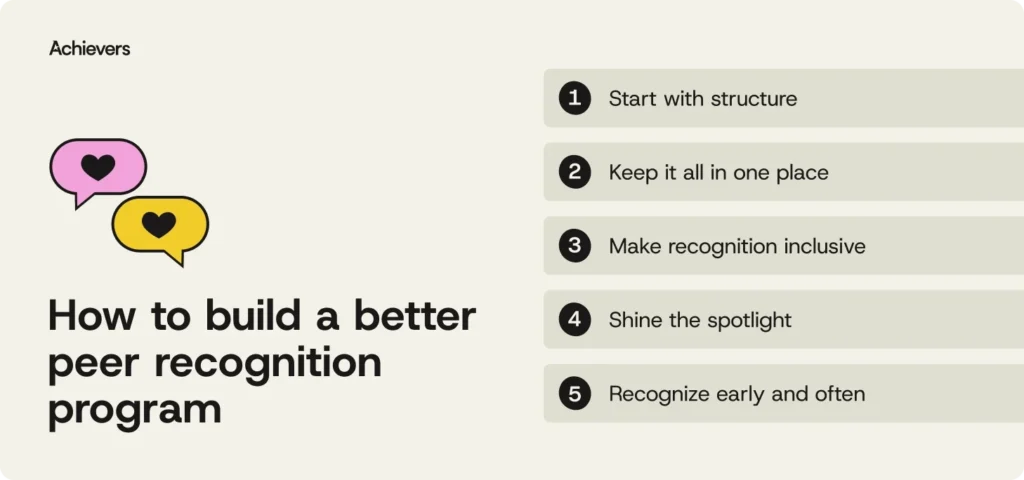
1. Establish a Clear Structure
Effective peer recognition doesn’t occur spontaneously; it requires a well-defined framework. Clearly articulate what constitutes meaningful recognition between peers and establish guidelines that encourage widespread participation. Whether through informal shout-outs or formal peer-nominated awards, a structured approach ensures that recognition becomes an integrated part of the daily workflow, rather than an afterthought. This foundational structure is vital for any successful employee recognition program.
2. Centralize Recognition Efforts
To avoid confusion and ensure no act of appreciation goes unnoticed, it is crucial to maintain recognition activities in a single, accessible location. A user-friendly recognition platform simplifies the process for employees, ensuring fairness, visibility, and a frictionless experience. By minimizing the number of steps required to offer kudos, organizations can encourage more frequent and impactful peer acknowledgments.
3. Champion Inclusive Recognition
A truly inclusive organizational culture ensures that all employees have the opportunity to both give and receive recognition, not just those in highly visible roles. Peers are adept at recognizing the nuanced efforts and contributions that might otherwise be overlooked. By celebrating a diverse range of contributions and actively monitoring recognition data, organizations can ensure that every voice is heard and every individual feels seen.
4. Amplify Positive Contributions
Recognition is inherently contagious. Publicly acknowledging the contributions of peers serves to reinforce desired behaviors and embed appreciation into the team’s ethos. Whether it’s a brief mention during a team meeting or a company-wide announcement, public peer recognition generates enthusiasm, enhances visibility, and fosters a shared sense of pride, significantly contributing to an effective employee engagement strategy.
5. Prioritize Frequent and Timely Recognition
Colleagues are often the first to notice day-to-day achievements and positive impacts, long before formal performance evaluations. Therefore, frequent recognition is paramount. Encourage regular peer shout-outs for a wide array of contributions, from meeting critical deadlines to boosting team morale. When recognition becomes a regular habit, it strengthens interpersonal relationships and cultivates a positive, people-first workplace culture.
6. Emphasize Specificity in Praise
Generic praise like "great job" lacks impact. Instead, encourage employees to be specific about what made a contribution stand out and how it benefited the team. This specificity makes recognition more meaningful and provides valuable learning opportunities for everyone, reinforcing the behaviors that drive exceptional employee performance.
7. Lead by Example
For peer recognition to flourish, leadership must actively participate. When managers and executives not only recognize their direct reports but also their peers, it signals that appreciation is a universal value, not tied to hierarchy. This modeling behavior encourages broader adoption of recognition practices across the entire organization, significantly influencing company culture.
8. Balance Social and Monetary Rewards
While a heartfelt thank-you from a peer can be incredibly powerful, incorporating small, tangible rewards can further enhance the impact of recognition. A balanced employee reward and recognition program should offer both social praise and tangible incentives. Whether it’s a globally recognized reward or a simple coffee voucher, the right combination ensures that peer recognition remains both meaningful and motivating.
9. Celebrate the Entire Journey
Peers are often present for both major milestones and smaller personal achievements. Recognizing these moments, such as promotions or personal successes, demonstrates support and reinforces the idea that success is a shared journey. This practice not only strengthens individual connections but also enhances the overall employee experience.
10. Inject Fun into Appreciation
Recognition doesn’t always need to be a formal affair. Incorporating elements of fun, such as themed awards, friendly team challenges, or a visible kudos leaderboard, can significantly boost engagement with recognition programs. Gamification can be a powerful tool for encouraging active participation in a culture of appreciation.
11. Recognize Both Individuals and Teams
Contributions can be made individually or as part of a collective effort. A comprehensive recognition program should celebrate both. Highlighting team successes for collaborative projects and acknowledging outstanding individual efforts ensures that every role is valued and contributes to boosting employee morale.
12. Measure and Analyze Recognition Data
To ensure the ongoing impact and effectiveness of peer recognition, it’s essential to track key metrics. Monitoring participation rates, frequency of recognition, and equity across different demographics provides valuable insights. Data from recognition platforms can help refine the employee recognition strategy over time, ensuring it remains relevant and impactful.
13. Empower Employee Nominations
Allowing employees to nominate their peers for recognition empowers them to actively contribute to a positive workplace environment. Peer nominations add authenticity to the recognition process and bring to light contributions that might otherwise go unnoticed. Employees are often best positioned to identify and acknowledge the impact of their colleagues’ work.

14. Acknowledge Cross-Functional Collaboration
In today’s interconnected work environment, collaboration frequently extends beyond immediate teams. It is vital to recognize instances where peers from different departments support each other. This practice helps break down departmental silos and fosters a more cohesive and collaborative employee culture.
15. Link Recognition to Professional Growth
Peers are often the first to witness and acknowledge an individual’s professional development. Recognizing when someone takes on a new role, acquires a new skill, or demonstrates leadership potential reinforces a growth mindset. This type of recognition underscores learning and development as a core component of the employee value proposition.
The Role of Technology in Enabling Peer-to-Peer Recognition
While the principles of effective peer-to-peer recognition are clear, their sustained implementation often hinges on the availability of appropriate technological solutions. Peer-to-peer recognition software acts as the connective tissue, transforming intent into tangible impact. A dedicated platform provides the necessary structure, visibility, and consistency to ensure that appreciation is not contingent on memory, proximity, or individual personality. By centralizing recognition activities, linking them to company values, enabling real-time acknowledgments, and offering data-driven insights, such software transforms best practices into ingrained daily behaviors. This integration ensures that recognition occurs where work actually happens, thereby shaping culture, strengthening connections, and driving measurable improvements in engagement and retention.
The Undeniable Impact: Peer-to-Peer Recognition Statistics
Emerging research from the Achievers Workforce Institute (AWI) consistently demonstrates that peer recognition is far more than a superficial nicety; it is a significant driver of employee engagement, productivity, and retention. These are not merely anecdotal observations but are substantiated by data that highlights the tangible benefits of fostering a culture of appreciation. Organizations that prioritize peer-to-peer recognition often report:
- Increased Employee Engagement: When employees feel recognized by their peers, their commitment to their work and the organization naturally deepens.
- Enhanced Teamwork and Collaboration: The act of recognizing a colleague’s contribution often involves acknowledging their role in a team effort, thereby fostering a greater sense of camaraderie and mutual support.
- Improved Productivity: Acknowledged efforts often motivate individuals and teams to maintain or even exceed their performance levels.
- Reduced Absenteeism: Employees who feel valued and connected to their colleagues are less likely to experience burnout or disengagement, which can lead to a decrease in sick days.
- Stronger Company Culture: A consistent practice of peer recognition cultivates an environment of positivity, mutual respect, and shared success, making the workplace a more desirable place to be.
The overarching takeaway is that while building a robust culture of recognition requires consistent effort, the right tools, a commitment to frequency, and a genuine intention can make it an attainable reality. The rewards, both tangible and intangible, are undeniably worth the investment.
Beyond Collaboration: The Power of Mutual Appreciation
Peer-to-peer recognition may appear to be a soft skill, but its impact on organizational outcomes is undeniably hard-hitting. It serves as a potent catalyst for boosting employee engagement, driving productivity, strengthening company culture, and crucially, ensuring that individuals feel genuinely seen for their daily contributions, not just their major accomplishments. This simple yet profound practice is one of the most effective ways to cultivate a workforce that is not only connected and motivated but also resilient and built for long-term success.
Companies like Achievers offer platforms designed to seamlessly integrate recognition into the daily rhythm of work. Their solutions empower employees to recognize and reward one another in real time, infusing appreciation with purpose, meaning, and even a touch of digital flair. From targeted culture campaigns to global reward initiatives, these platforms assist organizations in translating core values into observable behaviors and ultimately, into measurable results. For businesses aiming to foster an environment where every employee feels genuinely appreciated, the path forward is clear.
Frequently Asked Questions About Peer-to-Peer Recognition
What is the primary difference between manager-to-employee and peer-to-peer recognition?
Manager-to-employee recognition is typically initiated by a supervisor and often tied to formal performance reviews or specific achievements. Peer-to-peer recognition, conversely, originates from colleagues and is often more immediate, informal, and focused on everyday contributions, collaboration, and embodiment of company values.
How does peer recognition contribute to a positive company culture?
Peer recognition fosters a culture of appreciation, trust, and mutual respect. When employees feel comfortable acknowledging each other’s efforts, it creates a more supportive and positive work environment, enhancing camaraderie and a sense of belonging.
Can peer recognition be effectively implemented in a remote or hybrid work setting?
Absolutely. Digital recognition platforms are particularly well-suited for remote and hybrid environments, providing a centralized and accessible way for colleagues to acknowledge each other’s contributions regardless of their physical location.
What are the key benefits of peer recognition for employee well-being?
Feeling seen and valued by one’s peers is a significant factor in employee well-being. It combats feelings of isolation, reinforces a sense of purpose, and can contribute to reduced stress and burnout by fostering a supportive social fabric within the workplace.
How can organizations measure the success of their peer recognition program?
Success can be measured through various metrics, including participation rates, the frequency and quality of recognition given, employee feedback surveys, and the correlation between recognition activity and key business outcomes such as engagement scores, retention rates, and productivity levels.