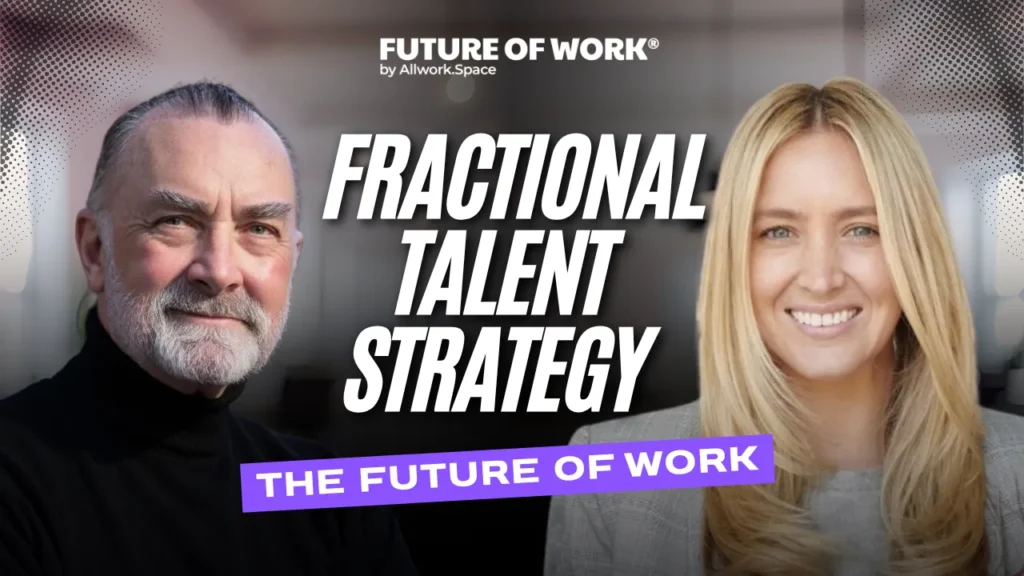
In a recent episode of The Future of Work® Podcast, host Frank Cottle engaged in a profound discussion with Lara Vandenberg, Founder and CEO of Assemble, a leading managed workforce platform. The conversation delved into the seismic structural shifts fundamentally redefining how modern teams are assembled and managed. Vandenberg, drawing on her extensive experience advising chief marketing officers and enterprise leaders, articulated why traditional headcount-centric models are rapidly becoming obsolete. She explained the burgeoning shift towards dynamic, capability-based ecosystems that seamlessly integrate full-time employees, specialized freelance talent, artificial intelligence, and sophisticated operational strategies.
The episode directly addressed one of the most pressing questions confronting organizations today: how can companies effectively design their teams in an era characterized by accelerating speed, pervasive uncertainty, and rapidly evolving technological landscapes that outpace conventional organizational charts? Cottle and Vandenberg meticulously unpacked the burgeoning trend of fractional talent, the increasing criticality of maintaining a robust internal culture, the nuanced role of AI in augmenting rather than eliminating jobs, and the imperative for businesses to adopt a customer-centric approach to talent strategy. For leaders navigating the complexities of workforce design, marketing operations, and the pursuit of long-term organizational resilience, this episode offers a sharp, practical, and forward-looking perspective on the evolving nature of work.
The Breakdown of Traditional Headcount Models
Lara Vandenberg, a recognized innovator in workforce strategy, founded Assemble with the explicit goal of revolutionizing how modern marketing teams are constructed. Her work with senior executives, particularly CMOs, has illuminated the immense pressure these leaders face to meet escalating output demands, manage tighter budgets, and navigate severe headcount constraints. Vandenberg’s core thesis is that traditional hiring models, predicated on fixed, full-time roles, are no longer sufficient. Instead, she champions a transition towards flexible, capability-based team designs that allow organizations to access and deploy senior freelance talent at scale. This approach enables the integration of specialized expertise directly into internal workflows, circumventing the traditional hurdles associated with hiring, compliance, and ongoing management overhead. Vandenberg’s insights position her at the vanguard of a movement reshaping marketing, operations, and overall workforce strategy, advocating for modular, expertise-driven teams built for agility, precision, and impactful outcomes.
During the podcast, Vandenberg elaborated on this paradigm shift, stating, "Historically, headcount is no longer the organizing principle. That is how the world has worked. You know, historically, capability is now the organizing principle." This fundamental reorientation means that the predictable annual headcount increases are a relic of the past. Instead, executives are compelled to critically assess the actual work that needs to be accomplished and determine the most effective means of achieving it. This necessitates a comprehensive evaluation of the optimal mix of full-time employees, freelance specialists, AI-driven solutions, and external agency partnerships. Vandenberg emphasizes that this "uncoupling" of work from traditional job descriptions forces a strategic reconsideration of every talent acquisition and deployment decision.
The Rise of Capability-Based Ecosystems
The transition from a headcount-centric model to a capability-based ecosystem is not merely a theoretical construct; it reflects a tangible response to the dynamic demands of the modern business environment. Companies are increasingly recognizing that specialized skills are often required for specific projects or evolving market needs, and maintaining a large, fixed workforce for every potential scenario is economically inefficient and strategically inflexible.
- Data Point: A 2023 report by Upwork indicated that 59 million Americans, representing 36% of the U.S. workforce, engaged in freelance work. This trend underscores the growing acceptance and reliance on flexible talent.
- Background Context: The COVID-19 pandemic acted as a significant accelerant for remote work and flexible talent models. Organizations that were forced to adapt rapidly discovered the benefits of distributed teams and the agility offered by contingent workers. This experience has fundamentally altered employer and employee expectations regarding work arrangements.
Vandenberg explained that this shift is driven by the need to "do more with less." Companies are being challenged to achieve greater output with fewer resources, forcing them to meticulously evaluate the "best type of work to get the work done." This strategic re-evaluation extends to defining the optimal full-time employee strategy, the role of freelance talent, the integration of AI, and the judicious use of external agencies.
The Role of AI in the Evolving Workforce
The conversation also delved into the transformative impact of artificial intelligence on the workforce. Frank Cottle offered a compelling perspective on how his own company is integrating AI not as a replacement for human capital, but as a powerful augmentation tool. "In our own company, which has been around for a while. We are, or we have, I should say, supported every role with an AI agent as opposed to reducing rolls. Replacing them with AI," Cottle stated. This approach aims to enhance the productivity of existing employees, allowing them to achieve significantly higher output through the synergistic combination of their expertise and AI capabilities.
Vandenberg concurred that AI is unlikely to eliminate jobs wholesale but rather to reshape them. "I don’t believe AI takes many jobs to zero. I think it takes a lot of jobs. To 75 or to 50 or to 25. And so, you know, talking about that full-time to freelance ratio. I do think that AI makes a lot of full-time roles freelance because a machine can do some of the work, but not all of the work." This implies that roles requiring repetitive tasks or data processing may be automated, freeing up human workers to focus on more complex, strategic, and creative endeavors.
- Analysis: The integration of AI is not a singular event but an ongoing process. Companies that proactively integrate AI tools to empower their workforce, rather than solely focusing on cost reduction through automation, are likely to foster greater innovation and employee satisfaction. This proactive approach can also mitigate the potential for mass layoffs and the associated negative impacts on organizational culture and public perception.
Cultivating Culture in a Distributed and Fractionalized Workforce
A critical aspect of the discussion revolved around maintaining a cohesive and vibrant company culture when a significant portion of the workforce may be remote or comprised of fractional talent. Cottle posed a direct question: "How do you create a culture? When you have a fractional, uncoupled, half your team are fractional and uncoupled. And totally remote. And a big part of their work is driven by AI. Is culture even important anymore in that regard, or is it just productivity?"
Vandenberg firmly asserted that culture remains paramount. "Culture is critical. And it will be forever. And I think that’s why, you know, as we talk about agentic and the rise of AI, humans. You know, what AI can’t replace is taste and tenacity and human intuition. And so, you know, to add to the first question. Humans and culture are not going to go away. If anything, it becomes more important."
She further elaborated on how this cultural imperative influences team composition. Full-time employees, in this new paradigm, should ideally function as exceptional project managers, possessing strong generalist skills. Conversely, fractional or freelance talent needs to be the ultimate hyper-specialists. This creates a symbiotic relationship where the core team provides strategic direction and project oversight, while specialized external talent brings deep expertise to specific tasks.
- Implication: The emphasis on culture in a distributed workforce highlights the need for intentional strategies. This includes fostering clear communication channels, promoting inclusive virtual environments, and developing mechanisms for remote team members to feel connected and valued. Companies that neglect culture risk a decline in employee engagement, collaboration, and overall organizational performance.
Strategic Positioning for the Future: The Customer as the North Star
When asked about how companies should strategically position themselves for the next three to five years, Vandenberg offered a clear directive: "Start with the customer." She emphasized that understanding customer needs should be the primary driver for all talent and operational decisions. This customer-centric approach informs how organizations should architect their ecosystems and processes.
Vandenberg also highlighted the emergence of roles like Chief of Staff or Head of Marketing Operations as crucial in this new landscape. These individuals are tasked with architecting the systems and processes that leverage AI and flexible talent effectively. The fixed cost associated with traditional employment models is increasingly viewed as a structural risk in uncertain economic times. Executives are compelled to rethink agility and efficiency, leading to a more dynamic approach to talent acquisition and deployment.
Cottle, while agreeing on the importance of customer focus, also advocated for a "do more with more" philosophy internally, emphasizing the value of investing in existing employees. He proposed increasing compensation for individuals who demonstrably increase their productivity through the effective use of AI tools, thereby strengthening company culture and overall organizational structure.
- Analysis: The divergence in perspectives between optimizing internal talent versus leveraging external fractional talent is a key tension in current workforce discussions. While both approaches have merit, the most successful organizations will likely find a strategic balance that leverages the unique strengths of each. The overarching theme remains the need for adaptability and a willingness to re-architect traditional operational models.
The Talent Pipeline Dilemma and the Rise of "Homegrown" Expertise
A significant concern raised during the discussion was the potential future scarcity of experienced talent. Vandenberg noted that Assemble primarily places professionals with five to fifteen years of experience, as these individuals possess a strong portfolio, proven execution capabilities, and the ability to take direction. However, this reliance on experienced talent raises a critical question about the development of future talent pipelines.
Cottle echoed this concern, emphasizing the importance of "incubating your own talent pool." He shared that his company actively employs interns and provides an environment for growth, not just production. This philosophy underscores the long-term strategic advantage of developing talent from within, fostering loyalty, and ensuring a continuous supply of skilled professionals who understand the company’s culture and objectives.
- Data Point: A study by Deloitte found that companies with strong internal talent development programs experience significantly higher employee retention rates and improved productivity compared to those that primarily rely on external hiring.
The discussion highlighted that while immediate needs might necessitate hiring experienced professionals, neglecting the development of junior talent can lead to a future competitive disadvantage. Companies that foster an environment of learning and provide opportunities for advancement are more likely to retain valuable employees and build a sustainable talent advantage.
Navigating Generational Shifts and Demographic Realities
The conversation touched upon the evolving demographics and generational expectations within the workforce. Vandenberg pointed out that women are marrying and having children later, or opting out of traditional family structures altogether. This, coupled with broader geopolitical and economic uncertainties, fundamentally alters career trajectories and the perceived need for job security.
Cottle introduced another critical factor: population decline. He raised the question of how this demographic reality, combined with the accelerating pace of technological change, will impact the availability of skilled labor. The potential for a shrinking workforce, particularly in specialized roles, necessitates a strategic re-evaluation of talent acquisition, retention, and development strategies.
- Broader Impact: The confluence of technological advancement, demographic shifts, and economic volatility creates a complex environment for workforce planning. Companies that fail to adapt to these interconnected trends risk being outmaneuvered by more agile and forward-thinking competitors. The ability to attract and retain talent will become an even more critical determinant of long-term success.
The Imperative to Re-architect Work
In conclusion, the discussion between Frank Cottle and Lara Vandenberg on The Future of Work® Podcast provided a comprehensive overview of the profound transformations reshaping the modern workplace. The obsolescence of traditional headcount models, the rise of capability-based ecosystems, the strategic integration of AI, and the enduring importance of culture are all critical elements that leaders must address.
Vandenberg’s final takeaway was a clear call to action: "It is an opportunity to optimize your ecosystem, but talent needs to be at the forefront. And I think that it’s not a tech problem. It’s not. A talent problem. It’s not an agency problem. It’s a systems problem." The solution, she advised, lies in "re-architecting how work works right now." This involves starting with the customer, understanding their needs, and then working backward to determine the necessary work and the most effective means of completing it, whether through internal talent, fractional expertise, or technological augmentation. The companies that embrace this holistic, systems-thinking approach are best positioned to thrive in the dynamic and evolving future of work.