The leadership ranks within organizations, when examined closely, often obscure a significant portion of their talent: neurodivergent leaders. While neurodivergent individuals are not rare, many choose not to disclose their neurodivergent identities to the very systems designed to support them. This pattern of hidden leadership, revealed by recent research, suggests that organizations may be significantly underestimating their existing neurodivergent leadership capacity and missing crucial opportunities for development and inclusion.
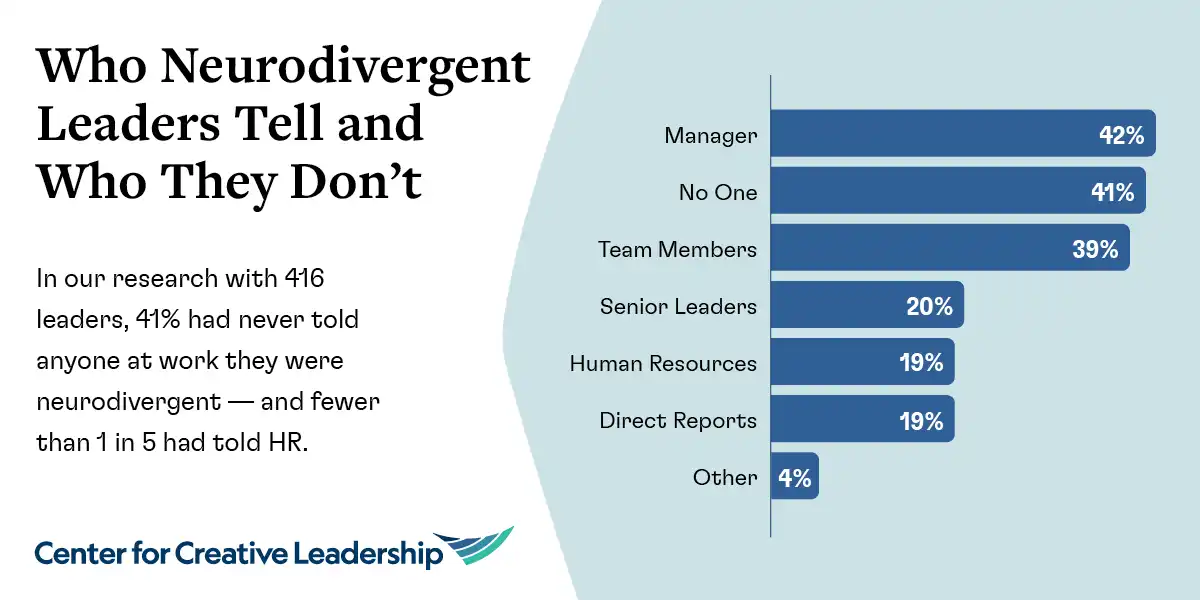
A comprehensive study involving 416 leaders across the United States and the United Kingdom uncovered a striking reality: 41% of neurodivergent professionals surveyed reported never having disclosed their neurodivergent identity to anyone in their workplace. Further analysis showed that an additional 42% had only informed their direct manager, while fewer than one in five had disclosed to human resources, the department typically responsible for formal accommodations and support. Disclosures, when they occurred, most frequently happened within informal, trusted relationships, highlighting a significant gap in formal organizational awareness and support structures. This widespread concealment means that neurodivergent leaders are largely operating "out of sight," leading to potential misinterpretations about the prevalence and interest of neurodivergent individuals in leadership roles.
The research challenges the assumption that a short list of known neurodivergent leaders reflects a scarcity of such talent. Instead, the data indicates that neurodivergent leaders are present across all organizational levels and functions, frequently meeting or exceeding performance expectations and making substantial contributions. Their invisibility stems not from an absence in leadership positions, but from the lack of awareness among their colleagues and within organizational systems. This reluctance to disclose is not a simple personal choice; it is deeply influenced by factors such as trust, perceived risk, and the organizational climate’s reception to difference—whether it is met with support or penalty.
The Organizational Price of Unseen Neurodivergent Leadership
The invisibility of neurodivergent leaders carries tangible consequences for organizations. When the prevalence of neurodivergent leadership is underestimated, critical decisions regarding leadership development, support mechanisms, and inclusion strategies are often based on flawed assumptions. Formal processes, including high-potential employee identification and leadership development programs, are typically built around a predefined understanding of what leadership looks like, how it manifests, and who these initiatives are intended to serve. Consequently, neurodivergent leaders, whose contributions may not align with these conventional markers, are less likely to be reflected in these foundational assumptions.
This deficit in recognition extends beyond systemic processes. The research found that fewer than a quarter of participants were aware of any neurodivergent managers or senior leaders within their organizations, with leaders at higher echelons being the least likely to be identified as neurodivergent. This lack of visible representation has a significant impact on aspiring neurodivergent leaders, who have fewer role models to draw upon when envisioning their own leadership trajectories. Representation, therefore, is not merely symbolic; it serves as a vital developmental resource, offering attainable and authentic pathways to success. Organizations that fail to acknowledge and foster this representation risk overlooking a substantial portion of their leadership talent and the unique experiences that shape their effectiveness.
Neurodiversity in the Workplace: A Pervasive Reality, Often Misunderstood
Neurodiversity, a concept that acknowledges the natural variation in human cognition, learning, and experiential processing, is a fundamental characteristic of every workplace. By definition, all organizations are neurodiverse. Neurodivergent individuals are those whose cognitive processes differ significantly from typical or expected standards. This umbrella term encompasses a wide spectrum of conditions, including Attention-Deficit/Hyperactivity Disorder (ADHD), autism, dyslexia, dyspraxia, dyscalculia, Obsessive-Compulsive Disorder (OCD), Tourette syndrome, and numerous others. Estimates suggest that approximately 20% of the global workforce identifies as neurodivergent, positioning cognitive difference as a core feature of the modern workforce rather than a marginal concern.
Despite their prevalence, neurodivergent individuals frequently face underemployment relative to their qualifications and experience. This pattern is observed across various neurodivergent groups, with autistic individuals notably experiencing disproportionately low employment rates and limited advancement opportunities. While autism often garners significant attention, it represents a smaller fraction of the overall neurodivergent population. The reasons behind this focus are complex, potentially involving perceptions of support needs, documented hiring and retention disparities, and a historical stigma associated with autism that has, at times, been more pronounced than for other conditions. Simultaneously, more prevalent neurodivergent conditions like ADHD, dyslexia, and dyspraxia constitute a substantial portion of the neurodivergent workforce, yet their challenges often remain less understood.
This combination of broad prevalence and uneven visibility contributes to persistent misunderstandings within organizations. Neurodivergence is frequently categorized monolithically or narrowly associated with autism alone. However, the neurodivergent experience is highly individualized. Diagnostic labels describe general patterns, not fixed traits, and no two individuals with the same condition experience it identically. Furthermore, many individuals possess overlapping conditions, such as ADHD and autism, or dyslexia alongside other processing differences. A diagnosis alone can never fully capture the intricate ways in which an individual thinks, processes information, and engages in the workplace.

The timing of diagnosis adds another layer of complexity. A significant number of individuals discover their neurodivergent identities later in their careers, and some may never receive a formal diagnosis. In the aforementioned research, the average age of first diagnosis was 27, with 40% of participants diagnosed after the age of 30, and many others much later. For many leaders, understanding and navigating their neurodivergence occurs concurrently with fulfilling professional expectations and assuming leadership responsibilities.
Neurodivergence is also a social construct that encompasses formal diagnoses, self-identification, and lived experience. As awareness grows, self-identification is becoming increasingly common. Regardless of formal documentation, many individuals benefit from accommodations once they understand their needs and can access appropriate support. However, access to such support is often contingent on organizational policies rather than individual requirements. When organizations mandate formal diagnoses as the sole gateway to flexibility, they risk overlooking many neurodivergent employees and leaders who are making valuable contributions. Consequently, a nuanced understanding of neurodivergence in the workplace necessitates recognizing its scale, diversity, and the persistent disparities in employment outcomes.
Research Insights into Neurodivergent Leadership
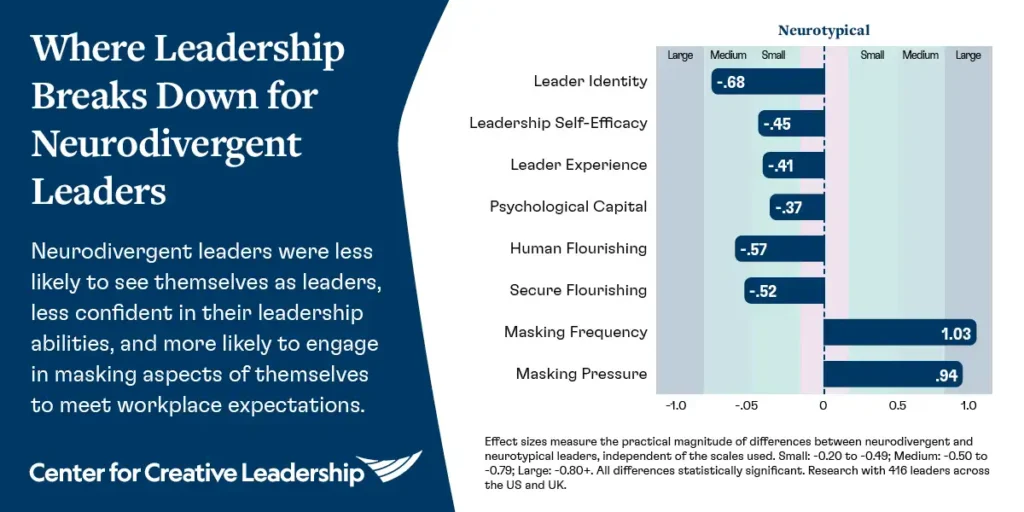
While the research explored multiple facets of the leadership experience, a consistent pattern emerged: neurodivergent leaders, across measures of self-perception, well-being, and the practice of masking (the suppression or concealment of aspects of oneself to conform to workplace expectations), reported experiences that rendered leadership more challenging to internalize and sustain. This held true even when their performance was demonstrably effective.
Neurodivergent leaders were less likely to identify as leaders and expressed lower confidence in their leadership abilities. They also reported a higher propensity to engage in masking behaviors and felt greater pressure from others to do so. These experiences were closely correlated with diminished employee well-being and a reduction in psychological resources over time. The findings suggest that leadership development for neurodivergent individuals is less about access to specific roles and more about how leadership itself is recognized, reinforced, and made safe to embody. When leadership environments favor narrow norms for communication, presence, or interaction, the cost of leading becomes significantly higher, even for highly capable and committed individuals.
Identity and Confidence: The Disconnect in Leadership Self-Perception
Leadership identity is cultivated through experience, but crucially, it requires recognition and reinforcement. Research consistently indicates that having a specific leader to identify with is a more potent driver of leadership confidence than abstract models of ideal leadership. The study revealed that neurodivergent leaders were less inclined to see themselves as leaders and harbored less confidence in their leadership capabilities, despite nearly all participants holding leadership positions. The divergence between capability and self-recognition appears to stem from whether leadership environments consistently signal that their contributions are valued.
In many organizations, leadership is identified through a limited set of cues, such as assertive verbal participation in group settings, comfort with unstructured social interactions, or adeptness at self-promotion and relationship-building. When these behaviors become the primary proxies for leadership potential, leaders who communicate or engage differently are less likely to receive affirming feedback, developmental opportunities, or sponsorship, even when their performance is strong. Over time, this can shape how leadership is internalized. When leaders do not see individuals like themselves recognized as leaders, or do not receive clear signals that their contributions are valued as leadership, their confidence erodes. Leadership then becomes an activity they perform, rather than an identity they fully claim.
To foster leadership confidence more inclusively, organizations should:
- Audit Leadership Norms: Examine the criteria used for high-potential identification, performance evaluations, and promotion decisions. If these criteria consistently favor style or visibility over demonstrable impact, the system may inadvertently be selecting for familiarity rather than true capability.
- Ensure Accessible Leadership Development: Leadership programs, coaching, mentoring, and stretch assignments should not be exclusive to those who fit a narrow prototype. Broad accessibility allows more leaders to build confidence through supported experiences.
Masking and Psychological Safety: The Hidden Burden of Leading Differently
For many neurodivergent individuals, leading effectively is accompanied by an unseen burden: the continuous effort of masking. In the research, masking emerged as one of the most significant differences between neurotypical and neurodivergent leaders. Leaders engage in masking when it feels unsafe to lead authentically, and difference is perceived as a liability rather than a natural variation. Masking was a routine aspect of leadership for neurodivergent leaders and was closely linked to lower well-being and diminished psychological resources over time.
This situation is fundamentally a matter of psychological safety. When leaders lack confidence that their working styles will be accepted or understood, they compensate. While this compensation enables performance, it comes at a significant cost, requiring constant self-monitoring, limiting access to support, and diverting energy that could otherwise be used for learning and growth. Individuals do not typically choose to mask; it is an adaptive strategy employed when they feel unsafe leading as their authentic selves. High levels of masking indicate that organizational leadership norms leave little room for cognitive diversity. Furthermore, research consistently demonstrates that a manager’s demeanor and whether individuals feel psychologically safe are more impactful on career outcomes than formal accommodations alone.
To reduce the need for masking and foster psychological safety, organizations can:
- Cultivate Psychologically Safe Conditions: Psychological safety is built through consistent behaviors that explicitly state expectations, invite diverse forms of contribution, acknowledge mistakes, and ensure participation is not contingent on who speaks first or loudest.
- Develop Leaders to Manage Neurodiverse Teams: Leading across cognitive differences requires specific skills, including providing clear and unambiguous feedback, structuring meetings intentionally, and recognizing when an individual may be masking rather than genuinely thriving.
- Offer Community and Connection: Employee resource groups and peer networks provide essential spaces for neurodivergent leaders to share experiences and identify systemic barriers that may not surface through formal channels. These communities also serve as a critical feedback loop for leaders and the organization.
Well-being and Sustainability: The Quiet Burnout of Capable Leaders
When the burden of masking accumulates and leadership is inconsistently reinforced, the sustainability of capable leaders becomes fragile. Even when performance remains high, the cumulative effort of adapting to the environment depletes essential leadership resources, such as relational energy, resilience, and psychological capital. This creates a significant risk for organizations: leaders who appear to be functioning well may be most vulnerable to disengagement or departure, worn down by an environment that makes sustained leadership challenging despite their commitment and potential. How leadership roles are structured, supported, and rewarded profoundly shapes these outcomes, often more so than an individual leader’s inherent resilience or self-management skills.
To design leadership that is sustainable, organizations should:
- Ensure Belonging from the Outset: Work environments should be designed to accommodate a broad range of cognitive styles, incorporating clear agendas, structured feedback mechanisms, and flexible participation formats to minimize unnecessary strain and reduce the need for masking.
- Measure What Matters: Organizations must track leadership experiences, access to development opportunities, and progression over time. Headcount alone does not reveal whether leadership systems are sustainable. Engaging neurodivergent leaders in defining success metrics ensures that assessments accurately reflect what is most important.
The Potential of a More Neuroinclusive Leadership Culture
Fostering neuroinclusive cultures is not merely a matter of values; it is a strategic imperative for talent acquisition and performance enhancement. Organizations that successfully cultivate neuroinclusive environments reap benefits that extend far beyond individual employees. Cognitively diverse teams approach problems from multiple perspectives, leading to more effective solutions often generated more rapidly. Employee engagement and retention improve when individuals can contribute authentically without expending energy managing how they are perceived. Across various functions, organizations build stronger capabilities for complex problem-solving, enhance innovation, and boost overall productivity.
The reality is that most leaders, regardless of their neurotype, are already leading neurodiverse teams, often without explicit awareness. This makes neuroinclusive leadership a core organizational capability rather than a niche concern. Equipping leaders to recognize and effectively collaborate across cognitive differences represents a high-leverage investment for any organization. When leaders provide clarity, structure, and psychological safety, performance improves, and fewer leaders are depleted by navigating environments that deviate from conventional norms.
Neurodivergent leaders are already contributing, delivering results, and often exceeding expectations. Yet, many advance without recognition, plateau in roles that underutilize their potential, or leave organizations where their strengths are misunderstood or overlooked. Simultaneously, other individuals who possess leadership potential may never pursue such roles or are screened out early because their styles do not align with prevailing leadership expectations.
Leadership systems must be designed to identify, develop, and sustain talent effectively. When leadership environments become more neuroinclusive, organizations broaden the pathways into leadership itself, expanding the pool of individuals identified as high potential, who receive stretch assignments, and who are encouraged to lead. This strengthens the leadership pipeline and enhances organizational agility. A more diverse range of leaders brings a broader spectrum of perspectives, better equipped to navigate complexity, respond to unexpected change, and identify opportunities that might otherwise be missed. In an era defined by uncertainty, this expansive capacity is a critical strategic asset.
Moving Forward: Cultivating Leadership That Embraces Cognitive Diversity
Leadership is fundamentally a social and relational endeavor, thriving on recognition, trust, and environments where individuals feel safe to lead authentically. Organizations that design their leadership systems to accommodate a variety of cognitive styles not only expand their long-term leadership capacity but also create conditions where a greater number of individuals can contribute at their highest potential.
The ongoing research into neurodiversity in the workplace continues to shed light on these critical dynamics. Organizations that prioritize neuroinclusion are poised to unlock untapped talent, foster greater innovation, and build more resilient and effective leadership teams for the future.