
The fundamental mechanisms by which organizations discover, assess, and onboard new talent have remained remarkably static for over a hundred years. This enduring reliance on outdated methodologies was the central thesis presented at Eightfold.ai’s inaugural Innovation Briefing, "The Infinite Workforce," a live event now available on demand, which argued that the current hiring landscape has reached an impasse. The briefing unveiled a suite of new capabilities designed to break through these limitations and usher in a new era of talent acquisition, driven by intelligent agents working in concert with human expertise.
The genesis of the modern structured interview can be traced back to Thomas Edison, who, in his role as a prolific inventor and industrialist, implemented what was essentially an early form of the interview as a screening tool for his vast workforce. While Edison’s other technological contributions have been continuously refined and revolutionized, the core experience of a job interview has largely resisted significant transformation. This stagnation, the company posits, is no longer sustainable in today’s rapidly evolving business environment.
The Innovation Briefing, held recently, aimed to address this critical gap, presenting a compelling case that the traditional hiring funnel is proving inadequate for meeting the demands of modern business. The event introduced Eightfold.ai’s vision for an "Infinite Workforce," a concept that redefines the division of labor between humans and intelligent technological agents, with a particular focus on transforming the interview process from a bottleneck into a catalyst for growth.
The Interview: An Indispensable Yet Flawed Cornerstone of Hiring
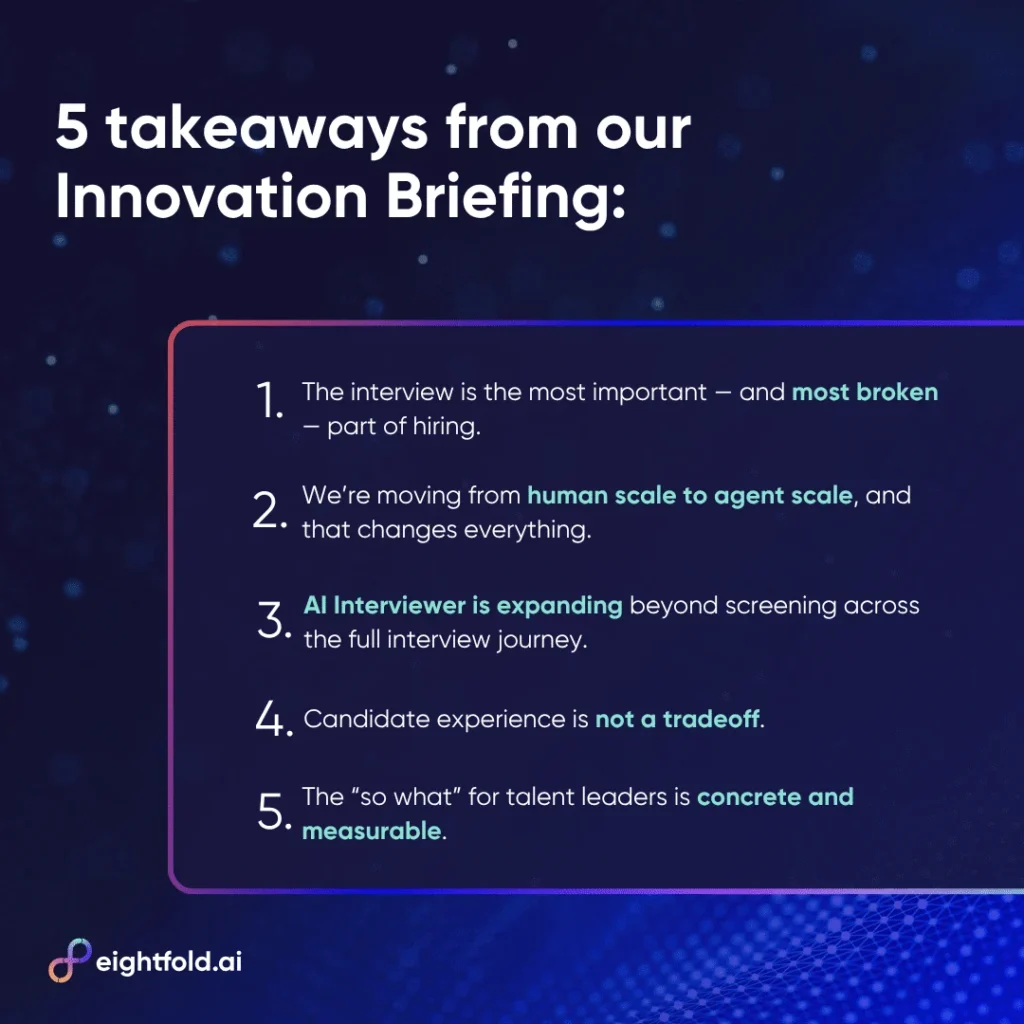
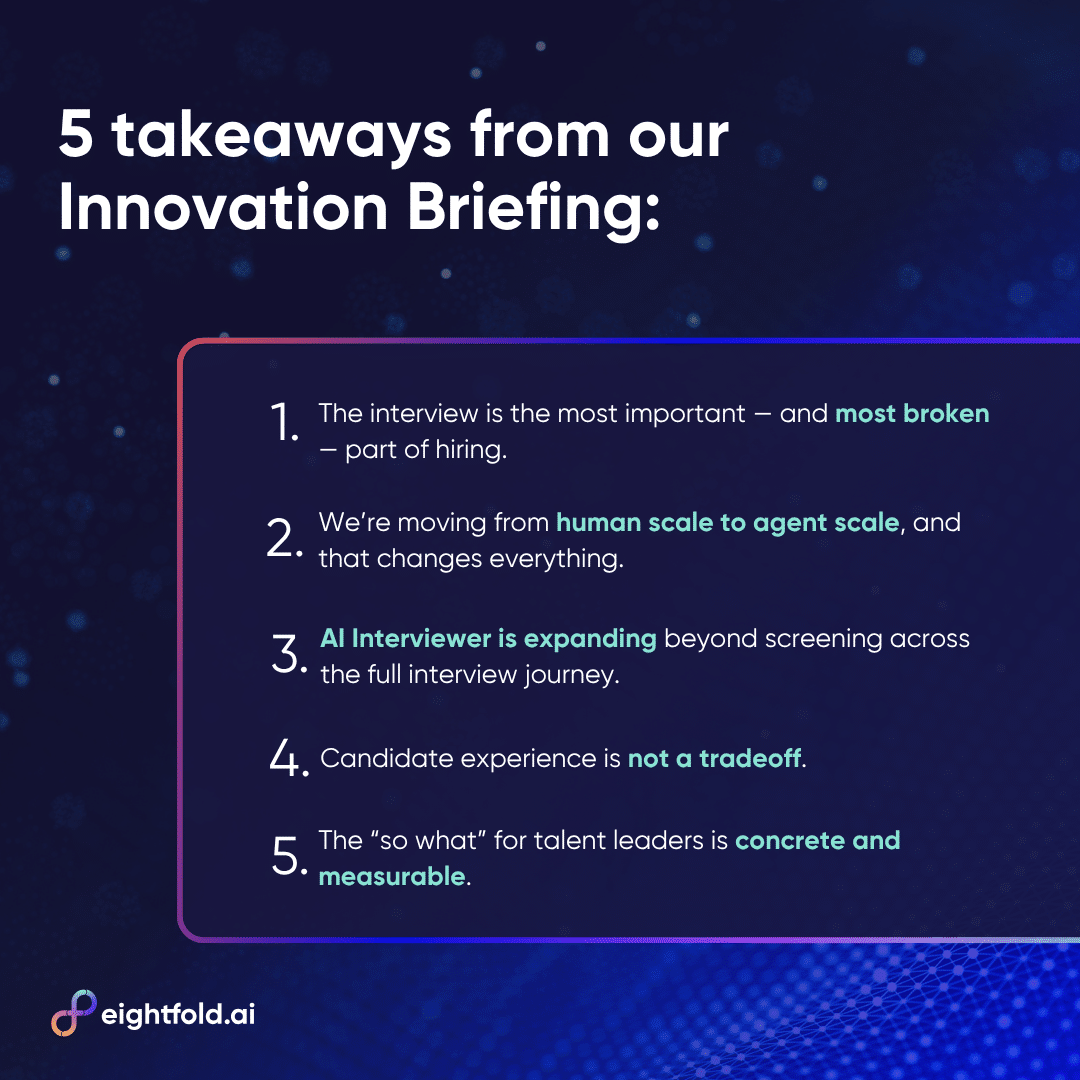
The persistent relevance of the interview, despite its inherent challenges, was highlighted as a key takeaway. While a resume or online profile offers a snapshot of a candidate’s qualifications, it cannot fully capture crucial elements such as verified skills, cultural alignment, intrinsic motivation, or untapped potential. These are the intangible yet vital aspects that organizations seek to discern through direct human interaction. Consequently, the interview remains an irreplaceable component of the hiring process.
However, this very indispensability has transformed the interview into the single most significant bottleneck in the entire talent acquisition pipeline. The constraints are deeply structural and human-centric. Hiring managers, already burdened with their primary responsibilities, often lack the dedicated time required for thorough candidate evaluations, leading to the deprioritization of either their core duties or the hiring process itself. Similarly, recruiters face physical limitations on the number of meaningful conversations they can conduct daily before fatigue sets in and cognitive biases begin to influence judgment. Furthermore, the complex coordination of interviews involving multiple stakeholders can drag on for weeks, a delay that frequently results in top candidates accepting offers from competitors before a decision is even made.
The fundamental issue, as articulated by Eightfold.ai, is that the ambition to identify and secure exceptional talent has outstripped humanity’s inherent capacity to conduct a high volume of in-depth, consistent, and timely evaluations. This disparity creates a critical chasm that hinders organizational growth and competitiveness.
From Human Scale to Agent Scale: Redefining Operational Capacity
A pivotal announcement from the briefing was the paradigm shift from operating at "human scale" to embracing "agent scale." This evolution, central to the "Infinite Workforce" concept, is not about replacing human employees but about forging a new, synergistic division of labor. Intelligent agents, unlike their human counterparts, are not susceptible to decision fatigue, do not experience "off days," and can provide an unprecedented level of consistency at scale.
By integrating the judgment and strategic oversight of human decision-makers with the tireless, scalable execution capabilities of intelligent agents, organizations can transcend the limitations of traditional hiring models. This fusion allows for not only accelerated hiring but also the removal of previous ceilings on what a company can achieve in terms of talent acquisition and workforce development. The implications for operational efficiency and competitive advantage are profound.
Expanding the AI Interviewer’s Reach Across the Entire Hiring Lifecycle
Initially, Eightfold.ai’s AI Interviewer was conceived to address the overwhelming volume of applications, enabling immediate engagement with every interested candidate rather than subjecting them to lengthy waiting periods for a recruiter’s availability. This core functionality remains foundational, but the application of AI in interviewing has evolved significantly.
During the Innovation Briefing, Eightfold.ai unveiled the expansion of its AI Interviewer capabilities to encompass the entire interview lifecycle, moving far beyond initial screening. This broadened scope includes:
- AI-Powered Pre-Screening: Continuously engaging with candidates the moment they express interest, providing immediate feedback and gathering essential information.
- AI-Conducted Interviews: Conducting comprehensive interviews for a wide range of roles, assessing skills, experience, and potential with consistent rigor.
- AI Interview Companion: Augmenting human-led interviews by capturing key insights and standardizing feedback in real-time. This allows hiring managers to dedicate their full attention to the conversational dynamics and candidate engagement, rather than being preoccupied with note-taking and documentation.
Collectively, these advancements empower organizations to deploy intelligent interviewing capabilities at every stage of the evaluation process, for virtually any position within the company. This comprehensive integration promises to streamline workflows, enhance fairness, and improve the quality of hires.
Candidate Experience: A Partnership, Not a Compromise
A prevalent concern regarding the integration of AI in hiring has been the potential for automation to detract from the candidate experience. However, data presented at the briefing indicated a starkly different reality. Eightfold.ai’s AI Interviewer consistently achieves Net Promoter Scores (NPS) exceeding 90%. Candidates frequently report feeling acknowledged and valued from the outset of their application, often more so than in traditional hiring processes where they might experience prolonged periods of silence after submitting their application.
When every qualified individual is systematically evaluated, rather than a select few who manage to capture immediate recruiter attention, the hiring process becomes inherently more equitable and, paradoxically, more human. The speed and fairness of this approach are not in opposition but are, in fact, two facets of the same positive outcome. This enhanced experience can significantly boost employer branding and attract a wider pool of diverse talent.
Tangible Outcomes for Talent Leaders: Measurable Impact
The "Infinite Workforce" initiative is not merely a forward-looking vision; it translates directly into concrete, measurable outcomes that are of paramount importance to Chief Human Resources Officers (CHROs), Chief People Officers (CPOs), and talent acquisition leaders. The briefing outlined several key benefits:
- Accelerated Time-to-Hire: Reducing the average time it takes to fill open positions by as much as 50%, allowing businesses to capitalize on opportunities more swiftly.
- Enhanced Hiring Quality: Improving the quality of hires by an average of 25%, leading to better long-term performance and retention.
- Increased Recruiter Productivity: Freeing up recruiters to focus on strategic initiatives and relationship building by automating routine tasks, boosting their efficiency by an estimated 30%.
- Improved Candidate Experience: Driving higher candidate satisfaction scores, which can positively impact employer brand and future applicant pools.
- Reduced Bias: Implementing AI-driven processes that help mitigate unconscious bias, leading to more equitable hiring decisions.
The "Infinite Workforce" is presented not as a future aspiration but as a present reality. Organizations that are actively deploying these new capabilities are already operating at a scale and achieving a level of talent acquisition quality that was previously unattainable. This strategic advantage is becoming increasingly critical in a competitive global market where talent is a key differentiator.
The implications of this technological evolution extend beyond mere efficiency. By re-engineering the hiring process, companies can foster more diverse and inclusive workforces, unlock innovation through better talent alignment, and build a more agile and resilient organizational structure capable of adapting to future challenges. The move towards an "Infinite Workforce" signifies a fundamental rethinking of how businesses engage with talent, promising a future where human potential is more effectively identified, nurtured, and deployed.
Organizations interested in understanding these advancements further are encouraged to view the full Innovation Briefing, now available on demand. This resource offers a deeper dive into the technologies and strategies that are poised to redefine the future of work.







