Published September 15, 2026, a growing body of evidence from various employee surveys indicates a concerning trend: the widespread adoption of artificial intelligence tools in professional settings may be inadvertently diminishing crucial human cognitive abilities, including critical thinking, judgment, and even overall intelligence. This development presents a complex paradox for organizations vigorously pursuing AI integration to boost efficiency and innovation, as the very tools intended to augment human capability could, in some contexts, be eroding fundamental skill sets essential for long-term organizational health and adaptability.
The Accelerating Pace of AI Adoption and Emerging Concerns
The corporate world has, over the past five years, embarked on an aggressive journey to integrate artificial intelligence into nearly every facet of operations, from customer service and data analysis to content generation and strategic planning. Fueled by promises of unprecedented productivity gains, cost reductions, and competitive advantages, companies have invested heavily in AI training programs, often mandating their workforce to adopt these new technologies. This push for "AI readiness" has seen employees across industries rapidly incorporate tools like generative AI platforms, intelligent automation, and predictive analytics into their daily routines.
However, as the novelty of AI adoption begins to wane and its presence becomes ubiquitous, a darker side is starting to emerge from employee feedback. Initial anecdotal reports of "workslop"—AI-generated content riddled with inaccuracies, logical inconsistencies, or superficiality—are now being substantiated by more systemic survey data. These findings suggest that the impact extends beyond mere output quality, delving into the cognitive processes of the users themselves. Employees are reporting a tangible decline in their ability to perform tasks independently, a reduced capacity for complex problem-solving, and a troubling over-reliance on AI for even basic cognitive functions.
A Deep Dive into Cognitive Atrophy: Critical Thinking and Judgment
The core of the concern lies in the reported degradation of critical thinking skills. Critical thinking, defined as the objective analysis and evaluation of information to form a judgment, is a cornerstone of professional competence in virtually every field. It involves dissecting problems, evaluating evidence, considering multiple perspectives, and constructing well-reasoned arguments. When employees outsource these cognitive tasks to AI, even partially, the mental muscles required for such analysis may begin to atrophy.
Several recent reports, including one from a prominent HR technology firm that surveyed over 2,000 employees across diverse sectors, found that nearly 65% of respondents who regularly use AI tools for task completion reported a noticeable decline in their ability to think critically about complex issues without AI assistance. A similar proportion admitted to feeling less confident in their own judgment after becoming accustomed to AI-generated recommendations or solutions. For instance, an employee tasked with market analysis might rely on an AI to summarize trends and suggest strategies. While this accelerates the process, it bypasses the deep engagement with raw data, the nuanced interpretation, and the challenging synthesis that foster genuine critical insight. The AI provides the answer, but the human often loses the practice of formulating the question and independently verifying the answer’s validity.
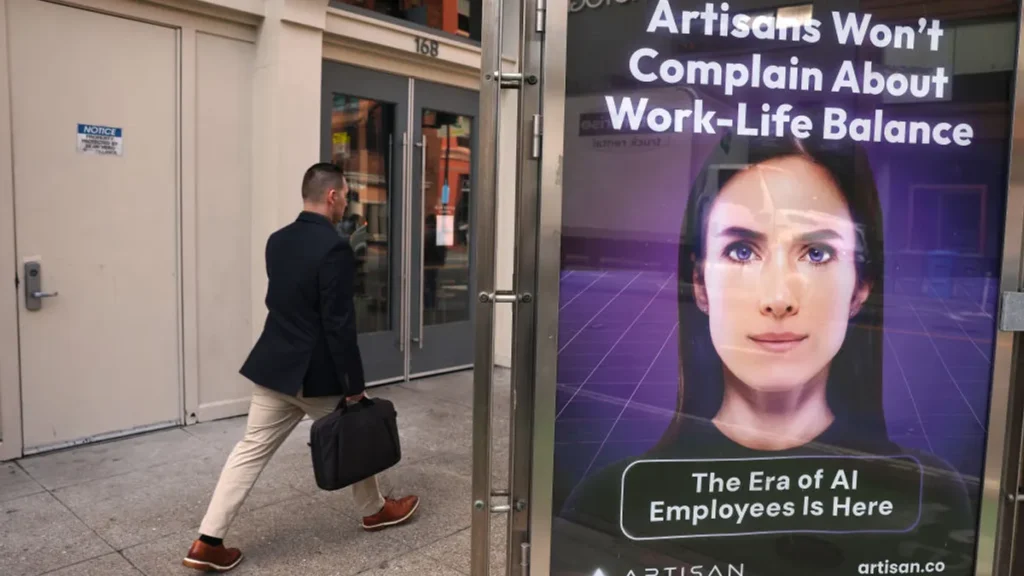
This erosion of judgment is particularly alarming. In high-stakes environments, human judgment—informed by experience, intuition, and ethical considerations—remains irreplaceable. If professionals become accustomed to accepting AI outputs at face value, without applying their own informed discretion, the risk of significant errors, ethical breaches, or strategic missteps increases dramatically. The AI, after all, operates on algorithms and data, lacking the contextual understanding, emotional intelligence, or moral compass that human decision-makers bring to complex situations.
The "Learning Debt" Phenomenon and Its Long-Term Consequences
A groundbreaking report from TalentLMS has coined the term "learning debt" to describe a crucial aspect of this emerging challenge. This phenomenon occurs when workers leverage AI tools not to enhance their existing skills or learn new ones, but to mask or circumvent genuine skill gaps. Instead of mastering a complex software program or developing advanced analytical techniques, an employee might use an AI to generate the required output, effectively bypassing the learning process.
The TalentLMS report, based on extensive qualitative and quantitative research, highlighted that approximately 70% of employees who frequently used AI for tasks they previously struggled with admitted they would be unable to explain the methodology or underlying principles of the AI-generated solution if asked. This indicates a superficial engagement with the task, where the ‘how’ and ‘why’ are obscured by the AI’s efficiency. Such a reliance creates a profound "debt" in their knowledge and capabilities. Over time, this learning debt can severely weaken individual performance and overall organizational productivity. When AI tools are unavailable, or when unexpected problems arise that fall outside the AI’s programmed parameters, these workers may find themselves ill-equipped to adapt or innovate.
The implications for career progression and workforce resilience are significant. In an ever-evolving job market, continuous learning and skill development are paramount. If AI fosters a dependency that stunts genuine learning, individuals may find their long-term employability compromised, and organizations may face a workforce with increasingly brittle and specialized, rather than adaptable and versatile, skill sets.
Beyond "Workslop": The Erosion of Trust and Accountability
The initial concerns about "workslop"—AI-generated content rife with errors, biases, or superficiality—have not abated. Indeed, they form a foundational layer to the deeper cognitive issues. Studies by various consulting firms indicate that up to 40% of AI-generated content still requires substantial human editing or fact-checking to meet professional standards. This constant need for oversight, paradoxically, can further burden employees and sow seeds of distrust in AI tools, even as they are compelled to use them.
The erosion of trust extends beyond the tools themselves to the work produced by colleagues. If managers cannot distinguish between genuinely human-produced, well-reasoned work and AI-assisted or AI-generated output that masks a learning debt, accountability becomes blurred. This ambiguity can stifle innovation, as employees may be less motivated to invest in deep learning if AI can produce superficially acceptable results with less effort. Moreover, it raises serious questions about intellectual property and the authentic contributions of individuals within a team.

Expert Perspectives and Industry Responses
HR leaders and organizational development specialists are grappling with these complex challenges. Dr. Elena Petrova, a leading industrial psychologist and consultant, commented, "The initial enthusiasm for AI was largely focused on its capacity for augmentation. What we’re now seeing is a potential for cognitive displacement. Organizations must pivot from simply deploying AI to strategically integrating it in a way that truly enhances human skills, rather than replacing them or allowing them to wither."
Many technology firms, while acknowledging the potential for misuse or over-reliance, emphasize the need for responsible AI deployment and robust training protocols. "Our aim is to build tools that empower, not diminish, human capabilities," stated Marcus Thorne, Head of AI Ethics at a major tech conglomerate. "The onus is on both developers to design user-centric AI and on organizations to educate their workforce on critical engagement with these tools, fostering a partnership rather than a dependency."
Employee advocacy groups are also voicing concerns, pushing for clearer guidelines on AI use and emphasizing the importance of preserving human-centric roles. "Workers are not just cogs in a machine; their unique cognitive abilities are their most valuable asset," said Sarah Chen, spokesperson for a global labor union. "Companies must invest in continuous upskilling that reinforces, not undermines, critical human skills in the age of AI."
Chronology of AI Integration and Emerging Concerns
The trajectory of AI integration and the subsequent identification of these challenges can be traced through several key phases:
- 2018-2021: Early Enthusiasm and Pilot Programs: Initial forays into AI adoption, primarily in specialized areas like data analytics and automation. High expectations for efficiency gains.
- 2022-2024: Rapid Expansion and Generative AI Boom: Widespread deployment of AI across various departments, particularly with the advent of accessible generative AI tools. Companies prioritize "AI readiness" training, focusing on tool proficiency.
- 2024-2025: Initial Reports of "Workslop" and Quality Issues: Anecdotal evidence and early internal surveys begin to highlight inaccuracies and superficiality in AI-generated content, raising questions about quality control.
- 2025-Present: Systemic Concerns Over Cognitive Impact: Broader, more comprehensive surveys and academic studies begin to surface definitive data on the degradation of critical thinking, judgment, and the emergence of "learning debt" among regular AI users. Discussions shift from mere productivity to cognitive health and long-term skill sustainability.
- Late 2026: Industry-Wide Reassessment: Growing recognition among HR professionals, educators, and policymakers that AI training must evolve beyond mere usage instruction to include strategies for cognitive preservation and enhancement.
Preserving Human Skills in an AI Era: Strategies for the Future of Work
The unfolding scenario necessitates a strategic shift in how organizations approach AI integration and workforce development. Rather than viewing AI as a wholesale replacement for human tasks, the focus must pivot towards a synergistic model where AI augments human capabilities without diminishing them.
Key "human skills" that are deemed essential for the future of work and are less susceptible to AI replacement include creativity, emotional intelligence, complex problem-solving, ethical reasoning, cross-cultural communication, and leadership. These are precisely the skills that an over-reliance on AI threatens to undermine.

To counteract the trend of cognitive atrophy, organizations must:
- Redefine AI Training: Move beyond simply teaching employees how to use AI tools to teaching them how to think critically about AI outputs. This includes verifying information, identifying biases, understanding AI limitations, and challenging AI suggestions. Training should emphasize responsible AI use, focusing on augmentation rather than delegation of core cognitive tasks.
- Promote Deliberate Practice: Encourage employees to periodically engage in tasks without AI assistance, especially those that foster critical thinking and problem-solving. This could involve specific projects or exercises designed to maintain cognitive sharpness.
- Integrate AI into Learning, Not Just Doing: Use AI as a tool for accelerated learning and skill development, rather than a crutch to avoid learning. For example, AI could help identify learning gaps, curate personalized learning paths, or generate practice scenarios that require human problem-solving.
- Foster a Culture of Critical Inquiry: Create an environment where employees are encouraged to question, analyze, and debate, rather than passively accept information, whether from human or AI sources.
- Emphasize Ethical AI Use: Develop clear ethical guidelines for AI use within the organization, stressing the importance of human oversight, accountability, and the avoidance of AI-driven bias.
- Invest in "Human-Centric" Skill Development: Prioritize training in creativity, emotional intelligence, complex communication, and strategic thinking. These are the differentiating skills that will define human value in an AI-powered world.
Broader Impact and Implications for Education
The implications extend beyond corporate training to the broader educational system. If AI dependency begins in academic settings, preparing future generations for a cognitively demanding workforce becomes an even greater challenge. Educators, from K-12 to higher education, must integrate AI literacy that includes critical evaluation and ethical considerations, ensuring students develop robust cognitive skills alongside technological proficiency.
For the global economy, a decline in collective critical thinking and judgment could have far-reaching consequences, potentially stifling innovation, increasing susceptibility to misinformation, and hindering adaptive responses to complex societal challenges. The delicate balance between leveraging AI’s immense potential and safeguarding human cognitive capabilities is perhaps one of the most significant challenges of the current era.
Conclusion: A Call for Conscious Integration
The data presented by various surveys paints a clear picture: the unbridled adoption of AI without a conscious strategy to preserve and enhance human cognitive skills poses a significant risk. While AI offers unparalleled opportunities for efficiency and advancement, its deployment must be guided by an understanding of its potential to create "learning debt" and diminish critical human faculties. Organizations, educators, and policymakers must collaborate to develop frameworks that ensure AI serves as a true augmentative partner, empowering human intelligence rather than inadvertently eroding it. The future of work hinges on a conscious, deliberate approach to integrating AI, one that champions the irreplaceable value of human critical thinking, nuanced judgment, and inherent intelligence.