
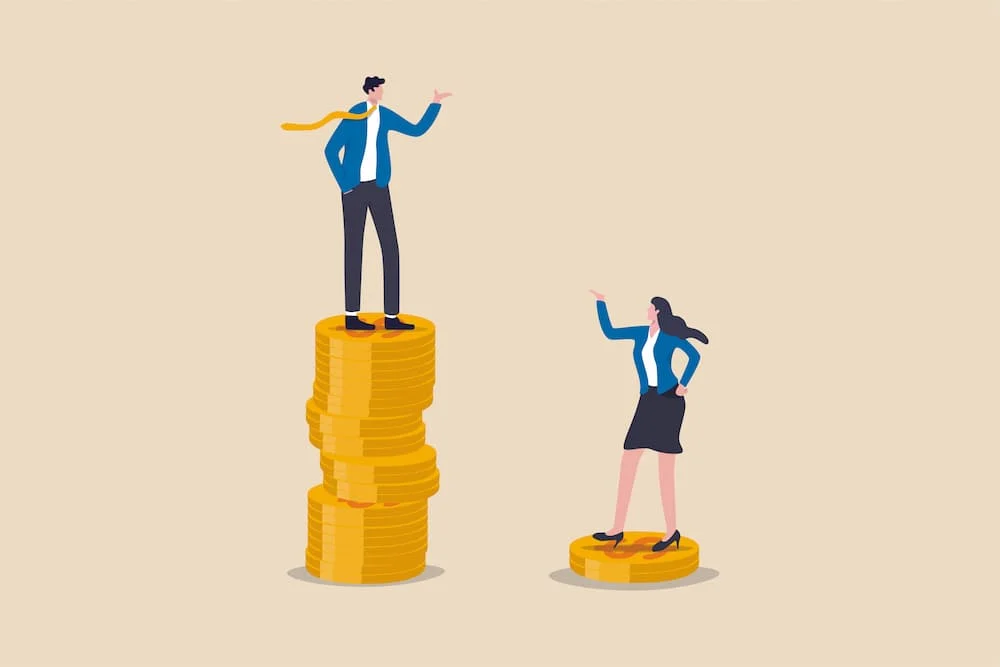
A recent analysis reveals a complex and often contradictory landscape for women in the American workforce, marking significant progress in individual earnings while simultaneously highlighting a widening aggregate earnings disparity. According to a comprehensive report by MyPerfectResume.com, which draws upon data from the Bureau of Labor Statistics (BLS) Current Population Survey and Federal Reserve Economic Data (FRED) for inflation adjustments, women’s weekly earnings are projected to have more than doubled from $493 in 2000 to approximately $1,089 by 2025. This substantial increase underscores a quarter-century of consistent economic advancement for female employees. However, this positive trend is overshadowed by the startling finding that the estimated aggregate annual earnings gap between men and women is expected to exceed a staggering $671 billion in 2025, representing a formidable challenge to true pay equity.
This dual narrative of individual gains amidst collective disparity demands a closer examination of the underlying dynamics shaping women’s economic standing. While women have demonstrably increased their earning power and workforce participation, the structural and systemic factors contributing to the gender pay gap continue to exert a profound financial impact, affecting millions of working women and the broader economy.
A Quarter-Century of Wage Growth: The Numbers Revealed
The journey from 2000 to 2025 illustrates a period of undeniable progress for women in terms of their direct weekly income. The leap from $493 to an estimated $1,089 represents a nominal increase of over 120%, or roughly an 80% increase when adjusted for inflation. This growth reflects increased educational attainment among women, greater entry into higher-paying professions traditionally dominated by men, and a general upward trend in wages across various sectors. The MyPerfectResume.com report also highlights progress in the long-standing "cents on the dollar" metric, a common measure of the unadjusted gender pay gap. In 2000, women earned approximately 77 cents for every dollar earned by men. By 2025, this figure is estimated to improve to roughly 82 cents, indicating a gradual closing of the percentage gap. This incremental improvement, while seemingly modest, signifies a positive shift in relative earnings, suggesting that the average woman is capturing a larger share of the overall economic pie compared to her male counterparts than she was at the turn of the millennium.
Complementing these individual wage gains, the report points to a substantial increase in women’s participation in the full-time workforce. Since 2000, nearly 10 million more women have joined the ranks of full-time employees. This surge in participation is a critical factor, demonstrating women’s growing commitment to continuous career engagement and their increasing presence in the formal economy. Jasmine Escalera, a career expert at MyPerfectResume, emphasizes the importance of recognizing this progress. "Our analysis reflects how much progress women have made in both earnings and workforce participation over the last 25 years," Escalera states, acknowledging these advancements as significant milestones worthy of commendation.
The Stubborn and Growing Dollar-Value Gap
Despite the positive trends in individual weekly earnings and the narrowing "cents on the dollar" ratio, the MyPerfectResume.com analysis uncovers a more complex and concerning reality regarding the absolute dollar-value gap. Escalera explains that this "dollar-value gap" presents a complicated situation, as the estimated annual earnings gap between individual men and women grew from $7,696 in 2000 to $12,324 in 2025 – an increase of over 60%. This phenomenon, where the percentage gap may shrink while the absolute dollar gap grows, can be attributed to several factors, including overall economic growth and rising wages. As total earnings increase across the board, even a slightly smaller percentage difference can translate into a significantly larger absolute dollar amount. For instance, if men’s average annual earnings increase from $50,000 to $80,000 and women’s from $38,500 (77% of $50k) to $65,600 (82% of $80k), the percentage gap shrinks from 23% to 18%, but the absolute gap grows from $11,500 to $14,400.
The implications of this growing individual gap are amplified by the increased number of women in the workforce, leading to the staggering aggregate figure of over $671 billion annually. This colossal sum represents lost income for women collectively, money that could otherwise fuel economic growth, bolster household financial security, and contribute to retirement savings. "Our analysis, however, shows the remaining earnings gap continues to have a meaningful financial impact on millions of working women, because that gap now affects a much larger share of the full-time workforce than it did a generation ago," Escalera underscores. This means that while more women are working and earning more, a larger population is now exposed to the cumulative disadvantage of the pay gap, making the issue more pervasive than ever before. To put the $671 billion figure into perspective, it is roughly equivalent to the annual GDP of several small to medium-sized countries, or enough to fund numerous major national infrastructure projects. This underscores the profound economic drag imposed by persistent gender pay inequality.
Underlying Factors: Deconstructing the Gender Pay Gap
The gender pay gap is not a monolithic issue but rather a complex interplay of various socioeconomic factors, systemic biases, and individual choices. Understanding these contributing elements is crucial for developing effective interventions.
- Occupational and Industry Segregation: A significant portion of the unadjusted pay gap can be attributed to occupational segregation, where women are overrepresented in lower-paying industries and jobs, such as education, healthcare support, and administrative roles, while men dominate higher-paying fields like engineering, technology, and finance. Even within similar fields, women may gravitate towards less lucrative specializations. For example, female doctors may be more likely to specialize in pediatrics, which typically pays less than surgery or cardiology, where men are more prevalent.
- The Impact of Caregiving and Career Interruptions: Women disproportionately shoulder caregiving responsibilities, whether for children or elderly family members. These responsibilities often lead to career interruptions, reduced hours, or foregoing promotions that require extensive travel or long hours. The "motherhood penalty" refers to the documented pay gap between mothers and non-mothers, even when controlling for experience and education. These career breaks or shifts can result in lost earning potential, missed opportunities for advancement, and a lag in skill development compared to peers who maintain continuous full-time employment.
- Implicit Bias and Systemic Barriers: Unconscious biases can influence hiring, promotion, and compensation decisions. Studies have shown that identical resumes may be evaluated differently based on perceived gender, and women often face more scrutiny or are judged more harshly in performance reviews. Systemic barriers, such as a lack of women in leadership positions to champion female talent, or opaque promotion criteria, can further entrench these disparities.
- Lack of Transparency and Advancement: Many organizations operate with limited pay transparency, making it difficult for employees to know if they are being compensated fairly relative to their peers. This opacity can allow pay disparities to persist undetected and unaddressed. Furthermore, women often face a "glass ceiling" that limits their ascent to senior leadership roles, which typically command the highest salaries. Even when women enter male-dominated fields, they may find fewer opportunities for "stretch assignments," mentorship, and sponsorship—critical elements for career acceleration and increased earning potential.
The Business Imperative: Strategies for Employers to Foster Pay Equity

Addressing the gender pay gap is not merely a matter of social justice; it is a strategic business imperative. Organizations that achieve pay equity benefit from enhanced talent attraction and retention, improved employee morale and productivity, stronger employer branding, and reduced legal risks. Jasmine Escalera offers several actionable recommendations for employers to proactively "push the needle" towards greater gender-based pay equity.
-
Beyond Initial Compensation: Cultivating Long-Term Earning Potential: Escalera emphasizes that while competitive starting pay is essential, long-term earnings are shaped by a broader spectrum of career development opportunities. "That means getting women into the workforce is only part of the equation," she states. "Women also need equal access to ‘stretch assignments,’ advancement opportunities, leadership tracks and higher-paying roles that shape long-term career success." Employers must move beyond simply offering equal starting salaries to ensure equitable access to career-shaping experiences. This involves identifying high-potential female employees and intentionally placing them in roles that offer significant growth, providing mentorship from senior leaders, and sponsoring their participation in leadership development programs. These opportunities are crucial for building the skills, networks, and experience necessary for upward mobility and sustained earning power throughout a career lifecycle.
-
Embracing Transparency in Career Paths and Compensation: Employer transparency is a powerful tool for fostering trust and equity. Escalera notes that employees are eager to understand the pathways for growth within an organization. "Being clear about career paths, promotion opportunities and compensation helps women see what’s possible," she explains. This involves clearly articulating salary ranges for all positions, defining objective and measurable criteria for promotions, and communicating how compensation decisions are made. Implementing pay transparency initiatives, such as publicly posting salary bands for job openings or conducting regular internal pay equity audits and sharing aggregate findings, can significantly reduce uncertainty and build confidence among employees. When employees understand the "rules of the game," they can make more informed decisions about their career trajectories and advocate for themselves more effectively. Several states and cities across the U.S. have already enacted pay transparency laws, requiring employers to disclose salary ranges, signaling a growing trend towards greater openness in compensation practices.
-
Prioritizing Structured Career Development Conversations: Regular, constructive career development conversations are indispensable for all employees, and particularly for women who may face unique barriers to advancement. Escalera advocates for creating dedicated spaces where employees can discuss their professional goals, identify desired skill sets, and outline the experiences needed to reach the next stage of their careers. "These conversations also give women employees fair access to raises, promotions, mentorship and the types of assignments that lead to advancement," she asserts. Such conversations should be formalized, occurring at regular intervals, and involve clear action plans. Managers should be trained to identify and mitigate biases in these discussions, ensuring that opportunities for growth, mentorship, and high-visibility projects are distributed equitably. These discussions can also serve as an early warning system, allowing managers to identify potential roadblocks or inconsistent career progression for female employees before they become significant issues.
-
Ensuring Fairness and Consistency in Advancement: Pay gaps often develop subtly over time, rather than through overt, single discriminatory acts. Therefore, employers must meticulously scrutinize how raises, promotions, and advancement opportunities are managed. Escalera stresses the importance of clarity and consistency, especially if career progression appears unclear or inconsistent for female employees. Implementing standardized, objective criteria for performance reviews and promotions, coupled with bias training for managers involved in these processes, can help ensure fairness. Regular pay equity reviews, which analyze compensation data by gender (and other protected characteristics), are vital for identifying and rectifying existing disparities. "When women employees can see opportunities to develop and advance, they’re more likely to stay engaged and continue building their careers with the organization," Escalera concludes. This also applies to all employees, who are more likely to remain loyal to an organization where advancement is perceived as fair, expectations are transparent, and rewards are directly tied to measurable contributions.
Broader Economic and Societal Repercussions
The persistent gender pay gap carries significant economic and societal repercussions that extend far beyond individual paychecks. Economically, the collective loss of $671 billion in annual earnings for women translates into reduced purchasing power, impacting consumer spending and overall economic growth. It also leads to lower lifetime earnings for women, which directly affects their ability to save for retirement, accumulate wealth, and achieve financial security, particularly given women’s longer life expectancies. This disparity can exacerbate poverty rates, especially for single-mother households, and contribute to a wider wealth gap between genders.
Socially, the pay gap reinforces gender stereotypes about the value of women’s work and their roles in society. It can erode morale, foster resentment, and undermine the psychological well-being and career confidence of female employees. For businesses, the implications are equally profound. A lack of pay equity can severely damage an organization’s reputation, making it difficult to attract and retain top female talent in a competitive market. High employee turnover due to perceived unfairness incurs significant recruitment and training costs. Moreover, diverse and inclusive workplaces, which inherently promote pay equity, are consistently linked to greater innovation, better decision-making, and superior financial performance.
The Path Forward: A Call for Sustained Action
The MyPerfectResume.com report serves as a critical reminder that while progress has been made in women’s individual earning power and workforce participation over the last 25 years, the fight for true pay equity is far from over. The widening aggregate dollar gap, despite a narrowing percentage gap, highlights the need for a more nuanced and sustained approach.
"Over time, pay equity means more than a current paycheck," Escalera emphasizes. "It also affects financial security, career confidence, retention and an employee’s ability to build their future within an organization." Achieving genuine pay equity requires a concerted and multi-faceted effort from employers, policymakers, and individuals. Employers must commit to rigorous pay equity audits, implement transparent compensation structures, and actively foster environments that provide equitable access to career advancement opportunities for all. Policymakers can continue to explore and enact legislation that promotes pay transparency, strengthens equal pay laws, and supports accessible, affordable childcare. Ultimately, dismantling the gender pay gap is not just about correcting an imbalance; it is about unlocking the full economic potential of half the population, fostering more equitable societies, and building stronger, more resilient economies for everyone.








