The human resources technology stack, often lauded for its comprehensiveness, can mask a critical, yet frequently overlooked, deficiency: the fragmentation of people data. While individual tools for engagement surveys, performance reviews, recognition programs, and development plans may function adequately in isolation, their collective impact is significantly diminished when they fail to communicate. This siloed approach creates a "disconnected data problem" that extends far beyond IT concerns, directly impacting an organization’s ability to make informed decisions, proactively address talent risks, and ultimately, drive business success. The cost of this fragmentation is substantial, often amounting to millions of dollars annually in lost productivity, avoidable turnover, and unrealized potential.
Understanding the Disconnected People Data Phenomenon
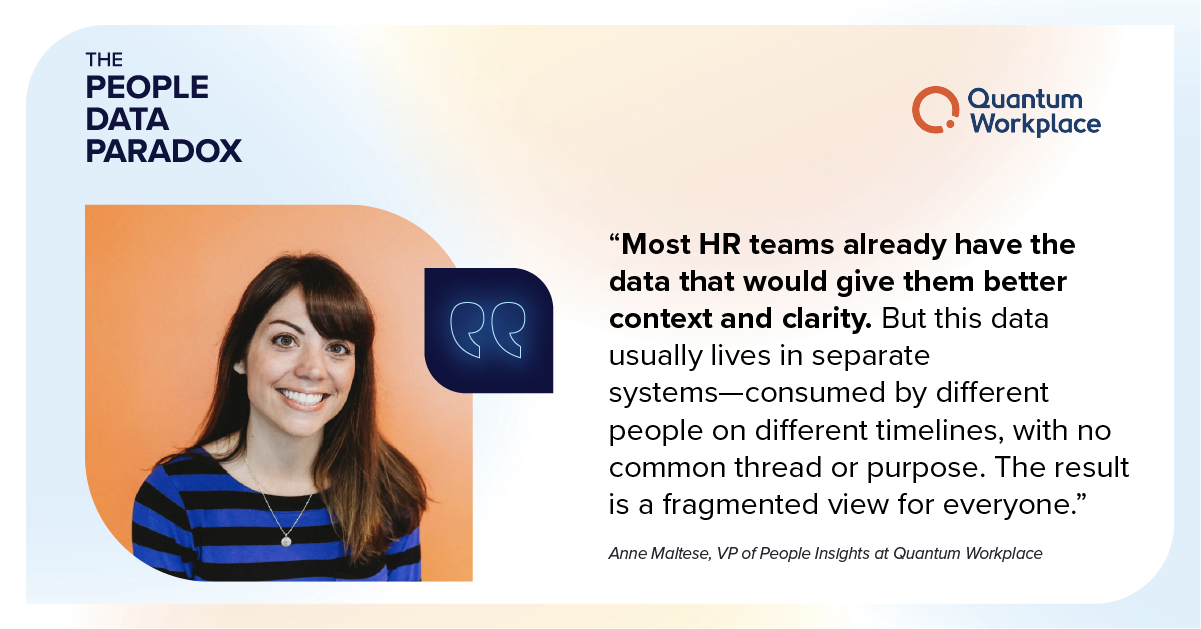
At its core, disconnected people data refers to the scenario where vital information about employees—from their engagement levels and performance metrics to their developmental aspirations and received recognition—resides in separate, non-integrated systems. Each system holds a piece of the employee puzzle, but no single platform offers a holistic view. Consequently, HR professionals and managers are forced to manually aggregate and correlate disparate data points, a time-consuming and often incomplete process. This leads to scattered insights rather than a cohesive narrative, hindering the ability to identify crucial trends and patterns that could inform strategic interventions.
Research from Quantum Workplace highlights this pervasive issue, revealing that while HR leaders commonly utilize between two and four distinct HR solutions from various vendors, a mere 39% report that these systems are effectively integrated. This gap in connectivity means that valuable data, even when meticulously collected, fails to translate into actionable intelligence. The signals of employee sentiment, performance shifts, and potential flight risks are present, but they remain isolated, unable to inform crucial managerial conversations or strategic HR initiatives.
The Escalating Costs of Fragmented Data
The financial implications of disconnected people data are staggering. Organizations can incur significant losses due to several key factors:
The Cost of Underequipped Managers
Managers serve as the frontline drivers of employee engagement and performance. Their effectiveness directly influences team productivity and overall organizational health. However, many managers are hampered not by a lack of inherent talent, but by a lack of the necessary tools and insights to excel. Statistics indicate that the average manager shoulders approximately 51% more responsibility than they can realistically manage, and a concerning 39% have never received formal leadership training.

This deficit in managerial support has a tangible business impact. Studies have shown that managers in the top decile of leadership effectiveness generate twice the net revenue of their counterparts. The disparity between high-performing and underperforming managers represents a significant performance gap that often goes unaddressed due to a lack of integrated data. When managers lack visibility into their team’s engagement levels, performance trends, or developmental needs, their ability to provide targeted support and foster growth is severely compromised. This can lead to widespread disengagement, reduced productivity, and a decline in overall team morale.
The Cost of Overlooking High-Potential Talent
High-performing employees are not merely valuable; they are disproportionately so, contributing an estimated 400% to 800% more output than an average employee. Despite this significant impact, a significant portion of organizations—57%—lack a formal process for identifying these critical individuals. Without connected data, the identification of high-potential talent often relies on subjective factors like visibility and advocacy, rather than objective performance and potential indicators.
This means that employees who are driving the most value may not be recognized or nurtured, leading to missed opportunities for career advancement and increased responsibility. The lack of a systematic, data-driven approach to talent identification can result in a scenario where crucial contributors feel undervalued or overlooked, potentially leading to disengagement or departure. Each quarter that high performers go unrecognized represents a loss of outsized contributions that the organization could have leveraged more effectively.
The Cost of Missing Retention Risks
The decision for a high-performing employee to resign is rarely sudden. It is typically preceded by months of subtle warning signs, such as declining survey sentiment, a cessation of development conversations, or a reduction in recognition. Individually, these signals may not be significant enough to trigger alarm bells. However, when viewed in conjunction, they paint a clear picture of escalating dissatisfaction and potential departure.
The financial burden of employee turnover is substantial, with the cost of replacing an employee often ranging from 50% to 200% of their annual salary. Research indicates that a significant proportion of departing employees believe their exit could have been prevented. This underscores the critical need for proactive retention strategies, which are severely hampered when the warning signs are scattered across disconnected systems. The inability to synthesize these disparate data points prevents HR and management from intervening early, leading to avoidable attrition and associated replacement costs.
The Cumulative Financial Impact
To illustrate the tangible financial consequences, consider a mid-sized company with 2,500 employees and 250 managers. If 50 of these managers are inadequately equipped, and this leads to disengagement among 10% of their direct reports, the annual loss in productivity could approach $1.7 million. When this is compounded by the potential departure of 10 high performers whose contributions went unrecognized—and whose replacement costs twice their annual salary—an additional $2 million in direct replacement costs is incurred.
This scenario, totaling nearly $4 million, highlights how disconnected data can silently erode an organization’s financial health. This figure does not even account for the indirect costs associated with misdirected effort, slow skill development, and unrealized potential that stem from a lack of integrated insights.
The Transformative Power of Connected Data
Historically, the process of connecting disparate data sources was labor-intensive and resource-prohibitive for many HR departments. However, advancements in artificial intelligence and data analytics are revolutionizing this landscape. AI can now continuously analyze data across engagement, performance, development, and recognition platforms, identifying subtle patterns and correlations that were previously invisible. This shift is not about accumulating more data, but about finally unlocking the intelligence that existing data has been trying to convey.
When these signals are connected, organizations can begin to address the most pressing questions that keep HR and executive leaders awake at night:
- Identifying Flight Risks Early: By correlating dips in engagement survey scores with reduced participation in development programs or a lack of recent recognition, organizations can proactively identify employees at risk of leaving. This allows for timely interventions, such as personalized coaching, career path discussions, or adjusted recognition strategies, to mitigate potential attrition.
- Understanding Engagement Drivers: Connected data can reveal the specific factors that are most strongly influencing employee engagement within different teams or departments. For instance, a dip in engagement might be directly linked to a lack of perceived growth opportunities, insufficient feedback, or a decline in manager support. This granular understanding enables targeted interventions to address the root causes of disengagement.
- Optimizing Manager Effectiveness: By integrating performance data with engagement feedback and recognition activities, organizations can gain a comprehensive view of manager effectiveness. This allows for the identification of managers who are excelling and those who may require additional training or support. It also provides data-driven insights to inform coaching conversations and development plans for managers.
- Pinpointing High-Potential Employees: Connected data can move beyond subjective nominations to identify high-potential employees based on a combination of performance metrics, demonstrated competencies, and engagement levels. This ensures that talent identification processes are objective and inclusive, capturing the organization’s most valuable contributors.
- Measuring the Impact of HR Initiatives: By tracking how changes in engagement, performance, or recognition correlate with key business outcomes, HR can demonstrate the ROI of its initiatives. Connected data provides the empirical evidence needed to justify investments in talent management programs and to refine strategies for maximum impact.
Bridging the Gap: From Fragmented Data to Connected Talent Insights
The true value of data lies not just in its collection, but in its ability to inform action. Quantum Workplace offers a solution designed to transform fragmented data into cohesive talent insights. Their platform integrates engagement, performance, development, and recognition data into a unified view, enabling leaders to move beyond piecing together disparate snapshots and gain a clear understanding of what is truly happening within their teams.
AI-powered insights surface the hidden patterns within existing systems, providing clear, prioritized next steps tailored to the organization’s specific priorities and benchmarks. These insights are delivered directly to leaders within their workflow, empowering them to make data-driven decisions with confidence.
By connecting people data, HR teams can:
- Proactively identify and mitigate retention risks.
- Gain a deeper understanding of employee engagement drivers.
- Equip managers with the insights needed to lead effectively.
- Systematically identify and develop high-potential talent.
- Measure the impact of HR strategies and demonstrate ROI.
- Foster a culture of continuous improvement and data-driven decision-making.
In an era where talent is a paramount competitive differentiator, the ability to leverage people data effectively is no longer a luxury but a necessity. Organizations that embrace connected talent insights will be better positioned to attract, engage, and retain their most valuable assets, ultimately driving sustainable growth and success. The silent drain of disconnected data can be transformed into a powerful engine for organizational development and prosperity.