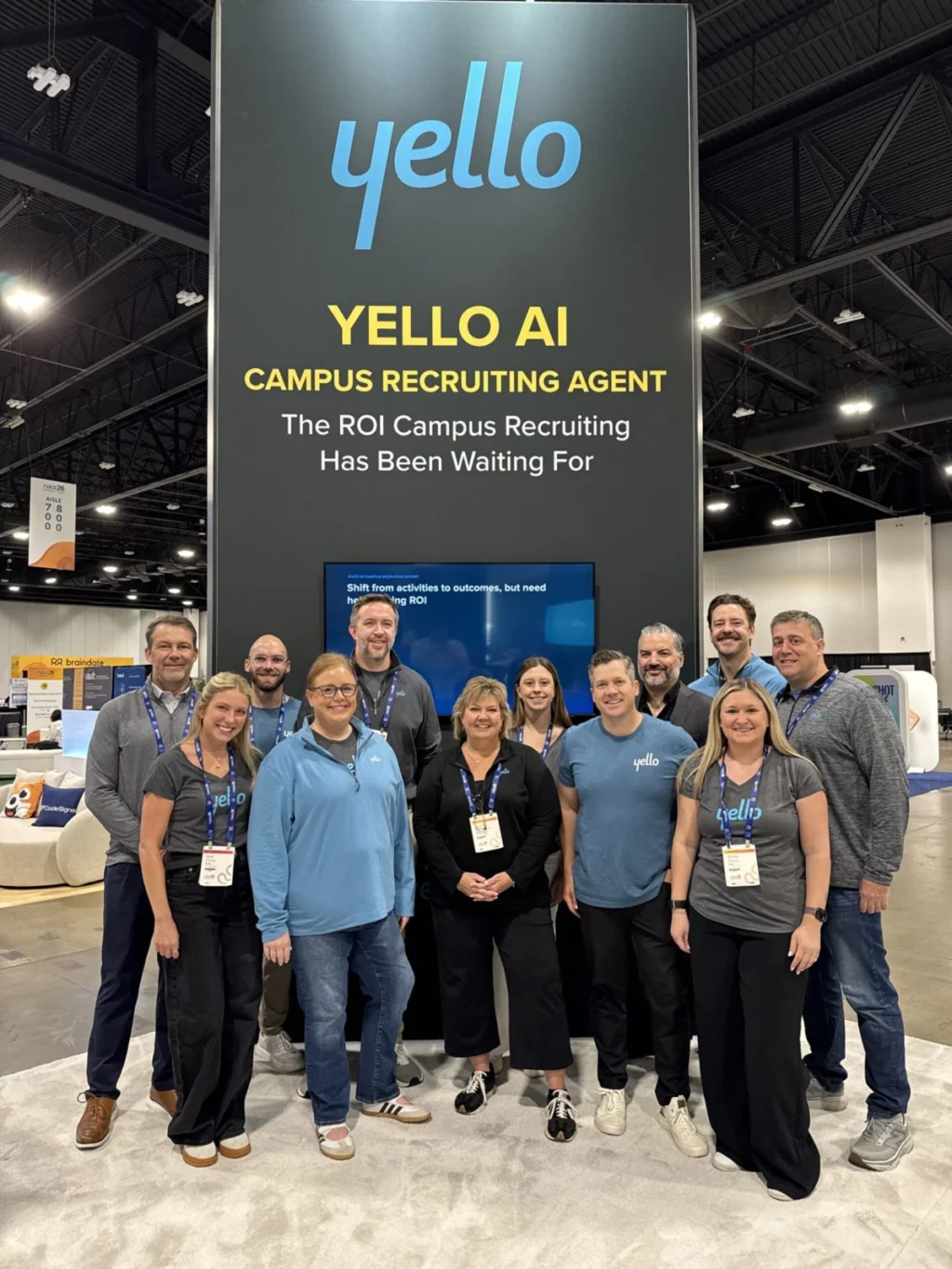
Denver, CO – The National Association of Colleges and Employers (NACE) 2024 conference, NACE26, recently concluded in Denver, serving as a pivotal gathering for the early talent community. Amidst robust discussions on the future of recruitment, Yello, a leading talent acquisition software provider, made a significant impact as a platinum sponsor, not only by hosting engaging sessions and networking events but also by debuting its groundbreaking AI Campus Recruiting Agent and announcing a strategic partnership with Symplicity. These developments underscore a crucial juncture in early talent acquisition, characterized by a rapid embrace of artificial intelligence, a re-evaluation of event strategies, and persistent challenges with offer reneges.
The NACE annual conference stands as a cornerstone event for professionals dedicated to college recruiting and career services. For decades, NACE has fostered collaboration between employers and educators, providing a vital platform for sharing best practices, discussing industry trends, and forging connections that shape the pipeline of future talent. NACE26, held in a dynamic period of technological acceleration and shifting workforce expectations, brought together hundreds of thought leaders, practitioners, and solution providers, all focused on optimizing the journey from campus to career. Yello’s prominent presence at the conference, marked by its platinum sponsorship and numerous engagements, signaled its commitment to addressing the evolving needs of this specialized recruitment sector. The company’s booth served as a hub for discussions, while its sponsored sessions delved into critical topics, culminating in two major announcements that promise to reshape how organizations approach early talent acquisition.
AI’s Evolving Role in Campus Recruiting: Beyond the Top of the Funnel
One of the most pervasive themes at NACE26 was the increasing integration of Artificial Intelligence into recruiting processes. While AI is undeniably changing the landscape, the consensus among attendees and panelists was that how it is utilized holds paramount importance. Yello’s recently published "State of Campus Recruiting Report" highlighted that while 26% of current AI usage is concentrated in sourcing and 25% in candidate communications—primarily top-of-funnel activities—its potential for deeper impact remains largely untapped. The area where AI could deliver the most significant value, namely data analysis and demonstrating Return on Investment (ROI), is precisely where its presence is most limited.
This discrepancy resonated throughout the Denver discussions. Recruiters, far from seeking AI to make autonomous hiring decisions, expressed a strong desire for technology that could alleviate administrative burdens and automate repetitive tasks. This would free up valuable time, allowing them to focus on more strategic, human-centric interactions with candidates. A Yello-sponsored session titled "Can Campus Recruiting Be Autonomous? The Answer Is Complicated" directly tackled this nuanced topic. Panelists Tamara Welch from LPL Financial, Matthew Brink from NACE, and Dan Bartfield from Yello engaged in a robust dialogue about whether the ultimate goal should be fully autonomous recruiting or, more realistically, empowering recruiters to concentrate on higher-value activities. The audience’s sentiment was overwhelmingly in favor of the latter, emphasizing that for AI to be truly effective, it must be purpose-built to address the unique challenges and requirements of campus recruiting. By automating manual workflows, AI can grant recruiters the bandwidth to prioritize meaningful candidate engagement, fostering genuine connections that are often crucial in early talent acquisition.
However, the ethical implications of AI in hiring were also a significant talking point. Matthew Brink from NACE underscored that students harbor reservations about employers who rely too heavily on AI without transparency. An impersonal process, or one where AI usage is not disclosed, risks alienating qualified candidates and subtly eroding employer brand reputation. The analysis suggests that while AI offers immense potential for efficiency, its implementation must be balanced with a commitment to human connection and ethical considerations to maintain candidate trust and ensure equitable hiring practices. Industry trends indicate a growing demand for "human-in-the-loop" AI solutions, where technology augments rather than replaces human judgment, especially in sensitive areas like talent selection.
Rethinking Event Strategies: From Volume to Value
Another critical takeaway from NACE26 centered on a significant shift in employer approaches to recruitment events. A panel featuring Vincent Bond from Synchrony, Kristin Leek from Boeing, and Christopher Cantu from Marathon Petroleum, in a session titled "Purpose Over Presence: Rethinking Your Event Strategy for Better ROI," articulated a shared challenge: escalating application volumes coupled with a diminishing pool of genuinely qualified candidates. This paradox is partly attributed to the rise of AI-assisted resume tools, which, as Vince Bond aptly put it, means "every resume looks the same now." In essence, AI is now fighting AI, with candidates leveraging generative tools to craft optimized resumes, while employers deploy AI to screen them.
In response to this evolving dynamic, these industry leaders advocated for an earlier and more intentional investment in relationship building, primarily through targeted in-person events. The traditional model of attending numerous career fairs, meeting a high volume of candidates, and hoping to uncover a select few fits is becoming outdated. Instead, employers are adopting an outcomes-based approach, rigorously evaluating which events yield the highest return on investment in terms of quality hires, rather than merely measuring activity or sheer volume of interactions. Christopher Cantu likened career fairs to the "end zone"—the final stage where offers are closed, not where initial connections are made. The foundational groundwork, he argued, must commence months, or even years, prior through highly targeted events and consistent engagement touchpoints. This strategy builds "relationship equity," which is increasingly recognized as a crucial competitive differentiator in today’s campus recruiting landscape, helping organizations navigate surging application numbers and mitigate the risks of candidate fraud. The implications are clear: future event strategies will prioritize quality over quantity, focusing on immersive experiences that allow for deeper engagement and authentic relationship development. This shift aligns with broader industry trends emphasizing personalized candidate experiences and strategic talent pipelining.
Addressing the Persistent Challenge of Offer Reneges
The issue of offer reneges emerged as another hot topic, directly linking back to the importance of relationship building discussed in event strategies. In today’s competitive talent market, an accepted offer no longer guarantees a done deal. Employers who are most effectively combating reneges are those who treat the post-offer period as an active, critical phase of recruiting. Consistent, personalized communication between the offer acceptance date and the candidate’s start date is deemed a non-negotiable requirement for retaining top talent. Panelists reiterated that their proactive relationship-building efforts initiated during events significantly contribute to keeping their renege rates low.
In a virtual session titled "Designing the Complete Journey: From Pre-Boarding to Off-Boarding," Yello’s Ahva Sadeghi introduced the KEEP framework, a structured approach designed to maintain candidate engagement throughout the entire journey. KEEP, an acronym for Kick Off, Engage, Enable, and Perform, comprises four pillars that guide a candidate from offer acceptance through to their first day and beyond. Sadeghi also delved into the underlying reasons why candidates renege, highlighting the substantial true costs incurred by employers—ranging from lost productivity and recruitment expenses to potential damage to employer brand. She further showcased how Symba customers have successfully reduced their renege rates by over 55% through optimized engagement strategies, demonstrating the tangible impact of proactive post-offer nurturing. Industry data often cites renege rates in early talent between 10-20%, with some sectors experiencing even higher figures, making this a critical area for strategic intervention. The financial impact of a single reneged offer can range from thousands to tens of thousands of dollars, depending on the role and industry, underscoring the urgency for effective solutions.
Yello’s Landmark Announcements: Pioneering the Future of Campus Recruiting
NACE26 served as the launchpad for two pivotal announcements from Yello, reinforcing its position at the forefront of early talent acquisition technology.
First, Yello officially unveiled and demonstrated its AI Campus Recruiting Agent. This innovative, AI-powered solution is engineered to automate a wide array of manual tasks, thereby streamlining event creation, candidate sourcing, campaign management, and interview scheduling. The core premise behind the AI Agent is to liberate recruiting teams from administrative overhead, allowing them to dedicate more time and energy to engaging meaningfully with candidates. Traditionally, campus recruiting has revolved around the reactive model of attending events and hoping the right candidates visit a booth. Yello’s AI Campus Recruiting Agent fundamentally flips this paradigm. It proactively identifies best-fit candidates and pre-schedules interviews before an event even begins. This involves handling the intricate logistics of event building and management, sophisticated candidate matching and prioritization, targeted outreach, and seamless interview scheduling. The result is a transformative experience for recruiters: instead of arriving at an event with an uncertain schedule, they are equipped with a full roster of pre-qualified candidates whose profiles genuinely align with their roles. This shift promises to dramatically enhance the efficiency and effectiveness of campus recruiting efforts, moving from a passive "wait and see" approach to a proactive, data-driven strategy. The implications for ROI are substantial, as recruiters can maximize their time at events with guaranteed, high-potential interactions.
Second, Yello announced a significant new partnership with Symplicity, a leading provider of student success and engagement technology. This collaboration is designed to expand candidate access for Yello customers, granting them direct entry to Symplicity’s vast network of over 600,000 early talent candidates. This integration means that employers utilizing the Yello Campus Recruiting Agent can now match against active candidates within the Symplicity database, in addition to candidates from their own Applicant Tracking Systems (ATS), their existing Yello database, WayUp, and more than 35 other diverse sourcing channels across the web. The partnership significantly broadens the reach and depth of Yello’s sourcing capabilities, providing recruiters with an unparalleled advantage in identifying and engaging with a diverse and qualified pool of early talent. Symplicity’s extensive reach within higher education institutions makes this partnership particularly impactful, connecting employers directly to students actively seeking opportunities. This integration addresses a key challenge in early talent acquisition: finding and engaging with the right candidates amidst a crowded digital landscape.
Broader Impact and Future Implications
The insights and innovations showcased at NACE26, particularly those from Yello, paint a clear picture of the future of early talent acquisition. The move towards sophisticated AI applications is not merely about automation; it’s about intelligent automation that enhances the human element of recruiting. By offloading mundane tasks, AI empowers recruiters to become strategic advisors and genuine relationship builders, critical roles in a market where candidates increasingly seek personalized experiences and authentic connections. The shift in event strategy—from mass outreach to targeted engagement—reflects a maturing understanding of ROI and the need for deeper, more meaningful interactions to secure top talent. Furthermore, the persistent challenge of reneges underscores the necessity for continuous engagement and robust post-offer communication, transforming the hiring process into a comprehensive candidate journey.
The combination of Yello’s AI Campus Recruiting Agent and its partnership with Symplicity represents a powerful synergy. It provides recruiters with both the tools to efficiently manage complex processes and the expanded access to a high-quality candidate pool. This dual approach tackles core pain points in early talent acquisition: efficiency in operations and effectiveness in sourcing. For employers, this means a more predictable, high-quality talent pipeline. For candidates, it promises a more personalized and streamlined experience, potentially reducing the friction often associated with job applications. The trajectory indicates that success in early talent acquisition will increasingly hinge on the strategic deployment of technology that supports human interaction, rather than replacing it, ensuring that the "human touch" remains at the heart of talent acquisition while leveraging AI for scale and precision. As the early talent market continues to evolve, these developments offer a blueprint for navigating its complexities and securing the workforce of tomorrow.