The contemporary business environment is characterized by an unprecedented confluence of complexity, rapid change, and recurrent crises. This volatile landscape demands an elevated level of organizational and individual agility, yet the ability to merely react is insufficient for sustained growth and competitive advantage. To truly thrive, organizations must move beyond reactive measures and proactively cultivate a distinct competitive identity, which necessitates a clear understanding of the leadership behaviors and mindsets required to achieve this. This pursuit is often obscured by ambiguity, making it challenging to delineate the precise connection between leadership actions and overarching strategic objectives.
The current operational climate, marked by constant disruption, compels a strategic re-evaluation of how organizations position themselves for enduring success. A growing body of research indicates that while agility and resilience are critical for navigating short-term challenges, they do not inherently guarantee long-term competitive differentiation. This gap highlights the urgent need for a more robust framework that connects strategic intent with tangible leadership execution. Without this bridge, even the most well-articulated strategies risk becoming disconnected from the day-to-day realities of organizational operations and leadership practice.
The Leadership Strategy Model: A Framework for Sustained Excellence
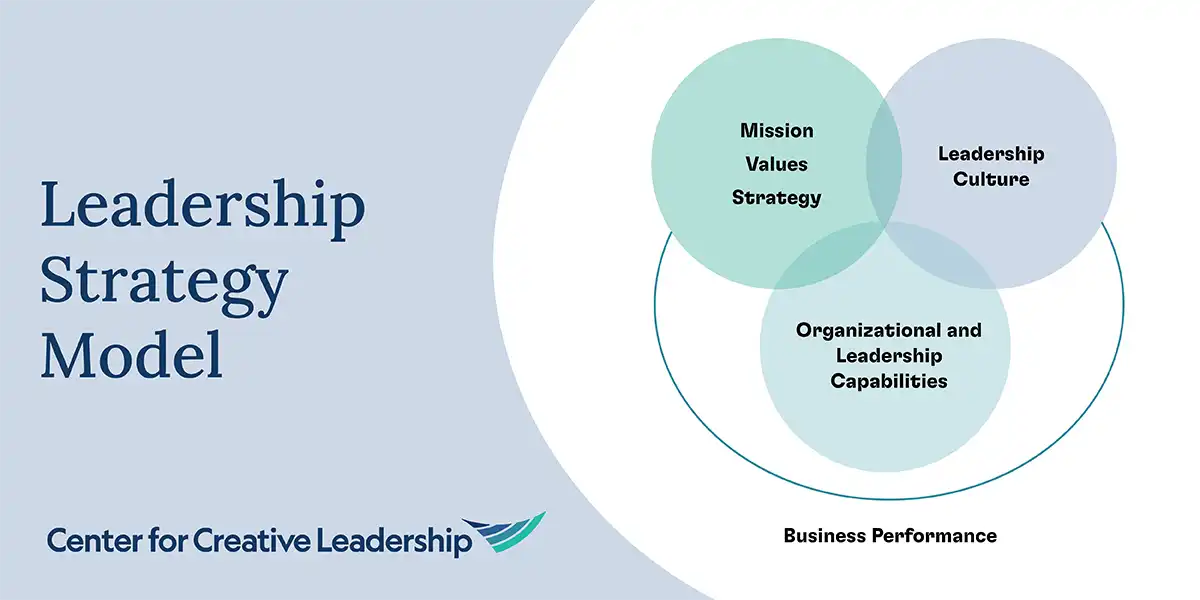
Recognizing this critical need, a new framework has emerged, designed to forge a clearer link between daily leadership practices and enduring organizational prosperity. This model, drawing on decades of research and practical application, centers on five interconnected elements, with organizational capabilities serving as the linchpin that connects strategy to the essential leadership behaviors required for their development and sustainment. This approach moves beyond the superficial understanding of leadership as a collection of individual traits and instead emphasizes its role as a dynamic, collective endeavor.
The foundational elements of this model comprise an organization’s mission, values, and overarching strategy. These form the strategic core, providing direction and purpose. Equally vital is the cultivation of a robust leadership culture – the ingrained beliefs, norms, and shared understandings that shape how leadership is enacted and recognized on a daily basis. Building upon this foundation, organizational capabilities define the business’s unique competitive identity, articulating what the organization collectively knows and does exceptionally well. Complementing these are leadership capabilities, which empower leaders to not only build but also sustain these organizational strengths. In unison, these components transform strategic aspirations into actionable realities, driving tangible results.
A prevalent oversight in many organizations is the tendency to leap directly from broad business strategy to individual leader development, without first establishing a clear understanding of what the organization needs to be collectively proficient at. Organizational capabilities act as the essential bridge, providing the context and clarity necessary to prioritize specific leadership behaviors. By defining these collective strengths first, organizations ensure that subsequent efforts in leadership development are more purposeful, precise, and aligned with strategic imperatives. This foundational step is crucial for avoiding fragmented initiatives and ensuring that leadership efforts contribute directly to competitive advantage.
Defining Organizational Capabilities: The Heart of Competitive Identity
Organizational capabilities represent the sum of what an organization collectively knows and does. They encompass both its inherent strengths and areas requiring development. Critically, these capabilities are a strong indicator of which customer segments an organization is best positioned to serve and which strategies it is most likely to execute successfully. They manifest through observable leadership behaviors that can be tracked and measured. Furthermore, organizational capabilities are inextricably linked to individual leader actions, as they can only exist when individuals possess the requisite combination of skills, knowledge, and attributes to contribute to the collective endeavor.

The expectation that strategy can be brought to life solely through individual behaviors, without a prior articulation of the necessary collective capabilities, creates a significant disconnect. Leaders may lack the contextual understanding to prioritize the most impactful behaviors, and the organization may suffer from a lack of coherence in its execution. Conversely, when organizational capabilities are clearly defined, they align the business and human systems, fostering synchronized operations and creating value in ways that competitors find difficult to replicate. This synchronization is a hallmark of truly high-performing organizations.
The concept of organizational capabilities is not new; it has roots in the strategic thinking of the 1990s, which shifted the focus from external market analysis to internal strengths and deliberate trade-offs in investment. This thinking has evolved significantly, particularly in acknowledging the imperative for organizations to adapt their capabilities in the face of perpetual disruption. Decades of research and practice in organizational leadership have consistently highlighted the importance of identifying and cultivating these core competencies.
A Research-Based Set of Organizational Capabilities
Through extensive research and engagement with numerous executive teams navigating large-scale change and transformation, a comprehensive set of 11 organizational capabilities has been identified. These capabilities are intrinsically linked to an organization’s strategic and cultural identity, providing a clear picture of what each looks like in practice. While all contribute to a high-performing organization, the critical task for leadership is to identify a focused subset, typically between three and four, that will serve as the primary drivers of excellence. This focused set of capabilities articulates how an organization positions itself to address strategic challenges and what it uniquely does to achieve success.
For example, a services company aiming to become an AI-driven organization might leverage existing strengths in "Fostering Innovation" and "Driving Productivity." In this scenario, the executive team might choose to further develop behaviors related to "quickly creating new products and services and effectively bringing them to market" and "continually shaping the organization’s structure and workflows." Simultaneously, the significant transformation required to embed AI throughout operations might necessitate building a "Leading Transformation" capability, while potentially reframing the focus on "Determining Performance" to align with the new strategic direction.
The process of narrowing down to the essential three to four organizational capabilities is not merely a matter of consensus; it demands rigorous consideration of multiple factors, including where to invest resources and what constitutes acceptable performance for the remaining capabilities. A high degree of alignment among the executive team and other key stakeholders regarding these essential capabilities is paramount for establishing and sustaining them effectively. This alignment fosters direction, ensures commitment, and paves theway for translating organizational capabilities into both individual and collective leadership behaviors.
Transforming Capabilities into Action: A Three-Phase Approach
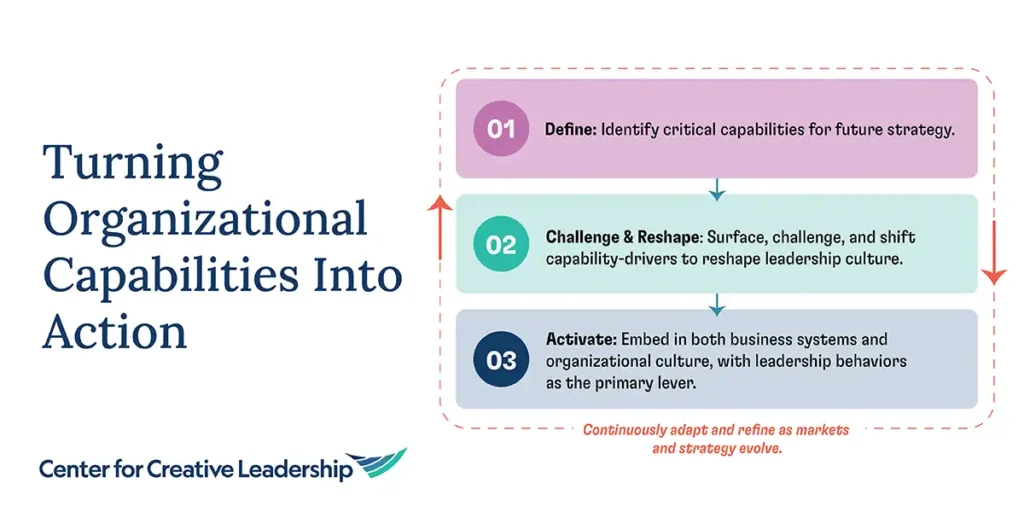
Turning organizational capabilities into tangible action requires a forward-looking and inward-focused perspective. This dual focus forms the bedrock of a proven three-phase approach designed for executive teams:
-
Phase 1: Diagnosis and Strategic Alignment: This initial phase involves a comprehensive assessment of the organization’s current state, identifying existing capabilities, potential gaps, and strategic imperatives. It necessitates a deep dive into the mission, values, and strategic goals to understand how they inform the need for specific organizational capabilities. This stage often involves workshops and facilitated discussions to build a shared understanding and secure executive buy-in. The output is a clear articulation of the strategic context and the identification of potential core capabilities.
-
Phase 2: Capability Design and Prioritization: Building on the diagnostic phase, this stage focuses on defining the selected organizational capabilities in detail. This includes specifying the observable behaviors and observable outcomes associated with each capability. A critical element here is prioritization, determining which capabilities will receive the most strategic focus and investment. This phase also involves considering the leadership culture necessary to support these capabilities and identifying any potential cultural shifts required. The outcome is a well-defined set of prioritized organizational capabilities and a roadmap for their development.
-
Phase 3: Activation and Integration: The final phase is dedicated to embedding the defined capabilities into the fabric of the organization. This involves translating them into actionable leadership development programs, performance management systems, and daily operational practices. It requires ensuring that leadership behaviors are consistently recognized, rewarded, and reinforced. The focus is on making these capabilities a living part of the organization’s identity and operations, ensuring sustained execution and adaptability. This phase also includes mechanisms for ongoing measurement and refinement to ensure continued relevance and effectiveness.
The Broader Implications: Sustaining Competitive Edge in a Dynamic World
The consistent application of this framework holds significant implications for organizational success in the long term. By clearly defining and actively developing core organizational capabilities, businesses can move beyond the reactive posture of agility to a proactive stance of strategic differentiation. This approach ensures that leadership efforts are not haphazard but are precisely aligned with the competencies that will provide a sustainable competitive edge.
In an era where the future remains inherently uncertain, the ability to adapt is paramount. However, adaptation is most effective when it is grounded in a clear understanding of what makes an organization uniquely strong. When an organization aligns its mission, values, strategy, and leadership culture around a focused set of capabilities, it not only strengthens its execution in the present but also significantly enhances its capacity to adapt to future challenges and opportunities. This integrated approach ensures that every element of the leadership strategy model, and every individual within the organization, remains on the right track towards achieving enduring success.
The work of identifying and cultivating the organizational capabilities that transform a company’s strategy into a distinct competitive identity, and building the leadership culture to sustain them, is a consequential undertaking for any executive team. Organizations that successfully navigate this process are better positioned to achieve sustained business performance, foster innovation, and build resilient, adaptable enterprises capable of thriving in the face of continuous change. This strategic clarity is no longer a luxury but a fundamental requirement for navigating the complexities of the modern business landscape.