
The landscape of B2B marketing has undergone a fundamental shift as traditional lead-generation tactics face diminishing returns and buyers increasingly seek authentic, human-centric engagement. While podcasting was once viewed as a niche hobby or a experimental "hype" medium, it has matured into a cornerstone of the modern marketing mix. According to the Edison Research 2026 Podcast Consumer Report, the medium has reached a critical mass of adoption; 82% of weekly podcast consumers actively engaged with video podcasts in the third quarter of 2025, while 78% remained loyal to audio-only formats. For B2B organizations, this trend represents a unique opportunity to build authority, foster deep-seated trust, and create a sustainable content ecosystem that powers multiple channels simultaneously.
The Evolution of the B2B Podcast as a Business Asset
In the current enterprise environment, the technical barriers to entry for podcasting have largely vanished. Remote recording software, automated transcription tools, and high-quality consumer-grade hardware allow brands to produce professional-grade content without the need for a dedicated studio. However, the ease of production has led to a saturated market, making strategic differentiation more critical than ever. A successful B2B podcast is no longer defined by the act of recording a conversation, but by the business outcomes it facilitates.
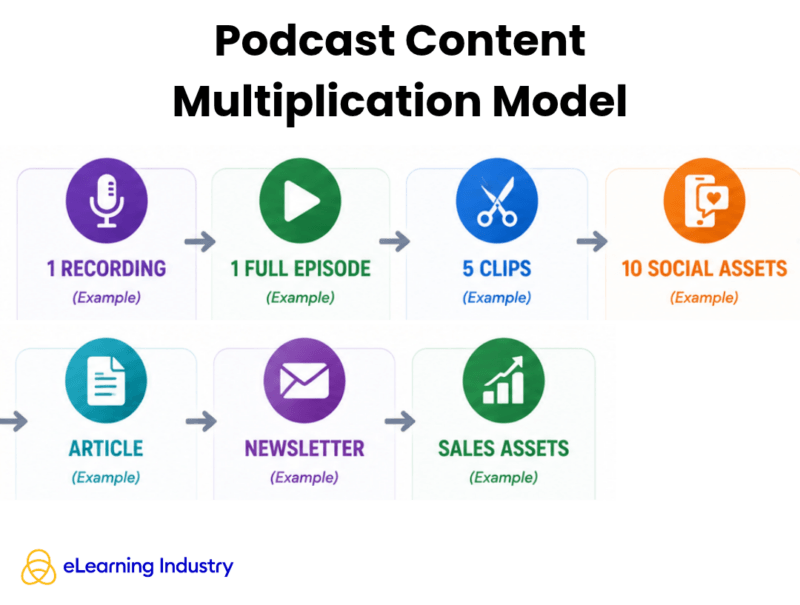
For a modern brand, a podcast serves as a multifaceted business tool. It allows executives to build personal and corporate authority, strengthens relationships with existing customers, and provides a low-friction entry point for connecting with high-value prospects. Furthermore, it acts as a "source asset"—a single recording that can be dismantled into LinkedIn snippets, newsletter features, SEO-driven articles, and sales enablement collateral. By treating a podcast as a strategic investment rather than a side project, companies can drive meaningful pipeline influence that extends far beyond simple download metrics.

Defining the Business Objective and Audience Architecture
Before a single minute of audio is recorded, an organization must define the specific "business job" the podcast is intended to perform. Broad goals like "brand awareness" are often too vague to provide editorial direction. Industry experts suggest a tiered goal structure consisting of one primary objective and two secondary objectives.
Primary objectives typically include demand generation, where the show is designed to attract and convert new buyers, or relationship marketing, which focuses on inviting key prospects and partners onto the show to build rapport. Secondary goals might involve executive visibility, where the podcast serves as a platform for leadership to share insights, or customer retention, where successful users share their experiences to educate and inspire the broader user base.
Simultaneously, the audience must be defined with surgical precision. Targeting "business professionals" is a recipe for irrelevance. Instead, successful shows identify specific personas—such as "Chief Information Security Officers at mid-market manufacturing firms"—and tailor content to the specific professional challenges, internal pressures, and KPIs that keep those individuals awake at night. This clarity of focus informs every subsequent decision, from guest selection to the editorial "lens" of the show.
Crafting a Distinctive Podcast Premise
The most significant cause of B2B podcast failure is the "me-too" syndrome—shows that cover generic topics like "leadership" or "innovation" without a unique perspective. To cut through the noise, a show requires a distinctive premise. This is the "hook" that gives a listener a reason to choose one show over the thousands of others available.
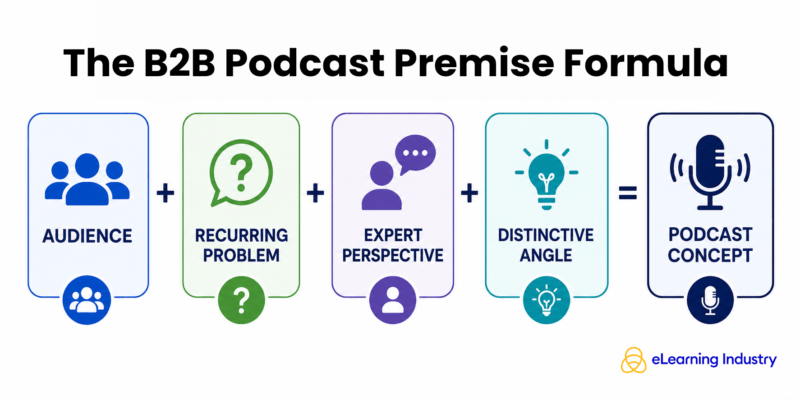
A strong premise answers four fundamental questions:
- Who is this specifically for?
- What unique problem does it address?
- What is the specific editorial lens?
- What is the "unmet need" in the current market?
For example, a generic premise would be "A podcast about HR technology." A distinctive, high-impact premise would be "A deep-dive series for HR Tech founders focused on the specific strategic pivots required to scale from product-market fit to enterprise-level growth." The latter provides a clear value proposition and makes the show’s marketing and distribution significantly more effective.
Format Selection and the Rise of Video-First Production
The choice of format should align with the organization’s resources and the host’s strengths. Common B2B formats include:
- The Interview Format: Ideal for networking and bringing external expertise to the brand.
- The Host-Led Expert Show: Best for establishing deep thought leadership and editorial control.
- The Co-Hosted Discussion: Leverages the chemistry between two internal experts to debate industry trends.
- The Narrative/Storytelling Format: High-production value episodes that focus on investigative topics or detailed case studies.
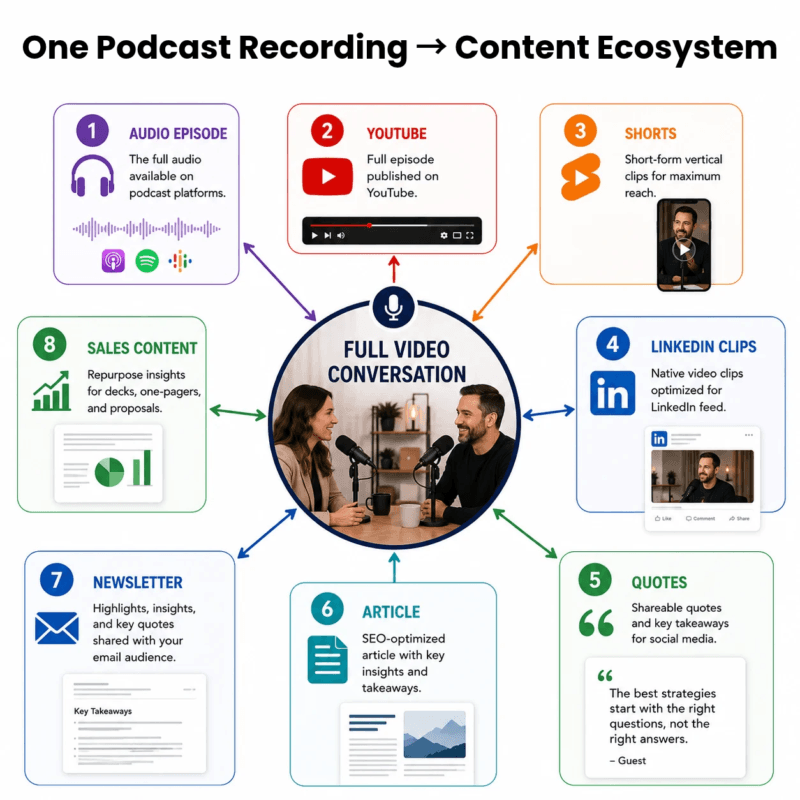
In 2025 and beyond, the industry is seeing a decisive move toward "video-first" recording. By recording video by default, a brand creates a wealth of visual assets for YouTube, LinkedIn, and TikTok/Reels. This approach treats the podcast recording as the "master file" from which an entire content ecosystem is born. A single 30-minute video conversation can be repurposed into a full YouTube episode, a high-quality audio file for Spotify/Apple, three to five short-form video "clips," two long-form articles, and a series of quote graphics for social media.
A 90-Day Chronology for a Successful Launch
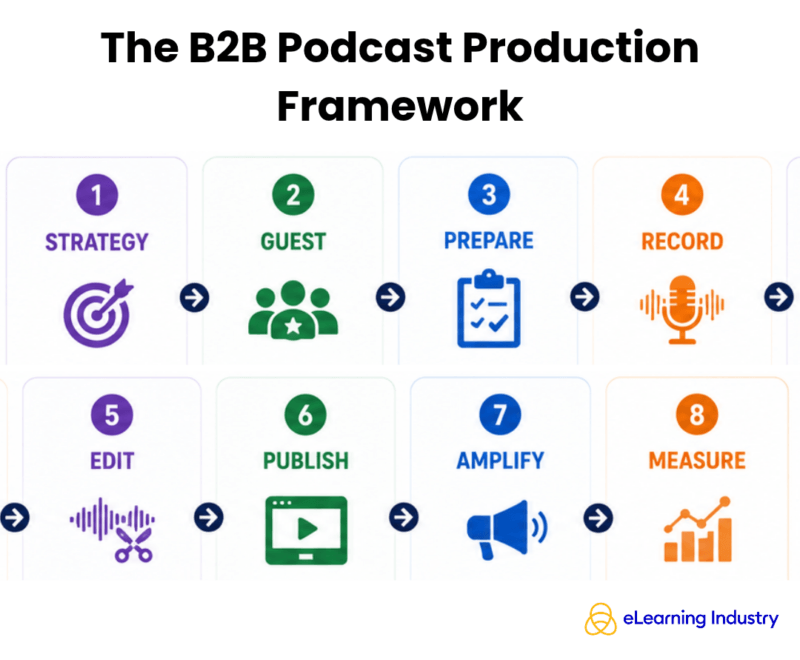
Launching a professional B2B podcast requires a structured timeline to ensure consistency and quality.
Phase 1: Strategy and Branding (Days 1-30)
This phase involves defining the premise, identifying the target audience, and creating the visual identity. Organizations should choose a name that is searchable yet memorable and secure the necessary digital real estate (social handles, domain names). This is also the time to select the host—prioritizing someone with the ability to facilitate great conversations rather than simply choosing the most senior executive.
Phase 2: Technical Setup and Guest Sourcing (Days 31-60)
During this month, the production workflow is established. This includes selecting recording software (such as Riverside or Zencastr), purchasing hardware (dynamic microphones and high-definition cameras), and building a guest pipeline. Outreach should be personalized, emphasizing why the guest’s specific experience is valuable to the show’s audience. Experts recommend recording a "buffer" of 3 to 5 episodes before the official launch to ensure a consistent publishing cadence.
Phase 3: Launch and Distribution (Days 61-90)
The final phase focuses on the "Grand Opening." This involves submitting the show to major directories (Apple, Spotify, Amazon) and executing a multi-channel promotion strategy. The launch should be treated as a major marketing event, leveraging internal employee networks and guest audiences to build initial momentum.
Integrating SEO and Generative Engine Optimization (GEO)
To ensure long-term discoverability, B2B podcasts must be optimized for both traditional search engines and emerging AI-powered "answer engines." This involves more than just keyword-rich titles. Each episode should be accompanied by a dedicated page on the company website containing a detailed summary, key takeaways, a full transcript, and internal links to related resources.
Using descriptive, problem-oriented titles—such as "How to Solve Data Silos in Global Logistics"—is far more effective than "Episode 12 with John Smith." Furthermore, providing structured data and clear "chapters" within the video and audio files helps AI systems like ChatGPT, Perplexity, and Google Gemini understand and cite the content in response to user queries. This practice, known as Generative Engine Optimization (GEO), ensures that the brand’s insights remain visible in the evolving search landscape.
Measuring Success: Beyond the Download
One of the most common mistakes in B2B podcasting is over-relying on "vanity metrics" like total downloads. While downloads indicate reach, they rarely reflect business impact. A more sophisticated measurement framework looks at:
- Audience Quality: Are the listeners actually in the target market?
- Relationship Influence: Did inviting a prospect onto the show lead to a discovery call or a closed deal?
- Content Efficiency: How much did the podcast reduce the cost of creating content for other channels?
- Pipeline Velocity: Do prospects who engage with the podcast move through the sales funnel faster than those who do not?
- Brand Sentiment: Is the show mentioned in industry forums or by customers during the sales process?
Strategic Analysis: The Long-Term Impact of Audio Authority
The true power of a B2B podcast lies in its ability to humanize a corporation. In an era where AI-generated text is becoming ubiquitous, the human voice—complete with its nuances, emotions, and spontaneous insights—becomes a premium asset. A well-executed podcast builds a "bank of trust" with the audience. When a buyer is finally ready to make a purchase decision, they are more likely to turn to the brand that has been providing them with free, high-value insights in their ears for months.
Furthermore, the podcast acts as a catalyst for internal alignment. It forces marketing, sales, and product teams to agree on the industry’s most pressing challenges and the company’s unique stance on those issues. This editorial discipline often ripples out to improve other areas of the business, from sales scripts to product roadmaps.
Ultimately, the successful B2B podcast is not a standalone project but a repeatable engine for growth. By focusing on a clear audience, a distinctive premise, and a systemized production workflow, organizations can transform simple conversations into a formidable platform for industry leadership and sustainable commercial success. Organizations that fail to adopt this medium risk losing their "share of ear" to more agile competitors who recognize that in the modern economy, attention is the most valuable currency.






