In an era defined by hyper-connectivity and the dissolution of geographical borders, cultural awareness training has transitioned from a niche human resources initiative to a core strategic imperative for global enterprises. As organizations increasingly navigate the complexities of international markets, remote work structures, and multicultural talent pools, the ability to decode and respect diverse cultural nuances has become a primary driver of operational efficiency and competitive advantage. Moving beyond the foundational principles of Diversity, Equity, and Inclusion (DEI), cultural awareness training focuses on developing the specific cognitive and behavioral skills necessary to foster psychological safety, minimize cross-cultural friction, and capitalize on the innovation inherent in diverse perspectives.
The Historical Trajectory of Workplace Diversity Initiatives
The evolution of cultural training in the professional sphere follows a clear chronological path, reflecting broader societal shifts and economic needs. In the late 20th century, specifically the 1960s through the 1980s, workplace training was largely reactive and compliance-oriented, focusing on legal adherence to anti-discrimination laws. During this period, the primary goal was risk mitigation rather than the proactive celebration of difference.
By the 1990s and early 2000s, the concept of "diversity management" emerged. Organizations began to recognize that a diverse workforce could offer a broader range of ideas, but the training often remained superficial, focusing on "celebrating" differences through food, holidays, or basic etiquette without addressing the underlying systemic biases or communication barriers.
The current decade marks a third wave: the era of Cultural Intelligence (CQ) and deep cultural awareness. This modern approach, accelerated by the COVID-19 pandemic and the subsequent rise of permanent remote and hybrid work models, emphasizes the practical application of cultural knowledge. Today’s training is data-driven and rooted in behavioral science, designed to facilitate seamless collaboration between a developer in Bangalore, a project manager in Berlin, and a marketing executive in New York.
Quantifying the Impact: Data-Driven Benefits of Cultural Awareness
The shift toward robust cultural awareness programs is supported by a growing body of empirical evidence. According to a landmark study by McKinsey & Company, "Diversity Wins," companies in the top quartile for executive-team diversity are 36% more likely to outperform their peers on profitability. However, researchers note that diversity alone is insufficient; without cultural awareness to bridge the gaps between diverse team members, the potential for "process loss"—the reduction in efficiency due to social friction—remains high.
Furthermore, a report by Deloitte found that inclusive teams are eight times more likely to achieve better business outcomes and twice as likely to meet or exceed financial targets. The link between cultural awareness and employee retention is equally significant. Gallup research indicates that when employees feel their unique cultural perspectives are valued, engagement levels rise by up to 20%, significantly reducing the costs associated with turnover and recruitment.
At the heart of these statistics is the concept of psychological safety. Google’s multi-year study, Project Aristotle, identified psychological safety as the single most important factor in high-performing teams. Cultural awareness training provides the tools to build this safety by teaching employees how to navigate "high-context" and "low-context" communication styles, differing attitudes toward hierarchy, and varying approaches to conflict resolution.
The Anatomy of a High-Impact Training Program
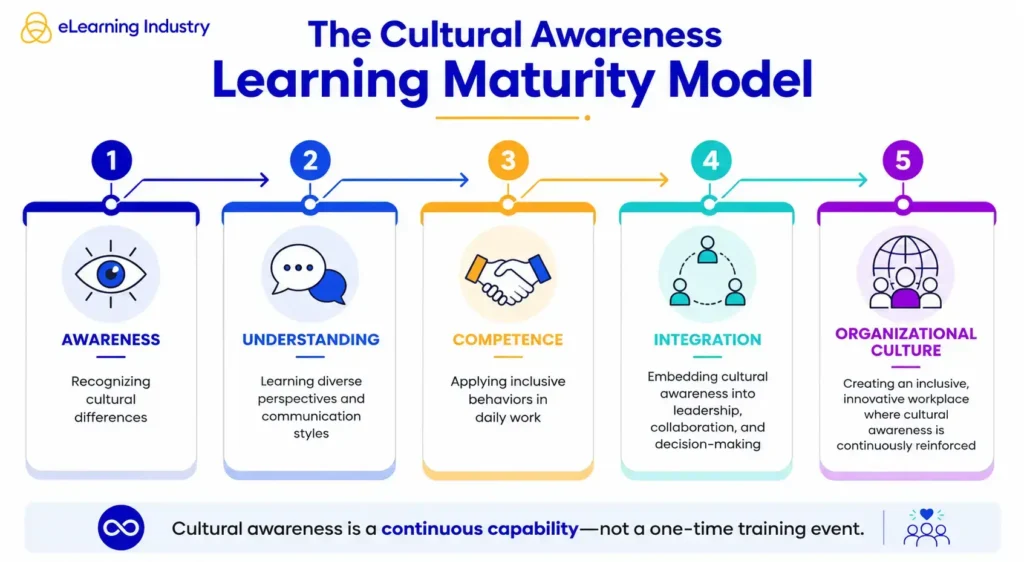
Effective cultural awareness training has moved away from static PowerPoint presentations toward dynamic, learner-centric models. Experts in instructional design emphasize that for behavior change to occur, training must be an ongoing process rather than a one-time event.
The Foundation of Self-Reflexivity
Modern programs begin with the "inside-out" approach. Before an individual can understand the "other," they must identify the cultural lenses through which they view the world. This involves guided self-reflection on one’s own upbringing, communication preferences, and unconscious biases. By recognizing that their own "normal" is a cultural construct, employees become more receptive to alternative viewpoints.
Skill-Based Communication and Inclusive Language
Awareness is the precursor to action. High-quality training focuses on "inclusive communication," which includes active listening, the use of gender-neutral language, and the avoidance of idioms or metaphors that may not translate across cultures. It also addresses the "power distance" dynamic—how different cultures perceive authority—ensuring that junior team members from more hierarchical cultures feel empowered to contribute ideas in a Western corporate setting.

The Integration of Scenario-Based Learning
Adult learning theory suggests that professionals retain information best when it is applied to real-world challenges. Consequently, leading organizations are utilizing scenario-based learning (SBL). This involves presenting employees with complex, ambiguous situations—such as a stalled negotiation or a misunderstood feedback session—and requiring them to navigate the situation using cultural empathy and strategic communication.
Continuous Reinforcement and Microlearning
The "forgetting curve" is a significant hurdle in corporate training. To combat this, organizations are adopting microlearning strategies—short, five-minute modules delivered via mobile apps or Slack integrations that reinforce cultural concepts in the flow of work. This ensures that cultural awareness remains a top-of-mind priority rather than a forgotten seminar topic.
Industry-Specific Applications and Critical Needs
While the core tenets of cultural awareness are universal, the application varies significantly across sectors.
Healthcare and Patient Outcomes
In the medical field, cultural awareness—often termed "cultural competency"—is a matter of life and death. Misunderstandings regarding a patient’s cultural beliefs about medicine, family involvement, or pain management can lead to misdiagnosis and poor treatment adherence. Studies have shown that culturally competent care significantly reduces health disparities among minority populations.
The Global Corporate Sector
For multinational corporations, cultural awareness is the grease that keeps the wheels of global trade turning. It impacts everything from brand positioning to local marketing strategies. A failure to understand local customs can lead to "brand blunders" that cost millions in lost revenue and reputational damage. Conversely, leaders who possess high cultural intelligence are better equipped to manage global mergers and acquisitions, where "culture clash" is the leading cause of failure.
Behavioral and Mental Health
In behavioral health, the stigma surrounding mental illness varies wildly across cultures. Training for practitioners focuses on "intersectionality"—how a patient’s race, gender, and cultural background overlap to influence their experience of trauma and recovery. This nuanced approach allows for more effective, personalized treatment plans.
Practical Training Activities: From Role-Playing to Storytelling
To bridge the gap between theory and practice, Instructional Designers are deploying a variety of interactive tools:
- Cultural Simulations: Participants may be placed in a simulated environment with unfamiliar social rules (e.g., the "Barnga" card game simulation) to trigger the feelings of frustration and confusion that often accompany real-world cross-cultural encounters.
- Reverse Mentoring: Senior executives are paired with junior employees from different cultural backgrounds. This flips the traditional power dynamic and allows leaders to gain firsthand insight into the barriers faced by underrepresented groups within their own company.
- Storytelling Circles: Employees share personal narratives about their cultural heritage or experiences with bias. This humanizes the data and builds deep empathy among colleagues.
- Inclusive Decision-Making Frameworks: Teams are taught specific protocols to ensure every voice is heard during meetings, such as "round-robin" brainstorming or anonymous digital suggestion boxes, which help mitigate the dominance of more assertive cultural styles.
Strategic Implications and Future Outlook
As the workforce continues to evolve, the definition of cultural awareness is expanding to include "neurodiversity" and "intergenerational" dynamics. The "Gen Z" entry into the workforce, alongside five other active generations, has created a new kind of cultural landscape that requires its own set of awareness tools.
Christopher Pappas, CEO and founder of eLearning Industry, emphasizes the strategic nature of these programs: "Cultural awareness is a key business skill, and not just a soft skill. It affects how people work together, create new ideas, and build trust at all levels of an organization."
The long-term implication for businesses is clear: those that view cultural awareness as a peripheral "nice-to-have" will likely struggle with talent retention and global expansion. In contrast, organizations that embed cultural competence into their DNA—treating it as a rigorous, measurable, and evolving discipline—will be better positioned to navigate the uncertainties of the 21st-century economy.
In conclusion, cultural awareness training is the bridge between a diverse workforce and an inclusive, high-performing culture. By moving toward a model of continuous learning, self-reflection, and practical skill-building, organizations can transform cultural differences from a source of potential conflict into a wellspring of innovation and resilience. The investment in these programs is no longer just about social responsibility; it is about the long-term viability and success of the global enterprise.