Building an effective employee recognition program is paramount for organizations aiming to cultivate a thriving workplace culture and drive tangible business results. It necessitates a clear, consistent framework for acknowledging behaviors and contributions that align with an organization’s core objectives. Strong programs not only illuminate what constitutes exemplary work but also ensure that significant employee efforts are duly noticed and valued. In today’s competitive landscape, employee recognition has evolved from a mere perk to a critical business performance strategy.
A recent survey by Harvard Business Review Analytic Services revealed a significant disconnect: while 66% of respondents deemed their organization’s recognition program crucial for influencing business performance, a mere 33% characterized their program as highly effective. This disparity underscores a widespread understanding of recognition’s importance, coupled with a prevalent challenge in implementing programs that consistently drive desired behaviors and yield substantial outcomes. At its core, an employee recognition program is a structured system designed to continuously acknowledge employees for their work, contributions, achievements, and behaviors. Such programs provide a standardized mechanism for managers, leaders, and peers to celebrate efforts that support company goals and values, often facilitated through online platforms that centralize recognition, milestone celebrations, and reward access.
Why Employee Recognition Programs Matter Now More Than Ever
The contemporary relevance of employee recognition programs stems from the persistent reality that many employees do not receive sufficient acknowledgment to meaningfully shape their performance, engagement, or the overall organizational culture. The 2026 State of Recognition Report, which surveyed 3,000 employees globally, indicated that 35% of respondents are recognized only a few times annually. Critically, 92% of these employees stated they would exert additional effort if they were acknowledged for their contributions. Without a structured approach, valuable work frequently goes unrecognized, diminishing an organization’s capacity to reinforce the very behaviors and contributions essential for business success.
The Primary Beneficiaries of Recognition Programs
The immediate and most profound impact of employee recognition programs is felt by employees and managers, who are engaged in the recognition process daily. Employees benefit from receiving appreciation, feedback, and visibility for their contributions, fostering a sense of value and belonging. Managers, in turn, leverage recognition as a powerful tool to reinforce expectations, celebrate progress, and support individual and team performance. This bidirectional flow of acknowledgment creates a positive feedback loop that can significantly enhance the employee experience.
The Pillars of Success and Failure in Recognition Programs
The success of an employee recognition program hinges on its perceived authenticity and its ability to genuinely reflect employee contributions. Programs thrive when managers consistently acknowledge team efforts, peers enthusiastically celebrate each other’s successes, and milestones are recognized in a timely and personal manner. Conversely, recognition programs often falter when they feel forced, inconsistent, overly reliant on managerial input, or disconnected from the daily realities of employees’ work. Examples of program failure include recognition that is confined to annual events or that predominantly benefits a select few, leading to perceptions of unfairness and a lack of genuine appreciation.
The Pervasive Reach of Recognition Programs
An effective employee recognition program permeates the entire employee lifecycle. From the initial stages of onboarding and daily work activities to promotions, project completions, work anniversaries, and significant career achievements, recognition finds its place. It manifests through manager-to-employee feedback, peer-to-peer acknowledgments, team celebrations, and organization-wide initiatives, ensuring it is never an isolated event but rather an integrated aspect of the work environment.
Operationalizing Employee Recognition Programs
In practice, a successful employee recognition program establishes clear criteria for what warrants acknowledgment, equips employees and managers with accessible methods for delivering recognition, and ensures that appreciation is visible throughout the organization. When an employee embodies a company value, achieves a milestone, supports a colleague, or delivers exceptional results, their contribution is recognized and amplified through the program.
Building and Launching an Effective Employee Recognition Program
The strategic development and launch of an employee recognition program involve several critical phases:

- Designing the Recognition Program
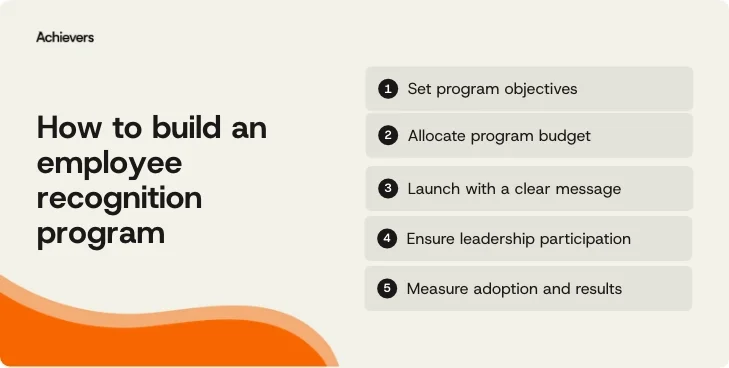
The foundational step involves meticulously designing the program. This entails defining what will be recognized, the methods for delivering recognition, the participants involved, and the metrics for measuring success. A well-designed program sets clear expectations from the outset, ensuring that recognition aligns with organizational goals, values, and employee needs.
-
Setting Objectives: Before launch, establishing clear objectives is crucial. Common goals include increasing employee participation, enhancing engagement levels, reinforcing company values, improving retention rates, or encouraging specific desired behaviors. These objectives will guide the selection of Key Performance Indicators (KPIs) and the methods for tracking progress over time.
-
Aligning Recognition with Company Values: Recognition should be intrinsically linked to the behaviors and actions the organization aims to foster. This alignment helps employees understand which contributions are most valued and ensures consistency across different teams. When employees can draw a direct line between their actions and organizational priorities, recognition becomes significantly more meaningful.
-
Allocating Budget: A realistic budget must be allocated, considering the program’s operational scope and scalability. This typically encompasses costs associated with recognition software, rewards, communication efforts, training, and program administration. A sustainable budget ensures ongoing participation and adoption, rather than focusing solely on initial launch activities.
-
Defining Program Guidelines: Clear and transparent program guidelines are essential for consistency. Employees need to understand what qualifies for recognition, who can issue recognition, how rewards are distributed, and any rules that may affect participation. Well-defined guidelines minimize confusion and promote a fair experience for all employees.
-
Planning for Scale: Scalability should be a consideration from the outset, particularly for organizations with a distributed workforce across multiple locations, countries, or work environments. Recognition programs must accommodate diverse languages, reward preferences, accessibility needs, and time zones to maintain a consistent and inclusive experience for all employees.
- Introducing and Launching the Program
The introduction and launch phase are critical for ensuring employee understanding and adoption. Employees must grasp the program’s purpose, the specific behaviors it recognizes, how to participate, and why their involvement is important.
-
Clear Launch Message: The program should be launched with a clear and concise explanation of its purpose. Employees need to understand which behaviors, values, and contributions are being recognized, the mechanisms for delivering recognition, and how it contributes to broader organizational objectives. A strong, clear connection facilitates easier adoption into daily work routines.
-
Comprehensive Training: Training employees and leaders on examples of effective recognition, the appropriate timing and methods for giving recognition, and managers’ roles in encouraging participation is vital. Clear expectations from the outset significantly increase the likelihood of recognition becoming a regular habit.
-
Ensuring Leadership Participation: Active participation from leadership is instrumental in establishing recognition as an expected and valued component of the employee experience. When leaders engage with the program, it signals its importance and reinforces its priority status within the organization.
- Measuring Program Adoption and Results
Continuous measurement is key to understanding the program’s effectiveness and identifying areas for improvement. This involves tracking whether recognition is influencing participation, employee experience, and ultimately, business outcomes.
-
Early Adoption Measurement: Monitoring program adoption from the launch phase allows for the early identification of participation gaps and opportunities for enhancement. Key KPIs to track include the percentage of active users, the frequency of recognition given and received, and the average recognition value. These metrics provide insight into regular employee participation and the program’s integration into daily workflows.
-
Gathering Employee Feedback: Soliciting feedback through employee surveys, focus groups, and direct conversations with managers offers valuable insights into employees’ program experience. This feedback can illuminate participation challenges, highlight areas for improvement, and identify aspects of the program that resonate most strongly with the workforce.
-
Refining the Program Over Time: Continuous refinement based on participation data and employee feedback is essential. Recognition programs achieve maximum success when they evolve in tandem with employee needs, company priorities, and the evolving workplace culture. Regular reviews ensure the program remains relevant, accessible, and impactful.
Why Recognition Programs Often Miss the Mark
Recognition programs are most effective when they extend beyond mere celebration of good work; they must actively reinforce the behaviors that propel organizational goals. Research from HBR indicates a significant divergence between organizations that achieve strong business results from recognition and those that do not. Among organizations with highly effective programs, 88% intentionally design recognition to drive specific employee behaviors, whereas only 28% of organizations with less effective programs adopt this strategic approach.
This strategic distinction is critical because recognition directly influences employee focus and energy. As economist Robert Dur posits, "A reward and recognition system is a bit like a compass that directs people’s attention, time, and energy." When recognition is intentionally tied to strategic priorities, employees gain a clearer understanding of what success looks like and which contributions the organization values most. Effective recognition is also timely, meaningful, and specific. While generic praise might create a fleeting positive moment, meaningful recognition helps employees understand the impact of their actions and encourages the repetition of those behaviors. As Dur further notes, "Recognition is powerful but tends to be underestimated by people in practice. For recognition to be powerful, it needs to be meaningful." Organizations that bridge this execution gap treat recognition as an ongoing business practice, not an intermittent people initiative, aligning it with company values, strategic objectives, and desired workforce behaviors.
The Profound Business Impact of Employee Recognition Programs
While recognition is often associated with engagement, morale, and culture, its most potent programs yield measurable business results. Harvard Business Review research has demonstrated that organizations with highly effective recognition programs report significant improvements across key performance indicators. Compared to lagging organizations, leaders are more likely to report:
- Increased Employee Productivity: Highly effective programs are associated with a 19% increase in employee productivity.
- Improved Employee Retention: These programs contribute to a 13% higher retention rate.
- Enhanced Customer Satisfaction: Organizations with strong recognition programs experience a 17% increase in customer satisfaction.
- Greater Innovation: They also report a 25% improvement in innovation.
The impact transcends financial and operational metrics, extending to gains in innovation, collaboration, problem-solving, and talent development. Conversely, nearly one-third (31%) of organizations with less effective programs report no business improvements from their recognition efforts, a stark contrast to the mere 2% of leading organizations. This data underscores a fundamental principle: recognition is most effective when designed to support business priorities, not solely to boost engagement scores. For HR leaders, the takeaway is clear: the most impactful recognition programs are measured not just by participation rates or reward redemptions, but by their ability to reinforce behaviors that enhance performance, strengthen culture, and drive business strategy execution.
Best Practices for an Effective Employee Recognition Program
To maximize the impact of an employee recognition program, adhering to best practices is essential:
-
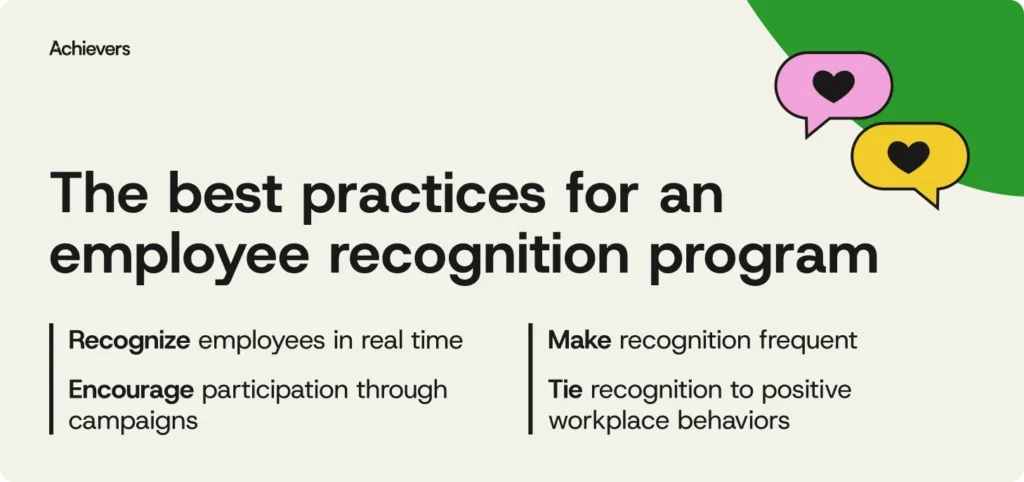
Recognize Employees in Real Time: Acknowledging contributions as close to the moment of achievement as possible creates a stronger connection between actions and appreciation, vividly showcasing what great work looks like in real-time.
-
Encourage Participation Through Campaigns: Recognition campaigns can foster recurring opportunities for employees to acknowledge one another. Campaigns tied to company milestones, awareness days, team achievements, or seasonal events increase visibility and embed recognition as a habit. A structured monthly recognition calendar can be invaluable for planning and consistency.
-
Make Recognition Frequent and Impactful: Recognition must occur frequently enough to become an integral part of the employee experience and be meaningful enough to reinforce important contributions. While regular acknowledgment is key, it must also be relevant, specific, and connected to the value created.
-
Tie Recognition to Specific Behaviors: Linking recognition to specific behaviors ensures employees understand precisely what they are being acknowledged for. Moving beyond generic praise to identify the behavior, contribution, or outcome and explain its significance provides clear examples of desired actions and values.
Budgeting for Employee Recognition: A Strategic Investment
Developing a budget for an employee recognition program requires aligning investment with overarching business goals, whether they involve enhancing engagement, reducing turnover, or reinforcing company values. The most effective programs view recognition not as an expense but as a driver of performance and retention. A practical budgeting approach involves planning for both program structure and participation. This includes allocating funds for technology platforms, tangible rewards, training, and ongoing program management. To maximize impact, organizations should prioritize frequency and accessibility, ensuring employees can recognize each other regularly, not just during major milestones. Leveraging a comprehensive employee experience platform can optimize budget utilization by increasing participation and linking recognition activities to measurable business outcomes.
Types of Employee Recognition
Employee recognition manifests in various forms, each serving distinct purposes:

-
Social Recognition: This involves public acknowledgment of an employee’s contributions, achievements, or behaviors, typically shared through recognition platforms, team meetings, company communications, or social feeds, allowing for broader visibility and engagement.
-
Monetary Recognition: Combining appreciation with tangible rewards, this can include points, gift cards, bonuses, company merchandise, or selections from a global marketplace.
-
Peer-to-Peer Recognition: This direct acknowledgment between coworkers highlights contributions observed during daily collaboration. It allows employees to recognize teamwork, support, problem-solving, and other valuable efforts that may not always be visible to leadership.
The Ideal Placement for a Recognition Program
A recognition program should be integrated where work naturally occurs. For many organizations, this begins with tools employees already use daily, such as Slack, Microsoft Teams, or Outlook, through seamless integrations. However, the program’s influence should extend beyond technology to permeate the broader workplace culture, weaving into team meetings and town halls. When appreciation is visible in pivotal moments, it feels natural, meaningful, and impossible to ignore. The objective is not complexity but to make recognition so effortless that it becomes a consistent practice.
Maximizing the Impact of Recognition Programs
Recognition programs deliver their greatest impact when woven into the everyday flow of work. Research indicates that weekly recognition makes employees 2.6 times more likely to be productive and 9 times more likely to feel a strong sense of belonging. Capturing contributions in the moment makes recognition feel powerful; delaying it diminishes its impact and perceived sincerity.
Addressing Challenges in Existing Recognition Programs
Many existing employee recognition programs face common hurdles:
-
Infrequent Recognition: When recognition is reserved for annual service awards, performance reviews, or major milestones, employees lack regular feedback on their performance and the behaviors the organization values. Delayed recognition loses relevance and impact.
-
Limited Participation: Programs often suffer from limited participation when recognition is predominantly manager-led. Coworkers witness valuable contributions daily, yet many traditional programs fail to facilitate peer-to-peer acknowledgment, leaving important moments unrecognized.
-
Recognition as Extra Work: If giving recognition requires learning a new system, switching between multiple tools, or navigating a lengthy process, adoption rates decline. Effective programs remove friction, making recognition feel effortless.
-
Lack of Visibility: Appreciation that occurs privately or within small teams limits broader reinforcement. Public recognition helps employees understand success across the organization and encourages the replication of positive behaviors.
-
Mismatched Rewards: Rewards that do not align with employee preferences can miss the mark. Flexibility and choice are paramount, as what is meaningful to one employee may be irrelevant to another.
-
Difficulty in Measuring Success: Without tracking participation, recognition frequency, or program outcomes, measuring success becomes challenging. This lack of data hinders the understanding of whether recognition is improving engagement, retention, or performance, and where program improvements are needed.
Preventing Bias in Employee Recognition Programs
Ensuring equity in recognition programs requires proactive measures:
-
Shared Responsibility: Making recognition a shared responsibility reduces reliance on a single individual’s perspective, mitigating potential bias. Peer recognition expands the scope of observed contributions beyond what managers alone can see.
-
Tying Recognition to Clear Behaviors: Consistent criteria for recognition, based on specific actions and their impact, minimize subjective opinions. The more specific the recognition, the less room there is for personal preferences to influence who is acknowledged.
-
Training on Meaningful Recognition: Establishing a shared standard through training helps employees understand how to write specific recognition, connect it to company values, and acknowledge contributions outside their immediate circle.
-
Leveraging Technology for Equity: Recognition platforms can provide visibility into recognition patterns, helping organizations identify participation gaps and encourage more balanced acknowledgment across the workforce, fostering a fair system.
The Compelling Business Case for Employee Recognition
Investing in employee recognition yields substantial business benefits:
-
Enhanced Business Results: Recognition directly boosts employee engagement, productivity, and commitment. By clarifying which contributions matter most, it strengthens alignment between individual actions and organizational goals. Statistics compiled by Achievers consistently show a direct correlation between recognition and business performance.
-
Improved Organizational Culture: Recognition reinforces shared values, encourages positive workplace behaviors, and fosters a sense of connection. Research from Gallup highlights that organizations with strong recognition cultures experience higher employee engagement and reduced turnover.
-
Securing Executive Buy-In: Positioning recognition as a business driver, rather than solely an employee engagement initiative, facilitates executive support. Leaders are more inclined to champion programs that demonstrate a clear link between recognition, employee outcomes, and overall business performance. Data from the Achievers Workforce Institute (AWI) indicates that leaders are more likely to invest in recognition programs when they understand their strategic impact.
Selecting the right recognition platform is a crucial step in building a scalable program. Independent analyses, such as the PEAK Matrix® report, evaluate leading providers based on market impact, innovation, customer adoption, and vision.
Developing a Strategic Employee Recognition Strategy
A robust employee recognition strategy begins with identifying desired behaviors and consistently acknowledging them. The fundamental question is: "What do we want employees to do more often?" Once this is clear, recognition becomes a powerful tool for shaping culture. A strong strategy should:
- Clearly define the purpose and goals of the recognition program.
- Align recognition with company values and strategic objectives.
- Establish clear criteria for what and how recognition is given.
- Promote frequent and timely recognition.
- Ensure recognition is visible and celebrated.
- Integrate recognition into existing workflows and platforms.
- Regularly measure and adapt the program based on data and feedback.
Best Practices for International and Global Recognition Programs
Implementing recognition programs on a global scale requires careful consideration of cultural nuances and logistical complexities:
-
Build a Shared Global Foundation: Establish consistent values, recognition criteria, and program standards that transcend regional boundaries. This ensures employees understand what behaviors are recognized and why, regardless of their location.
- Shared Values: These act as the connective tissue of a global culture, providing a common understanding of excellence while allowing for local expression.
- Clear Expectations: Consistent criteria remove ambiguity, improving fairness and building trust across diverse teams and time zones.
- Centralized System, Local Expression: A centralized platform ensures alignment and measurability, while regional teams can adapt tone, rewards, and communication styles to suit local preferences.
-
Make Recognition Culturally Relevant and Locally Meaningful:
- Include Regional Voices: Involve local HR teams and leaders in program design and rollout to ensure recognition practices, communications, and rewards resonate culturally.
- Adapt Messaging and Styles: Tailor communication and recognition styles to regional preferences, recognizing that some cultures may favor public acknowledgment while others prefer private or team-based appreciation.
- Offer Locally Relevant Rewards: Provide rewards that align with local preferences and purchasing habits to ensure they are perceived as valuable and meaningful.
-
Ensure Equity and Access Globally:
- Accessible Tools and Channels: Recognition should be accessible across various devices and work environments, meeting employees where they are.
- In-Time-Zone, In-Language Support: Offering localized support enhances approachability and demonstrates a commitment to understanding employees’ realities.
- Fairness Through Transparency: Transparent recognition programs build trust. Regular review of recognition patterns across regions helps identify and correct potential biases.
-
Empower Leaders and Local Champions:
- Train Global Managers: Equipping global leaders to recognize their international workforce fosters connection and unity. Managers who recognize intentionally build trust and a sense of belonging among their teams.
- Simple, In-the-Flow Tools: Integrating recognition into everyday tools like Microsoft Teams, Slack, or Workday makes consistent recognition more likely for leaders.
-
Launch Globally with Local Activation:
- Pilot Programs: Start with a pilot that reflects the diversity of the global workforce to test scenarios and gather insights for a broader rollout.
- Global Plan, Local Adaptation: Provide a shared message and toolkit, then empower regions to localize delivery and tone for a natural launch.
- Visible and Engaging Launch: Combine clear messaging with leadership presence and a simple first action for employees to encourage immediate participation.
- Manager Enablement: Equip managers with prompts, examples, and integrated tools to model recognition consistently.
- Support Employees Where They Are: Provide in-language, in-time-zone support to address questions promptly and build confidence.
- Refine and Scale with Insights: Utilize program data and regional feedback to maintain fairness and cultural relevance as the program grows.
Modern employee recognition programs should not only drive engagement but also generate valuable organizational insights. Strategic recognition programs can help identify trends in collaboration, performance, culture, and retention, providing a comprehensive view of workforce dynamics.
Increasing Employee Recognition Program Participation
To boost participation in recognition programs:
- Make Recognition Easy to Give: Removing friction and making recognition effortless is the fastest way to increase participation.
- Enable Peer-to-Peer Recognition: Opening recognition to all employees creates more opportunities for appreciation, as coworkers witness each other’s contributions daily.
- Recognize Employees More Frequently: Frequent recognition keeps momentum high and turns participation into a habit, rather than a one-time event.
- Tie Recognition to Company Values: When employees understand how their recognized behaviors align with business success, participation becomes more meaningful.
- Make Recognition Visible: Seeing coworkers regularly recognized keeps the program top-of-mind and demonstrates the value of appreciation.
- Train Leaders to Recognize Consistently: Leaders who actively model recognition set the tone for the entire organization, encouraging broader participation.
- Use Recognition Campaigns: Targeted campaigns tied to company milestones or initiatives can provide timely reasons for employees to engage and reactivate less frequent participants.
Creating Lasting Impact with Achievers’ Employee Recognition Program
Achievers empowers global companies to build recognition programs that are understood, participated in, and consistently utilized. By combining advanced recognition technology with comprehensive implementation support, customer success guidance, strategic program design, and 24/7 multilingual support, Achievers facilitates a seamless experience. From initial launch through long-term program management, Achievers assists organizations in increasing participation, measuring impact, and adapting their recognition programs to evolving employee and business needs, ensuring recognition experiences scale globally while remaining locally meaningful.