Success at work, far from always being a grand, fireworks-laden spectacle, often manifests in the quiet triumph of a project finally reaching completion, the deft handling of a difficult conversation, or simply the consistent dedication of a team diligently executing their tasks day after day. Yet, a pervasive issue in contemporary corporate environments is the tendency to overlook and rush past these crucial moments, both large and small. In an era marked by evolving workforce dynamics and heightened expectations for workplace culture, learning how to celebrate success – consistently, meaningfully, and comprehensively – stands as one of the most potent tools available to organizations striving for stronger employee engagement, elevated performance, and robust talent retention. This extends beyond merely acknowledging monumental achievements; it encompasses recognizing the myriad smaller victories that occur daily, forming the bedrock of organizational progress.
The urgency of this issue is underscored by compelling data from the Achievers Workforce Institute’s (AWI) 2026 Engagement and Retention Report, which paints a concerning picture: a mere 26% of employees globally report feeling engaged, and an even lower 25% genuinely feel appreciated at work. This significant chasm between employee effort and perceived appreciation represents a critical leakage point for motivation, productivity, and loyalty. Bridging this divide through consistent and authentic celebration is not merely a "nice-to-have" perk but a strategic necessity for fostering a thriving, resilient workforce.
The Unseen Crisis: Widespread Disengagement and Low Appreciation
The AWI report’s findings resonate with broader trends observed across the global labor market. Terms like "quiet quitting" and the "Great Resignation" have become common parlance, reflecting a deeper discontent rooted in a lack of purpose, connection, and, critically, recognition. When employees invest their time, skills, and energy into their work, but their contributions go unnoticed or unacknowledged, the psychological contract between employee and employer begins to fray. This leads to diminished morale, reduced discretionary effort, and ultimately, an increased propensity to seek opportunities elsewhere.
Organizational psychologists and HR experts consistently highlight that human beings possess an innate need for validation and a sense of accomplishment. In the workplace, this translates into a fundamental desire to feel seen, heard, and valued for one’s contributions. The data suggesting that only a quarter of employees feel genuinely appreciated points to a systemic failure within many organizations to meet this basic human need. This failure has far-reaching consequences, impacting not just individual well-being but also collective team cohesion and overall organizational health.
Beyond Applause: The Strategic Imperative of Workplace Celebration
Celebration at work, at its core, is a sophisticated form of recognition. It is the deliberate act of acknowledging effort, celebrating progress, and validating contributions, extending beyond the mere quantification of final results. When individuals perceive that their work is seen, understood, and genuinely appreciated, they are significantly more inclined to sustain their engagement, replicate positive behaviors, and cultivate a deeper sense of connection to their organization’s mission and objectives.
The benefits of embedding a culture of celebration are multifaceted and measurable:
- Boosted Productivity and Performance: Research consistently demonstrates a strong correlation between feeling appreciated and increased effort. A Forbes Communications Council report, for instance, indicated that 69% of employees would work harder if they felt their efforts were better appreciated. This isn’t just about large, transformative projects; even acknowledging small wins and the individuals who contribute to them strengthens team dynamics and creates a positive motivational feedback loop, driving continuous improvement.
- Enhanced Retention and Reduced Turnover: In today’s competitive talent landscape, retention is paramount. The cost of employee turnover, encompassing recruitment, onboarding, training, and lost productivity, can be substantial, often ranging from tens of thousands to hundreds of thousands of dollars per employee, depending on the role. AWI data explicitly shows that employees who feel appreciated are significantly less likely to leave their organizations. This translates directly into tangible savings and a more stable, experienced workforce.
- Cultivating a Stronger Sense of Belonging: A profound sense of belonging is a key predictor of retention and overall job satisfaction. The 2026 Engagement and Retention Report reveals a staggering statistic: employees who feel appreciated are 54 times more likely to report a strong sense of belonging. In a world where remote and hybrid work models can sometimes foster feelings of isolation, consistent recognition becomes a vital mechanism for reinforcing connection and reminding employees that they are an integral part of a larger, supportive community.
- Improved Employee Well-being and Mental Health: The constant pressure of modern work, coupled with a lack of recognition, can contribute to burnout and stress. Regular appreciation acts as a buffer, validating employees’ hard work and reinforcing their value. It contributes to a positive psychological environment, which is crucial for mental health and overall job satisfaction.
- Reinforcing Organizational Values: When celebration is intentionally tied to specific company values (e.g., innovation, collaboration, customer focus), it transforms abstract principles into living examples. It demonstrates what these values look like in action, thereby shaping and reinforcing the desired organizational culture.
Defining Authentic Recognition: More Than Just Major Milestones
The essence of celebrating success at work is not about waiting for annual reviews or the culmination of massive, multi-year initiatives. Paradoxically, the most impactful and effective celebrations are often the smallest, most frequent ones. True celebration manifests in:
- Prompt acknowledgement of a project milestone.
- Public recognition of an individual who exemplified a core company value.
- A quiet, personalized note of thanks for extra effort.
- A team gathering to acknowledge the successful resolution of a complex problem.
- Informal shout-outs during team meetings for daily contributions.
The "recognition frequency" is a critical differentiator. Global reports consistently indicate that weekly or monthly recognition is strongly correlated with higher engagement, a greater sense of belonging, and a significantly lower intent to leave. Conversely, employees who are rarely or never recognized face dramatically elevated turnover risks. This underscores a crucial point: consistent, iterative celebration far surpasses the impact of sporadic, grand gestures.
Evolution of Workplace Recognition: A Historical Perspective
The concept of employee recognition has evolved considerably over the past few decades. Historically, recognition often took the form of annual bonuses, "employee of the month" awards, or long-service accolades – typically top-down and infrequent. The industrial age focused on monetary compensation and hierarchical rewards. However, with the rise of human resources as a strategic function in the late 20th century, and accelerated by insights from organizational psychology, the understanding of intrinsic motivation gained prominence.
The early 2000s saw a shift towards more structured recognition programs, often still manager-centric but with a greater emphasis on performance incentives. The advent of digital platforms in the 2010s revolutionized this further, enabling peer-to-peer recognition and making appreciation more visible, immediate, and democratic. The current era, characterized by diverse workforces, remote work, and heightened awareness of mental well-being, demands a recognition strategy that is continuous, personalized, values-driven, and seamlessly integrated into the daily fabric of work life. The AWI’s ongoing reports reflect this longitudinal shift, continuously updating the understanding of what truly motivates and retains modern employees.
Crafting a Culture of Appreciation: Actionable Strategies for Effective Celebration

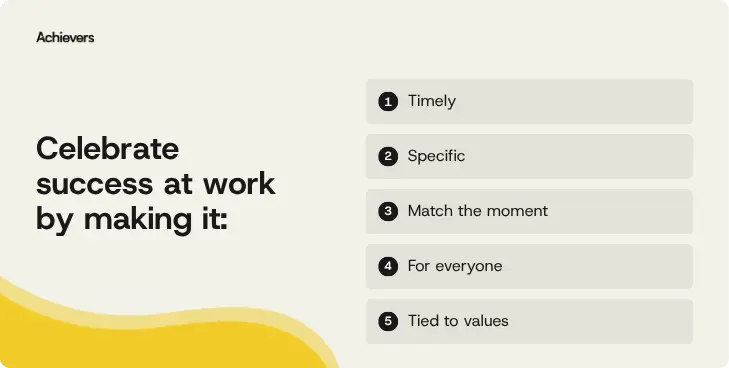
Building a robust culture of celebration doesn’t require extravagant budgets or elaborate events. It demands intention, thoughtfulness, and consistency. When celebration is integrated thoughtfully and regularly, it powerfully reinforces desired behaviors without feeling forced or performative. Here’s what truly works:
-
Make it Timely: The Immediate Impact
Recognition loses its potency when delayed. The impact of appreciation fades as time passes, weakening the crucial connection between an employee’s effort and the acknowledgment received. Timely recognition, delivered as close to the event as possible, validates the action while it’s still fresh in everyone’s mind. It helps employees understand precisely how their actions made a difference in real-time, rather than being a retrospective note in a formal review weeks or months later. This immediacy is key to reinforcing positive behaviors effectively. -
Be Specific: Reinforcing Desired Behaviors
Generic praise like "Great job" lacks the impact of specific recognition. While well-intentioned, it offers little guidance. Specific recognition requires slightly more thought but yields far greater returns. By articulating what someone did and why it mattered, employees gain a clear understanding of which behaviors are valued and should be repeated. This removes ambiguity, bolsters confidence, and transforms recognition from a mere polite gesture into a powerful, actionable signal for growth and development. For example, instead of "Good presentation," try "Your clear breakdown of the financial projections in today’s presentation made the complex data accessible to everyone, ensuring we all understood the implications for Q3." -
Contextual Relevance: Matching the Moment and the Individual
Not every achievement warrants a grand public spectacle. While some significant milestones might deserve a company-wide celebration, other contributions are best acknowledged through a quiet, personal conversation or a private note. The art lies in selecting the appropriate channel and level of recognition that aligns with the context of the achievement and the personality of the individual. When the celebration method matches the moment and the person’s preferences, it feels authentic and meaningful, rather than performative or awkward. Some employees thrive on public accolades, while others prefer private acknowledgement. -
Inclusive Participation: The Rise of Peer Recognition
The responsibility for celebration should not fall solely on managers. Peer recognition is an indispensable component of building a connected and inclusive workplace, particularly in large, distributed, or frontline environments where managers may not witness every impactful contribution. Empowering employees to recognize the wins they observe daily makes recognition more frequent, more inclusive, and deeply embedded within the operational fabric of the organization. This fosters a culture where everyone feels responsible for uplifting and supporting their colleagues, creating a pervasive atmosphere of appreciation. -
Value Alignment: Embedding Culture in Every Acknowledgment
When recognition is explicitly linked to an organization’s core values, those values transition from abstract statements to tangible actions. Celebrating work that embodies values like collaboration, customer focus, integrity, or innovation brings these principles to life. It visually demonstrates what success looks like within the organizational framework. Over time, consistently celebrating values-aligned behaviors not only reinforces the culture but also guides employees on how success is achieved, not just what is delivered, creating a virtuous cycle of positive cultural reinforcement.
Overcoming the Obstacles: Why Appreciation Often Fails
Most organizations do not intentionally neglect celebration out of indifference; rather, it’s often a casualty of operational pressures. Deadlines loom, priorities shift, and recognition, deemed a "soft skill," is inadvertently postponed – often indefinitely. This postponement carries significant risks. When appreciation dwindles, so too does the crucial sense of belonging.
The 2026 Engagement and Retention Report starkly illustrates this: employees who feel appreciated are 54 times more likely to report a strong sense of belonging, and belonging is one of the most powerful predictors of employee retention. Thus, when celebration is overlooked, it’s not merely a missed "nice moment"; it represents a missed opportunity to leverage a potent retention mechanism.
Furthermore, systemic challenges often impede effective recognition. Managers, frequently overwhelmed with their core responsibilities, may lack the training, tools, or time to consistently provide meaningful recognition. The AWI data also indicates that only 18% of employees globally feel supported by their manager in ways that help them perform their best work. This statistic highlights a critical gap in managerial capabilities and organizational infrastructure. Without adequate systems and leadership commitment, recognition efforts can remain sporadic and ineffective, failing to integrate into the daily workflow.
The Future of Work: Integrating Celebration as a Core Habit
The ultimate objective is not to celebrate occasionally, but to cultivate a deeply embedded culture where celebrating success is the norm, an intrinsic part of how work is done. When celebration evolves into a habit:
- Employee morale receives a consistent uplift.
- Positive behaviors are continuously reinforced.
- Team cohesion and collaboration are naturally strengthened.
- Individuals feel genuinely supported and valued by their leaders and peers.
This consistent, visible recognition is one of the most straightforward yet impactful ways to address the low percentage of employees who feel adequately supported by their managers. It transforms the employee experience from one of quiet contribution to one of acknowledged impact, fostering a more vibrant, productive, and loyal workforce.
Technological Enablers: How Platforms Facilitate Continuous Recognition
In today’s complex, often distributed work environments, technology plays a pivotal role in enabling and scaling a culture of continuous celebration. Solutions like the Achievers platform are designed to move beyond sporadic applause, making recognition a strategic driver of organizational outcomes. These platforms assist organizations by:
- Providing Accessible Tools: Offering intuitive platforms that simplify the process of giving and receiving recognition, making it easy for anyone, anywhere, to acknowledge contributions.
- Enhancing Visibility: Creating centralized, visible streams of recognition that allow individuals, teams, and the entire organization to see and celebrate successes, reinforcing a collective culture of appreciation.
- Integrating with Rewards: Linking recognition to meaningful, customizable rewards that further incentivize desired behaviors and provide tangible appreciation, whether monetary or experiential.
- Delivering Actionable Insights: Generating data on recognition patterns, frequency, and impact, allowing HR leaders and managers to identify trends, address gaps, and continuously refine their recognition strategies for maximum effectiveness.
- Facilitating Values Alignment: Structuring recognition opportunities around core company values, helping to embed and reinforce these principles through every act of appreciation.
When individuals feel seen, heard, and genuinely appreciated, the ripple effect extends far beyond individual morale. They don’t just work harder; they work smarter, demonstrate greater loyalty, and approach their tasks with a deeper sense of purpose and commitment. Moving beyond occasional acknowledgment to building a systemic culture of continuous celebration is no longer optional; it is a fundamental pillar of sustainable organizational success in the 21st century. Organizations ready to make this shift will find themselves better positioned to shape their workforce, recognize excellence, reward contributions, and ultimately, achieve superior results.