In the rapidly evolving landscape of modern business, employee recognition is no longer a peripheral perk but a fundamental pillar of organizational performance. As businesses navigate the complexities of the 2026 fiscal year, Chief Human Resources Officers (CHROs) are increasingly recognizing recognition as a strategic imperative, directly influencing employee behaviors that drive organizational success. A recent study conducted by Harvard Business Review Analytic Services, surveying 566 respondents, revealed that while 66% deem recognition critically important to business performance, a mere 33% report their current programs as highly effective. This disparity presents a significant opportunity for CHROs to recalibrate their recognition strategies, transforming them into clear signals of organizational values, priorities, and desired outcomes.
The Strategic Evolution of Employee Recognition
The traditional view of employee recognition often relegated it to sporadic gestures of appreciation. However, the contemporary business environment demands a more strategic and integrated approach. Research from HBR’s report, Improving Business Performance Through Appreciation, underscores this shift, highlighting that 88% of recognition leaders actively design their programs to foster specific employee behaviors. This contrasts sharply with the 28% of organizations with less mature recognition programs that focus on more generalized appreciation. The implication is clear: recognition is most potent when it is meticulously aligned with the behaviors and efforts that propel the business forward.
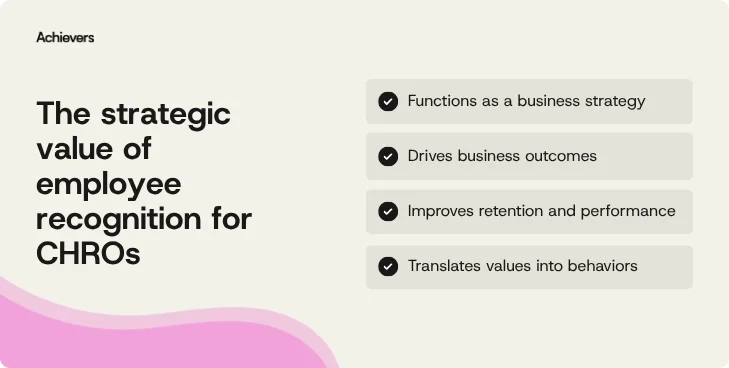
For CHROs, this strategic pivot means viewing recognition not as an add-on process but as an intrinsic component of their people agenda. By embedding recognition into the daily operations, organizations can effectively guide behavior, reinforce critical priorities, and articulate expectations without introducing additional bureaucratic layers. This strategic integration ensures that recognition initiatives actively support, rather than compete with, broader human resources objectives.
Recognition as a Catalyst for Business Outcomes
The pressure on HR departments to deliver tangible business outcomes, such as enhanced engagement, improved retention, and boosted performance, is ever-present. Employee recognition emerges as a powerful lever to address these critical metrics. Organizations that consistently implement robust recognition programs typically witness a reduction in voluntary turnover, higher levels of employee engagement, and demonstrably better productivity and performance. Furthermore, recognition plays a crucial role in clarifying for employees what constitutes valuable contributions, thereby encouraging the replication of such behaviors.
The financial implications of neglecting recognition are substantial. The cost of replacing disengaged or departing employees—encompassing recruitment expenses, onboarding, lost productivity, and the disruption to team dynamics—is considerable. Strategic recognition acts as a proactive measure, fostering a stronger sense of connection and value among employees, thereby mitigating the likelihood of attrition. For CHROs tasked with optimizing budgets and meeting ambitious organizational goals, recognition offers a high-impact, cost-effective solution that requires sustained strategic focus rather than constant reinvention.
Translating Values into Daily Actions
Organizational values, when articulated but not reinforced, often remain abstract ideals. Recognition serves as the bridge between stated values and daily employee conduct, providing a tangible mechanism to highlight and encourage actions that align with the company’s core principles. As Robert Dur, Professor of Economics at Erasmus University Rotterdam, aptly describes in the latest HBR report, recognition functions as a "compass that directs people’s attention, time, and energy." This makes recognition an invaluable tool for CHROs seeking to translate organizational values from policy documents into observable, everyday behaviors.
The Modern Paradigm of Employee Recognition in 2026
The efficacy of traditional recognition models is increasingly being called into question in the context of the contemporary workplace. These legacy systems, often built for a pre-digital era, struggle to keep pace with the dynamic nature of modern work. They tend to limit the reach of recognition, diminish its relevance to day-to-day contributions, and miss crucial opportunities to acknowledge important moments.
The prevailing trend in 2026 is a decisive shift from infrequent, episodic recognition to frequent, embedded appreciation. This modern approach integrates recognition seamlessly into the workflow, ensuring it is consistent and closely tied to the actual work being performed. This evolution makes recognition more credible, inclusive, and significantly more effective in shaping day-to-day behaviors.

Fostering Change-Ready, Connected Organizations
In an era characterized by constant flux, recognition transcends mere motivation; it provides a stabilizing force. By consistently acknowledging and reinforcing desired behaviors, organizations build resilience and adaptability. This creates a foundation for a connected company, where recognition acts as a steadying influence, keeping employees aligned, engaged, and prepared for future challenges.
The success of any significant business transformation ultimately hinges on employees adapting their work practices. David Bator, Managing Director of Achievers Workforce Institute, commented on the HBR findings, emphasizing that recognition is critical for translating change initiatives into enduring behaviors. In his insights published in The Recognition Effect, Bator argues that recognition is a key driver in organizational transformation, helping to solidify new ways of working.
Leveraging Recognition for Engagement, Retention, and Culture
To effectively harness the power of recognition, CHROs must adopt a multi-faceted approach:
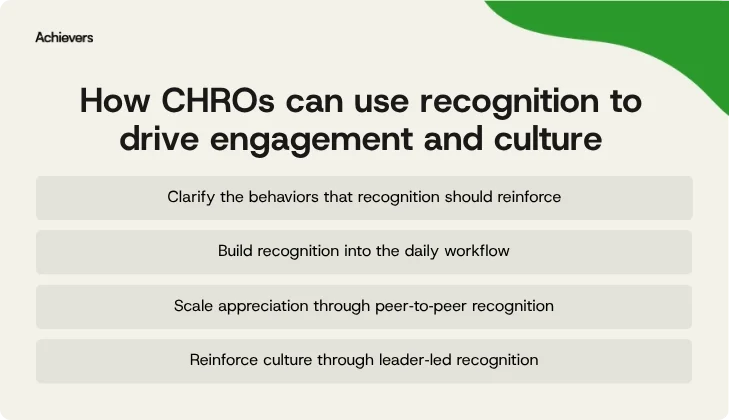
Clarifying Desired Behaviors
Recognition is most impactful when it is directly linked to clear expectations. CHROs must meticulously define the behaviors that most effectively drive engagement, morale, retention, and performance. By ensuring recognition consistently reinforces these specific actions, its impact is amplified. Vague recognition dilutes its effectiveness; conversely, specific recognition tied to organizational priorities and values provides employees with actionable guidance.
Integrating Recognition into Daily Workflows
The most effective recognition occurs organically, within the flow of work, rather than as a separate, externally imposed program. Instead of being confined to annual awards, recognition should be woven into daily team check-ins, project milestones, customer successes, and everyday collaborative efforts. This embedded approach ensures that appreciation is timely, relevant, and consistent.
Scaling Appreciation Through Peer-to-Peer Recognition
While manager recognition is undeniably important, it cannot solely shoulder the responsibility for fostering a culture of appreciation. Peer-to-peer recognition broadens the visibility of contributions, strengthens a sense of belonging, and captures valuable efforts that managers might otherwise miss. When recognition becomes a shared responsibility, the organization’s culture scales organically. CHROs play a pivotal role by establishing the expectation that recognition is a collective endeavor, actively given by all employees, not solely a directive from leadership.
Reinforcing Culture Through Leader-Led Recognition
Recognition from senior leaders carries significant weight, signaling what the organization truly prioritizes. A CEO publicly acknowledging a team’s successful navigation of a challenging period, or an executive commending collaborative efforts during a tough quarter, provides a clearer message than any formal communication. CHROs can ensure this impact is sustained by equipping leaders to recognize visibly, consistently, and in ways that serve as learning opportunities for the broader workforce.
Designing Inclusive Recognition Across Work Models
Recognition must extend to all employees, regardless of their role or work model. This necessitates designing recognition initiatives that accommodate diverse realities, from frontline workers to remote teams. Whether through quick peer shout-outs on the shop floor or digital recognition shared across dispersed teams, the focus should be on the genuine contribution and impact made, ensuring employees feel valued for their efforts, not just their proximity to leadership.
Positioning Recognition as a Culture-Shaping System
The true value of recognition is realized when it becomes a habitual leadership practice, not a one-off initiative. Consistent application of recognition helps employees understand organizational ethos and their place within it. This transforms recognition into a measurable system that CHROs can continuously refine to strengthen the organizational culture over time.
Measuring Recognition ROI and Addressing Challenges
To demonstrate the business impact of recognition, CHROs must focus on key metrics:
Usage and Participation: Tracking the frequency and breadth of recognition given and received provides insight into its adoption across the organization. High usage rates indicate that recognition is becoming embedded in the company culture.
Consistency and Timeliness: Analyzing how consistently recognition is delivered and its proximity to the recognized behavior is crucial. Timely and consistent recognition reinforces desired actions more effectively.
Impact on Key Metrics: Linking recognition data to critical business outcomes such as employee engagement scores, retention rates, productivity levels, and customer satisfaction provides a clear return on investment (ROI). For instance, correlating periods of high recognition activity with dips in voluntary turnover can quantify the retention impact.
Employee Feedback: Gathering qualitative feedback through surveys, focus groups, and one-on-one conversations offers deeper insights into how employees perceive the recognition they receive and whether it aligns with their contributions and the company’s values.
Common Recognition Challenges and Solutions
CHROs frequently encounter obstacles in implementing and sustaining effective recognition programs. One significant challenge is lack of clarity around desired behaviors. This can be overcome by clearly defining and communicating the specific actions and achievements that the organization values and wishes to reinforce through recognition. Another hurdle is inconsistent application of recognition, often stemming from a lack of leadership buy-in or training. Solutions involve comprehensive leadership development programs focused on the strategic importance of recognition and practical training on how to deliver meaningful appreciation.
Insufficient budget allocation can also impede program effectiveness. In such cases, CHROs can advocate for recognition as a strategic investment by presenting compelling data on its ROI, demonstrating how it contributes to crucial business outcomes like retention and productivity, thereby justifying the necessary financial resources. Finally, difficulty in measuring impact can lead to programs being perceived as less valuable. By establishing clear KPIs from the outset and integrating recognition platforms with existing HR analytics tools, CHROs can effectively track and demonstrate the tangible business benefits of their recognition initiatives.
The Path Forward: Turning Recognition into Results
For CHROs in 2026, the paramount question is not whether recognition matters, but whether it is effectively deployed in the moments that count. In times of employee uncertainty or strain, recognition serves as a vital signal, affirming that their work is valued and contributes to the larger organizational purpose. When executed strategically, recognition becomes the thread that connects individuals to their purpose, to their colleagues, and to the core values of the organization.
Leading CHROs are moving beyond superficial programs and focusing on the consistent, impactful application of recognition. They meticulously track its reach, the behaviors it reinforces, and its contribution to a results-driven culture. This requires an honest assessment of current practices and a willingness to adapt and evolve. By embracing recognition as a strategic business performance system, CHROs can cultivate a more engaged, productive, and resilient workforce, ultimately driving sustained organizational success.