In today’s dynamic global economy, employee recognition has transcended mere courtesy to become a cornerstone of strategic business practice. Enterprises, particularly those with vast and geographically dispersed workforces, are increasingly acknowledging that a workforce that feels genuinely seen and valued is one that exhibits higher retention rates, superior performance, and a deeper commitment to organizational goals. This paradigm shift has propelled enterprise leaders toward sophisticated employee recognition software, recognizing that the power of appreciation must scale seamlessly, even when employee counts soar into the tens of thousands.
The Evolving Landscape of Workforce Engagement
The conventional wisdom of occasional bonuses or annual awards is rapidly being supplanted by a demand for continuous, impactful recognition. The challenges of scaling appreciation across diverse teams, multiple time zones, and varied technological ecosystems are substantial. Without a structured approach, even the most sincere intentions to foster a culture of gratitude can falter. This is precisely where modern recognition platforms emerge as indispensable tools, designed to bridge distances, facilitate real-time acknowledgment, and ensure that exemplary contributions never go unnoticed within complex organizational structures.
The urgency for robust recognition strategies has been amplified by several macroeconomic trends, including the "Great Resignation" and the persistent talent wars, which have underscored the critical importance of employee experience in attracting and retaining top talent. Companies that prioritize psychological safety and appreciation are better positioned to navigate these challenges, fostering an environment where employees are not just productive cogs but valued contributors.
Defining the Modern Corporate Rewards Program
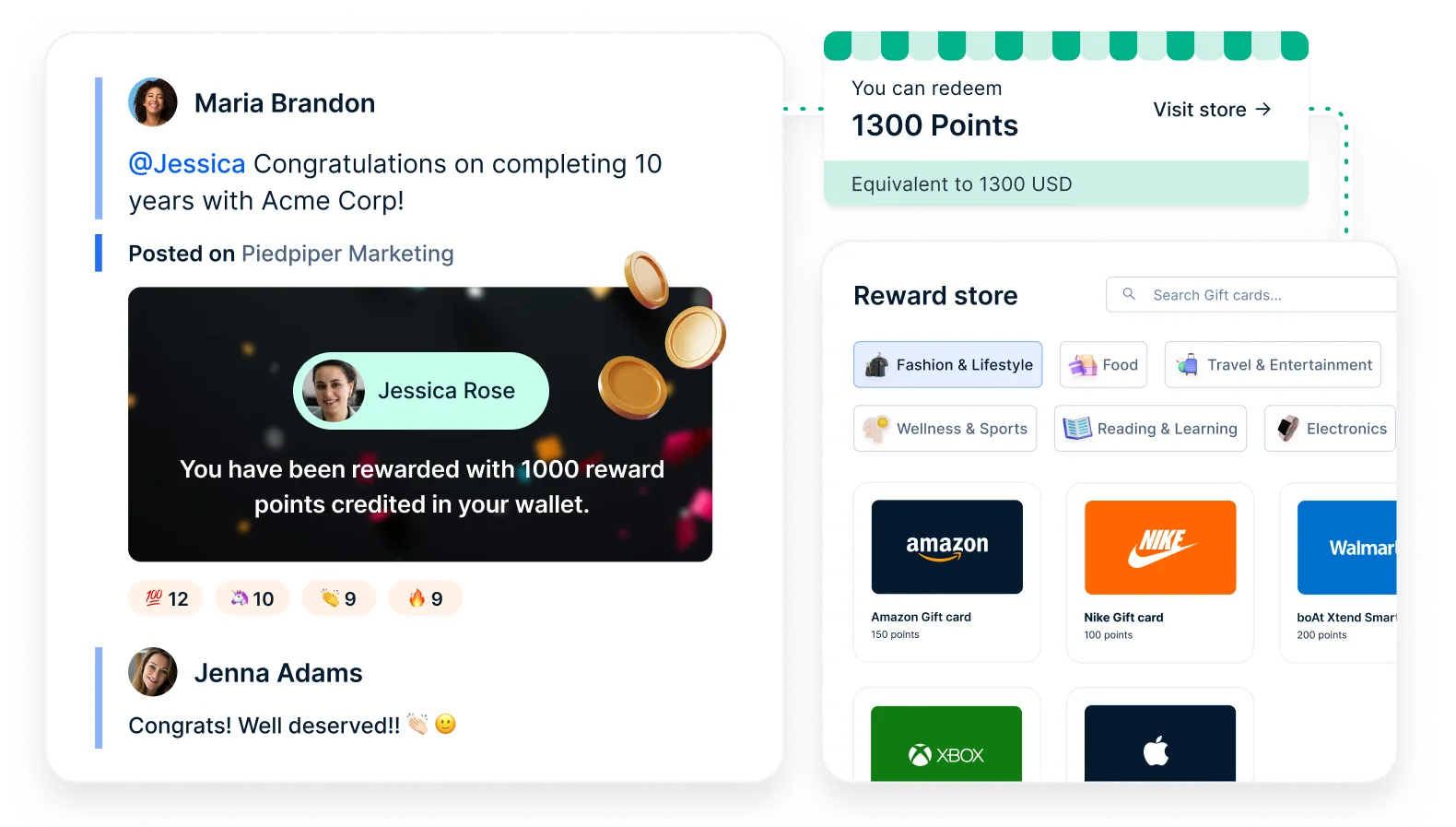
At its core, a corporate rewards program is a meticulously designed initiative aimed at recognizing and compensating employees for their contributions, achievements, and alignment with the company’s overarching goals and values. These programs are instrumental in reinforcing desired behaviors by offering meaningful incentives such as points, gift cards, merchandise, unique experiences, or other tailored rewards. They serve as tangible affirmations when employees reach significant milestones, consistently deliver high performance, or embody core company values.

Crucially, contemporary corporate rewards programs are integrated components of a broader employee recognition strategy. They move beyond episodic acknowledgments, embedding recognition as a continuous thread within the employee journey. The adoption of technology platforms has been pivotal in this evolution, enabling managers and peers alike to offer real-time recognition and facilitate points-based rewards that employees can redeem for items or experiences genuinely meaningful to them.
Key Pillars of an Effective Enterprise Recognition Program
For large enterprises, successful corporate rewards programs typically combine robust social recognition features with highly flexible reward options. This ensures broad participation across all departments, geographical locations, and job functions. When integrated with a comprehensive employee recognition platform, these programs are proven catalysts for improving engagement, strengthening company culture, reducing attrition, and cultivating a more cohesive and connected workforce.
Organizations evaluating employee recognition software must prioritize platforms that offer social recognition capabilities, customizable reward catalogs, enterprise-grade scalability, and seamless integration with existing HR and business systems. These functionalities are vital for ensuring that recognition is delivered consistently, equitably, and with a measurable impact on the overall employee experience and, ultimately, business outcomes.
The Strategic Imperative: Why Recognition Matters for Large Companies
In expansive, often multinational organizations, recognition acts as the critical adhesive that binds corporate culture together. It ensures consistency in values and aligns employees around a shared purpose, even as the business expands and transforms. The benefits extend far beyond morale:
- Enhanced Employee Engagement: Studies by organizations like Gallup consistently show that highly engaged employees are more productive, profitable, and customer-focused. Recognition is a primary driver of this engagement, creating a positive feedback loop that motivates continued high performance.
- Improved Retention Rates: In a competitive labor market, employees who feel valued are significantly less likely to seek opportunities elsewhere. Strategic recognition programs directly combat employee turnover, reducing the substantial costs associated with recruitment and training.
- Boosted Productivity and Performance: When achievements are acknowledged, employees are motivated to replicate and even exceed their performance. Recognition reinforces positive behaviors and encourages a culture of continuous improvement.
- Stronger Company Culture: Recognition platforms provide a public forum for celebrating successes and demonstrating values in action. This strengthens cultural bonds, reinforces desired behaviors, and creates a more positive and inclusive work environment.
- Increased Innovation and Collaboration: When employees feel secure and valued, they are more likely to take risks, share ideas, and collaborate effectively across teams, fostering an environment ripe for innovation.
Best Practices for Recognition at Scale
Effective recognition in large organizations demands more than good intentions; it requires a structured, consistent methodology that reaches every employee, regardless of location, role, or team. For large enterprises, the most impactful recognition programs are meticulously designed to maximize participation, reinforce core values, and deliver demonstrable business results. Key best practices include:
- Frequent and Accessible Recognition: Enabling real-time, continuous recognition, rather than limiting it to annual reviews or major milestones, keeps engagement high and reinforces desired behaviors immediately.
- Values-Aligned Recognition: Tying every recognition moment to the organization’s core values and strategic goals ensures that appreciation actively drives behaviors that contribute to stronger performance and a more robust culture.
- Empowering Peer-to-Peer Recognition: In large organizations, managers alone cannot effectively scale recognition. Empowering every employee to recognize their colleagues significantly broadens reach, boosts participation, and enhances the authenticity of appreciation.
- Blended Recognition Approaches: Combining public, social recognition with meaningful, rewards-based incentives leverages both intrinsic motivation (feeling seen) and extrinsic motivation (receiving a tangible reward).
- Data-Driven Program Optimization: Utilizing analytics to track participation rates, frequency, and outcomes allows organizations to understand program effectiveness and identify areas for improvement, directly linking recognition efforts to engagement and retention metrics.
- Seamless Integration into Workflow: Recognition should feel like an organic part of the workday, not an additional task. Integrating recognition platforms with existing communication and productivity tools (e.g., Slack, Microsoft Teams, HRIS) ensures ease of use and higher adoption.
Selecting the Right Employee Recognition Software for Enterprise
For a workforce spanning multiple offices, time zones, and job classifications, even minor deficiencies in usability or support within a recognition platform can create significant ripple effects. The most effective platforms simplify recognition for everyone, everywhere. Critical considerations include:
- Scalability: The software must effortlessly support thousands of users across global regions without performance degradation. This includes global reward fulfillment, multilingual support, and a consistent user experience.
- Ease of Use: An intuitive interface is paramount. If the platform is cumbersome, adoption rates will suffer. It should integrate naturally into existing workflows, making recognition a seamless part of daily operations.
- Frequency and Visibility: Top-tier systems enable fast, frequent, and public appreciation, allowing employees to see how their contributions align with broader company objectives.
- Integration Capabilities: The platform should integrate robustly with existing HRIS, communication, and productivity tools, ensuring recognition can occur within the applications employees already use daily.
- Comprehensive Reporting and Analytics: Beyond simply tracking recognition events, the software should offer deep insights into participation, engagement trends, and the ability to calculate Return on Investment (ROI), directly linking appreciation to performance outcomes.
- Vendor Support: For large-scale implementations, strong vendor partnership is essential. This includes dedicated customer success teams, hands-on implementation support, and ongoing guidance to ensure the recognition culture evolves with the company.
Leading Employee Recognition Platforms for Large Enterprises
A competitive landscape of software providers offers specialized solutions to meet the complex demands of enterprise-level recognition.
1. Achievers
G2 rating: 4.7/5
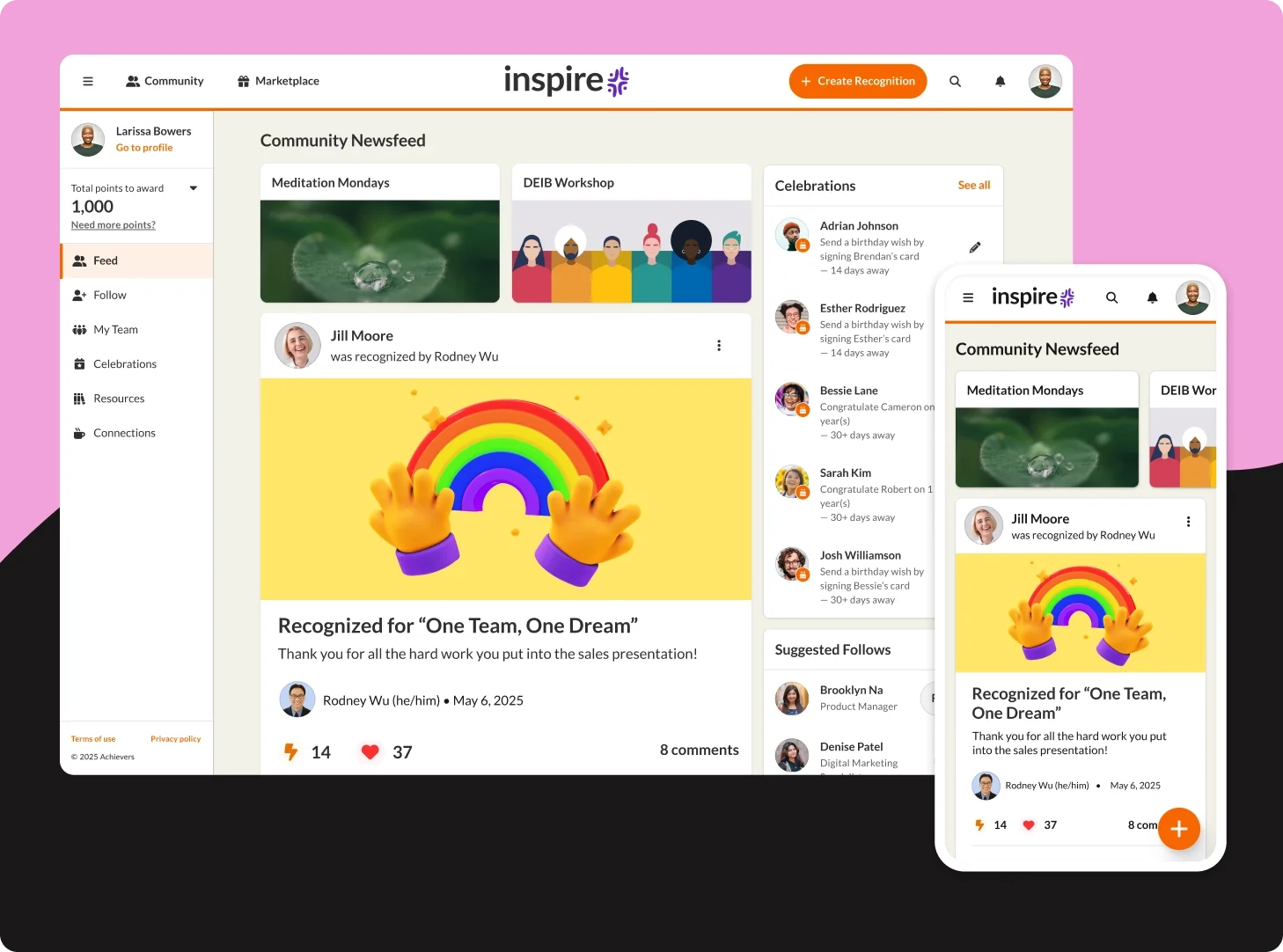
Strengths: Achievers stands out as a leading platform, empowering large organizations to transform recognition into a core business driver. Boasting over 4.3 million global users and exceptional adoption rates often exceeding 90%, it facilitates seamless peer and manager recognition across any location, accessible via desktop, mobile, or integrated into popular workplace tools. Achievers differentiates itself by grounding every interaction in behavioral science, derived from its Achievers Workforce Institute, enabling leaders to cultivate habits that demonstrably improve engagement, retention, and performance. Its flexible global rewards system covers 190 countries, complemented by AI-driven insights and 24/7 multilingual support in over 200 languages, making it ideal for complex, global workforces.
Best for: Enterprise and global organizations seeking to scale recognition, significantly boost engagement, and measure cultural impact through actionable data.
Key features: AI-powered recommendations, global reward fulfillment, real-time social recognition, comprehensive analytics, robust HRIS integrations.
Weakness: Its advanced analytics and extensive configuration options, while powerful for enterprises, might be overkill for smaller businesses.
2. Motivosity
G2 rating: 4.7/5
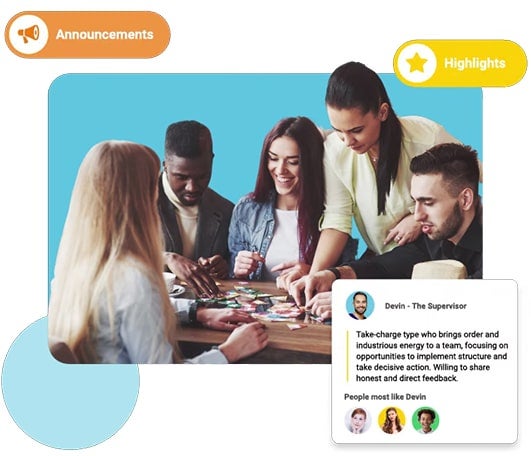
Strengths: Motivosity offers a recognition and rewards platform specifically designed to enhance connection and appreciation. It supports peer and manager recognition, milestone celebrations, and spot bonuses, alongside integrated communication tools and employee profiles to encourage sustained participation.
Best for: Organizations prioritizing social features and engagement within their recognition framework.
Key features: Peer-to-peer appreciation, manager-led recognition, social feed, milestone awards, sentiment surveys.
Weakness: While effective for mid-sized teams, larger enterprises may require more profound analytics and customization capabilities.
3. Guusto
G2 rating: 4.9/5
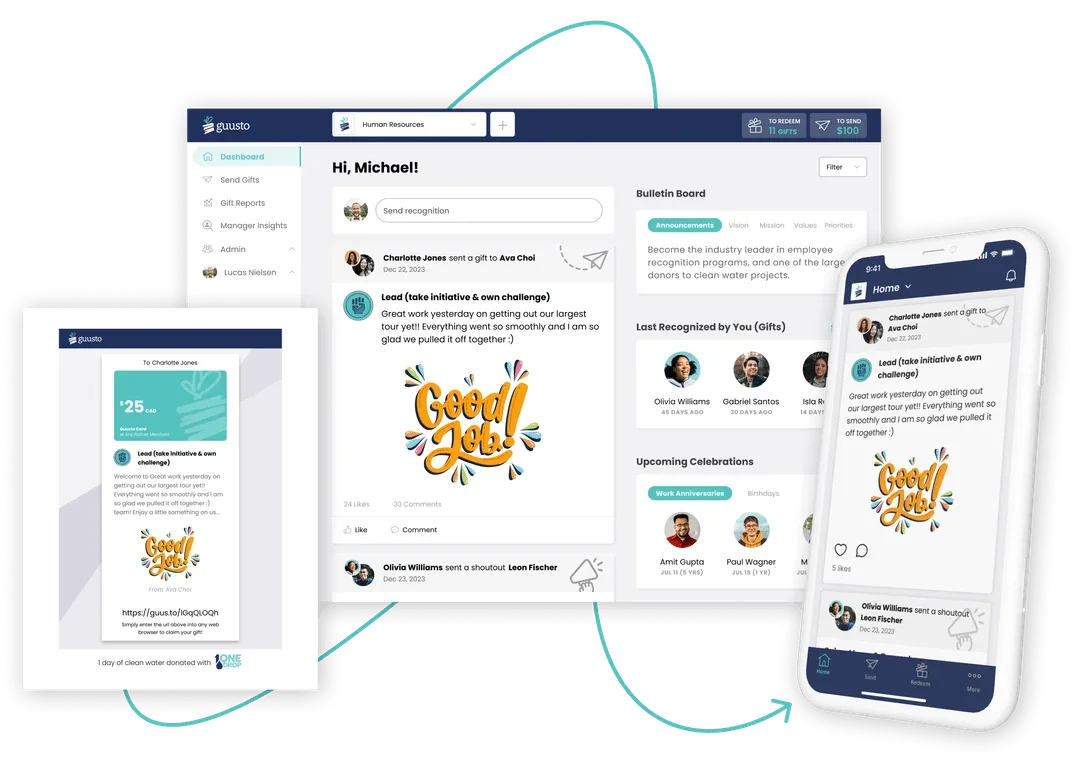
Strengths: Guusto focuses on engaging both office-based and frontline employees with an intuitive platform for sending digital or printed rewards, automating milestone programs, and managing budgets. It also supports non-monetary recognition through shoutouts and peer nominations.
Best for: Organizations with diverse workforces (office and frontline) requiring an easy-to-use rewards and recognition system.
Key features: Digital gift sending, automated milestone programs, budget management, peer nominations.
Weakness: Its simplified setup and reporting may not satisfy the deep analytical or integration needs of global enterprises.
4. Mo
G2 rating: 4.6/5
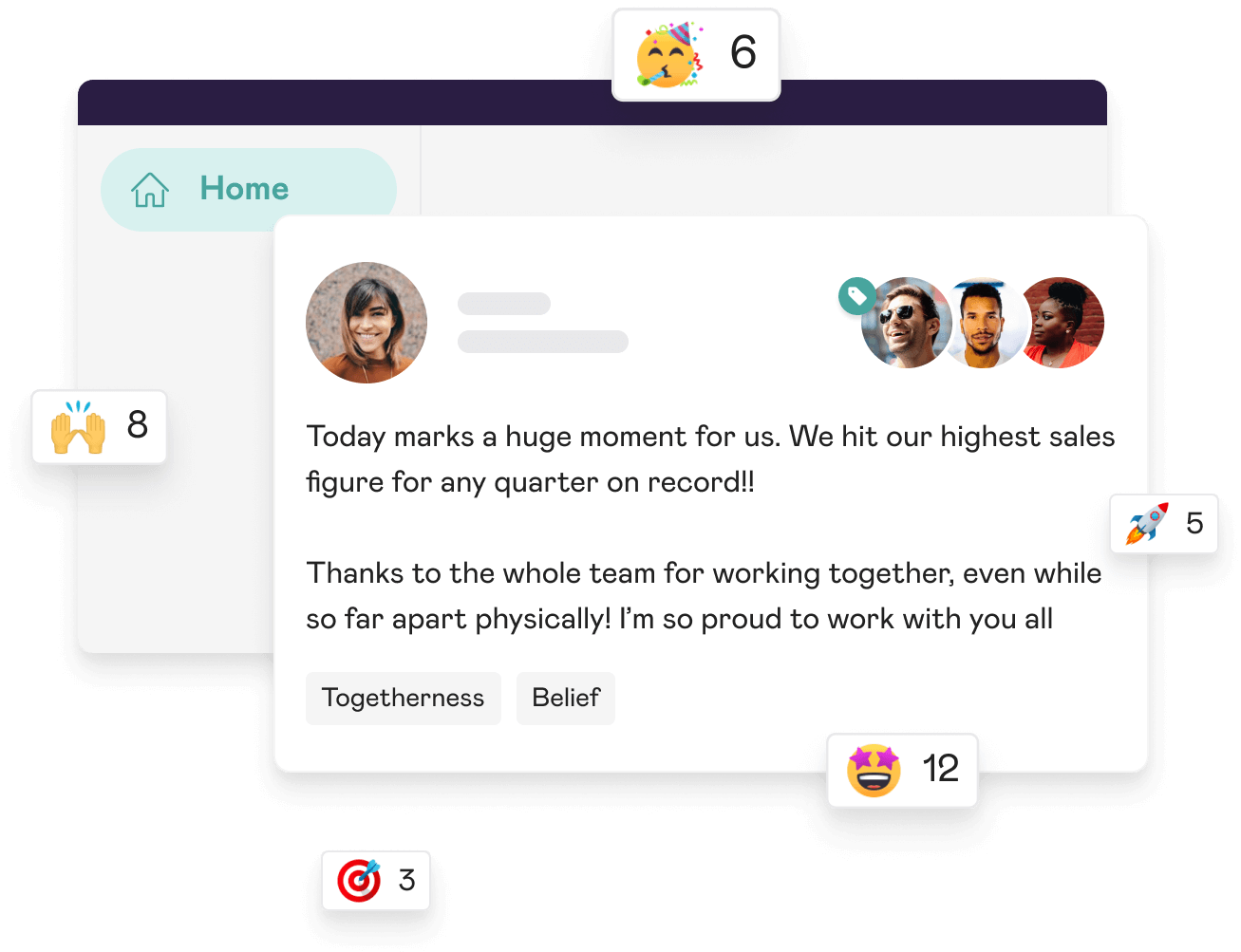
Strengths: Mo emphasizes making company culture visible through daily acts of appreciation. It helps employees and managers share recognition, celebrate milestones, and link contributions to company values, with automated prompts and integrations facilitating daily use.
Best for: Companies that value ease of use and consistent, everyday recognition over highly detailed reporting.
Key features: Social recognition feed, automated prompts, integration with communication tools, custom values alignment.
Weakness: It may lack the advanced analytics and extensive customization features that large enterprises often require.
5. Terryberry
G2 rating: 4.6/5
Strengths: Terryberry provides a unified engagement platform encompassing recognition, wellness initiatives, and survey tools. It focuses on measuring cultural and engagement outcomes through built-in analytics and offers global fulfillment for awards.
Best for: Teams seeking a holistic employee engagement system with integrated recognition capabilities.
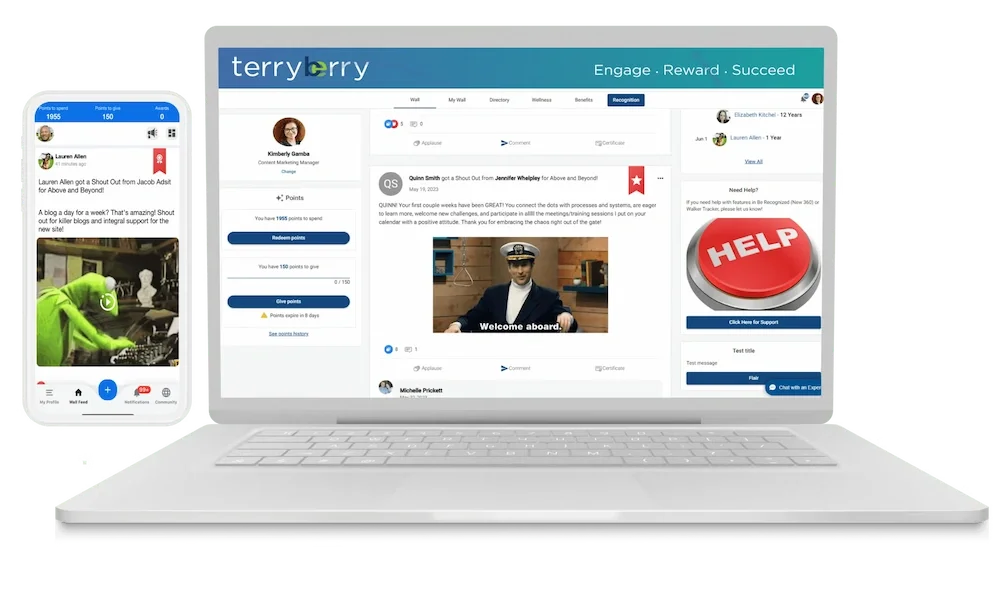
Key features: Unified platform for recognition, wellness, and surveys; sentiment-based analytics; global reward fulfillment.
Weakness: Its all-in-one approach might offer less flexibility for companies primarily focused on advanced recognition and analytics.
6. Nectar
G2 rating: 4.6/5
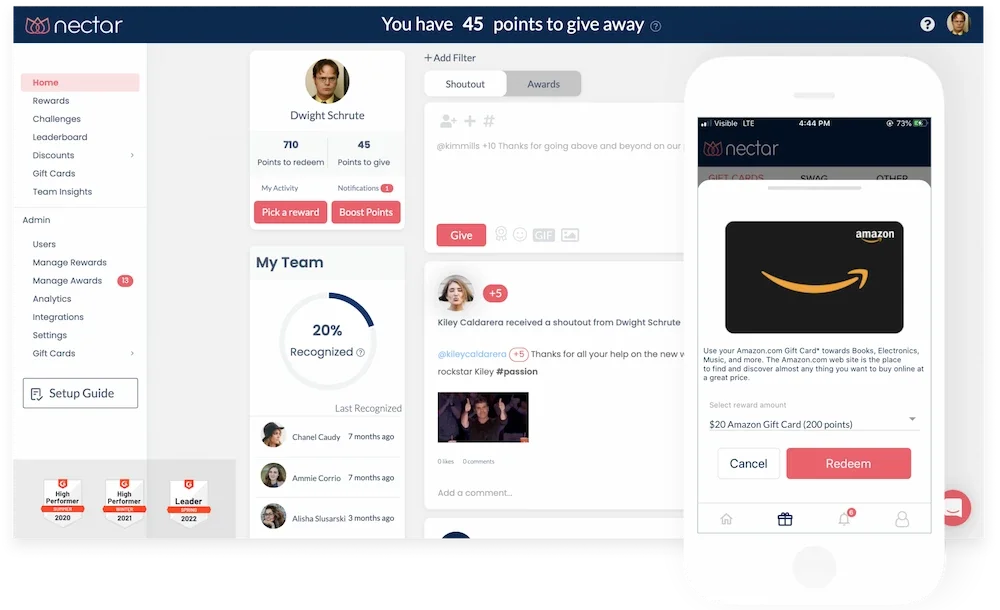
Strengths: Nectar offers a straightforward platform for recognition and rewards, facilitating the celebration of achievements, managing nominations, and internal communications. It prioritizes ease of use and automation for milestone celebrations and reward distribution.
Best for: Organizations needing a simple, automated recognition solution without extensive advanced analytics.
Key features: Peer-to-peer recognition, nominations, automated milestone celebrations, internal communications.
Weakness: Its simplified design may not provide the deep analytics or global reward options needed by larger enterprises.
7. Kudos
G2 rating: 4.8/5
Strengths: Kudos is built to reinforce company values through a "Performance Recognition" framework that connects recognition messages to impact levels and values. It offers peer-to-peer and top-down recognition, milestone automation, and a broad global rewards catalog.
Best for: Organizations seeking a value-based recognition platform with accessible analytics and core engagement features.
Key features: Value-based recognition, peer-to-peer and top-down, milestone automation, global rewards.
Weakness: Offers lighter data insights and reporting depth compared to some enterprise-focused platforms.
8. WorkTango
G2 rating: 4.7/5
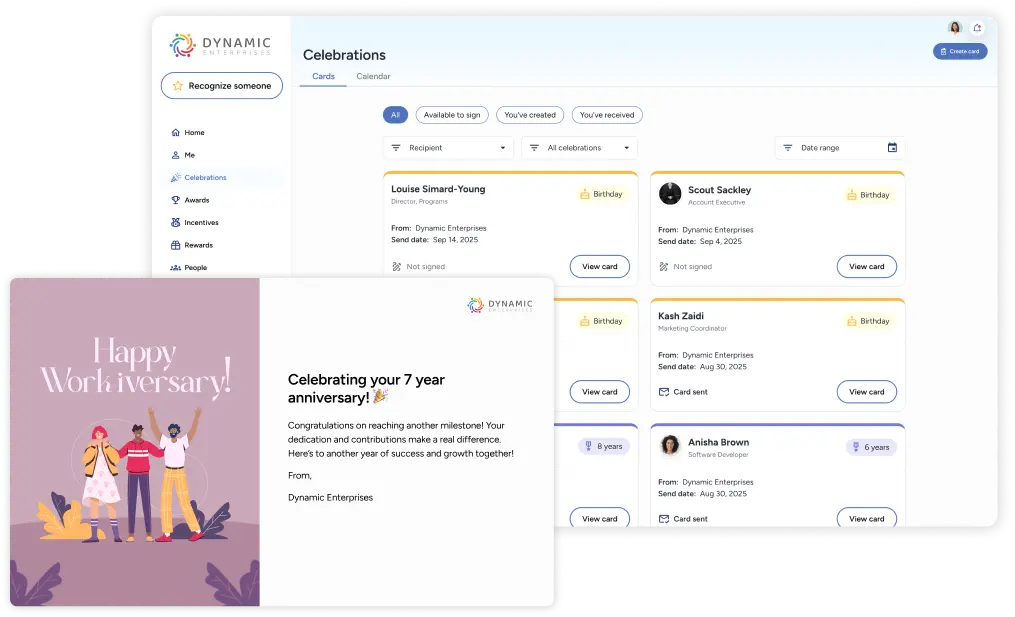
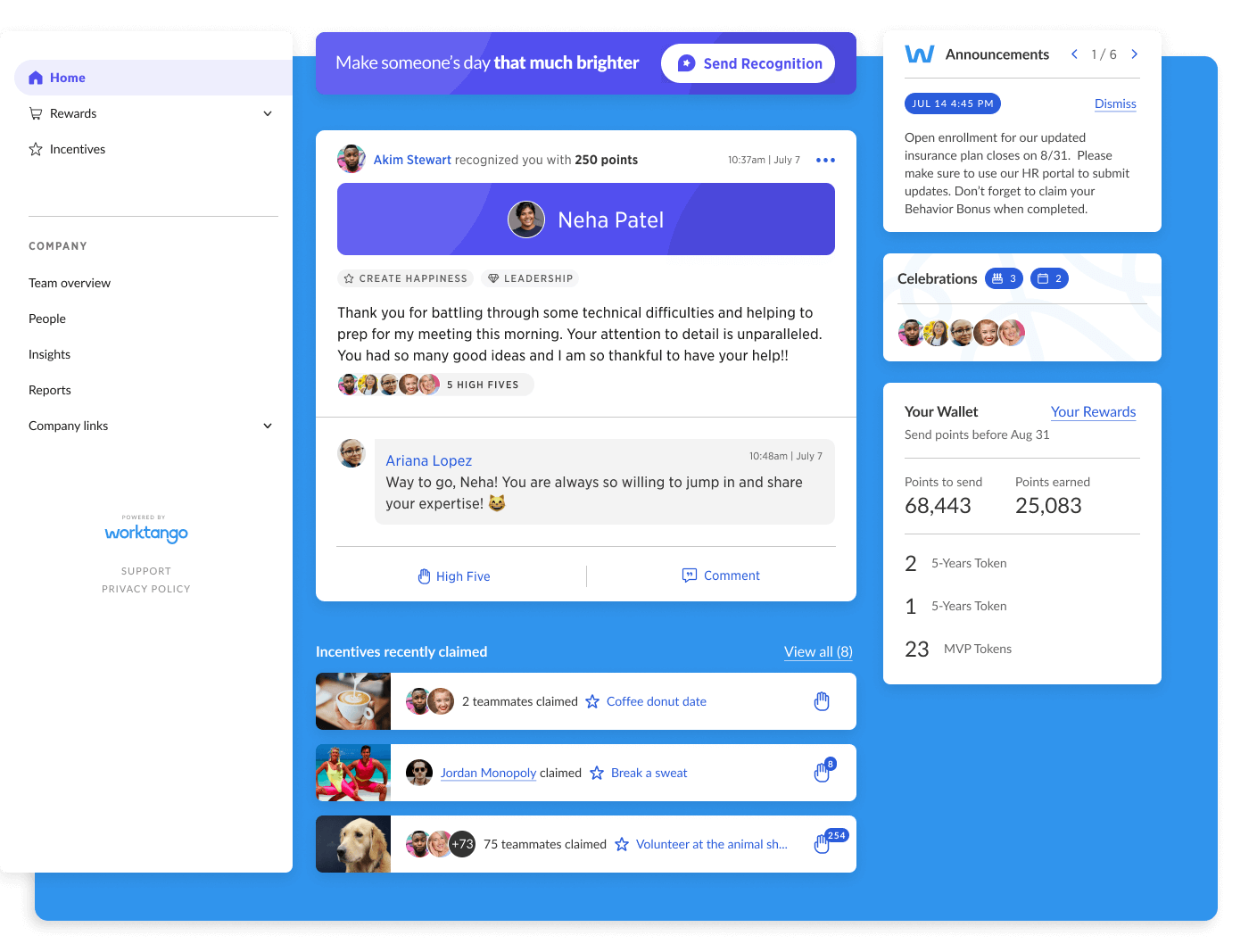
Strengths: WorkTango combines recognition and rewards with survey and insights tools into a single employee experience platform. It helps organizations measure engagement, gather feedback, and reinforce behaviors through automated recognition and incentive programs, featuring a large global rewards marketplace.
Best for: Teams looking for a comprehensive HR platform where recognition is integrated into a broader engagement strategy.
Key features: Recognition, surveys, and incentives; global rewards marketplace; reporting dashboards.
Weakness: Its broad coverage of HR functions means its recognition features might be less specialized or customizable than dedicated platforms.
9. Bucketlist
G2 rating: 4.8/5
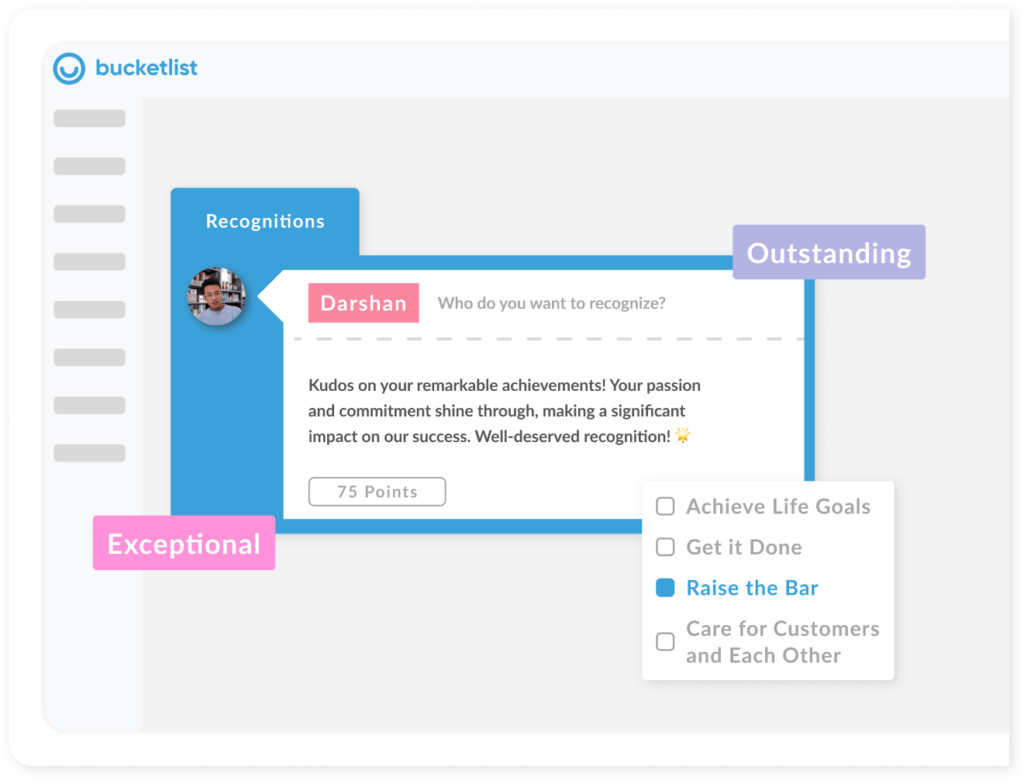
Strengths: Bucketlist focuses on automation, accessibility, and real-time engagement through peer and manager recognition, milestone celebrations, and goal-based incentives. It integrates with Slack, Teams, and HRIS systems to support both office and frontline employees.
Best for: Organizations prioritizing everyday engagement and easy recognition delivery over deep analytics.
Key features: Automated peer/manager recognition, social feed, milestone celebrations, broad integrations.
Weakness: Recognition tools may feel limited for organizations requiring deeper analytics or more robust global support.
10. Qarrot
G2 rating: 4.6/5
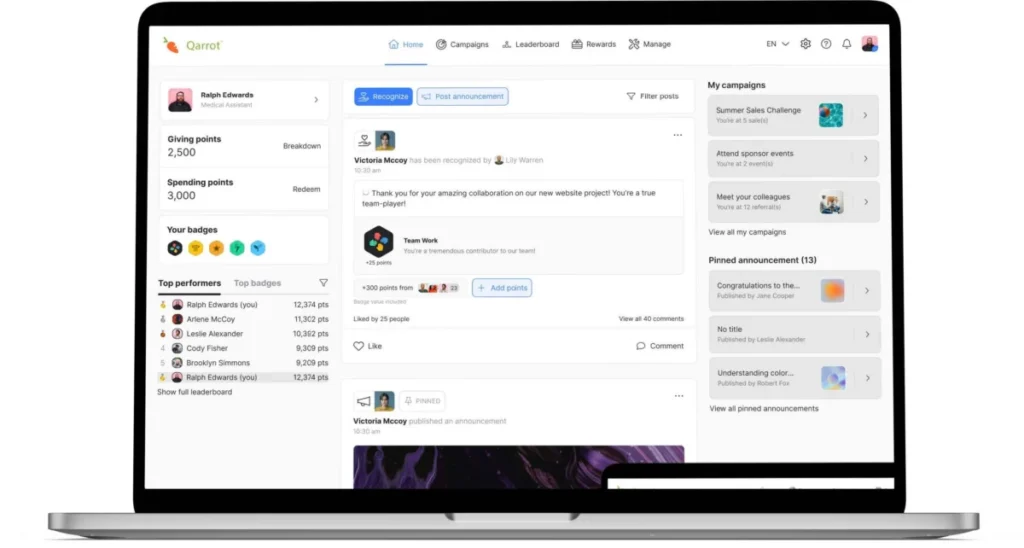
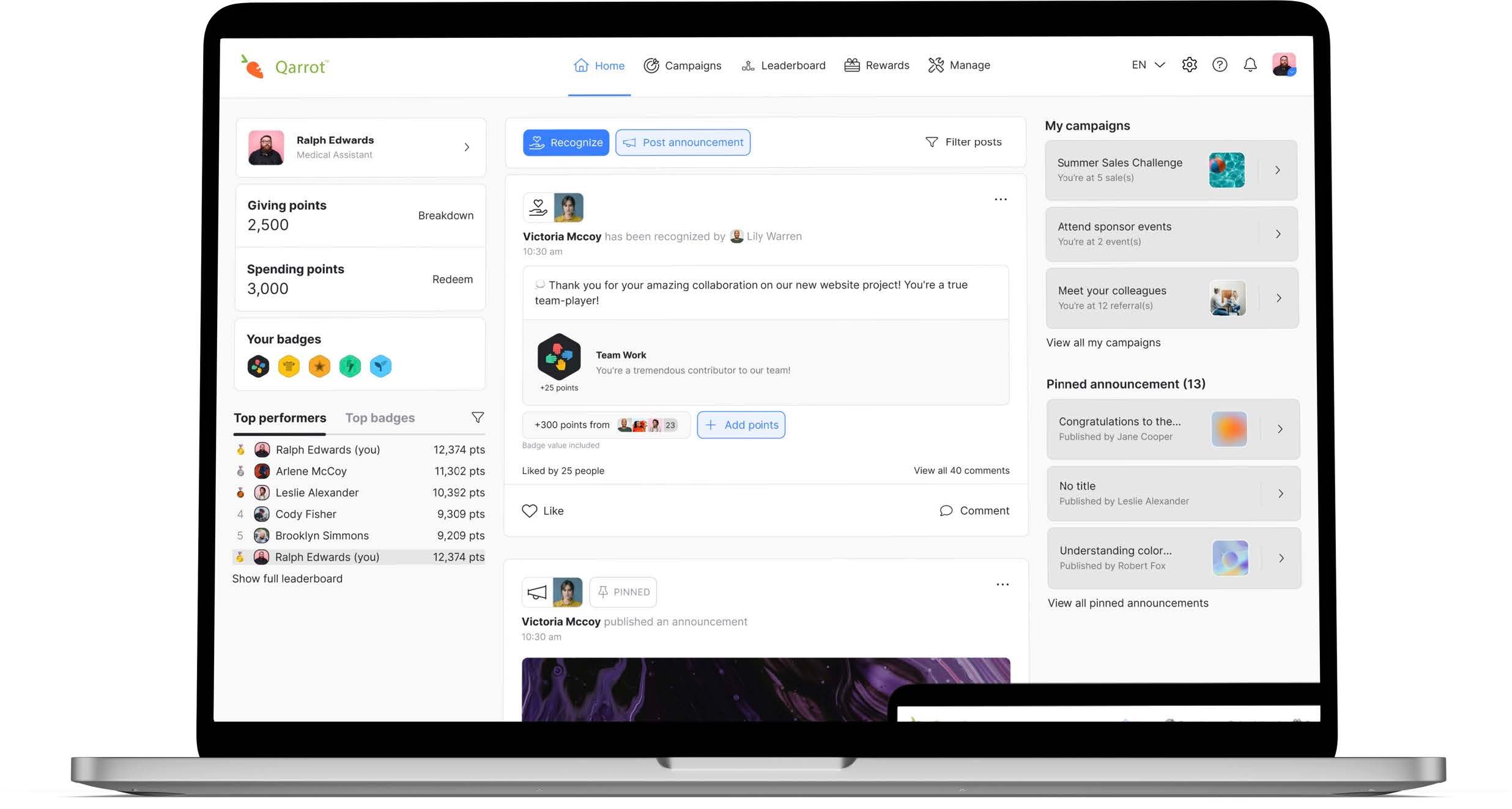
Strengths: Qarrot offers an employee recognition and rewards platform supporting peer recognition, milestone celebrations, and goal-based campaigns. It includes custom badges, gamified challenges, and team announcements, with Slack and Microsoft Teams integrations.
Best for: Companies seeking an easy-to-manage, fun recognition solution for small to mid-sized teams.
Key features: Peer recognition, value-based badges, gamified challenges, team announcements.
Weakness: May not offer the depth of analytics or configuration options needed by larger organizations.
11. Workvivo
G2 rating: 4.8/5
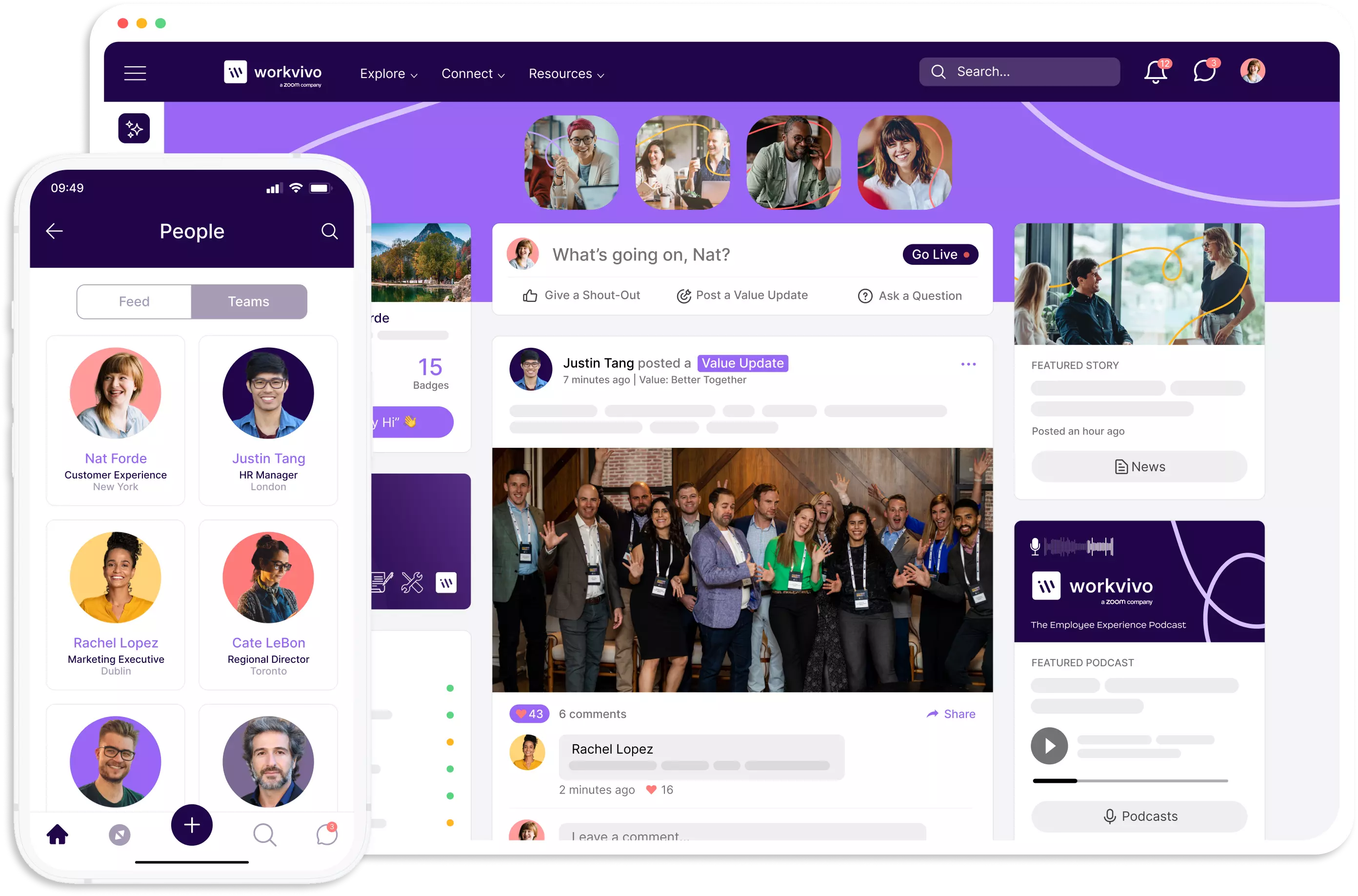
Strengths: Workvivo is a mobile-first employee experience platform that unifies internal communications, engagement, recognition, and intranet tools. It connects dispersed teams through a social interface with news feeds, shout-outs, and surveys, integrating with major workplace tools.
Best for: Organizations prioritizing communication and connection across dispersed or hybrid teams.
Key features: Mobile-first internal communications, social feed, recognition tools, surveys, strong integrations.
Weakness: While it includes recognition, its primary focus is communication and engagement, potentially offering less specialization in advanced rewards or behavioral analytics.
12. Empuls (by Xoxoday)
G2 rating: 4.6/5
Strengths: Empuls combines recognition, rewards, surveys, and communication. It provides a structured approach to appreciation through peer-to-peer recognition, milestones, and a global rewards catalog, alongside engagement surveys and feedback tools.
Best for: Companies seeking a comprehensive engagement platform that integrates recognition with surveys and communication.
Key features: Unified recognition, rewards, surveys, communication; global rewards catalog.
Weakness: While feature-rich, teams looking for deeper behavioral insights or advanced analytics may find its reporting more functional than strategic.
13. Matter
G2 rating: 4.7/5
Strengths: Matter is designed for direct integration within Slack or Microsoft Teams, enabling peer-to-peer kudos, automated celebrations, and simple pulse surveys without additional software. It promotes recognition habits through features like "Feedback Friday."
Best for: Companies looking for a simple, built-in recognition solution that integrates directly with Slack or Teams.
Key features: In-app kudos (Slack/Teams), automated celebrations, pulse surveys, customizable templates.
Weakness: Prioritizes simplicity, potentially lacking the advanced analytics or customization options of larger platforms.
14. Assembly
G2 rating: 4.9/5
Strengths: Assembly facilitates regular appreciation with peer-to-peer shoutouts, automated celebrations, and built-in rewards to boost engagement and morale. It includes culture insights and manager enablement tools for tracking activity and encouraging consistent recognition.
Best for: Companies seeking an easy-to-use platform to enhance employee engagement and recognition.
Key features: Peer-to-peer shoutouts, automated celebrations, built-in rewards, culture insights.
Weakness: May not offer the same global reach or advanced reward options as more enterprise-focused platforms.
15. Profit.co
G2 rating: 4.7/5
Strengths: Profit.co provides a unified platform for OKRs, performance management, and employee engagement. It supports goal alignment, continuous feedback, and peer recognition through leaderboards, pulse surveys, and 1:1 meetings, linking business performance with engagement.
Best for: Companies focused on integrating performance, portfolio, and task management with recognition.
Key features: OKR management, performance management, peer recognition, pulse surveys, 1:1 meetings.
Weakness: Its primary focus on OKRs and performance management means its recognition capabilities may be less extensive than dedicated recognition platforms.
The Future of Workforce Connection
For large companies, maintaining a personal connection within the vast expanse of their workforce is a significant challenge. Yet, it is precisely in this context that strategic recognition performs its most vital role: bridging geographical distances, strengthening interpersonal connections, and affirming to every employee that their contributions are valued and integral to the larger organizational mission.
The right employee recognition software transforms this connection from a mere aspiration into an effortless reality. It ensures that appreciation is visible, measurable, and intrinsically woven into the fabric of daily work life. Platforms like Achievers are engineered specifically for this purpose: enabling large organizations to remain human, deeply connected, and perpetually inspired, irrespective of their scale or complexity. As businesses continue to grow and adapt to evolving work models, the strategic investment in comprehensive recognition solutions will remain a critical differentiator for fostering resilient, high-performing cultures.