In an increasingly competitive global talent landscape, the foundational element of any successful hiring strategy—the job description (JD)—is undergoing a critical transformation. For too long, organizations have grappled with the inherent inefficiencies, compliance risks, and strategic disadvantages posed by manual job description creation workflows. The challenges of collaboration chaos, version control issues, uncontrolled approvals, and escalating compliance risks are no longer minor inconveniences but significant impediments to attracting top talent and maintaining a robust employer brand. The year 2026 marks a pivotal moment where the imperative to abandon outdated manual processes and embrace intelligent, automated solutions has become undeniable.
The Evolution of Job Descriptions: A Background Context
Historically, job descriptions served as straightforward administrative documents, detailing responsibilities and required qualifications. Their creation was often a solitary or minimally collaborative task, typically handled by a hiring manager or HR generalist. However, the modern JD has evolved into a multifaceted strategic asset. It is the primary outward-facing representation of a role, a crucial tool for employer branding, a compliance document, and a key factor in attracting diverse talent. This expanded role, coupled with a rapidly changing regulatory environment and heightened expectations from candidates, has rendered manual, ad-hoc processes obsolete. The complexity of crafting JDs that are engaging, inclusive, legally compliant, and strategically aligned demands a level of precision, efficiency, and oversight that traditional methods simply cannot provide.
The Mounting Costs of Manual Processes: A Deep Dive into Key Challenges
The drawbacks of manual job description creation are extensive, permeating every stage of the talent acquisition lifecycle and incurring significant hidden costs.
Crippling Inefficiency and Time Drain
The lack of structure inherent in manual JD workflows leads to a protracted and often frustrating process. Issues such as inconsistent formatting, repetitive data entry, and a constant search for relevant information or previous versions plague HR and hiring teams. Industry analysts suggest that HR professionals, on average, spend up to 15-20% of their working week on manual adjustments and administrative tasks related to job descriptions. A process that should ideally take a few days can often stretch into weeks or even months, primarily due to disorganization and the absence of a streamlined system. This protracted timeline directly impacts time-to-fill metrics, leading to critical vacancies remaining open longer and potentially hindering business operations.
Approval Bottlenecks: Stifling the Hiring Pipeline
Manual approval processes are notorious for creating bottlenecks. A job description requiring sign-off from two or three stakeholders can languish for weeks, awaiting signatures or feedback. This delay is often exacerbated by a lack of clear communication channels, difficulty in tracking document status, and the absence of automated reminders. Common scenarios include approvers overlooking requests, documents getting lost in email chains, or a lack of clarity on who needs to approve what. Such delays not only prolong the hiring cycle but can also lead to the loss of highly qualified candidates who may accept offers from more agile competitors. Sarah Jenkins, Head of Talent Acquisition at GlobalCorp, recently highlighted this challenge, stating, "Our biggest pain point used to be the three-week lag on JD approvals. It wasn’t just about speed; it was about the palpable frustration among hiring managers and the missed opportunities to engage top talent quickly."
Fragmented Collaboration and Communication Chaos
Modern job descriptions require input from diverse stakeholders: hiring managers, talent acquisition leaders, DEI (Diversity, Equity, and Inclusion) teams, compensation specialists, and legal/compliance departments. When this collaboration occurs across disparate tools—email, shared drives, messaging apps, and word processors—chaos ensues. Conflicting feedback, difficulty in consolidating edits, and the constant risk of working on an outdated version become commonplace. This fragmented approach leads to significant rework, misunderstandings, and a general slowdown, as teams spend more time reconciling information than actively contributing to the JD’s content.
The Information Black Hole: Wasted Resources in Data Retrieval
Without a centralized repository, teams spend an inordinate amount of time searching for existing job descriptions to use as templates, trying to locate the "latest version" of a document, or determining who holds crucial information. This scavenger hunt is a massive drain on productive hours. Questions like "Who has the document?" or "Where should I look for a template?" become daily occurrences, transforming what should be a quick reference task into a time-consuming ordeal. This disorganization hinders efficiency and prevents the leverage of past work and best practices.
Navigating the Regulatory Minefield: Heightened Compliance Risks
The regulatory landscape governing employment has become increasingly complex. The rise of pay transparency laws, evolving global, local, and state regulations, and stricter guidelines around equitable hiring language mean that manual JD creation in 2026 is fraught with compliance risks. Organizations may inadvertently omit mandatory disclaimers, fail to include required salary ranges, or use language that violates non-discrimination laws. Legal experts estimate that compliance violations related to JDs could result in fines ranging from thousands to millions of dollars annually, not to mention reputational damage and potential litigation. Manually tracking and implementing these ever-changing requirements is virtually impossible for most organizations.
Erosion of Employer Brand: Inconsistent and Substandard JDs
When JDs are created manually without standardized templates or content governance, inconsistencies are inevitable. Variations in branding, formatting, tone, and even the clarity of role expectations can lead to a disjointed candidate experience. JDs with confusing titles, poorly articulated responsibilities, or inconsistent company messaging project an unprofessional image, deterring potential candidates. Such standardization issues are not trivial; they reflect directly on an organization’s professionalism and attention to detail, impacting its ability to attract and retain top talent.
The Hidden Bias: Unintentional Exclusion in Hiring
Perhaps one of the most insidious consequences of manual JD creation is the unconscious bias that often creeps into the language. Phrases like "young, energetic team player," "digital native," or even gendered pronouns, can inadvertently deter qualified candidates from diverse backgrounds. Age bias, gender bias, racial bias, and ableism can manifest subtly, often unknowingly, in the choice of words. Studies by diversity and inclusion institutes often highlight how biased language can deter up to 70% of qualified minority candidates from applying. Manually auditing JDs for these nuanced biases is an incredibly time-consuming and often ineffective process, leading to less diverse candidate pools and missed opportunities for innovation.
Lack of Strategic Visibility: Operating in the Dark
A manual JD creation workflow means operating without crucial data insights. Without centralized tracking and analytics, it becomes challenging to answer critical questions such as: "How long does it take to create a JD?" "Which departments have the longest approval times?" "Are our JDs attracting diverse candidates?" or "What is the ROI of our JD creation process?" This lack of real-time visibility prevents data-driven decision-making, hindering strategic improvements in the hiring process and making it difficult to demonstrate the impact of talent acquisition on broader business goals.
The Transformative Power of Job Description Software: A Strategic Solution
Recognizing these profound challenges, the adoption of specialized job description software has emerged as a strategic imperative for modern organizations. These platforms provide a centralized, intelligent ecosystem for JD creation and management, addressing each of the manual process deficiencies.
Streamlined Workflows and Enhanced Efficiency
JD software automates much of the administrative burden, offering standardized templates, pre-approved content blocks, and intuitive interfaces. Tools like Ongig Text Analyzer, for instance, are designed to accelerate the drafting process, allowing teams to generate high-quality JDs in a fraction of the time previously required. Content optimization features further ensure clarity and effectiveness, reducing the need for extensive manual revisions.
Accelerated and Structured Approvals
Automated approval workflows within JD software dramatically cut down delays. These systems allow for configurable approval chains, automated notifications, and real-time tracking of approval status. Stakeholders receive direct alerts, can review and approve documents digitally, and audit trails ensure accountability. This structure ensures that JDs move swiftly through the necessary channels, keeping the hiring pipeline fluid.
Centralized Collaboration and Version Control
Job description platforms serve as a single source of truth for all JD-related activities. They facilitate real-time, collaborative editing, allow for comments and feedback directly within the document, and maintain comprehensive version histories. This eliminates collaboration chaos, ensures everyone is working on the most current version, and streamlines the feedback integration process.
Intelligent Content Management and Libraries
These platforms offer centralized cloud libraries that act as intelligent repositories for all job descriptions, templates, and approved content. This means teams can easily search for, reuse, and adapt existing JDs, reducing redundant effort and ensuring consistency. It transforms the "information black hole" into a readily accessible knowledge base.
Robust Compliance Assurance
JD software integrates built-in compliance checks and continually updates with the latest regulatory requirements, including pay transparency laws and non-discrimination guidelines. It can flag potential compliance issues, suggest necessary inclusions, and ensure that all published JDs meet legal standards across different jurisdictions, significantly mitigating legal and financial risks.
Ensuring Brand Consistency and Quality
By providing standardized templates, enforcing brand guidelines, and offering content optimization features, JD software ensures a consistent and professional representation of the employer brand. This consistency across all job postings reinforces an organization’s identity and enhances the candidate experience, ultimately attracting higher-quality applicants.
Fostering Inclusivity: Bias Detection and Mitigation
One of the most powerful features of modern JD software is its ability to identify and mitigate unconscious bias. Utilizing AI and natural language processing, these tools can flag gender-coded language, ageist terms, or other potentially exclusionary phrasing, suggesting neutral alternatives. This empowers organizations to craft truly inclusive job descriptions that appeal to a broader and more diverse talent pool, aligning with DEI objectives.
Real-time Analytics and Strategic Insights
Job description software centralizes all JD-related data, providing invaluable real-time visibility into the hiring process. Dashboards and reporting features can track key metrics such as JD creation time, approval durations, candidate engagement with specific JDs, and even the diversity of applicants. This data enables HR and talent acquisition leaders to make informed, data-driven decisions, optimize their strategies, and demonstrate the tangible impact of their efforts on business goals.
Implementation Considerations: A Smooth Transition
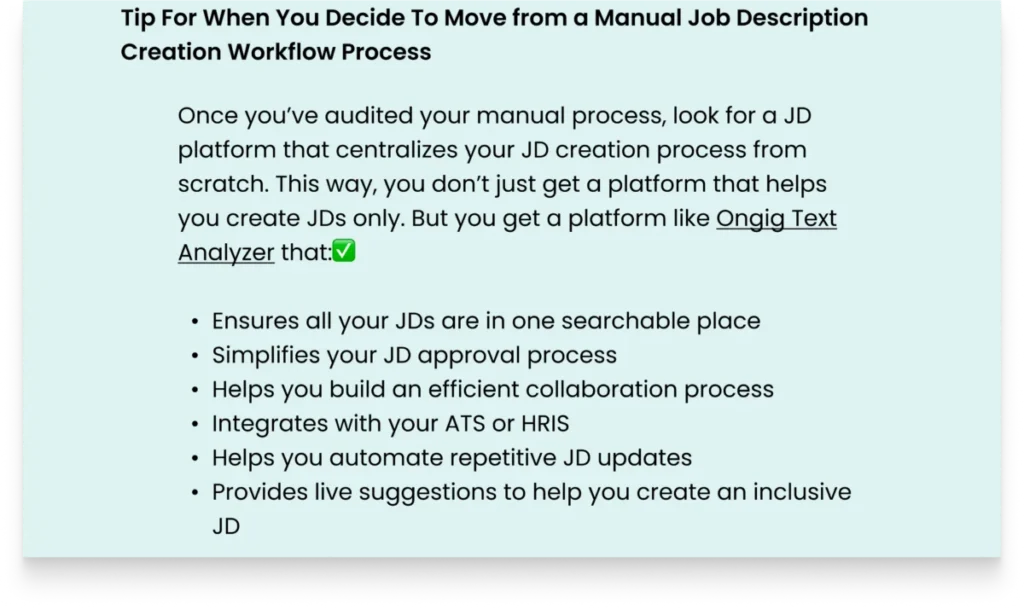
For organizations contemplating the shift from manual processes, a strategic approach is key. The first step involves a comprehensive audit of existing manual workflows to identify specific pain points and areas of greatest inefficiency. This audit will inform the selection of a JD platform that aligns with the organization’s unique needs, whether it’s primarily focused on compliance, speed, or inclusivity. Critically, modern JD tools are designed to integrate seamlessly with most existing Applicant Tracking Systems (ATS) and Human Resources Information Systems (HRIS), ensuring that the transition enhances, rather than disrupts, current recruitment processes.
The Future of Talent Acquisition: Beyond Manual Limitations
The era of manual job description creation is drawing to a close. Its inherent flaws—from crippling inefficiencies and compliance risks to the unintentional fostering of bias and a lack of strategic insight—are no longer sustainable in the dynamic and competitive talent landscape of 2026. Embracing job description software is not merely an operational upgrade; it is a strategic imperative that empowers organizations to attract superior talent, build more diverse teams, maintain regulatory compliance, and operate with unprecedented efficiency. By moving beyond manual limitations, companies can transform their talent acquisition functions into powerful engines for growth and innovation, securing a competitive advantage in the race for top talent.