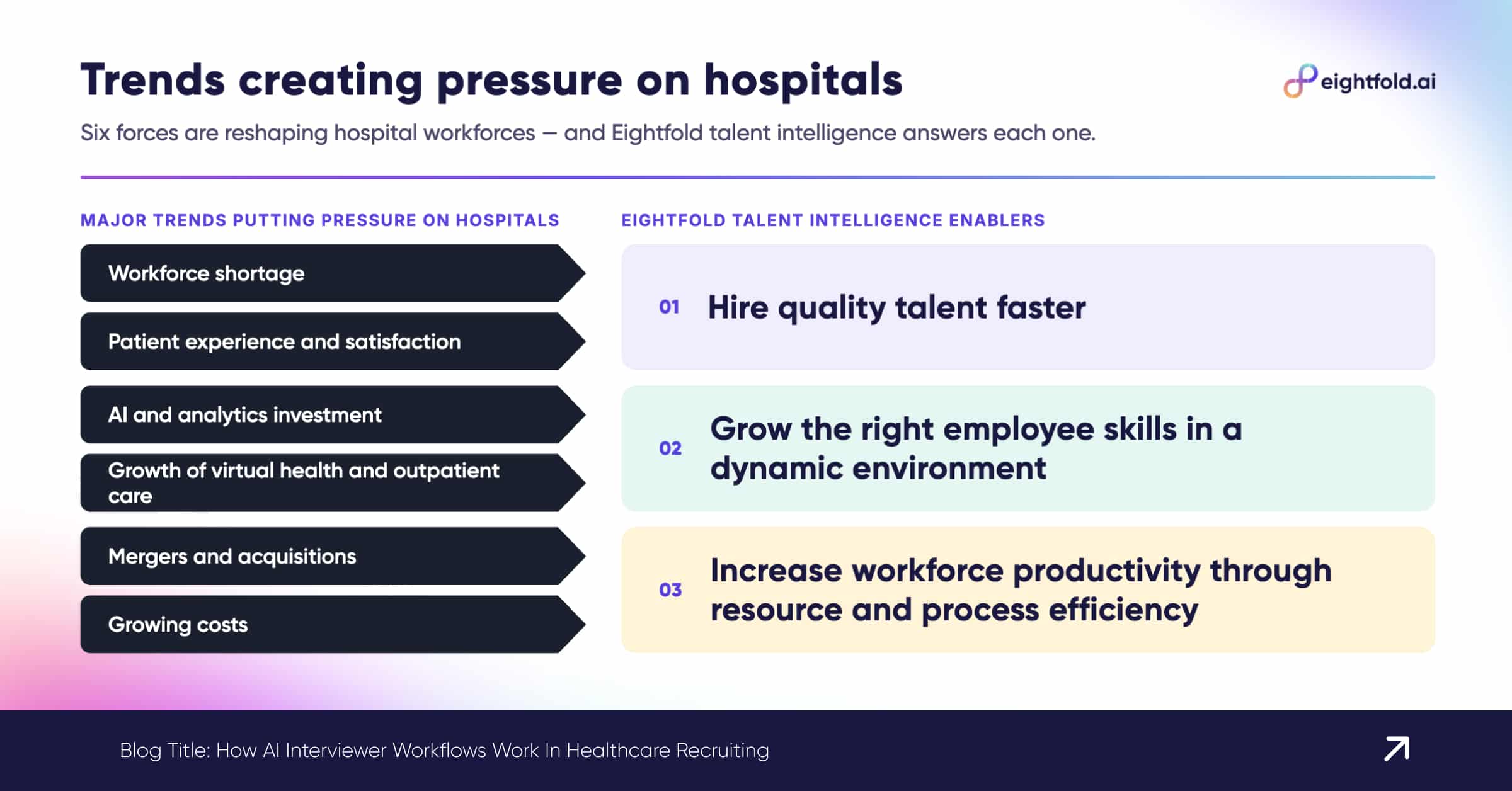
The healthcare industry, perpetually facing a complex and escalating demand for skilled professionals, is witnessing a transformative shift in its recruitment strategies, primarily driven by sheer volume. Traditional hiring models, long inadequate for the unique pressures of healthcare staffing, are buckling under the weight of hundreds, sometimes thousands, of open requisitions simultaneously. From registered nurses and medical technologists to patient care technicians and essential environmental services staff, each vacant position represents not an abstract cost, but a tangible deficit in patient care delivery. The immediate consequence of an unfilled shift is a system operating under strain, impacting both patient outcomes and existing staff well-being. In response to this critical challenge, Artificial Intelligence (AI) interviewer workflows are emerging as a vital solution, designed to scale interview capacity in direct proportion to requisition volume, rather than relying solely on the linear growth of recruiter headcount.
This article delves into the mechanics of AI interviewer workflows, exploring their operational intricacies, their integration into broader AI recruiting strategies within healthcare, and the specific contexts in which these innovative solutions are currently being deployed.
The Healthcare Hiring Conundrum: Volume, Velocity, and Vulnerability
The healthcare sector operates on a fundamentally different paradigm than many other industries. The constant demand for clinical staff, coupled with high turnover rates, creates a perpetual hiring cycle. A single large health system might simultaneously manage hundreds of open positions across a diverse range of roles. This is not merely an administrative burden; it’s a critical operational challenge. An empty nursing shift directly translates to increased patient-to-nurse ratios, potentially compromising patient safety and increasing the likelihood of medical errors. Similarly, vacant laboratory positions can lead to delays in diagnostic testing, impacting treatment timelines.
The inherent limitations of human recruiters in managing such a high volume are stark. A recruiter can only conduct a finite number of structured phone screens per day. Each additional screening step introduced to ensure thoroughness inevitably slows down the hiring pipeline. This creates a catch-22: while more rigorous screening is needed, the urgency of filling positions means speed is paramount. This is where AI interviewer workflows offer a compelling solution, promising to process candidates at a scale that human teams alone cannot achieve.
What Exactly is an AI Interviewer Workflow?
At its core, an AI interviewer workflow is a sophisticated, conversational interview process facilitated by an AI agent. Unlike traditional human-led interviews, this AI-driven approach is meticulously designed to evaluate candidates against predefined role competencies, ensuring a consistent and comparable assessment for every individual. The fundamental problem it addresses is the inherent variability in human-led screening. Two recruiters tasked with assessing the same job opening might pose different follow-up questions, assign varying weights to candidate responses, and bring their own subjective biases to the evaluation.
An AI interviewer, however, operates on a standardized script. It asks the same core questions, in the same manner, to candidate number one and candidate number one thousand. This standardization ensures that the only variable in the evaluation is the candidate’s response, not the evaluator’s interpretation or the timing of the interview. This consistency is crucial in healthcare, where adherence to protocols and standardized procedures is paramount.

AI in Healthcare Recruiting: A Broader Ecosystem of Talent Intelligence
The implementation of AI interviewers in healthcare recruitment is not an isolated technological deployment; rather, it is a component of a larger strategy leveraging "Talent Intelligence." This broader application of AI encompasses a range of functionalities aimed at optimizing the entire talent acquisition lifecycle. These include:
- Sourcing: AI algorithms can proactively identify potential candidates based on intricate skill sets and experience, going beyond traditional resume databases.
- Skills Matching: Advanced AI can precisely match candidate skills to the specific requirements of complex healthcare roles, identifying not just keywords but nuanced proficiencies.
- Candidate Communication: AI-powered chatbots and automated messaging systems can provide instant responses to candidate inquiries, offer interview updates, and manage initial communications, improving engagement.
- Scheduling: AI tools can automate the complex logistics of scheduling interviews, considering the often-unpredictable availability of healthcare professionals and hiring managers.
The AI interviewer workflow itself represents a critical layer within this ecosystem. It functions in tandem with other AI-powered tools, such as those that manage interview logistics and coordinate the candidate journey. It is vital to understand that an AI interviewer is not an autonomous hiring authority. Human oversight and intervention remain indispensable at every material decision-making juncture, including any candidate advancement or rejection.
The efficacy of these AI systems is intrinsically linked to the quality and currency of the data they utilize. Inaccurate or outdated input criteria, or a lack of ongoing monitoring for "data drift," can lead to distorted outcomes. While bias-audited hiring processes and continuous monitoring are essential safeguards, they do not guarantee a completely bias-free system. Organizations must remain vigilant in identifying and mitigating potential risks.
AI Recruiting Tools Across the Healthcare Hiring Workflow
The integration of AI into healthcare recruitment is a multi-faceted approach, with distinct tools addressing specific stages of the hiring process. Crucially, human reviewers retain ultimate decision-making authority at every critical point.
| Workflow Stage | Tool Category | Human Checkpoint |
|---|---|---|
| Role Planning | Talent Intelligence | Leader approves criteria |
| Applicant Review | Skills Matching | Recruiter reviews context |
| First Conversation | AI Interviewer | Recruiter reviews evidence |
| Skills Validation | Functional/Language Assessment | Hiring team interprets results |
| Interview Logistics | Talent Agents | Team sets scheduling rules |
| Candidate Updates | Communication Agent | Recruiter governs messaging |
| Pipeline Oversight | ATS Reporting | Talent team monitors outcomes |
The Urgent Imperative for AI Interviewer Workflows in Healthcare
The current adoption of AI interviewer workflows in healthcare recruitment is being accelerated by a confluence of three significant pressures:
-
Unprecedented Volume: Roles with high turnover and high vacancy rates, many operating 24/7, necessitate continuous hiring. The sheer volume of applications for positions like nurses and patient care technicians means that recruitment cannot pause to accommodate recruiter bandwidth. AI interviewers are instrumental in managing this high-volume, hourly hiring demand.

-
Consistency and Compliance: The healthcare industry operates under stringent regulatory frameworks and audit scrutiny. A structured, bias-audited AI process is more defensible and easier to document than the often-informal evaluations conducted by human interviewers. This consistency is vital for maintaining compliance and mitigating legal risks.
-
Candidate Experience: In today’s competitive talent market, clinical candidates have numerous options. A slow, inconsistent, or impersonal hiring process can be a significant deterrent, leading candidates to accept offers from competing healthcare organizations. AI interviewers can offer a more responsive and transparent experience, available on the candidate’s schedule, thereby enhancing employer brand and candidate satisfaction.
How an AI Interviewer Workflow Operates in Practice
The implementation of an AI interviewer workflow begins with the recruiter or talent acquisition leader defining the core competencies of the role and developing a comprehensive interview guide. Candidates then engage with the AI interviewer, typically asynchronously via video or voice recording, responding to the same set of structured questions that all other candidates for that position will encounter.
The AI agent meticulously evaluates each response against the predefined competencies, moving beyond simple keyword matching to assess the depth and quality of the candidate’s answers. The output is a structured, data-driven report delivered directly to the recruiter’s pipeline within their Applicant Tracking System (ATS). This process ensures that the same evaluation rubric is applied to every candidate, irrespective of the recruiter conducting the assessment or the time of day. The AI interviewer scales seamlessly from a single candidate to thousands, maintaining the same level of rigor. It is crucial to note that the AI interviewer does not handle scheduling or candidate tracking; these functions remain within the purview of the ATS. The AI interviewer serves as an integrated layer, enhancing the existing pipeline rather than replacing it.
Agentic AI: Orchestrating Healthcare Hiring
The emergence of agentic AI recruiting platforms marks a significant advancement in how healthcare hiring workflows are coordinated. These platforms are designed to maintain momentum in the hiring process while strategically reserving critical judgment for human decision-makers. An agentic AI recruiting platform can automate a series of interconnected tasks, ensuring a smooth and efficient candidate journey. This includes initial screening, assessment, and even follow-up communications, all while ensuring that key evaluation points are flagged for human review.
Navigating Common Misconceptions About AI Interviewers
Despite their growing prevalence, AI interviewers are often subject to misconceptions that warrant clarification:
-
Misconception: AI Replaces the Recruiter.
Reality: The AI interviewer is designed to augment, not replace, the human recruiter. It handles the initial evaluation phase, freeing up recruiters to focus on more strategic tasks such as building candidate relationships, conducting in-depth final interviews, and managing the overall hiring process. The recruiter remains the ultimate decision-maker, responsible for all subsequent steps in the hiring journey. -
Misconception: AI Cannot Fairly Assess a Person.
Reality: A well-designed AI interviewer workflow can actually reduce bias. By grounding assessments in verified capabilities rather than subjective signals—such as a recruiter’s tone of voice, the similarity of a candidate’s background, or the recruiter’s stress level on a given day—AI can promote a more equitable evaluation. While the risk of bias does not disappear entirely, the criteria become explicit and auditable, offering a level of transparency often lacking in informal phone screens. Rigorous AI bias testing is crucial to ensure these systems are fair and equitable. -
Misconception: Candidates Dislike Being Interviewed by AI.
Reality: Contrary to this belief, data from Eightfold.ai’s customer base reveals that candidates who complete an AI interview report a remarkably high Net Promoter Score (NPS) of 93%. They often perceive the experience as fair, transparent, and less stressful than traditional phone screens. This is largely due to the flexibility offered by AI interviews, which can be completed on the candidate’s schedule, eliminating the pressure of squeezing an interview into a recruiter’s limited availability. This preference underscores the evolving expectations of modern job seekers.
Acknowledging the Limits: The Need for Explicit Controls in AI Recruiting
It is imperative to acknowledge that AI recruiting tools, including AI interviewers, have inherent limitations. Their performance is directly proportional to the quality and representativeness of the data they are trained on and operate with. No AI system can be described as "zero bias" or "100% bias-free." Therefore, robust governance and control mechanisms are essential for responsible implementation.
Key controls include:
- Transparency: Publishing a clear transparency statement about the use of AI in the hiring process.
- Candidate Notification: Informing candidates when they will be interacting with an AI system.
- Accommodation Paths: Providing clear avenues for candidates who require accommodations.
- Human Review: Mandating human review at every material decision point in the hiring process.
- Bias Audits: For regions with specific legal requirements, such as New York City’s Local Law 144, ensuring independent bias audits are completed within the stipulated timeframe (typically 12 months).
A comprehensive governance framework, as outlined in executive guides to ethical AI interviewer implementation, is vital for navigating these complexities.
| Risk | Control | Owner |
|---|---|---|
| Poor Data or Drift | Validate inputs; monitor regularly | TA Analytics |
| Discrimination or Automation Bias | Test outcomes; require recruiter review | Compliance Lead |
| Access or Language Barriers | Offer accommodations and alternatives | Candidate Operations |
| Privacy, Stale Criteria, ATS Handoffs | Limit data, refresh criteria, reconcile transfers | Privacy, Clinical, HRIS Leads |
Expanding Recruiter Capacity While Retaining Accountability
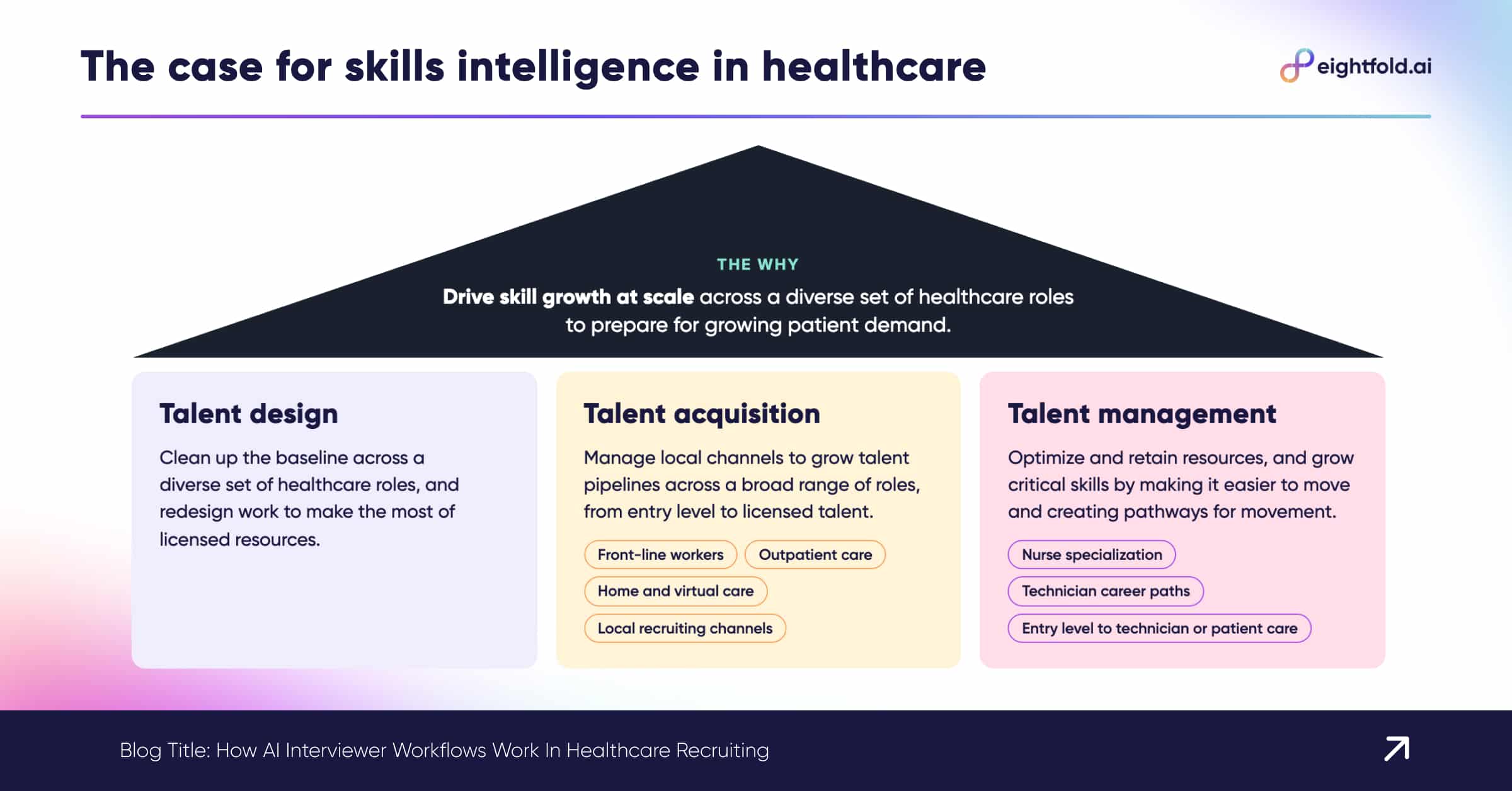
An AI interviewer workflow fundamentally acts as a capacity multiplier for recruiters. By automating the repetitive tasks of initial conversations, note-taking, and calendar coordination, it liberates recruiters to dedicate their time and expertise to more value-added activities, such as nurturing candidate relationships, engaging with hiring managers, and addressing critical staffing needs. Human accountability remains firmly in place. Recruiters are responsible for defining role competencies, arranging necessary accommodations, validating credentials, investigating any anomalies, and making the final hiring decisions.
Customer data from Eightfold.ai, for instance, indicates significant improvements in hiring efficiency, with reductions in initial review time and substantial increases in recruiter efficiency over a few months. While specific results can vary based on the workflow’s complexity and data quality, continuous monitoring for drift and potential discriminatory outcomes as candidate pools evolve is essential.
High-Volume Healthcare Roles Leading the AI Interviewer Adoption
Healthcare talent acquisition teams are strategically deploying AI interviewer workflows in areas where the pressures of volume and the need for consistency are most acute. This includes:
- High-Volume Clinical Support Roles: Positions like Certified Nursing Assistants (CNAs) and Medical Assistants often receive a large volume of applications, making AI screening highly efficient.
- Allied Health Positions with Well-Defined Competencies: Roles such as radiologic technologists or respiratory therapists, where specific skills and certifications are critical, benefit from standardized AI evaluations.
- Multi-Site Roles: For health systems with numerous facilities, AI interviewers ensure a uniform evaluation standard across all locations, promoting consistency and fairness.
The primary driver for adoption in these areas is the desire for a structured, repeatable first-round evaluation that is not dependent on the availability or individual assessment style of a particular recruiter.
Key Questions for Healthcare TA Leaders Evaluating AI Interviewers
Before embarking on an evaluation of AI interviewer workflows, healthcare talent acquisition leaders should address several critical internal questions:
- Role Prioritization: Which roles experience the highest requisition volume and possess the greatest standardization, making them ideal candidates for AI-driven initial screening? This typically involves high-volume, compliance-sensitive positions rather than highly specialized, difficult-to-fill roles.
- Competency Definition and Maintenance: Who will be responsible for defining and continuously updating the interview guide to reflect evolving role requirements?
- ATS Integration: How will the AI interviewer’s output seamlessly integrate with the existing ATS, ensuring a unified workflow rather than a parallel, disconnected process?
- Compliance and Legal Requirements: What are the specific requirements from compliance and legal departments regarding the definition, auditing, and implementation of AI-driven assessment criteria?
Integrating AI into Healthcare Recruiting Without Adding Complexity
A strategic approach to integrating AI into healthcare recruiting involves starting small and proving value before scaling. A pilot program focusing on one high-volume role can demonstrate the potential to reduce friction and improve efficiency. Key metrics to track during such a pilot include:
- Speed and Experience: Application-to-interview time, interview completion rates, and candidate Net Promoter Score (NPS).
- Operations and Risk: Recruiter hours saved, demographic outcome differences, and the volume of escalations requiring human intervention.
Data from controlled rollouts has shown significant hiring cycle compression, reducing the time from application to hire from an average of 42 days to as little as 5 days in some instances. While these results are achievable, they are not universally guaranteed and depend heavily on the specific context and implementation.
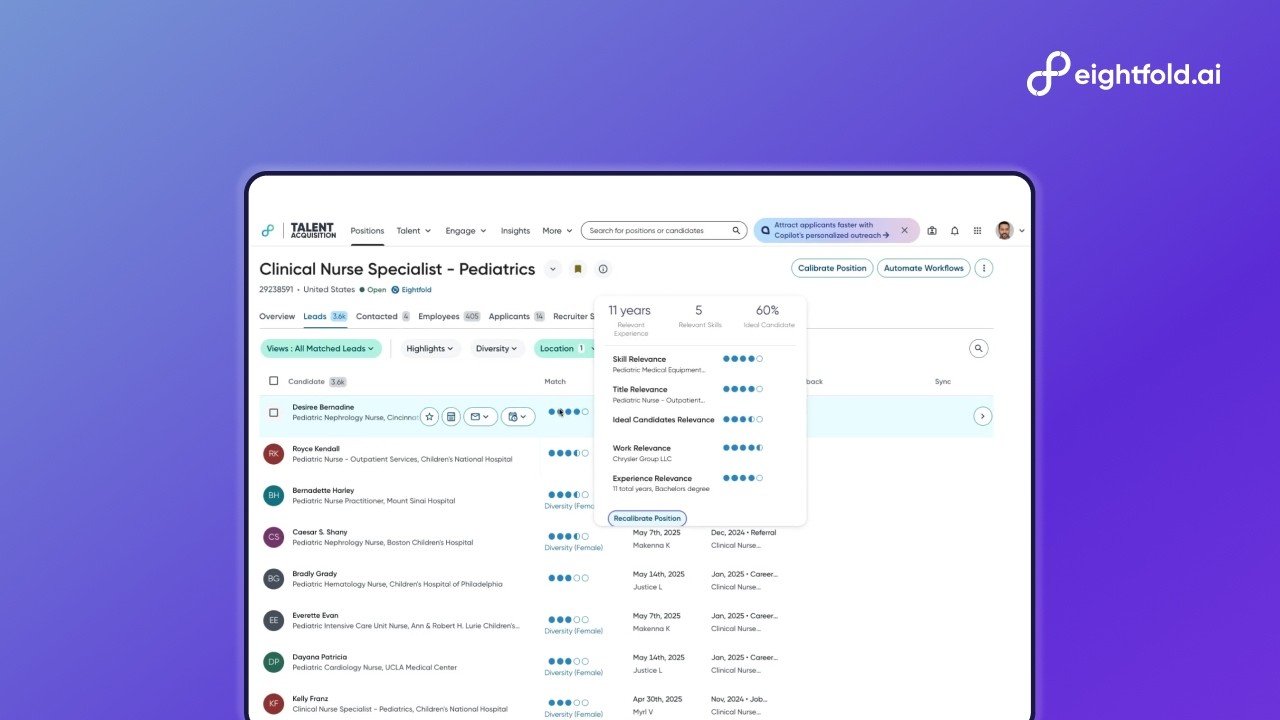
The CHRO Dashboard: A Unified View of Talent Performance
For senior leadership, a unified view of talent metrics is essential. A CHRO-level dashboard can consolidate key performance indicators from both talent management and talent acquisition. This includes attrition rates, internal hire rates, offer acceptance rates, and average days to fill. Crucially, it can also integrate data on in-demand skills versus the organization’s internal skill supply, providing a holistic picture of the talent landscape.
The Bottom Line: AI Interviewer Workflows in Healthcare
An AI interviewer workflow represents a structured, agent-conducted interview designed to evaluate every candidate against a consistent set of criteria, scalable to meet any volume requirement. Its significance in healthcare recruitment stems from the persistent challenges of high volume, stringent compliance demands, and the critical need for a superior candidate experience. These factors collectively underscore the necessity for a first-round evaluation process that is consistent, auditable, and efficient, without becoming a bottleneck on recruiter bandwidth. The future trajectory of these workflows will be shaped by the specific roles, compliance landscapes, and integration capabilities within healthcare organizations. This is the foundational understanding: an AI interviewer is an agent performing an interview, built for consistency at scale.
Frequently Asked Questions
How does AI interview scheduling work in healthcare recruiting?
AI interview scheduling platforms allow candidates to select available time slots directly from a synchronized calendar. These systems can account for time zone differences, check real-time availability across multiple interviewers, and automatically send confirmations and reminders. For healthcare, this is particularly valuable as it can incorporate blackout dates tied to critical patient care schedules. If a candidate or manager needs to reschedule, the workflow can automatically rebook, ensuring that high-volume roles like nursing and allied health positions are filled without delays caused by scheduling complexities.
What does bias-audited hiring mean for AI interviewers in healthcare?
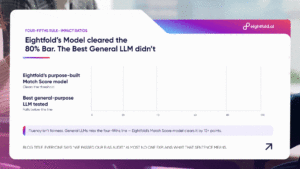
Bias-audited hiring signifies that an independent third party has statistically tested the AI interviewer’s scoring outputs across various demographic groups (such as race, gender, and age) to ensure no group is disproportionately screened out. This typically involves adherence to the "four-fifths rule," which flags adverse impact when one group’s selection rate falls below 80% of the selection rate for the highest-scoring group. Legislation like NYC Local Law 144 mandates these audits annually. Prospective users should inquire about the audit report’s availability, the methodology employed, and the demographic categories tested before implementing AI interviewers at scale.
Does the AI Interviewer integrate with existing healthcare ATS platforms?
Yes, most AI Interviewer platforms offer robust integration capabilities with major healthcare ATS platforms through APIs or native connectors. These integrations facilitate automatic synchronization of candidate records, interview scores, and status updates, eliminating the need for manual data re-entry. Common integrations include platforms widely used in hospital and health system hiring, such as Workday and iCIMS. Organizations should confirm bidirectional sync capabilities and whether integration requires custom IT work or is readily available out-of-the-box. For example, Eightfold.ai has demonstrated successful integration of agentic interviewing with Oracle Fusion Cloud Recruiting.