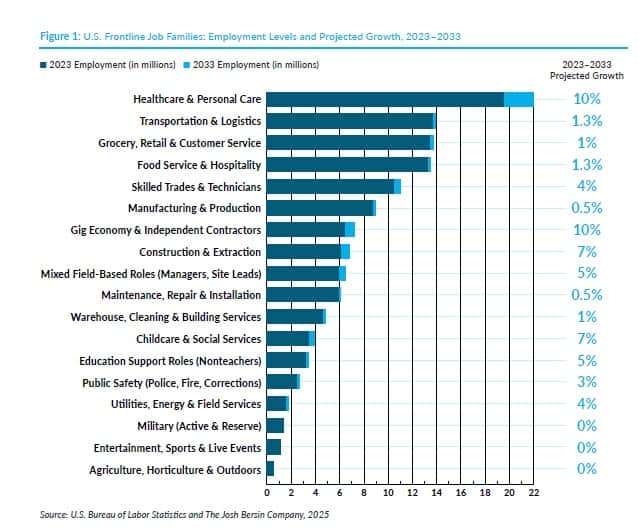
Frontline workers, comprising nurses, drivers, hospitality staff, retail associates, manufacturing personnel, and technicians, represent the indispensable backbone of the global economy. This critical workforce, estimated to constitute nearly 80% of all employees by sheer numbers, generates an astounding $6.5 trillion in wages within the United States alone. Recent research indicates a significant growth trajectory for this segment, outpacing white-collar professions, largely due to its inherent resilience against automation by artificial intelligence. For Chief Executive Officers and Chief Financial Officers, this demographic is not merely a cost center but a strategic imperative, directly responsible for delivering core business value through customer interaction, service provision, and product delivery. Consequently, optimizing and supporting the frontline workforce has become a paramount concern for organizational success and sustainability.
The Strategic Significance of the Frontline Workforce
The vital role of frontline workers is amplified by their direct engagement with customers, patients, and the physical delivery of goods and services. This constant interaction makes them the primary custodians of a company’s brand reputation and customer satisfaction. Unlike many white-collar roles that can be partially or wholly automated by advancements in artificial intelligence, the physical presence, interpersonal skills, and immediate problem-solving capabilities of frontline staff remain largely irreplaceable. This inherent resilience means that as AI technologies advance, the demand for frontline workers is not diminishing but is, in fact, projected to grow.
This growth presents both an opportunity and a challenge for businesses. The opportunity lies in harnessing the power of this vast and growing workforce to drive innovation and customer loyalty. The challenge arises from the traditional underinvestment in this critical segment, often perpetuated by a flawed logic that high turnover rates justify limited investment in training and development.
The Paradox of Underinvestment: A Flawed Strategy
Despite their undeniable strategic importance, frontline workers have historically received a disproportionately low level of investment compared to their white-collar counterparts. Research indicates that spending on training, management development, and career advancement for frontline staff is less than one-third of that allocated to office-based employees. Annually, companies typically invest over $1,500 per white-collar worker, whereas frontline employees often receive less than $400. This disparity is frequently rationalized by the assumption that frontline workers have higher turnover rates, leading to a perception that investing in their long-term development is a futile exercise.
However, this line of reasoning is fundamentally flawed. Evidence suggests that increased investment in frontline employees can lead to a dramatic improvement in tenure and productivity. A prime example is Costco, a retail giant that deviates significantly from industry norms. Costco pays its retail employees an average of $26 per hour, considerably higher than the industry benchmark of $17 per hour. Furthermore, the company provides comprehensive healthcare benefits and clear pathways for career advancement into management roles. The results speak for themselves: Costco boasts an annual turnover rate of less than 8%, a stark contrast to the industry average, which often exceeds 60%. This demonstrates that a "good jobs" strategy, characterized by fair compensation, robust benefits, and developmental opportunities, can effectively mitigate turnover and foster a highly engaged and productive workforce.
The Complexities of Frontline Work and Employee Experience
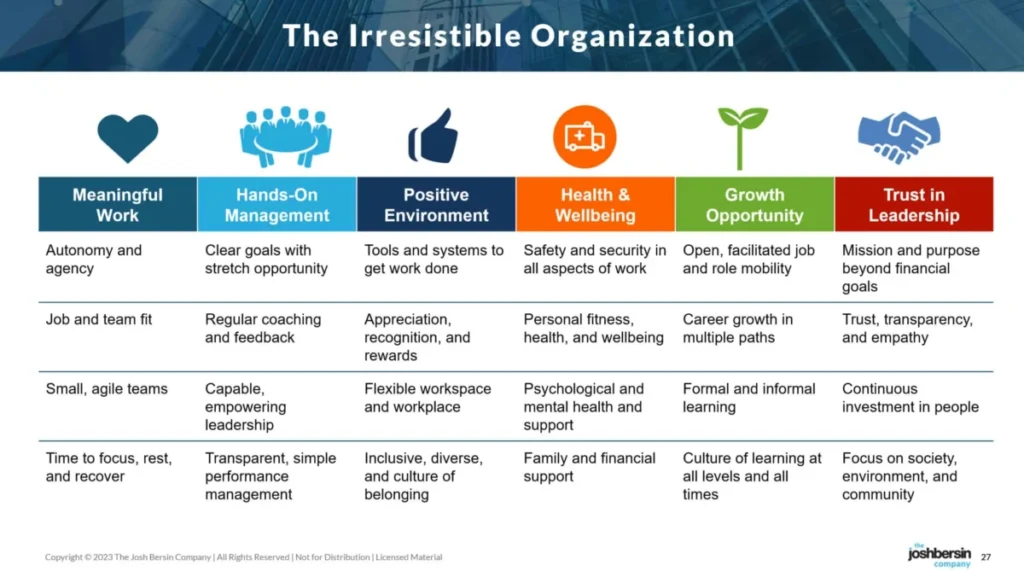
Beyond compensation and benefits, "frontline-first" companies recognize that fostering a positive employee experience is crucial. This involves investing in effective communication channels, offering schedule flexibility, providing strong management support, and valuing employees’ time. The inherent nature of frontline work presents a unique set of challenges that demand tailored solutions.
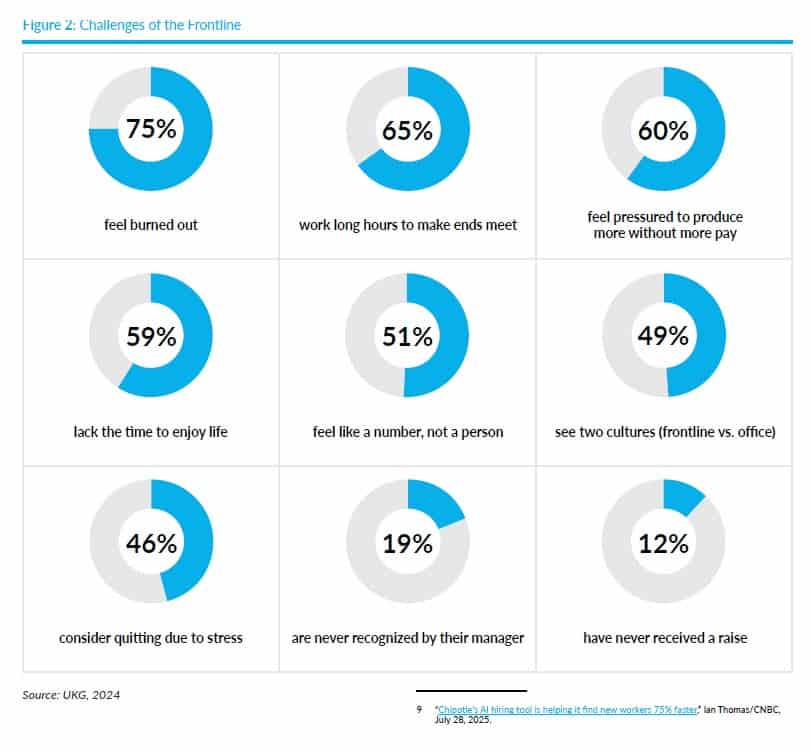
Consider the daily realities of a nurse who needs to adjust her schedule to accommodate childcare responsibilities or a delivery driver experiencing physical strain after a long shift. These individuals often perform physically demanding labor, are typically paid hourly, and may frequently seek overtime opportunities or pursue skill upgrades to secure higher-paying positions. Their needs often include flexible scheduling, real-time visibility into their earnings, and tangible opportunities for professional growth. They grapple with physical risks, stress, extended working hours, and a perceived lack of connection to their employer. When these fundamental needs are not met, organizations suffer from diminished productivity, increased turnover, and escalating operational and financial burdens.
From a business perspective, optimizing frontline capacity yields significant returns. In scenarios of fluctuating demand, supervisors and operations teams must possess the agility to reschedule shifts, expedite hiring processes, or rapidly upskill existing employees to fill critical gaps, all while safeguarding revenue streams and brand reputation. Inconsistent shift allocation or unpredictable schedules can lead to employee dissatisfaction, underperformance, and ultimately, attrition. Moreover, the dynamic nature of labor forecasting can obscure actual expenses until timesheets are finalized, creating a substantial risk of budget overruns.
The impact of understaffing can be dire. A network of gyms or hair salons operating with insufficient personnel not only experiences direct revenue loss but also suffers damage to its brand value. Conversely, companies that effectively leverage their workforce can gain a competitive edge. Chipotle, for instance, has publicly credited its workforce automation initiatives as a key driver of recent sales growth, a strategy highlighted by financial analysts on CNBC.
Skills management is also mission-critical in frontline roles. Frontline workers often require specialized technical skills that directly impact safety and operational integrity. Companies must meticulously track certifications, safety training, and skill proficiency to ensure fair compensation for advanced capabilities. Many frontline jobs are physically strenuous, necessitating employers to invest in physical fitness training and proper ergonomic practices. For example, a poultry manufacturer might implement fitness programs for employees involved in lifting heavy objects, mitigating injury risk and enhancing overall performance.
The Underestimated Role of Human Resources
In many organizations, Human Resources departments are not deeply involved in addressing the multifaceted challenges faced by frontline workers. These responsibilities often fall to supervisors and operations managers, who may themselves lack adequate training in workforce management and employee engagement. It is not uncommon for frontline staff to be promoted into supervisory roles without formal management training, creating a cascading effect of potential risks and inefficiencies.
However, when HR departments actively engage with frontline workforce issues, the impact can be transformative. During the COVID-19 pandemic, when nearly every Marriott hotel was temporarily closed, the company’s Chief Human Resources Officer and CEO initiated the development of a comprehensive new management training program. This initiative was instrumental in the business’s recovery and served as a model for leadership development worldwide. It fostered a new operating paradigm, integrating HR functions with operational teams to empower workers in innovative ways.
The complexity of the frontline employee experience is further underscored by research into 24 distinct areas of employee engagement. Many frontline workers lack consistent access to computers or email and are unable to use their personal devices during working hours. Some face immediate financial pressures, necessitating access to payday loans or real-time pay options, highlighting the need for financial education and support. A pervasive sense of disconnection often prevails, emphasizing the importance of robust communication and team-building programs.
The HR Technology Market’s Response: A Fragmented Approach
The HR technology market has attempted to address the needs of the frontline workforce, but often through fragmented solutions. Payroll and HR vendors typically offer workforce scheduling tools that are only loosely integrated with core HR management systems (HRMS) and payroll platforms. This piecemeal approach leads to several challenges: skill inventories are scattered across different systems, shift and work data remain disconnected from pay and tax information, and accurately calculating the total cost of labor becomes difficult.
Consider the scenario of an employee who swaps shifts with a higher-paid colleague or relocates to a different jurisdiction. Without a unified system, HRMS and payroll platforms may struggle to account for the associated tax implications or positional discrepancies. Furthermore, employees may find it challenging to access an integrated view of their pay when data is siloed across multiple, disconnected systems.
Despite these challenges, several major HR technology providers have made significant strides in addressing the frontline market. Workday, a leader in enterprise cloud applications, has strategically acquired companies like VNDLY and Paradox, signaling a renewed focus on the frontline workforce. SAP, a dominant player in industries with substantial frontline employment, such as energy, manufacturing, and telecommunications, launched its comprehensive Total Workforce Management platform in September. ADP, a key provider for mid-market frontline businesses, recently revamped its workforce platform, aiming to offer a more integrated experience.
UKG: Pioneering a Unified Frontline Workforce Solution
Amidst this evolving landscape, UKG (United Kingdom, a company now a global leader) has emerged as a pioneer, having built its foundation on a frontline-first ethos. The company’s origins lie in the pioneering work of Kronos, which revolutionized timekeeping and dynamic scheduling three decades ago, and Ultimate Software, a cloud-native HRMS and payroll provider known for its user-friendly interface. The 2020 merger of these two entities, under new leadership, forged UKG into a powerhouse with a clear vision: to create an integrated "Workforce Operating Platform" designed to meet the specific needs of frontline industries, their employees, and C-suite decision-makers.
UKG’s integrated platform consolidates critical functions such as payroll, scheduling, shift management, skills tracking, and HR processes into a single, operationally cohesive system. This approach ensures that every shift change, pay adjustment, jurisdictional tax update, overtime calculation, and employee record modification flows seamlessly across payroll, HR, and scheduling modules. Core HR functions, including onboarding, compliance management, training, and performance management, are integrated within the same operational environment as day-to-day workforce activities. The result is a unified interface that simplifies the employee experience while equipping managers and leaders with AI-powered tools for enhanced scheduling, employee engagement, operational oversight, and cost containment.
A testament to UKG’s commitment to culture and leadership development is its 2021 acquisition of Great Place To Work (GPTW), the organization renowned for its validated culture assessments and its annual ranking of the Fortune 100 Best Companies to Work For. This strategic move allows UKG customers to leverage industry-specific benchmarks and gain insights into building trust and improving management practices. Today, UKG serves over 80,000 companies, generating approximately $5 billion in revenue and onboarding 1,500 new clients annually, underscoring its significant market traction.
UKG’s Innovations: Driving Action and Empowerment
UKG’s dedication to the frontline worker market is evident in its continuous stream of innovative solutions, all designed to address the urgent needs of frontline-first companies.
Workforce Intelligence Hub: From Insight to Action
The Workforce Intelligence Hub represents a significant leap beyond traditional analytics. This integrated platform combines workforce planning with operational insights, empowering managers with actionable tools. Building on Kronos’ legacy, this "hub" goes beyond mere data presentation, enabling real-time planning and dynamic adjustments. AI-driven use cases within this hub, such as predicting staffing needs based on weather patterns or proactively identifying potential overtime risks, demonstrate the power of an integrated data platform. These "Superagent" use cases, enabled by the seamless flow of data, transform the system from one of mere insight to one of direct action for operations leaders.
Dynamic Labor Management Coupled with Rapid Hire
UKG’s announcement of "Dynamic Labor Management" signifies a groundbreaking integration of real-time labor insights with a rapid hiring solution designed to scale operational capacity. The November acquisition of Chattr, a company specializing in frictionless, high-volume hiring, has been rebranded as "Rapid Hire." This solution allows job seekers to quickly apply for and accept positions without the cumbersome process of creating profiles or navigating lengthy application procedures.
Imagine a restaurant manager facing a sudden surge in customer demand due to inclement weather or anticipating a significant holiday rush. With Dynamic Labor Management integrated with Rapid Hire, the manager can open new positions and fill them within hours. Potential employees can view job advertisements on their mobile devices, scan a QR code, and instantly apply through UKG’s digital hiring assistant. This synergy creates an opportunity for a "Superagent" to directly support business growth by ensuring adequate staffing levels during peak periods.
Voice-Enabled Frontline Worker Support: Project Alto
Project Alto, a voice-activated AI agent, represents another profound innovation. This initiative seamlessly connects an employee’s personal calendar and schedule with the entire UKG system, encompassing shift scheduling, pay information, skills tracking, and rewards programs. For frontline workers, particularly those in dynamic environments like restaurants or transportation, this technology offers unprecedented convenience.
Consider a transportation worker who, through a voice query to their assistant, inquires about their November earnings and realizes they need an additional $500 for holiday shopping. Project Alto can interpret this request and, leveraging UKG’s integrated platform, recommend available shifts or even highlight opportunities to apply for a supervisory role. If the employee expresses interest in a promotion, the system can suggest relevant training modules to prepare them for the new position. This integrated experience, compatible with voice assistants like Siri, brings the full power of UKG’s platform directly to the fingertips of busy, mobile frontline workers, offering a glimpse into the future of AI-assisted workforce management for all employees.
UKG Frontline Worker Network: A Holistic Ecosystem
In its commitment to frontline empowerment, UKG has also launched a partner network designed to provide UKG-powered workers with access to third-party services focused on health, wealth, and well-being. Initial offerings concentrate on financial wellness, including partnerships with services like Chime, OnePay, and TurboTax, with plans for further expansion. This initiative aims to provide critical support to frontline workers, many of whom navigate financial challenges on a paycheck-to-paycheck basis.
UKG Beacon: Elevating Employee Recognition
The acquisition of Mo, a UK-based employee recognition solution, further solidifies UKG’s comprehensive approach. UKG Beacon, the integrated recognition platform, simplifies the delivery of appreciation, ranging from simple verbal "thank yous" and "shout outs" to more elaborate rewards like gift cards and peer-nominated accolades. Research from a decade ago indicated that companies with robust recognition programs experienced a 70% lower voluntary turnover rate compared to their peers.
In frontline-first organizations, where every team member plays a crucial role in customer or patient care, small acts of recognition can have a profound impact. Beacon is embedded within the HR, payroll, and recruiting modules, featuring a feed of "moments," "boosts," and rewards that managers can extend to employees for milestones such as anniversaries, career achievements, or consistent high performance. Importantly, UKG tracks these recognition events, providing managers and executives with insights into recognition trends across stores or facilities. Future AI agents could even prompt managers to acknowledge high performance if their recognition rates fall below established benchmarks, fostering a culture of appreciation and engagement.
The Future of Frontline Workforce Management
The market for frontline workforce technology is poised for significant growth. UKG, under the leadership of Jennifer Morgan, is illuminating this critical sector and driving innovation. While many HR providers view the "frontline" as an ancillary opportunity, UKG has established it as a core market, ripe for continuous innovation. The integrated features within UKG’s platform have broad applicability across all employee segments, positioning the company to serve not only frontline workers but also banks, insurance companies, and other industries with significant frontline components.
The immediate opportunity lies in effectively closing the persistent gaps in employee experience, opportunity, and mobility for the 2.7 billion individuals who form the essential workforce that keeps the global economy running. With its pioneering approach, integrated platform, and commitment to AI-powered solutions, UKG appears well-positioned to lead in this evolving landscape of frontline workforce support, promising a brighter future for millions of workers and the organizations that depend on them.