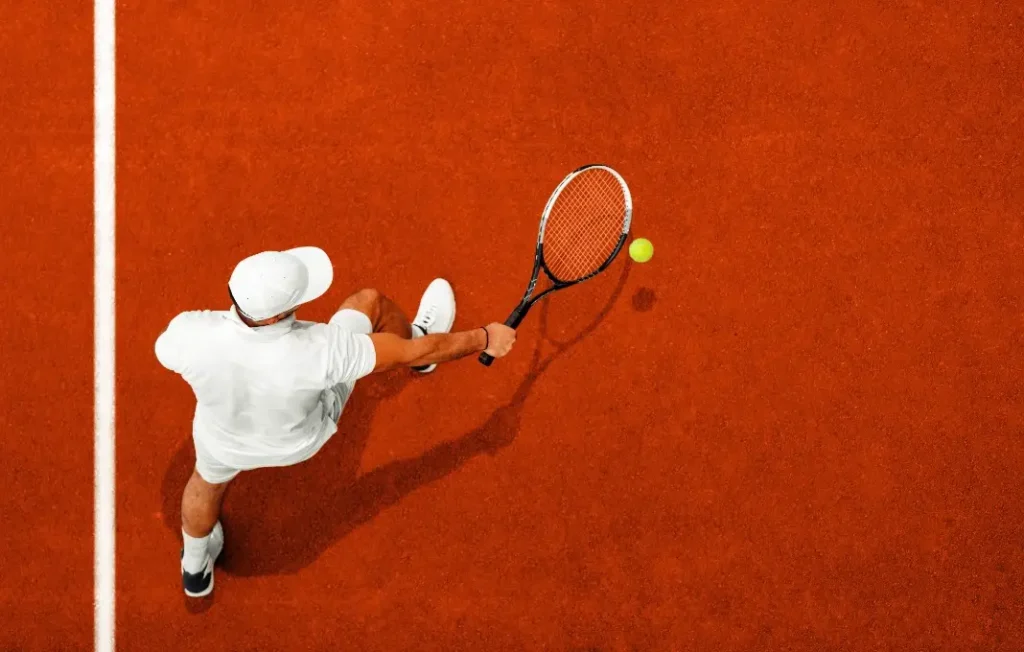
A tech entrepreneur who built and sold two companies argues that the secret to great management isn’t strategy or experience—it’s the quality of attention you bring to the present moment. This profound insight, drawn from decades of building successful ventures and observed through the lens of sporting legend Roger Federer, challenges conventional wisdom in the business world, suggesting that true leadership lies not in grand plans, but in the granular act of being fully present.
The core of this argument centers on a simple yet often overlooked principle: paying attention to the immediate task at hand. Drawing a parallel to the fundamental instruction in tennis, "Watch the ball," the entrepreneur highlights how easily the mind can be sidetracked by external pressures, future anxieties, or past regrets. In the fast-paced, high-stakes environment of entrepreneurship, this distraction can lead to critical errors. The obsession with metrics like vision, strategy, valuation, and exit plans, while seemingly crucial, can overshadow the essential work of the present – the quality of a meeting, the nuance of a decision, or the depth of a team relationship.
The Federer Framework: Beyond Strategy and Experience
The entrepreneur, who has requested anonymity but whose track record of building and divesting two successful tech companies lends significant weight to his claims, posits that the differentiator between good and great management is not technical acumen or years of experience. Instead, it is a quality he terms "the feel"—an acute, moment-to-moment awareness of both the external work and the internal landscape of one’s own mind. This "feel," he contends, is embodied by tennis icon Roger Federer.
Federer’s unparalleled success, the argument goes, transcends mere technical mastery. His game is characterized by invention, improvisation, and an inherent joy that sets him apart from peers who often rely on percentage play and strategic patience. His former fitness coach, Pierre Paganini, famously described Federer as an artist who also happens to play tennis. This artistic sensibility, the entrepreneur suggests, is the key.
A slow-motion replay of Federer executing a backhand, for instance, reveals a player whose attention seems to linger on the process even after the ball has left his racket. This complete confidence in his technique allows his focus to remain on the action itself, not the eventual outcome. He is not anticipating the ball’s trajectory but is fully immersed in the sensation of its departure. This profound presence, the entrepreneur asserts, has direct implications for management.
The Pitfalls of Outcome-Obsessed Leadership
In the startup ecosystem, a relentless focus on outcomes—the exit, the financial return, the valuation multiple—often eclipses the importance of the process. Investors, by their nature, are primarily concerned with the endgame. However, Federer’s approach demonstrates that when an activity is performed with undivided attention, the results naturally follow. The pursuit of outcome becomes secondary to the excellence of the execution.
The entrepreneur draws a stark contrast between the sporting arena and the corporate world. While some athletes and managers mistake the scoreboard for the game, the truly exceptional understand the distinction. Federer, at the height of his powers, consistently deflected questions about records and rankings, prioritizing personal well-being and family over the relentless pursuit of accolades. His continued passion for the game, extending far beyond his peers, stemmed not from a chase for numbers but from an enduring love for the act of playing.
This contrasts sharply with the startup culture, where founders can become consumed by valuation rounds, media hype, and the race to achieve "unicorn" status. The HBO comedy "Silicon Valley" satirized this phenomenon, depicting a tech investor seeking enlightenment in Tibet not for genuine self-discovery but to gain a competitive edge in the next deal. This portrayal, the entrepreneur observes, highlights a tragic reduction of wisdom to a mere tool for transactional advantage.
Federer’s example offers a potent corrective. He adhered to a "natural order": health first, then family, then work. He embraced simple pleasures like chocolate and wine, and dedicated time to reading and family life. He did not treat his body or career as a machine to be relentlessly optimized, yet his achievements were extraordinary, not in spite of this balance, but because of it.
The Invaluable, Non-Outsourceable "Feel"
A pivotal moment cited by the entrepreneur is Federer’s between-the-legs winner against Novak Djokovic in the 2009 U.S. Open semifinal. This shot, a masterclass in improvisation, was not the product of brute force or intricate strategy. It was pure "feel"—an intuitive understanding of the court and the game that transcended physical limitations. In that instant, there was a complete fusion of player, racket, ball, and court, a singular state of intense, unadulterated attention.
This is precisely what constitutes "the feel" in management. It is not a skill that can be acquired from a textbook or imparted in a business school lecture. It is an innate quality of attention—ever-present, constantly renewed, and always fresh. A manager with two decades of experience cannot simply rely on past successes; their effectiveness hinges on their ability to be fully present in the current moment. Just as a tennis player cannot depend on a previous tournament’s performance to win a current match, a CEO cannot rest on past decisions. The "feel" exists only in the now.
Crucially, this "feel" cannot be outsourced. No consultant, no coach, no advisory board can deliver it. It originates from the manager’s own self-awareness—their mental state, their ingrained reactions, their conditioning, and their blind spots. It is a deeply personal attribute, an act of direct perception, or it is non-existent.
Embracing Vulnerability as a Management Strength
Federer also offers profound lessons on vulnerability. His visible emotion after losing the 2009 Australian Open final, or his decision to play through fading light in the 2008 Wimbledon final to avoid inconveniencing spectators, even at a disadvantage, demonstrates a remarkable willingness to be open. He consistently acknowledged that his opponents always had a chance to defeat him on any given day.
This is not a sign of weakness but rather an antidote to complacency. In management, vulnerability means maintaining a state of alert awareness, never assuming mastery. The leader who believes themselves to be invulnerable is the most susceptible to missing critical signals—an employee in distress, a deteriorating client relationship, or a subtle shift in market dynamics.
The Ultimate Ball to Watch: One’s Own Mind
The most significant lesson derived from Roger Federer’s career extends beyond the realm of sports. It is a fundamental truth about the quality of attention we bring to all aspects of our lives. In tennis, the instruction is simple: "Watch the ball." In management, the imperative is identical, but the "ball" becomes one’s own state of mind. Are decisions driven by fear or by clarity? Is the focus on the anticipated outcome or on the immediate process? Is one truly present in a conversation, or has the mind already leaped ahead to the next task?
Federer’s enduring legacy serves as a powerful reminder that true excellence is not achieved through relentless grinding or strategic maneuvering alone. It arises from a profound quality of presence, a state that many have lost and that no amount of strategic planning can replicate. The encouraging news is that this presence is accessible to anyone willing to cultivate it. It requires no extraordinary genius or athletic prowess, only the simple, deliberate act of learning to "watch the ball"—to observe one’s own attention with unwavering focus. This seemingly basic act, when applied with discipline, can unlock a level of management effectiveness that transcends conventional metrics and drives sustainable success.