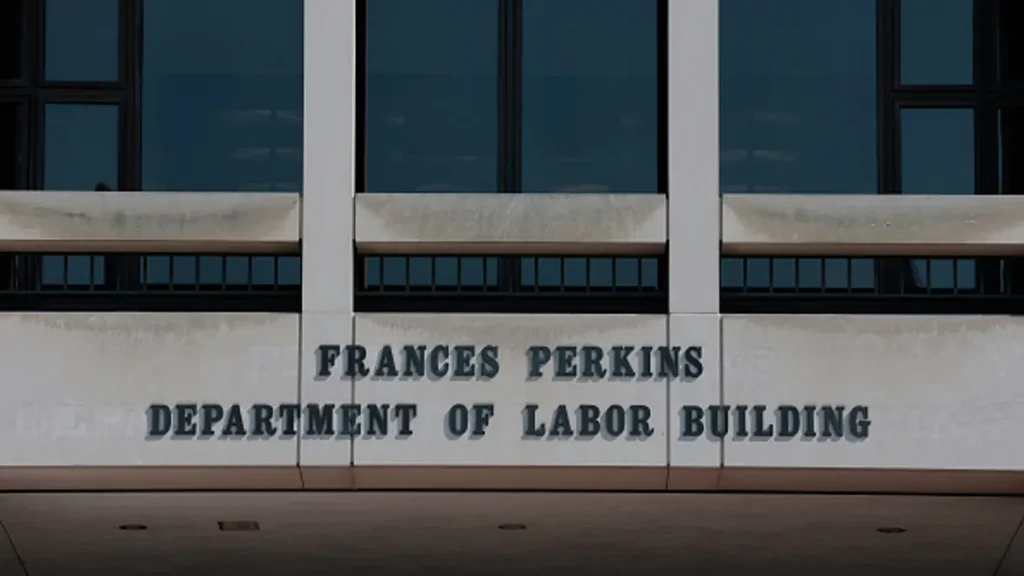
The U.S. Department of Labor (DOL) has announced a significant proposed rule designed to establish "a single nationwide standard" for determining joint employer status under the Fair Labor Standards Act (FLSA) and other federal labor laws. This move, unveiled on April 22, 2026, and updated just hours ago, seeks to bring clarity to a complex and frequently litigated area of employment law, representing a pivotal shift from the prior administration’s approach and aiming to simplify compliance for American employers while guiding Wage and Hour Division (WHD) investigators.
Understanding Joint Employment: A Historical Overview and Its Significance
Joint employment arises when an employee is considered to be employed by two or more employers simultaneously, often without the employee’s direct awareness of the dual employer relationship. This determination is crucial because it assigns shared legal responsibilities and liabilities to multiple entities for compliance with wage and hour laws, including minimum wage, overtime pay, and recordkeeping requirements under the FLSA. The concept is particularly relevant in various modern work arrangements, such as temporary staffing, franchising, subcontracting, and other forms of contingent work where a primary employer contracts out services or labor to another entity.
Historically, the definition of a "joint employer" has been a source of considerable ambiguity and legal contention. The FLSA itself does not explicitly define joint employment, leaving it to regulatory agencies like the DOL and the courts to interpret and apply the concept based on the Act’s broad purpose of protecting workers. This lack of a clear statutory definition has led to a patchwork of judicial interpretations across different federal circuits, creating uncertainty for businesses and workers alike.
The implications of joint employer status are far-reaching. For workers, it means identifying which entities are responsible for their wages, benefits, and working conditions. If a primary employer fails to meet its obligations, a jointly liable secondary employer could be held responsible. For businesses, the designation of joint employer status can dramatically expand their potential liability for wage and hour violations, expose them to collective bargaining obligations, and increase administrative burdens related to compliance. This uncertainty has often deterred companies from engaging in common business practices like subcontracting or using staffing agencies, fearing unforeseen legal risks.
A Chronology of Shifting Standards
The proposed 2026 rule is the latest chapter in a protracted regulatory saga marked by frequent changes mirroring shifts in presidential administrations and their respective philosophies on labor regulation.
-
The 2020 Trump Administration Rule: In January 2020, the first Trump administration finalized a rule that narrowed the definition of joint employment under the FLSA. This rule established a four-factor balancing test for "vertical" joint employment (where one employer controls the work of another employer’s employee) and required that an entity actually exercise one or more of these four factors to be considered a joint employer. These factors included whether the potential joint employer:
- Hires or fires the employee.
- Supervises and controls the employee’s work schedule or conditions of employment to a substantial degree.
- Determines the employee’s rate and method of payment.
- Maintains the employee’s employment records.
The 2020 rule emphasized actual control over reserved but unexercised control, aiming to provide businesses with more predictability and reduce the scope of potential liability. It also clarified that certain business relationships, such as sharing a vendor or being franchisees of the same franchisor, were generally insufficient on their own to establish horizontal joint employment (where two employers separately employ the same individual for different jobs). However, this rule faced legal challenges and was eventually rescinded.
-
The 2021 Biden Administration Rescission: Shortly after taking office, the Biden administration moved to rescind the 2020 joint employer rule. In July 2021, the DOL formally withdrew the Trump-era regulation, arguing that it was inconsistent with the FLSA’s text and purpose, and that it created an overly narrow standard that undermined worker protections. The rescission effectively reverted to the DOL’s prior enforcement guidance, which was generally understood to be broader and more inclusive of various forms of control, including indirect or reserved control, in determining joint employer status. This created renewed uncertainty for employers, as it meant the DOL would evaluate joint employment based on a more expansive "economic reality" test, often leading to more frequent findings of joint employer relationships.
-
The 2026 Trump Administration Proposal: The current proposal, initiated by the second Trump administration, seeks to re-establish a clear, nationwide standard, but with key differences from its 2020 predecessor. This move aligns with the administration’s broader agenda of simplifying compliance for American businesses. Acting Secretary of Labor Keith Sonderling underscored this aim, stating that the proposed rule is part of efforts to "simplify compliance for American employers." The timing of the announcement also comes amidst recent leadership changes at the DOL, with the resignation of Secretary of Labor Lori Chavez-DeRemer two days prior due to allegations of misconduct. Both Chavez-DeRemer and Sonderling, during their confirmation hearings, had indicated their intent to revisit the Biden-era joint employer rule, signaling a consistent policy objective within the department.
Details of the Proposed 2026 Rule

The newly proposed rule, outlined in the DOL’s notice, aims to provide "much-needed regulatory clarity in the face of divergent judicial precedent throughout federal courts of appeals," as stated by Wage and Hour Division Administrator Andrew Rogers. It largely reinstates a four-factor analysis for vertical joint employment, but with crucial refinements that distinguish it from the 2020 rule.
For vertical joint employment, where an employee has an employment relationship with one employer (the "direct" employer) and the economic realities show that the employee is also economically dependent on another entity (the "potential joint" employer), the rule proposes evaluating the following four factors:
- Hiring or Firing: Whether the potential joint employer hires or fires the employee.
- Supervision and Control: Whether the potential joint employer supervises and controls the employee’s work schedule or conditions of employment to a substantial degree.
- Payment: Whether the potential joint employer determines the employee’s rate and method of payment.
- Records: Whether the potential joint employer maintains the employee’s employment records.
A significant nuance in the 2026 proposal, differentiating it from the 2020 rule, is the explicit omission of language that required an individual or entity to "actually exercise" one or more of these four factors to be deemed a vertical joint employer. Instead, the new rule provides "more nuanced guidance that exercised control is more relevant than reserved control that is rare or never exercised." This means that while direct, active control remains paramount, the mere potential for control, if it is rarely or never utilized, will likely carry less weight than a pattern of active supervision or decision-making. However, the absence of the "actually exercise" requirement implies a slightly broader scope than the 2020 rule, potentially allowing for joint employer findings even without direct, active exercise if the ability to control is significant and regularly available. The DOL states that "a unanimous finding on the four factors in either direction would establish a ‘substantial likelihood’ regarding whether an individual or entity is a joint employer with another," suggesting that clear evidence on all four points will be highly determinative.
For horizontal joint employment, which exists when an employee has separate employment relationships with two or more employers, and the employers are sufficiently associated with respect to the employee’s employment, the rule clarifies that such status "exists when separate employers are sufficiently associated with respect to the employment of the same employee." Crucially, it reiterates that "business relationships which have little to do with the employment of specific employees—such as sharing a vendor or being franchisees of the same franchisor—are alone insufficient to establish joint employment." This provides important guardrails for common commercial arrangements, aiming to prevent the automatic designation of joint employer status based solely on tangential business ties.
It is vital to note that this proposed rule specifically addresses joint employment under the FLSA and other laws enforced by the Wage and Hour Division. Administrator Rogers explicitly stated during a press briefing that the rule "does not address joint employment under the Wagner Act, also known as The National Labor Relations Act of 1935," which governs labor relations and collective bargaining. The National Labor Relations Board (NLRB), an independent agency, has its own evolving standards for joint employer status under the NLRA, which have also seen significant shifts in recent years, creating a separate but related area of regulatory complexity.
Implications and Analysis

The proposed 2026 rule, if finalized, carries substantial implications for various stakeholders across the American economy.
For Employers:
- Increased Clarity and Predictability: The primary benefit for businesses is the promise of a "single nationwide standard." This clarity could reduce the current legal uncertainty stemming from conflicting judicial interpretations, allowing companies to better assess their compliance obligations and potential liabilities.
- Reduced Litigation Risk and Costs: With a clearer standard, employers might face fewer frivolous lawsuits or be better equipped to defend against legitimate claims, potentially leading to a decrease in litigation costs and administrative burdens associated with compliance. This aligns with Administrator Rogers’ statement that the proposal "would also reduce compliance and litigation costs for employers."
- Operational Flexibility: Businesses that rely on complex contracting models, such as franchising, temporary staffing, or subcontracting, could gain greater confidence in structuring their relationships without inadvertently triggering joint employer status. This could foster innovation and growth in these sectors.
- Due Diligence: Despite the clarity, employers will still need to conduct thorough due diligence when engaging with third-party service providers or contractors to ensure their operational control structures align with the new DOL standard.
For Workers:
- Wage Protections: Worker advocacy groups will likely scrutinize the rule to ensure it adequately protects employees from wage and hour violations. A narrower definition of joint employment, even with the nuances from the 2020 rule, could potentially reduce the number of entities held accountable for such violations, making it harder for workers to recover unpaid wages or overtime from multiple parties.
- Accountability: The balance between clarity for employers and accountability for workers is delicate. The rule’s emphasis on "exercised control" being "more relevant than reserved control that is rare or never exercised" aims to focus liability on entities that genuinely influence an employee’s work life. However, critics might argue that this could still leave gaps where employers exert indirect influence without direct "exercise" of the four factors.
- Unionization Efforts: While the rule explicitly excludes NLRA joint employment, the general regulatory environment regarding employer accountability can indirectly influence workers’ perceptions of their rights and their ability to organize.
Economic and Regulatory Landscape:
- Economic Impact: The DOL estimates that regulatory changes of this nature can have significant economic impacts, affecting how businesses structure their operations and manage their workforces. A clearer, more consistent standard could encourage investment and job creation in sectors that were previously cautious due to joint employer risks.
- Future Legal Challenges: Given the contentious history of joint employment regulations, it is highly probable that the finalized rule will face legal challenges from either employer groups (if they perceive it as too broad) or worker advocacy groups (if they perceive it as too narrow). The "divergent judicial precedent" mentioned by Rogers highlights the likelihood of continued legal battles over interpretation.
- Administrative Burden: While the DOL aims to reduce compliance costs, the initial transition to a new standard will require employers to review and potentially revise their existing contracts and operational practices.
The Path Forward: Public Comment Period
The proposed rule is now open for public comment for a period of 60 days, concluding at 11:59 p.m. EDT on June 22, 2026. This public comment period is a critical stage in the rulemaking process, allowing interested parties—including businesses, labor unions, legal experts, and individual citizens—to submit their feedback, concerns, and supporting data. The DOL will be required to review and consider all comments before issuing a final rule. This feedback often influences the final text, potentially leading to further adjustments or clarifications based on real-world insights and legal arguments. The robust engagement during this period will be crucial in shaping the ultimate contours of this nationally significant labor regulation. The outcome of this rulemaking process will undoubtedly reshape how employers and employees understand their rights and responsibilities under federal wage and hour laws for years to come.