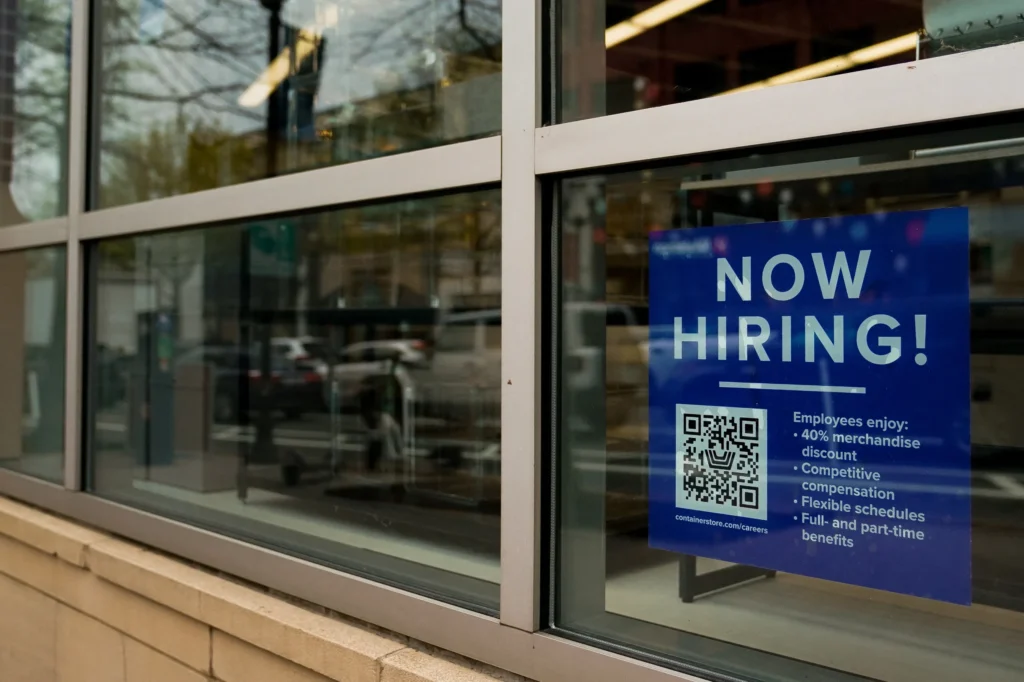
The number of Americans filing initial claims for unemployment benefits experienced a moderate uptick last week, a development that, while seemingly counterintuitive, underscores the prevailing stability of the U.S. labor market. This trend is further reinforcing financial market expectations that the Federal Reserve is unlikely to enact interest rate cuts this year, as the economy navigates a complex landscape marked by geopolitical tensions and evolving technological advancements.
The latest weekly jobless claims report, released by the Labor Department on Thursday, serves as one of the most timely indicators of the economy’s health. Crucially, the data continues to reveal no discernible signs of significant labor market distress stemming from the potential oil price shock triggered by the ongoing conflict between the United States and Iran, particularly concerning maritime traffic through the Strait of Hormuz. This resilience suggests that businesses are maintaining their workforce levels, even in the face of potential external economic headwinds.
While fewer individuals were actively collecting unemployment checks towards the end of April, this decline may be partly attributable to some claimants exhausting their 26-week eligibility period, a standard duration in most states. Nevertheless, the underlying bedrock of low layoff figures continues to anchor the labor market. Economists, however, remain cautiously watchful of potential downside risks, primarily due to the ongoing disruption of oil shipments through the critical Strait of Hormuz, a chokepoint for a significant portion of global oil supply.
Christopher Rupkey, chief economist at FWDBONDS, commented on the labor market’s fortitude, stating, "Fed officials previously lowered interest rates last year due to concerns about joblessness and a rising unemployment rate. However, at present, there is no compelling reason to consider interest rate cuts whatsoever, as the labor market is demonstrating remarkable steadiness, akin to being ‘rock solid.’" This sentiment reflects a broader consensus among analysts who view the current labor market conditions as robust enough to withstand inflationary pressures without necessitating immediate monetary policy easing.
Initial Claims Edge Up, But Remain Subdued
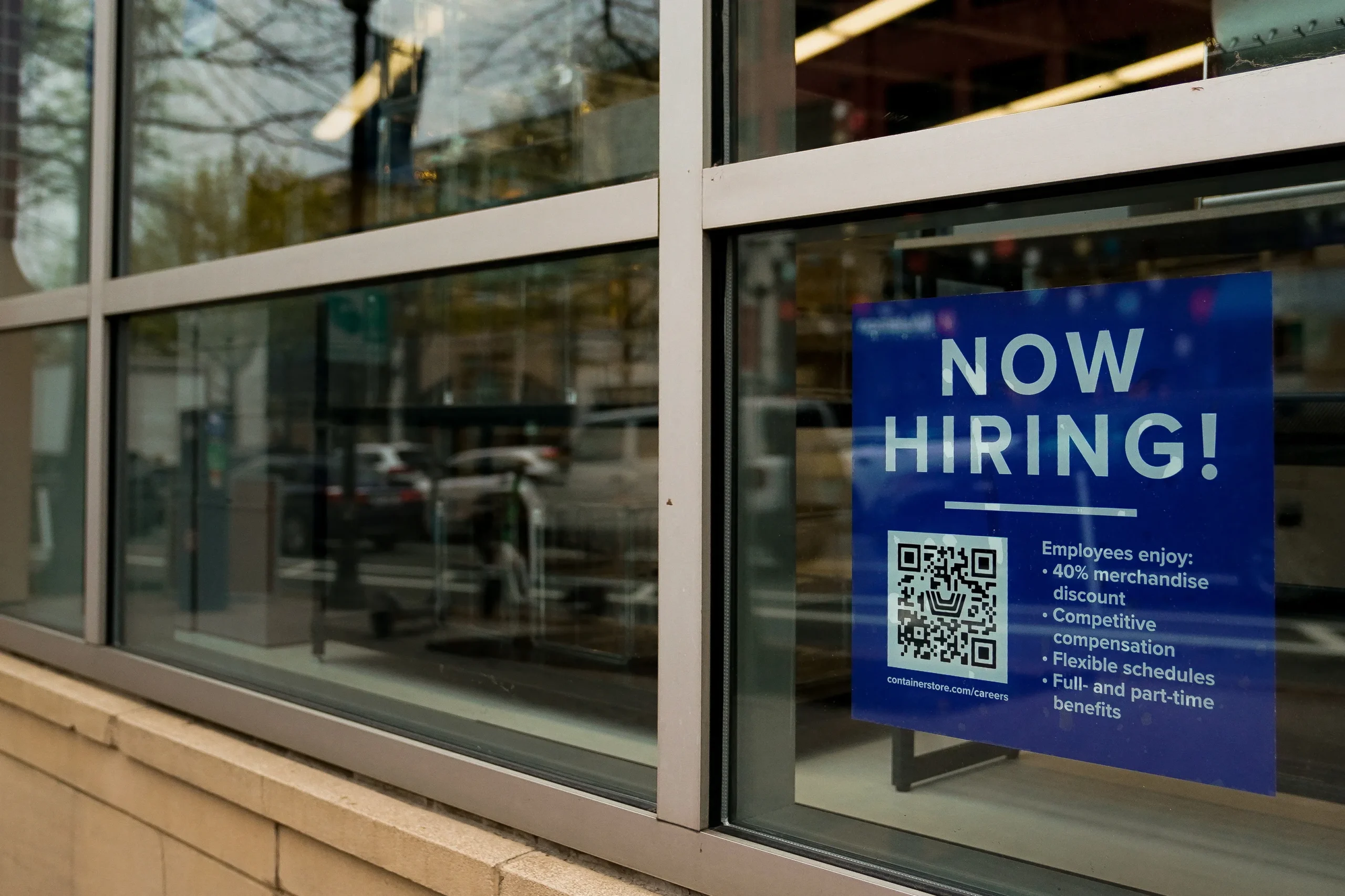
According to the Labor Department’s data, initial claims for state unemployment benefits rose by 10,000 to a seasonally adjusted 200,000 for the week ending May 2. This figure was slightly lower than the 205,000 forecast by economists polled in a Reuters survey. The increase served to partially reverse the significant decline observed in the preceding week, which had pushed jobless claims to levels not seen since 1969, highlighting a historical low in labor market dislocation.
Further evidence of labor market equilibrium was presented in government data released earlier in the week. This data indicated that in March, there were 0.95 job openings for every unemployed person, an improvement from the 0.91 ratio recorded in February. This ratio, consistently hovering near or above one-to-one, is a strong indicator of a tight labor market where employers are actively seeking to fill positions.
Technological Shifts and Layoffs: A Nuanced Picture
Despite a notable wave of layoff announcements from major technology firms, often citing the integration of artificial intelligence (AI) into various job roles, initial jobless claims have largely remained below the 230,000 threshold throughout the current year. This phenomenon suggests that laid-off technology workers are likely benefiting from generous severance packages, allowing them to absorb the transition without an immediate surge in unemployment claims. Moreover, it points to the broader ability of the economy to absorb displaced workers, albeit with potential sector-specific challenges.
A separate report from the global outplacement firm Challenger, Gray and Christmas provided further context on layoff trends. This report revealed that U.S.-based employers announced 83,387 job cuts in April, representing a 38% increase from March. However, this tally remained 21% lower than the same period in the previous year, indicating a moderating trend in overall layoff announcements on an annual basis.
Layoffs Trend Lower Year-Over-Year

Cumulatively, employers have announced 300,749 job cuts year-to-date. This figure represents a substantial 50% decrease compared to the same period in 2025. The technology sector has been the primary driver of these layoff announcements, with AI frequently cited as a contributing factor. This trend, while concerning for individuals directly impacted, signals a broader recalibration within industries rather than a systemic economic downturn.
The U.S. central bank, in its most recent policy meeting, maintained its benchmark overnight interest rate within the 3.50%-3.75% range, citing persistent inflation concerns as a key driver for its decision. Financial market participants are largely anticipating that the Federal Reserve will hold interest rates steady through at least 2027, reflecting a cautious approach to monetary policy in the current economic climate. This expectation is influenced by the labor market’s strength and the ongoing battle against inflation.
In early trading, U.S. stocks experienced a largely flat performance, while the dollar saw a slight dip against a basket of major currencies. U.S. Treasury yields also declined, reflecting investor sentiment towards economic growth prospects and interest rate expectations.
Continuing Claims Signal Robust Hiring
The number of individuals receiving unemployment benefits after their initial claim, a key proxy for ongoing hiring activity, decreased by 10,000 to a seasonally adjusted 1.766 million during the week ending April 25. This figure marks the lowest level since January 2024, suggesting that employers are retaining their existing workforce and potentially accelerating hiring efforts. It is important to note that this data does not influence the April employment report, which is scheduled for release on Friday.
Economists surveyed by Reuters anticipate that nonfarm payrolls likely increased by 62,000 jobs last month. This projection follows a stronger rebound of 178,000 jobs in March. The expected slowdown in job growth is attributed to the fading seasonal boost from warmer weather and the return of striking healthcare workers to their positions. Despite this anticipated moderation, the projected pace of job creation remains above what economists consider necessary to keep pace with the growth of the working-age population. Estimates for the "break-even" rate, the number of jobs needed to maintain the current unemployment rate, typically range between zero and 50,000 jobs per month.

The unemployment rate is forecast to have remained unchanged at 4.3% in April, with a possibility of being rounded down to 4.2%. The Chicago Fed’s own forecast places the jobless rate at 4.23%, which would also round down to 4.2%. This sustained low unemployment rate is a significant factor contributing to the Federal Reserve’s cautious stance on interest rate cuts.
Productivity Growth and the AI Factor
In a separate report, the Labor Department’s Bureau of Labor Statistics revealed that nonfarm productivity, a measure of hourly output per worker, increased at an annualized rate of 0.8% in the first quarter. This follows a more robust 1.6% increase in the preceding October-December quarter. On a year-over-year basis, worker productivity saw a more significant increase of 2.9%. The substantial investments in AI technology have ignited a lively debate among economists regarding its precise impact on productivity growth.
Stephen Stanley, chief U.S. economist at Santander U.S. Capital Markets, offered his perspective on this evolving landscape: "The crucial question is whether productivity has truly accelerated due to AI and other technological advancements, which would suggest a sustained upward trend, or if firms were simply deferring hiring last year due to policy-related uncertainty, leading them to operate with leaner workforces. The latter scenario also manifests as a productivity acceleration but is not a sustainable long-term phenomenon." This observation highlights the complexity of disentangling cyclical economic factors from the transformative impact of new technologies.
The interplay between a resilient labor market, persistent inflation concerns, and the transformative potential of AI continues to shape the economic outlook. While jobless claims remain subdued, signaling a healthy job market, the Federal Reserve’s cautious approach to monetary policy is expected to persist, reflecting a commitment to price stability amidst a dynamic and evolving economic environment. The upcoming April employment report will provide further insights into the trajectory of job growth and its implications for the broader economy.